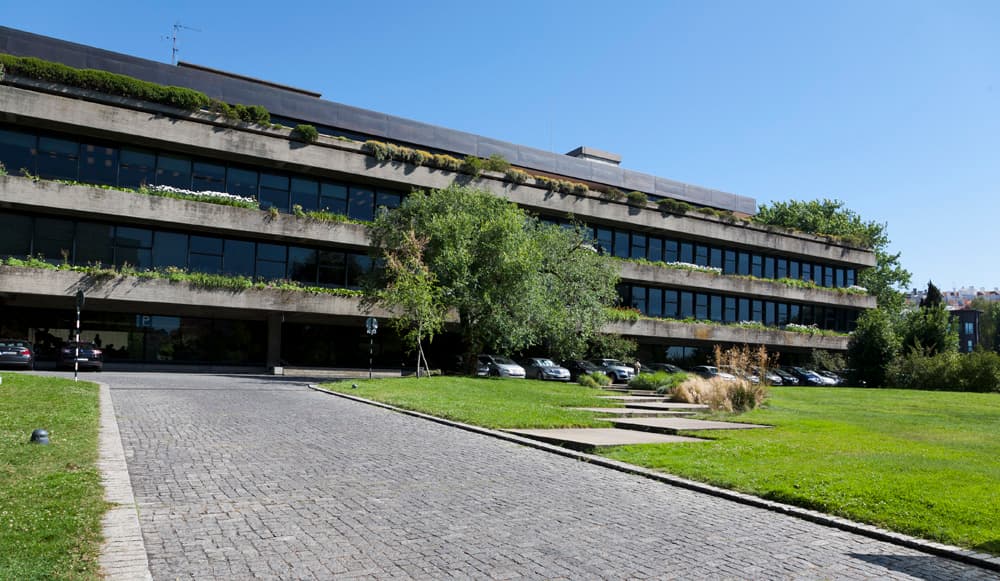
Fundação Calouste Gulbenkian, based in Lisbon, Portugal, is a private philanthropic foundation established in 1956 according to the will of Calouste Sarkis Gulbenkian, an Armenian oil magnate and noted art collector. The foundation's headquarters and garden, inaugurated in 1969, reflect modern architectural principles and were the first contemporary work in Portugal classified as a National Monument in 2010.
Gulbenkian’s bequest included nearly his entire fortune and a unique art collection exceeding 6,000 objects, now housed in the Calouste Gulbenkian Museum. The museum’s permanent exhibition displays artifacts spanning ancient Egyptian, Greco-Roman, Islamic, Armenian, and Asian arts, as well as Western works from artists such as Rembrandt, Monet, Lalique, and others. The adjacent Modern Art Centre holds a comprehensive collection of contemporary Portuguese art.
The foundation’s activities extend beyond the arts. Its science institute, the Instituto Gulbenkian de Ciência, near Lisbon, focuses on biological and biomedical research with multidisciplinary teams. The Gulbenkian Orchestra and Choir, situated in a 1,228-seat auditorium, offer classical concerts and cultural programming throughout the year.
Recent projects include support for contemporary art exhibitions, grants for social welfare and education, and international initiatives for Armenian communities. In 2019, the foundation sold its energy holdings to promote a sustainable future. With assets making it one of the wealthiest charitable institutions globally, Fundação Calouste Gulbenkian remains central to the promotion of arts, science, education, and social development in Portugal and abroad.