
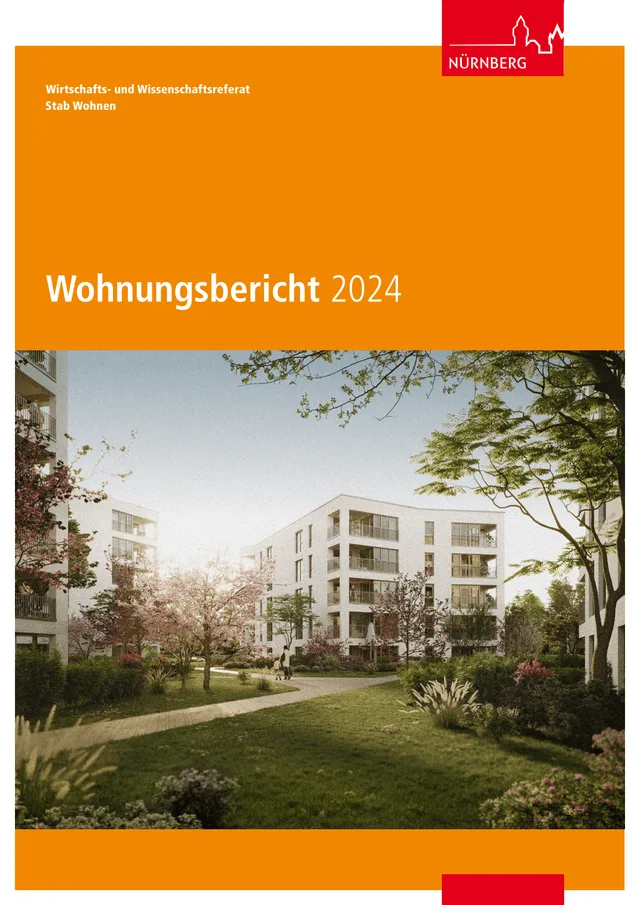
Overview of the Report
The “Wohnungsbericht 2024 der Stadt Nürnberg” is a comprehensive study produced by the city’s Housing Department (Stab Wohnen) within the Wirtschafts‑ und Wissenschaftsreferat. Authored by a team of senior municipal officials—Britta Walther, Stefan Borst, Lisa Bergmann, Roman Rosenfeld, Volker Wolfrum and Thomas Kretschmer—the report presents the latest statistical and policy analysis of Nürnberg’s housing market for the year 2024, contextualised within broader German and European trends.
Housing Stock and Demand
In 2024 the city recorded 546 397 people with a main residence, a modest increase of 0.4 % over the previous year. The number of households rose to 7 265, while the total housing stock stood at 296 430 units, of which 17 650 (≈6 %) were subject to occupancy‑binding regulations. Notably, 42 % of newly completed apartments (630 units) were publicly‑funded, the highest proportion in recent years, indicating a strong policy focus on affordable housing.
Financial Commitment to Housing
The municipal housing programme allocated €125.9 million in 2024 for new construction, renovation and conversion measures. This funding supported 317 newly built rental units, 35 owner‑occupied units and 92 family homes, alongside a wide range of subsidies for barrier‑free adaptations and energy‑efficiency upgrades. The total cost of all housing‑related measures reached €154.9 million, reflecting a concerted effort to sustain supply despite rising construction costs and interest rates.
Market Pressures and Construction Activity
Baugenehmigungen (building permits) fell sharply to 1 561 in 2024, a 25 % decline from 2023 and the lowest level in five years. Correspondingly, completed new dwellings dropped to 1 497, well below the city’s target of 2 000 units per year. High material prices and financing costs have delayed or cancelled many projects, mirroring a nationwide slowdown in the German residential construction sector.
Promotion of Sustainable and Accessible Housing
The report highlights increased investment in energy‑efficient refurbishment, with 95 modernisation projects receiving support. Barrier‑free adaptations for people with disabilities were funded for 43 units, and a dedicated “Sustainable Housing” supplement offers up to €200 per m² for environmentally‑friendly upgrades. These measures align with EU climate objectives and aim to reduce the sector’s carbon footprint while improving living standards for vulnerable groups.
Allocation of Publicly‑Funded Units
Of the 17 650 bound units, 8 251 belong to the first funding path, 5 081 to income‑oriented (EOF) support, and 3 466 to contractually bound municipal housing. The remaining units are distributed across special programmes such as the Bavarian Modernisation Programme and other local initiatives. The city reports a positive net change of +1.98 % in bound units compared with 2023, marking the first reversal of a long‑term decline.
Social Composition of Housing Seekers
In 2024, 7 265 households were listed as housing‑searching, with 6 391 receiving Wohngeld (housing benefit). The majority of benefit recipients (≈84 %) were pensioners, while 60 % of all recipients were employed. Approximately 45 % of applicants were classified as “very urgent”, reflecting persistent pressure on affordable housing for low‑income and elderly residents.
Policy Outlook and Future Challenges
The report concludes that, despite the notable share of subsidised units, the overall supply gap is likely to widen unless construction activity recovers. Continued high construction costs and financing rates pose the main risk. The city plans to maintain and expand its collaborative framework with the Bavarian state, housing providers and private developers to achieve a balanced, socially‑responsible housing market.
Key Statistics at a Glance
- Population (31 Dec 2024): 546 397
- Households: 7 265
- Total dwellings: 296 430
- Occupancy‑bound units: 17 650 (6 %)
- New subsidised apartments: 630 (42 % of completions)
- Housing programme budget 2024: €125.9 million
- Building permits 2024: 1 561 (‑25 % YoY)
- Wohngeld recipients 2024: 6 391 (≈45 % of households) These data provide a factual basis for pan‑European stakeholders interested in the sustainability, affordability and policy dynamics of Nürnberg’s housing sector.