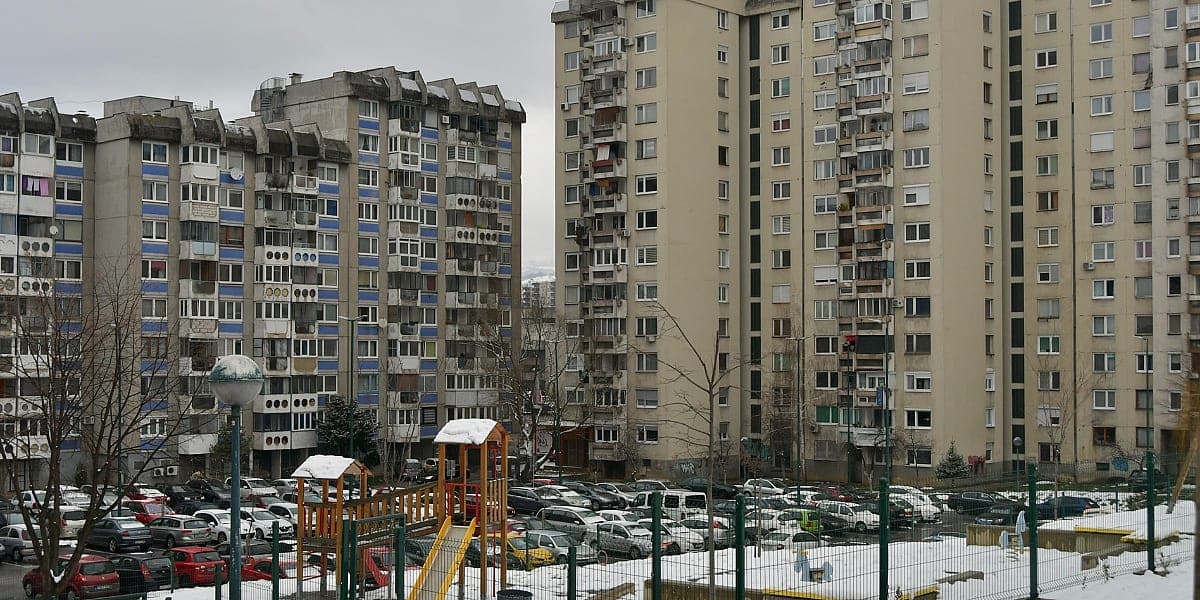
Overview of Sarajevo Housing Price Surge
The article, published by the Bosnian news outlet Klix.ba and authored by journalist Armin Lendo, examines the dramatic rise in new‑build flat prices in Sarajevo between 2020 and 2025. Using data from the Federal Statistical Institute (FZS), it tracks how the average price per square metre more than doubled, highlighting the growing affordability challenge for residents of the capital city.
Key Price Figures and Trends
In 2020 the average price of a newly sold flat in Sarajevo was 2 068 KM / m². By the third quarter of 2025 this figure had risen to 4 269 KM / m², an increase of roughly 2 400 KM / m² over ten years. The article also notes a 2024 price of 3 500 KM / m², indicating a near‑800 KM jump within a single year. If the trend continues, prices could reach around 5 000 KM / m² later in 2025. Compared with other municipalities in the Federation of Bosnia and Herzegovina, Sarajevo’s prices remain higher, with the rest of the region averaging about 3 000 KM / m².
Impact on Typical Two‑Room Flats
Using a standard 50 m² two‑room flat as a reference, the cost to purchase such a dwelling rose from 95 000 KM in 2016 to approximately 215 000 KM in 2025—more than double the earlier amount. Five years earlier, the same size could be bought for just over 100 000 KM, and in 2024 the price was about 175 000 KM. This rapid escalation underscores the strain on average households seeking home ownership.
Drivers of the Price Explosion
The article attributes the surge to several factors. A high proportion of vacant new‑build flats, many owned by members of the Bosnian diaspora who purchase but rarely occupy them, reduces supply for local buyers and pushes prices upward. Rental rates for typical apartments range between 700 and 1 000 KM, while diaspora owners often have incomes of several thousand KM, diminishing any incentive to rent out the units. Additional contributors include rising construction material costs, higher labour expenses, inflation, and increased interest rates, all of which feed into higher sale prices.
Comparative Context Within Bosnia and Herzegovina
Historically, Sarajevo’s average price per square metre has been consistently above the national average. In the last quarter of 2016, Sarajevo’s price was 1 900 KM / m², roughly 500 KM higher than the average across other municipalities. Price ranges across the wider Sarajevo area have varied from 1 200 KM to 4 500 KM / m², reflecting disparities between older and newer constructions and between neighbourhoods such as Stari Grad and Centar, which command the highest values.
Implications for Sustainable Housing
The steep price growth challenges the development of affordable, sustainable housing in Sarajevo. Higher acquisition costs may deter investment in energy‑efficient retrofits and green building practices, as developers and buyers focus on recouping larger capital outlays. Moreover, the prevalence of unoccupied units reduces the overall utilisation efficiency of the housing stock, potentially leading to greater environmental footprints per dwelling. Policymakers aiming to promote sustainable urban development will need to address both the supply‑side constraints and the financial barriers highlighted by the data.