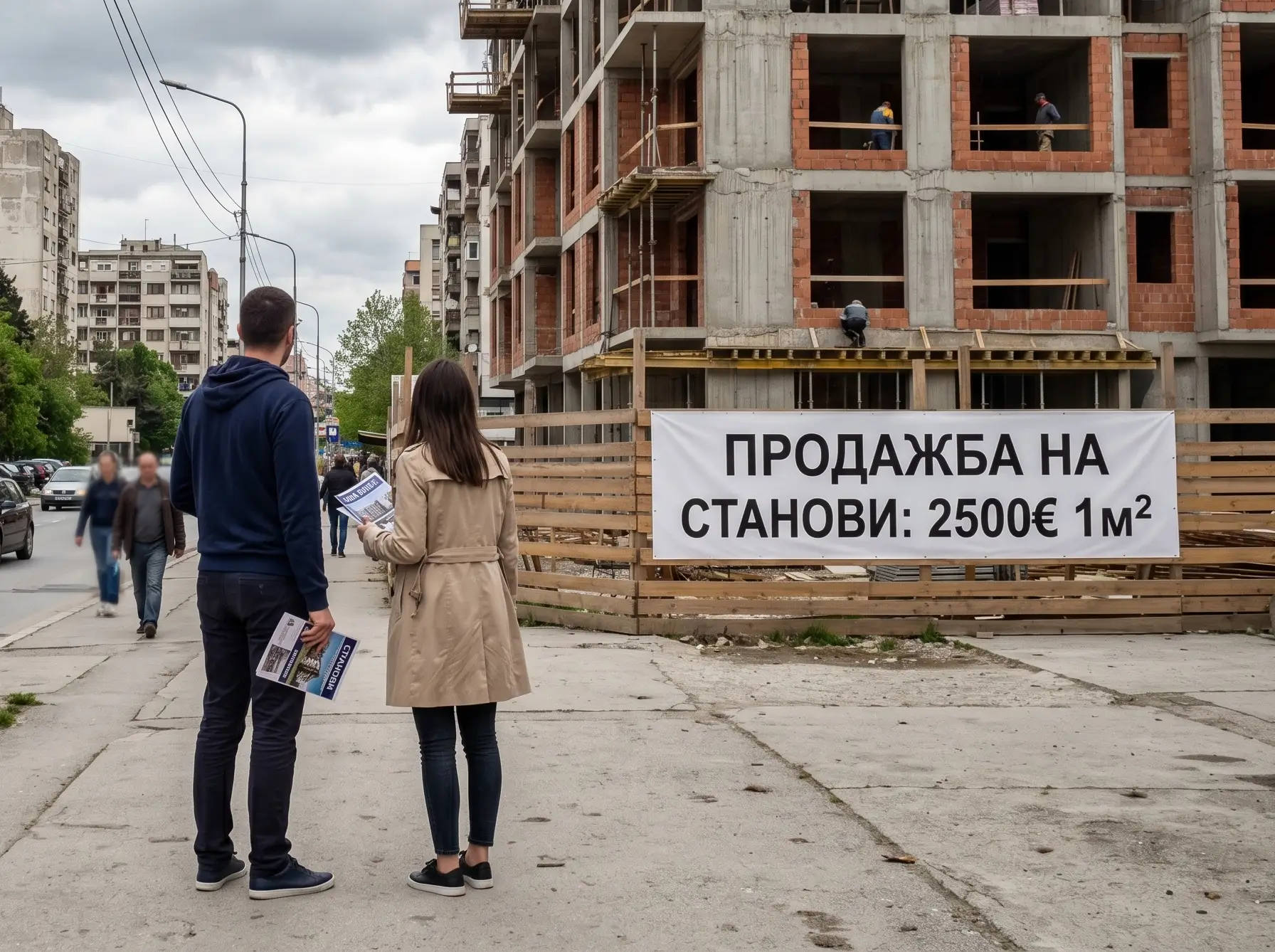
Overview of the Balkan Housing Crisis
The article, published by the Macedonian Institute for Media (Македонски институт за медиуми), examines the deepening housing affordability crisis across the Balkans, with a focus on Serbia and its impact on young people. It highlights how soaring property prices and limited rental options are delaying independent living and family formation for the region’s youth.
Young Adults and Housing Challenges
In Serbia, roughly one‑third of citizens—predominantly men aged 30‑34—still share their family home. Only 15 % of young people live in an independent household with a partner, while 58 % remain with their parental family and 22 % rent alone or with flat‑mates. Economic constraints are the primary barrier: many young adults earn below the €1,100 monthly income deemed necessary for a decent standard of living, with half earning under €680 and 55 % unemployed.
Income, Employment, and Education Barriers
A significant 60 % of young people abandon further education due to unaffordable costs. Although university tuition can be free, student housing accommodates merely 7 % of students, prompting calls to expand dormitory capacity. The lack of affordable credit also hampers home ownership; only 0.3 % of young people have applied for subsidised housing loans, despite the state offering loans up to €100,000 with a 1 % co‑payment for ages 20‑35, even for the unemployed.
State Interventions and Their Limits
The government subsidises mortgage interest for young buyers, yet the programme’s uptake remains low. Critics argue that these loans primarily benefit banks, inflating the housing market without addressing supply shortages. Additional schemes aim to support rural home purchases, young couples, and single mothers, but they are viewed as short‑term fixes rather than sustainable solutions.
Property Price Dynamics in Serbia
Serbian real estate prices surged after the onset of the Ukraine war, later stabilising but continuing to track inflation. Experts attribute this trend to the devaluation of the dinar, prompting citizens to invest in property as a hedge. Consequently, two‑thirds of Serbian real estate transactions are for owner‑occupied housing, with the remainder treated as investment assets. The market lacks large‑scale construction projects, and administrative hurdles delay new permits, exacerbating supply constraints.
Supply Shortfalls and Construction Bottlenecks
The article notes that bureaucratic delays hinder the development of new housing, while a substantial stock of illegal structures cannot be legally sold, further limiting supply. Initiatives such as the “Svoj na svoje” legalisation programme have registered over 2.3 million informal buildings, yet the overall market remains fragmented and inefficient.
Recommendations for Sustainable Housing
Stakeholders, including the youth organisation KOMS and housing experts, call for expanded student dormitory capacity, more affordable mortgage rates (suggesting a reduction from the current 4‑5.5 % to lower levels), and greater state participation in financing to reduce reliance on private banks. They stress that coordinated action between citizens, investors, and authorities is essential for creating sustainable, accessible housing in the Balkans.