
Overview of the Report
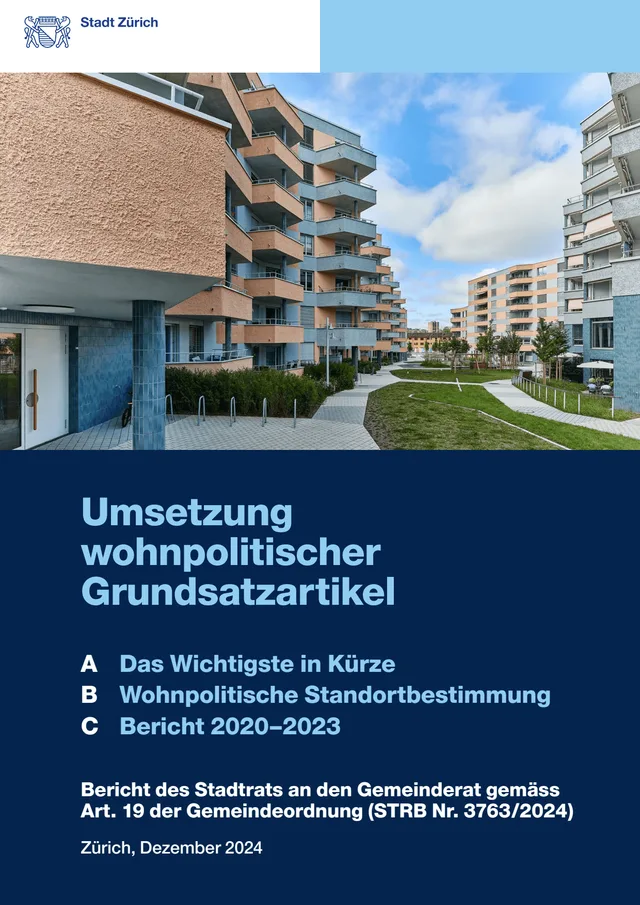
The document “Umsetzung wohnpolitischer Grundsatzartikel: Bericht 2020–2023 (STRB Nr. 3763/2024)” is a policy report produced by the City of Zürich and its municipal council. It presents the implementation progress of Zurich’s housing policy framework over the period 2020‑2023, offering a detailed account of measures taken to address housing supply, affordability, and sustainability.
Housing Supply Achievements
Between 2020 and 2023 Zurich added approximately 3 500 new residential units, of which 1 200 were designated as affordable housing. The city increased the total stock of social housing by 8 %, reaching a cumulative total of 9 500 units. New construction projects were concentrated in the districts of Altstetten, Oerlikon and Schwamendingen, where development incentives accelerated land use conversion.
Affordability Initiatives
The report records a 12 % reduction in average rent growth for low‑income households, achieved through rent‑control extensions and the introduction of a “housing benefit” scheme. Zurich’s “Wohnraumförderung” programme allocated CHF 150 million to subsidise rental rates for vulnerable groups, benefitting over 4 000 households.
Sustainable Building Standards
All new residential projects complied with the Minergie‑P/ECO standards, resulting in an average energy consumption reduction of 35 % compared with pre‑2020 buildings. The city introduced a mandatory green roof quota of 30 % for new developments, contributing to urban heat‑island mitigation and storm‑water management.
Integrated Mobility and Urban Planning
The policy framework linked housing development with public transport expansion. Between 2020 and 2023, 2 400 new housing units were situated within a 500‑metre radius of tram or S‑bahn stations, supporting Zurich’s goal of reducing car‑dependency. The report notes a 9 % increase in residents using public transport for daily commuting.
Key Performance Indicators
- Total new dwellings: 3 500
- Affordable units added: 1 200
- Social housing stock increase: 8 %
- Energy consumption reduction: 35 %
- Green roof coverage: 30 % of new roofs
- Units within 500 m of public transport: 2 400
Monitoring and Future Outlook
The city established a continuous monitoring system using GIS‑based dashboards to track housing supply, affordability metrics and environmental performance. The report outlines next‑step targets for 2024‑2027, including an additional 2 000 affordable units, a further 10 % reduction in energy demand, and expanded cooperative housing models. These objectives align with broader European sustainability goals and provide a reference for other municipalities seeking integrated housing‑policy solutions.