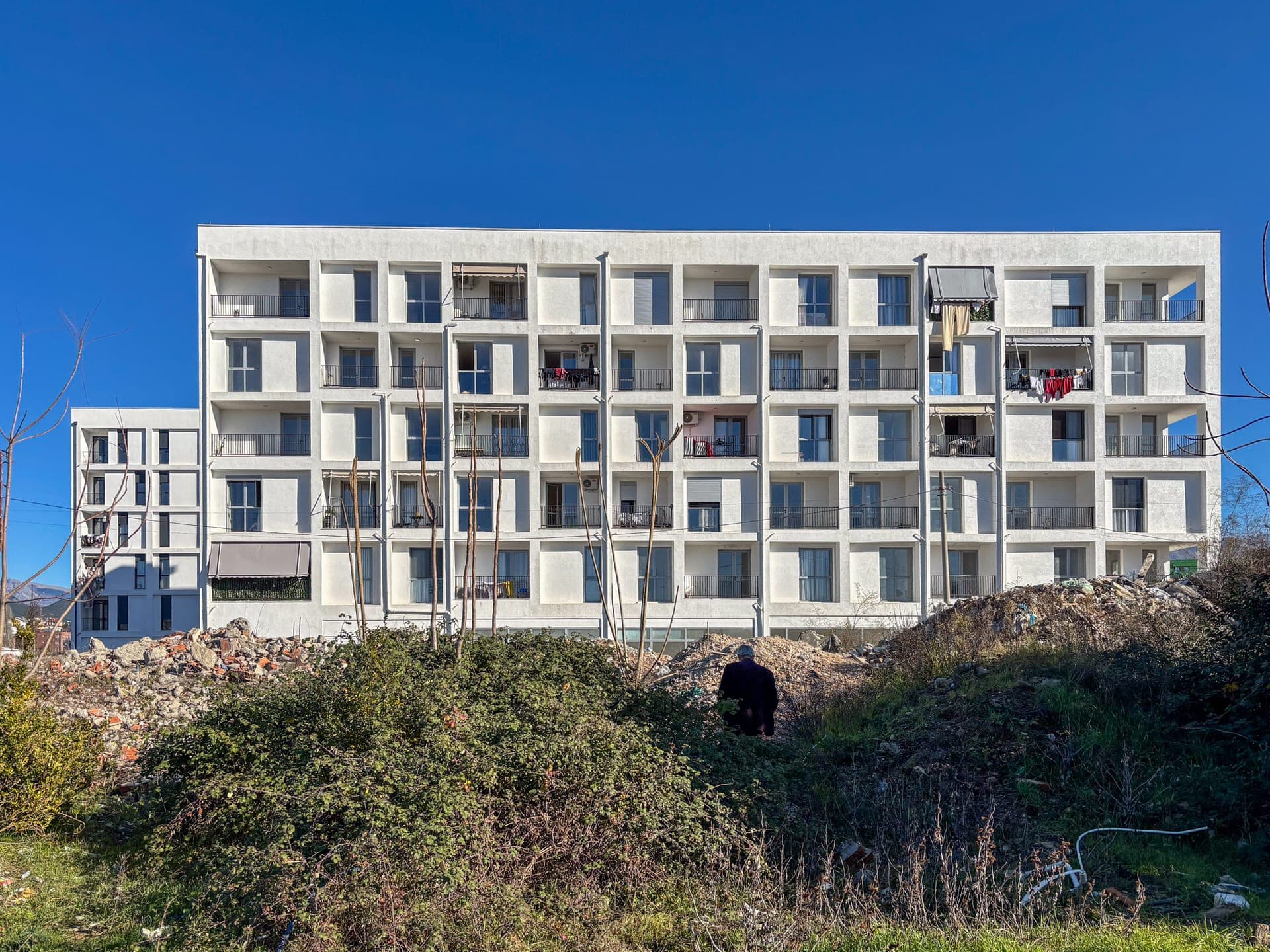
Overview of Tirana Riverside Project
The article, published by Voxeurop and authored by journalists Federico Caruso and Francesca Barca, examines the large‑scale urban renewal known as Tirana Riverside, situated in the 5 Maji neighbourhood of Albania’s capital. The piece provides a factual account of the redevelopment’s scale, its linkage to post‑earthquake housing needs, and its positioning as a model for sustainable, climate‑responsive urban design.
Project Scope and Infrastructure
Tirana Riverside plans to construct 3,500 new flats while demolishing 400 existing houses. The development is promoted as a 15‑minute, polycentric, zero‑emission eco‑district designed to accommodate 12,000 residents. Italian architect Stefano Boeri, acclaimed for “starchitect” projects, leads the design, integrating smart‑city technologies and green infrastructure aimed at climate resilience.
Sustainability and Urban Planning Claims
The neighbourhood is marketed as Europe’s first district simultaneously addressing climate change and pandemic preparedness. Features highlighted include low‑emission transport, renewable energy integration, and eco‑friendly building materials, aligning with broader European sustainable housing objectives.
Post‑Earthquake Housing Context
Following the 26 November 2019 earthquake that caused over 50 deaths and thousands of injuries, the 5 Maji area was earmarked to host families displaced by the disaster. Although the redevelopment pre‑dated the quake, the emergency response accelerated legislative approvals, bypassing standard public consultation procedures.
Social Impact and Resident Displacement
Demolition work began in October 2021, affecting roughly 400 households. The article documents the case of Gjin Nikolli, who paid €29,000 for amnesty of his house but lost his home during the February 2022 demolition. Residents received temporary accommodation in new flats but lack title deeds and face municipal control of utilities, creating legal and financial uncertainty.
Community Resistance and Legal Challenges
Approximately 400 people protested the demolitions for six months. Activists such as Ndue Marku have voiced concerns over forced evictions and the potential for further municipal claims on the property, indicating intentions to pursue cases up to the European Court of Human Rights.
Publication Context and Credibility
The report is part of the PULSE project, a collaborative series on peripheral European areas involving Il Sole 24 Ore, OBc Transeuropa, and El Confidencial. The article draws on interviews with local residents, journalists, and academic commentators, providing a multi‑source perspective on the redevelopment’s implications for sustainable housing in the region.