Overview of the Study
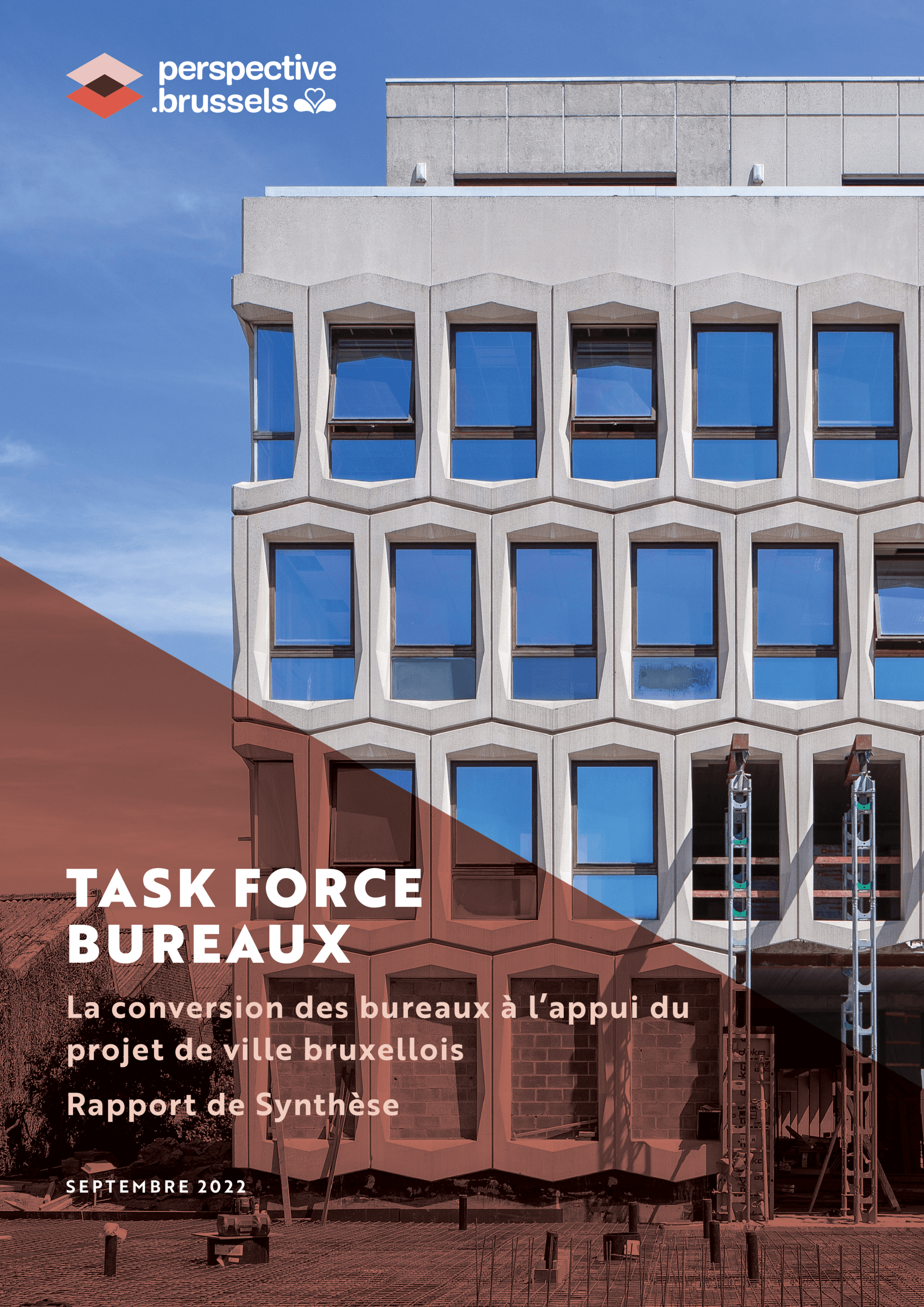
The report “Task Force Bureaux – La conversion des bureaux à l’appui du projet de ville bruxellois” is a comprehensive synthesis produced by perspective.brussels, a research and policy‑support organisation for the Brussels‑Capitale region. It brings together the expertise of Valeria Cartes Leal, Sophie Coekelberghs, Sarah De Boeck, Pierre Lemaire, Veronica Pezzuti, Frédéric Raynaud and additional contributors. The study, completed in September 2022, analyses the conversion of office buildings into other uses—primarily housing and public equipment—within the context of Brussels’ urban development plan (PRDD).
Context and Objectives
The Task Force Bureaux was mandated by the Minister‑President to assess office vacancy, identify conversion opportunities, and propose recommendations that align with the city‑wide project “Ville Bruxelloise”. Its goals include enhancing mixed‑use neighbourhoods, reducing mono‑functional office zones, and supporting sustainable urban density. The study examines how office conversions can contribute to the PRDD’s aims of short travel distances, efficient land use, and environmental sustainability.
Key Conversion Statistics
Since 1997, a total of 1 674 298 m² of office space have been authorised for conversion, averaging about 63 000 m² per year. Between 2018 and 2020, 56 % of conversions created housing, 31 % produced public equipment (including schools), 5 % resulted in commercial uses and 8 % in other functions. Conversions are concentrated: 54 % occur in administrative zones of the PRAS, with the second‑ring eastern areas showing the highest activity. By 2020, 35 buildings (≈33 % of total vacant surface) were identified as completely vacant, representing 197 531 m² of potential space.
School Conversion Highlights
The report documents 34 conversion projects targeting secondary schools between 2014 and 2025, of which 28 have already been realised. These projects are distributed across central and peripheral Brussels, addressing a projected increase of ≈ 10 000 students by 2025. The conversion of office blocks into schools leverages existing structural flexibility, façade exposure, and often meets accessibility standards, although challenges such as limited site area and ceiling height persist.
Social‑Housing Conversion Insights
Public actors, notably the Fonds du Logement, have converted office buildings into social‑housing units, exemplified by the Pléiades project (49 units) and other private‑sector initiatives delivering between 41 and 79 units each. Conversion costs are higher than new construction due to PEB (energy performance) compliance, municipal taxes on office space, and pre‑taxes during the permitting phase. Estimated conversion costs range from €1 100 to €2 600 per m², compared with higher expenses for demolition‑reconstruction.
Technical and Regulatory Challenges
Conversions face technical constraints: deep floor plates (> 15 m), low ceiling heights, and limited external space for playgrounds. Regulatory hurdles include obtaining change‑of‑use permits, meeting PMR (accessibility) standards, and navigating tax liabilities that persist until demolition or re‑classification. Nevertheless, many office buildings already satisfy fire safety, natural lighting, and structural robustness, facilitating adaptation.
Environmental Considerations
The study stresses the environmental benefits of re‑using office structures, noting that demolition‑reconstruction generates ≈ 650 000 tonnes of waste annually in Brussels. Reuse reduces embodied carbon and aligns with the EU’s “Nearly Zero‑Energy Building” targets. However, market incentives still favour demolition in many cases due to tax advantages and the high cost of retrofitting energy systems.
Recommendations for Policy Makers
- Strengthen tools for systematic vacancy monitoring, distinguishing commercial, hidden and structural vacancy.
- Prioritise mixed‑use conversion in central districts to preserve office supply while adding housing and public services.
- Develop financial incentives (tax abatements, low‑interest loans) specifically for conversions that deliver social‑housing or educational facilities.
- Promote design guidelines that ensure quality of life in converted dwellings, such as adequate natural light, ventilation, and communal spaces.
- Integrate circular‑economy principles in permitting, requiring waste‑avoidance plans and material‑re‑use assessments for all conversion projects.
Outlook for Brussels and Europe
The Brussels experience illustrates that large‑scale office conversion can address housing shortages, improve urban mix, and contribute to climate goals, provided that technical, financial and regulatory frameworks are aligned. The data and lessons from this study are relevant for other European cities facing similar office vacancy trends post‑COVID‑19 and seeking sustainable, inclusive urban development.