Resource context
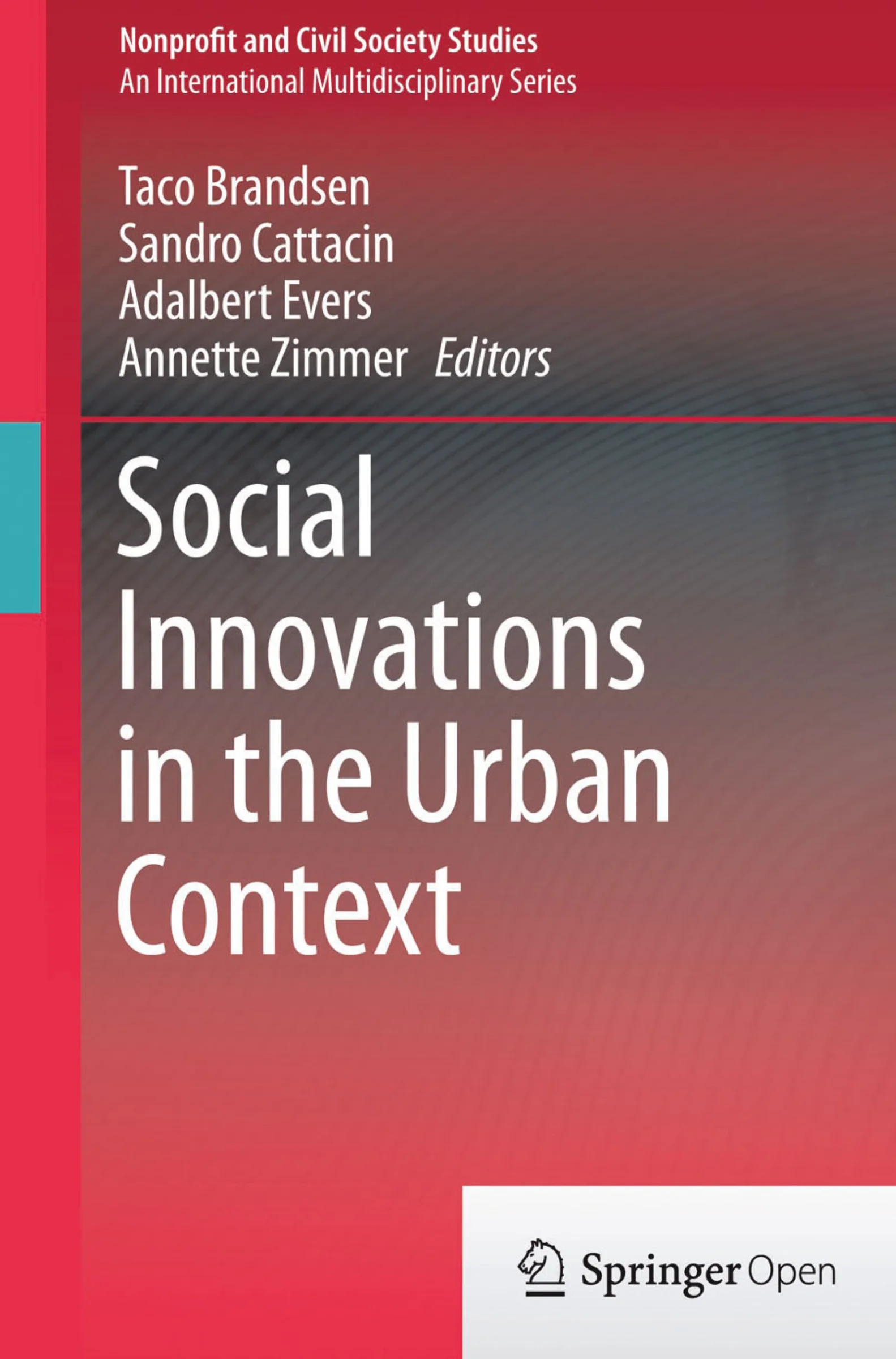
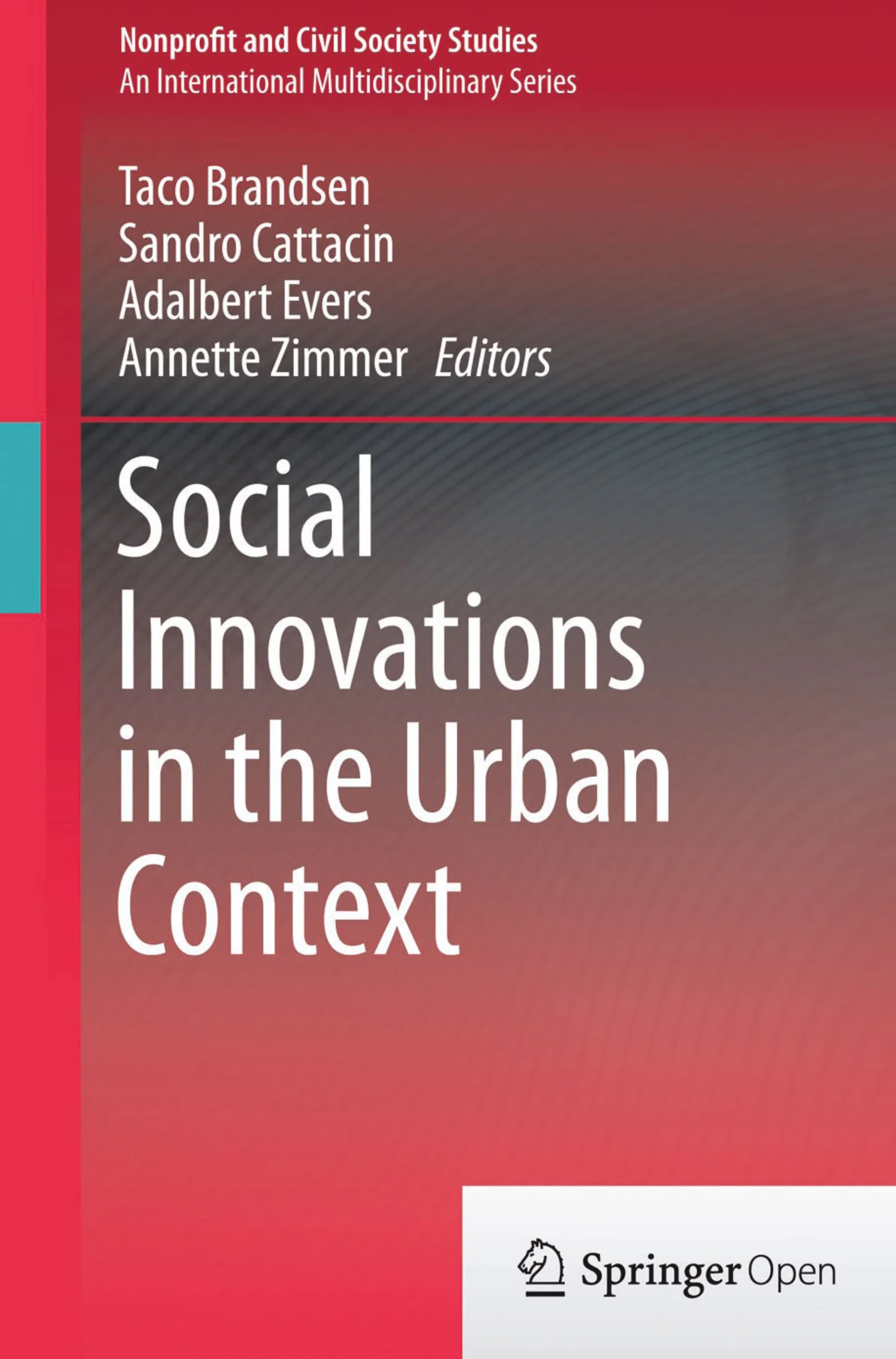
Social Innovations in the Urban Context is an open-access edited volume published by Springer International Publishing AG. The editors are Taco Brandsen, Sandro Cattacin, Adalbert Evers, and Annette Zimmer, and the book reports findings from the EU-funded research project WILCO (Welfare Innovations at the Local Level in Favour of Cohesion, 2010–2014), coordinated by Radboud University Nijmegen and involving universities from ten European countries.
Why cities and local welfare matter
The book argues that European cities are “microcosms” where social inequalities and exclusion become highly visible, making local welfare systems central to tackling inclusion challenges. It emphasizes that cities across Europe generate many bottom-up ideas from residents, professionals, and policymakers, but warns against treating “social innovation” as automatically positive or as a substitute for existing welfare arrangements.
What “social innovation” means in this research
The authors describe social innovation as a contested “buzzword” in policy circles and note that definitions range from very broad (novel solutions to social needs) to more transformative ones (changing governance and power relations). For WILCO, social innovations are understood as both products and processes: ideas translated into practical approaches that are new in the local context, often emerging from networks and joint action beyond standard government and business routines. The book also stresses uncertainty and risk in innovation processes, including the possibility of failure and conflict.
Methods and evidence base
WILCO studied 20 European cities (two per country) and examined inequality and exclusion in three key policy fields: childcare, employment, and housing. The project combined analysis of the Eurostat Urban Audit with extensive qualitative research, including hundreds of interviews with affected groups, policymakers, administrators, and civil-society actors, plus document analysis and city-level stakeholder meetings. It identified 77 local social innovations (typically 3–5 per city) and analysed how local contexts shape their development and sustainability.
Urban governance typology and policy implications
A central contribution is a typology of four urban welfare governance arrangements shaping opportunity structures for social innovation. These include “governance of cooperation” (seeking synergies between economic and social policy and relying on welfare mixes), “governance of growth” (prioritising economic interests and individualising social problems), “governance of social challenges” (state-led, solidarity-oriented welfare provision), and a conflictual type where economic and social investment priorities compete. Across cities, the book highlights common trends such as co-production, capability-building approaches, democratic decentralisation, and more territorially focused, preventive interventions.
Housing-relevant insights for sustainable and inclusive urban development
Housing appears as one of the core urban policy fields examined, alongside employment and childcare, with attention to how local welfare regimes respond to affordability pressures, segregation, and renewal. Case material includes, for example, co-produced housing in a major urban renewal district in Lille, where resident mobilisation influenced renewal plans and led to participatory self-rehabilitation approaches. The book links housing challenges to broader governance choices: how cities balance growth strategies with social inclusion, how non-profits and municipalities share responsibility, and how preventive and investment-oriented frames shape long-term outcomes for vulnerable groups.