Context
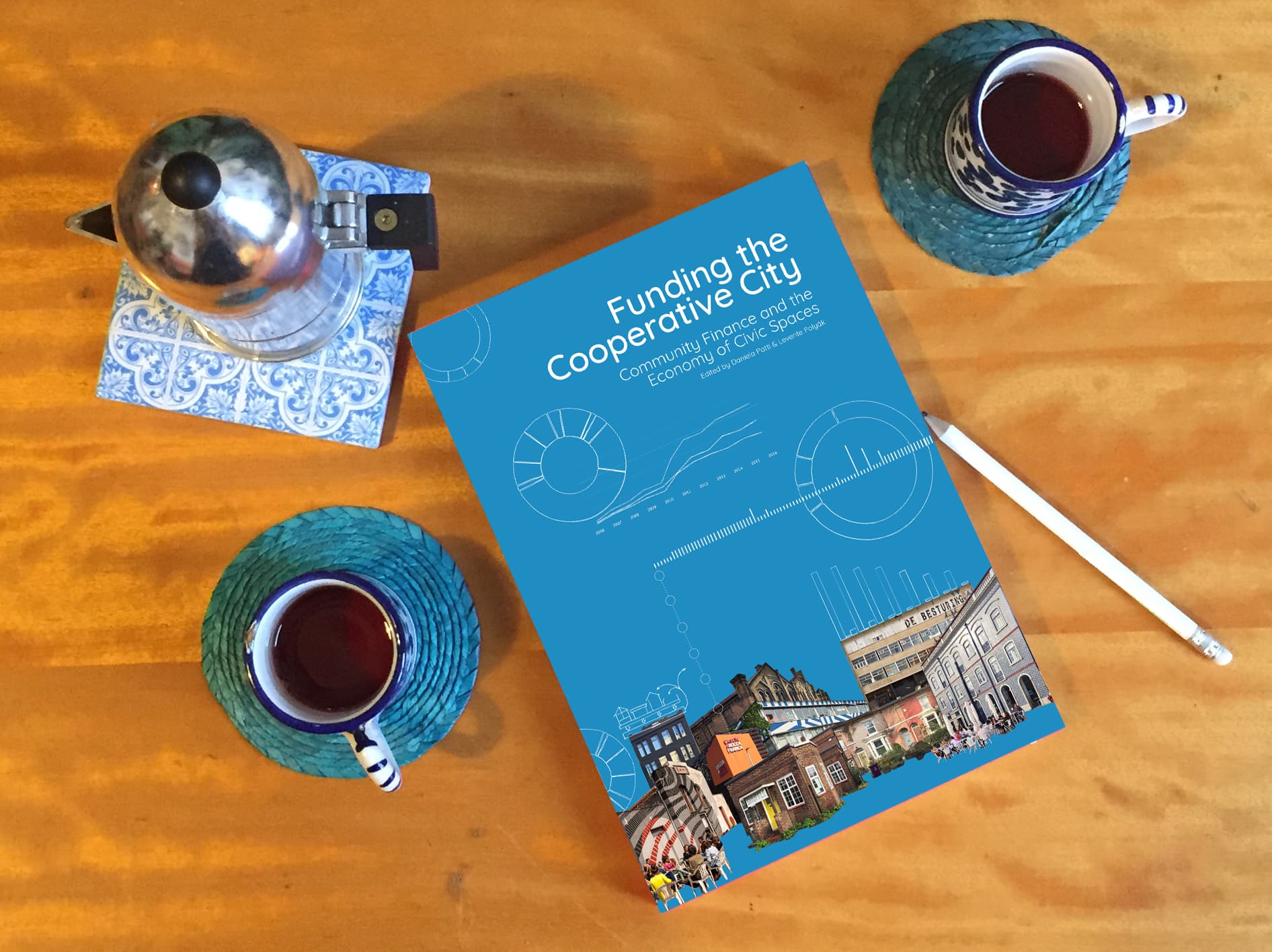
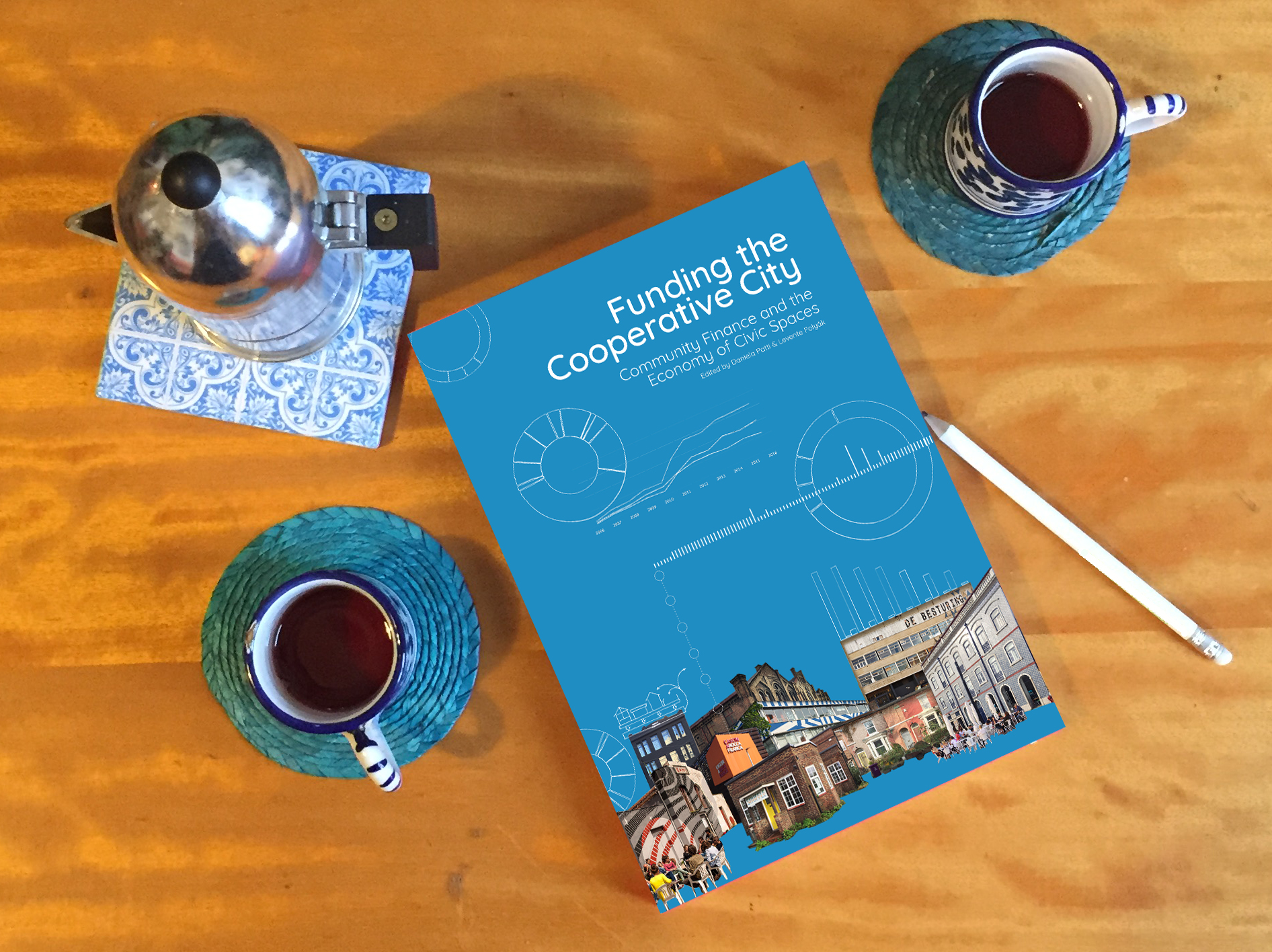
“Funding the Cooperative City: Community Finance and the Economy of Civic Spaces” is a 2017 publication edited by Daniela Patti and Levente Polyak and published by Cooperative City Books (Vienna) as part of the Cooperative City / Eutropian research and advocacy work. The book is a collection of contributions (chapters and case studies) examining how civic spaces and community-led urban initiatives in Europe secure access to space and finance, and how these practices relate to broader shifts in urban governance and real-estate markets.
What the book is about
The publication frames “civic spaces” as places that may look similar to commercial or publicly managed venues but operate differently in terms of access, community support, financial arrangements, and economic model. It situates these spaces in the context of financialised real estate markets and austerity-era pressures on public budgets, arguing that communities increasingly need new tools to access and hold space for social, cultural, educational, and welfare functions.
Accessing capital: institutions and tools
A major section focuses on how community initiatives can fund acquisition, renovation, or long-term operation of buildings and land when conventional profit-driven finance is a poor fit. The book highlights ethical and cooperative banks as well as foundations that aim to counter speculation by investing in projects with social objectives. It also discusses crowdfunding and crowdinvesting as ways to mobilise dispersed resources through platforms, while noting that national regulations can limit certain models (for example, peer-to-peer lending).
Ethical banks and foundations (examples)
Case-focused contributions describe ethical finance actors such as Banca Etica (Italy) and Coop57 (Spain) that provide financial services oriented toward social and solidarity economy projects. The book also presents anti-speculation foundations and models such as Stiftung trias, which work to remove property from speculative markets and support long-term, community-serving uses.
Securing affordability and long-term stewardship
Across multiple chapters, the book presents strategies that separate use-value from speculative exchange-value. It includes discussion of Community Land Trusts as a model to secure community access to land and support affordable housing, and examines cooperative and shared-ownership structures that can stabilise civic initiatives beyond short leases and rising rents.
Governance, partnerships, and European context
The publication describes how community-led projects interact with municipalities and policy frameworks across different European regions (including Southern, Central/Eastern, and Northwest Europe). It covers both conflictual and collaborative pathways, including public-civic partnerships and EU-era policy instruments relevant to cities. It also notes recurring barriers such as bureaucratic constraints, uneven legal environments, and limited access to financing for non-profit or low-return projects.
Key takeaway themes
The book’s case studies and essays collectively document a European landscape in which communities respond to vacancy, privatisation, and housing affordability pressures by building new financial alliances, experimenting with cooperative ownership, and developing governance arrangements to keep civic spaces and housing accessible over the long term.