Introduction – Resource Context
The Regional Housing Programme (RHP), a European initiative focused on sustainable and inclusive housing, published a detailed report on the closure of the Konik Camp in Montenegro. The article documents the final relocation of the remaining 51 families from the long‑standing refugee settlement to newly constructed apartments, marking the end of Europe’s longest operating refugee camp. The RHP, established to support vulnerable populations through housing solutions, collaborates with national ministries, EU bodies and international donors to deliver socially sustainable dwellings.
Project Funding and Scope
The closure was made possible by substantial financial commitments: the European Union contributed €23 million to the RHP’s Montenegrin programme, while earlier EU Instrument for Pre‑Accession Assistance (IPA) funds financed 48 apartments in 2015. In November 2017 the RHP added 120 apartments, and through cost‑saving measures an additional 51 units were built, enabling the final families to move in. Overall, the project delivered 219 new homes, demonstrating a cost‑effective approach to large‑scale refugee housing.
New Sustainable Housing Units
The newly built apartments are purpose‑designed social flats owned by the capital city of Podgorica. They meet contemporary sustainability standards, integrating energy‑efficient construction, durable materials and communal infrastructure that reduces long‑term maintenance costs. By replacing temporary sheds and containers with permanent, climate‑responsive dwellings, the project advances the EU’s broader objectives of sustainable urban development and social inclusion.
Stakeholder Collaboration
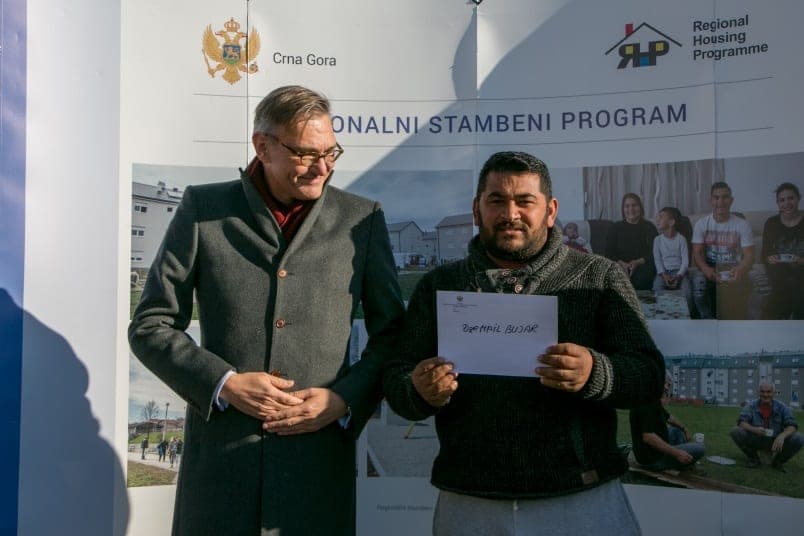
Key officials highlighted the collaborative nature of the endeavour. Kemal Purisic, Montenegro’s Minister of Labour and Social Welfare, affirmed the Ministry’s role in finalising the closure alongside donor partners. Deputy Mayor Sladjana Vujacic underscored the city’s investment in land and infrastructure, while representatives from Serbia, Croatia and Bosnia‑Herzegovina expressed regional solidarity. Ambassadors from the EU, Germany, the United States and UNHCR also praised the project’s impact on integration and social cohesion.
Beneficiary Impact
Beneficiary testimonies illustrate the human dimension of the housing solution. Sebastian Krasnici, who arrived in 1999, now enjoys a stable home for his six children after completing vocational training. Over 700 children from the former camp are now enrolled in eight Podgorica schools, with daily transportation provided, enhancing educational access and long‑term social mobility.
Regional Significance and Replicability
The Konik Camp closure serves as a model for sustainable refugee settlement strategies across Europe. By leveraging EU funding, national policy, and efficient project management, the RHP demonstrated how long‑term, environmentally conscious housing can replace temporary structures. The initiative aligns with EU goals for climate‑neutral construction and showcases the potential for similar programmes in other post‑conflict regions.
Further Information
For additional details, the RHP Secretariat can be contacted at ceb‑rhp@coebank.org, and the full report is available on the programme’s website.