The community
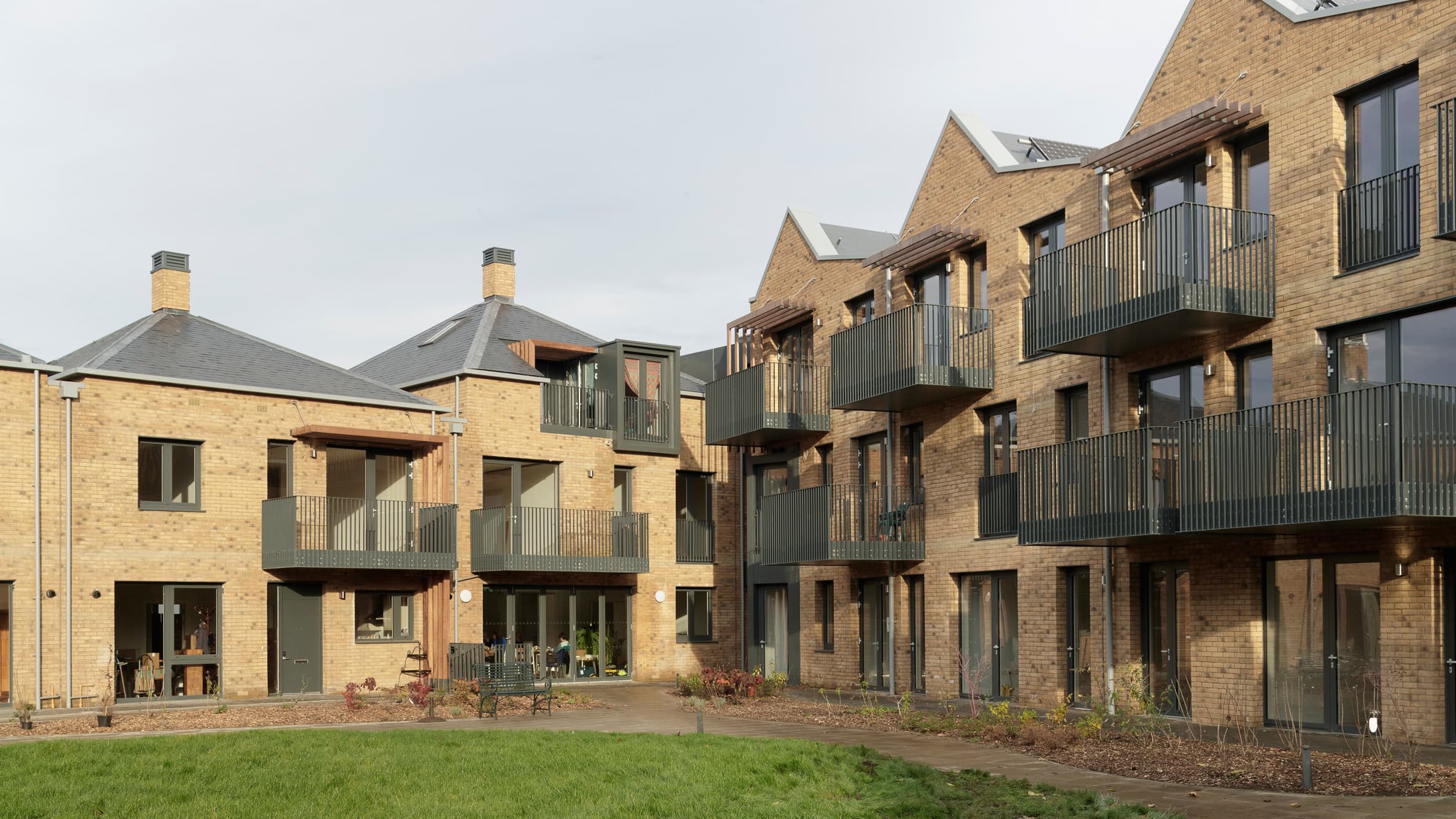
New Ground in Barnet, North London, is the UK's first established senior co-housing community, and it is for women only. The Older Women's Co-Housing group (OWCH) spent 18 years getting past institutional hurdles and ageism before 26 women aged 52 to 89 moved in at the end of 2016. Hanover Housing Association bought the site on the group's behalf in 2010 and developed it; planning permission came in 2013.
Homes and tenure
There are 25 homes: 17 private leasehold flats of one to three bedrooms (£269,000 to £440,000) and eight socially rented flats owned and managed by Housing for Women, plus a common room, a laundry, a guest suite and a large shared garden. The residents manage the shared spaces themselves through more than 18 working groups.
The research
Melissa Fernández Arrigoitia (Lancaster University) and Karen West (University of Bristol) followed the community from moving in, 2016–18, with eighteen residents (66 per cent of the community): interviews, questionnaires, diaries and focus groups. Fifteen women completed the detailed health and wellbeing survey in their first six months. The paper appeared in Ageing & Society (2021, vol. 41, issue 7, pp. 1673–1696; online 2020).
Two questions
Is senior co-housing only for a dedicated, activist and privileged few? And is it just a retirement lifestyle choice grounded in age denial, individualism and risk management?
What they found
The authors call their findings tentative, but they point to a model of later-life living built on collectivist values: interdependence, commitment, learning and even love. Members sign up to an "ethics of co-housing" (self-organisation, pulling one's weight, balancing individual and collective interests), and applicants are interviewed. All but one of the women had never lived communally before, which counters the idea that co-housing suits only people with a history of it. Adjusting takes time, founders and newer members can pull in different directions, and the community is revisiting social diversity and its allocation criteria through working groups.
Why it matters
New Ground widens later-life housing beyond the choice between staying "independent" at home and moving into sheltered housing, extra care or residential care. When the paper was written, the UK Co-housing Network had 11 senior schemes registered as in development.