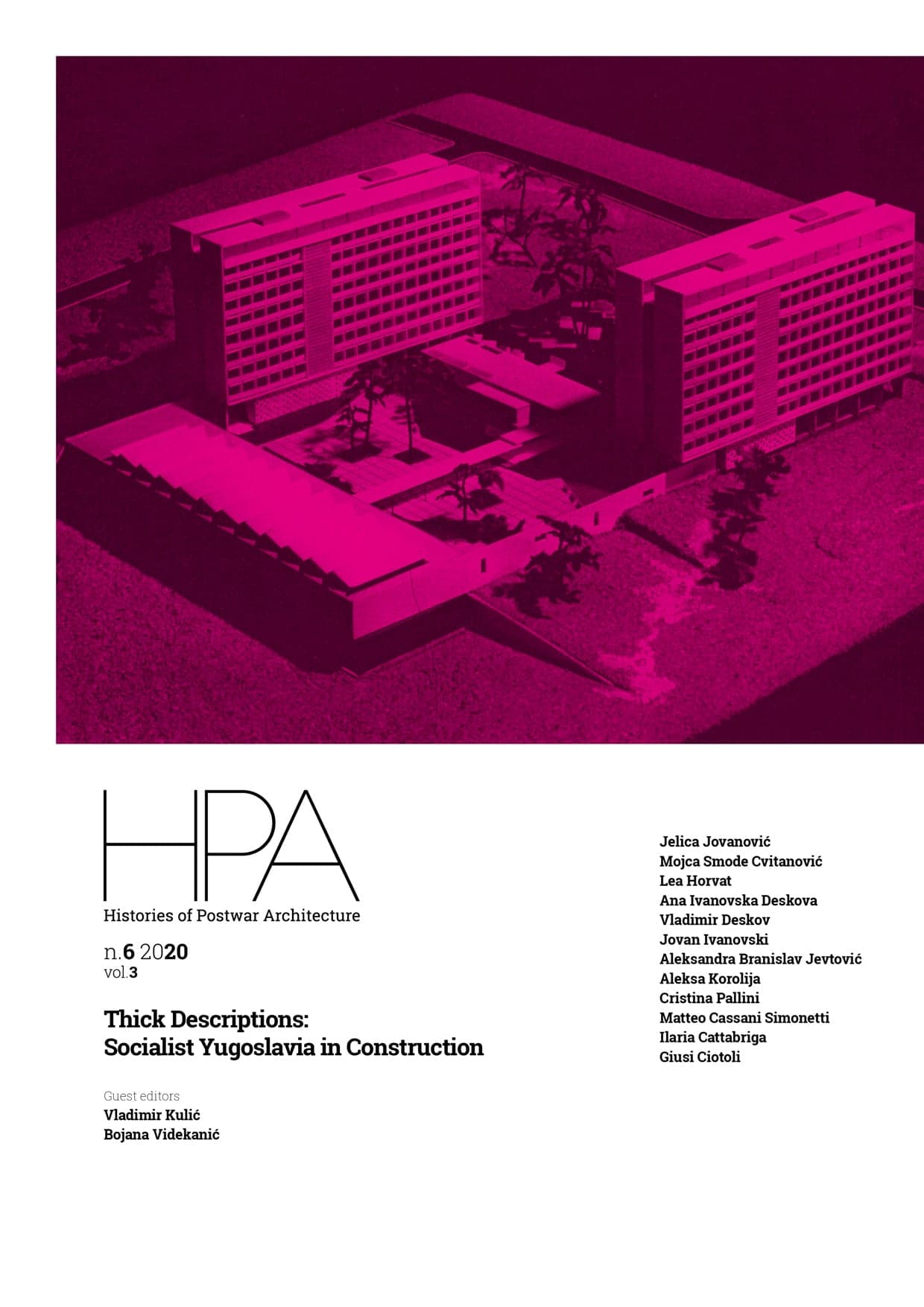
Overview of the Resource
The paper “Housing Yugoslav Self‑Management: Blok 5 in Titograd” is an academic article published in the series Histories of Postwar Architecture (2020). It was authored by Lea Horvat, a MA‑qualified art historian and comparative literature scholar from the University of Zagreb, currently a PhD candidate at the University of Hamburg and teaching fellow at Humboldt University, Berlin. The publisher, Histories of Postwar Architecture, is a scholarly platform focusing on architectural developments after World War II. The article is publicly accessible via the university’s online repository.
Context of Blok 5 in Titograd
Blok 5, constructed between 1977 and 1984 in Titograd (now Podgorova, Montenegro), exemplifies the Yugoslav model of self‑management (samoupravljanje) in mass housing. Designed by architect Mileta Bojović, the settlement features flexible floor plans, over‑stretched façades, and a modular layout intended to empower residents in decision‑making about their living environment. The paper positions Blok 5 as one of the most enduring implementations of this ideology.
Key Data on Design and Construction
- Construction period: 1977‑1984
- Location: Titograd, Montenegro
- Architect: Mileta Bojović
- Funding model: Self‑management contributions (samodoprinos, SIZ)
- Structural characteristics: adaptable units, communal spaces, and façade extensions designed to accommodate varying household sizes.
Comparative Ideological Analysis
The study contrasts Yugoslav self‑management with Western Marxist interpretations of housing agency. While Western models often emphasized state‑directed provision, Yugoslavia’s approach distributed financial and organisational responsibilities to resident collectives, fostering a hybrid of public oversight and private initiative. This distinction is highlighted through archival records and stakeholder testimonies.
Stakeholder Dynamics During Construction
The research outlines tensions among architects, municipal authorities, and resident committees. Conflicts arose over budget allocations, design modifications, and the extent of resident participation. These frictions are documented through references to municipal archives and oral histories, illustrating the complex negotiation processes inherent in self‑managed projects.
Post‑Socialist Afterlife of Blok 5
Following the dissolution of Yugoslavia, Blok 5 experienced divergent trajectories. Some units retained collective management structures, while others shifted to private ownership or faced neglect. The paper examines how the original self‑management principles have been adapted, abandoned, or revived in contemporary urban policy debates in Montenegro.
Sustainable Lessons for Modern Housing
Blok 5’s emphasis on flexible design, resident involvement, and modular construction offers insights for sustainable housing initiatives across Europe. The adaptability of floor plans reduces the need for extensive renovations, while collective financing models can lower individual financial burdens and promote community cohesion. These aspects align with current EU sustainability goals targeting energy efficiency, social inclusion, and resilient urban development.
References Supporting the Analysis
The article draws on a broad bibliography, including works by Archer (2013) on housing inequities, Burzan (2016) on Podgorica’s chronology, and numerous studies on Yugoslav architecture and urban planning. These sources provide a scholarly foundation for the arguments presented, reinforcing the factual basis of the case study.