Context and Origin of the Report
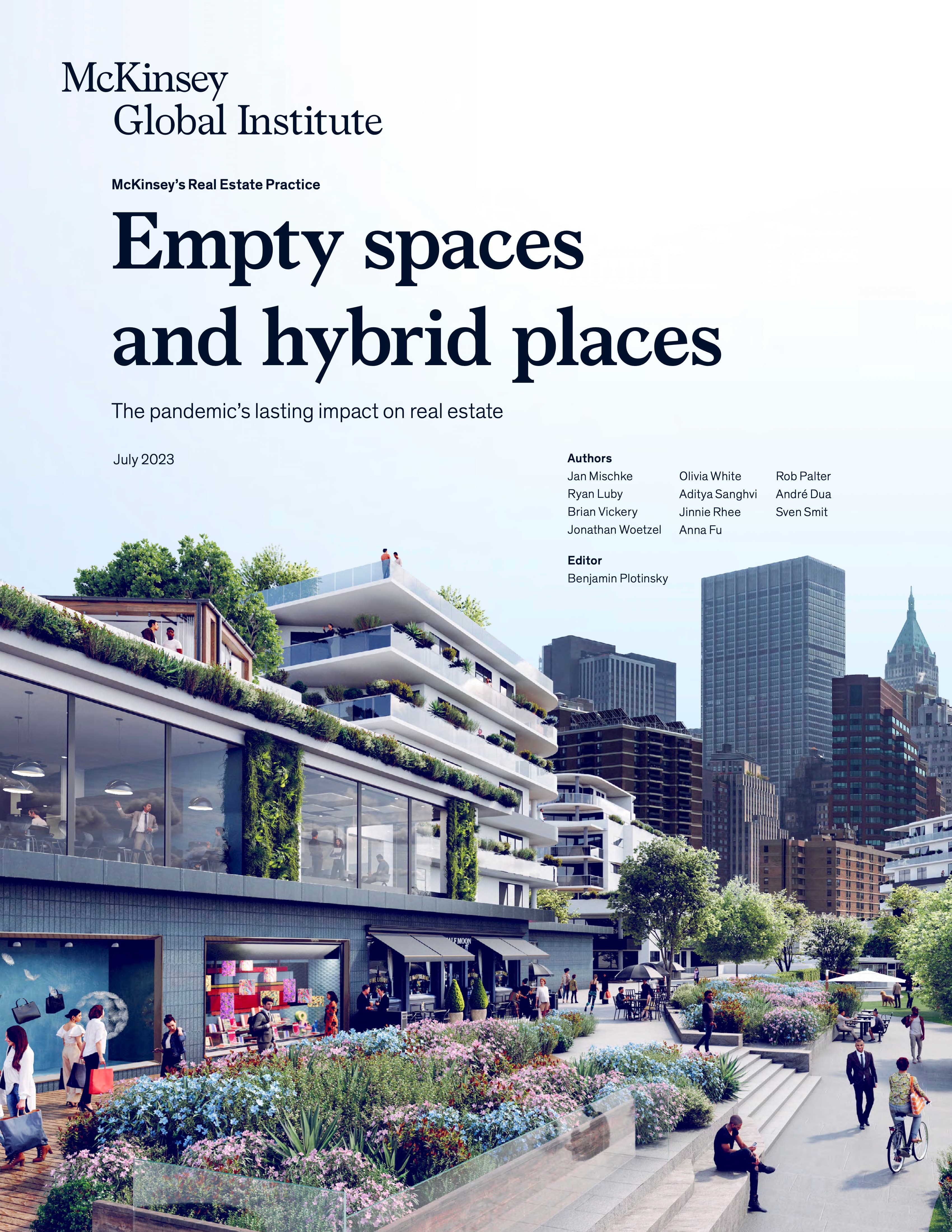
The McKinsey Global Institute (MGI), the research arm of McKinsey & Company founded in 1990, produced this study on the pandemic’s lasting impact on real‑estate markets. The authors include Jan Mischke, Ryan Luby, Brian Vickery, Jonathan Woetzel, Olivia White, Aditya Sanghvi, Jinnie Rhee and Anna Fu, among others. MGI’s mission is to provide fact‑based analysis for policy makers and business leaders, and the report is publicly available on the McKinsey website.
Hybrid Work Reduces Office Attendance
Across the ten “superstar” cities examined, office attendance has stabilised at roughly 30 percent below pre‑pandemic levels. In the United States, attendance fell by up to 90 percent in early 2020 and recovered to an average of 3.5 days per week by October 2022, still 30 percent lower than before. Cities with expensive housing and a high share of knowledge‑economy workers (e.g., San Francisco, New York) show the steepest declines, with office‑attendance gaps of 30‑40 percentage points.
Out‑Migration and Residential Shifts
The pandemic accelerated out‑migration from urban cores. New York City lost 5 percent of its core population between mid‑2020 and mid‑2022, San Francisco 6 percent, and London 7 percent. While suburban populations grew, vacancy rates in urban cores rose everywhere, from 0.8 percentage points in Tokyo to 9.9 percentage points in London. Home‑price growth slowed markedly in cores, rising eight percentage points slower in US superstar cities than in suburbs, and 13 percentage points slower than in non‑superstar cities.
Retail Footfall and Online Shopping
Foot traffic near stores remains 10‑20 percent below pre‑pandemic levels, with urban cores faring worse than suburbs. In London and Paris foot traffic fell by about 80 percent at the pandemic’s start, while New York and San Francisco saw 50‑60 percent drops. Online‑spending share spiked in 2020 and has stayed higher than pre‑pandemic trends, contributing to sustained lower retail demand in office‑dense neighbourhoods.
Demand Projections to 2030 – Office Space
MGI’s moderate scenario forecasts a 13 percent reduction in office‑space demand across the median city by 2030, with San Francisco facing a 22‑percent decline and Houston a modest 2‑percent increase. The severe scenario predicts up to a 38 percent drop in the most affected cities. Excess supply, defined as vacancy beyond the structural rate, could reach 20 percent in cities like Shanghai and exceed 15 percent in many others.
Demand Projections to 2030 – Residential Space
Residential demand remains positive in most urban cores, except Paris and San Francisco where it may fall. In the moderate scenario, median demand grows modestly, with Houston, Beijing and Tokyo showing the strongest increases (around 8‑10 percent). However, the “donut effect” – higher prices in suburbs and stagnation in cores – persists, limiting affordability improvements.
Demand Projections to 2030 – Retail Space
Retail demand is expected to fall by 9 percent on average in the moderate scenario, with the strongest declines in London (up to 22 percent) and milder impacts in Tokyo (as low as 2 percent). The severe scenario projects up to a 31 percent reduction. Factors driving these trends include continued remote‑work‑related lower footfall and entrenched e‑commerce growth, especially in the United Kingdom.
Sustainable Housing Implications
The analysis highlights opportunities for sustainable, mixed‑use development. Converting under‑used office buildings to residential or hybrid uses could modestly increase housing stock – less than 3 percent of total residential space even if all excess office space were repurposed. Adaptive‑reuse projects can improve energy efficiency by replacing older, carbon‑intensive structures. Nevertheless, the scale of conversion is limited, and broader affordability challenges remain, especially in high‑price cores.
Strategic Recommendations for Stakeholders
- Encourage mixed‑use zoning to diversify neighbourhoods and reduce reliance on single‑use office districts.
- Prioritise retrofitting existing buildings for energy efficiency rather than new construction alone.
- Align public‑private incentives to support conversion of surplus office space into affordable housing.
- Monitor e‑commerce trends and foot‑traffic data to guide retail‑space planning, favouring flexible formats that can adapt to changing consumer behaviour. These findings provide a data‑driven foundation for policymakers, developers and investors seeking to shape post‑pandemic urban environments that are resilient, affordable and environmentally sustainable across Europe.