Overview of the Study
The paper “Emerging commons: Cooperative housing in Switzerland” is authored by Claudia Sanchez‑Bajo and published by OpenEdition Journals under the Cidades, Comunidades e Territórios series (Autumn Special Issue 2024). It presents research funded by the European Union’s UIDB/03127/2020 programme and explores how legal, non‑speculative shared ownership models reshape Swiss housing, fostering participation, cohesion and regulated internal use.
Scope and Motivation
The research addresses the growing challenge of securing quality, affordable housing in Switzerland. It links the rise of housing cooperatives to civil‑society responses that aim to de‑commodify housing, drawing on Polanyi’s double‑movement theory and Elinor Ostrom’s commons framework to analyse motivations and practices of cooperative members in Geneva and Zurich.
Theoretical Foundations
Polanyi’s critique of market‑driven housing and Ostrom’s principles of common‑pool resources provide the analytical lenses. The study adopts a case‑study methodology (Yin 2017) to examine how cooperative members manage rights such as access, withdrawal, management, exclusion and alienation, and how these bundle of rights support sustainable, self‑managed housing.
Methodology and Data Collection
Fieldwork involved semi‑structured interviews with members of five cooperatives (La Rencontre, CODHA Rigaud, OuVerture, Luciole and Kalkbreite) conducted in September 2023. Interviews were recorded, transcribed and coded using Atlas.ti, applying grounded‑theory techniques to identify recurring motivations (de‑commodification, solidarity, participation) and practices (shared spaces, renewable energy, mutual learning).
Key Findings: Motivations
The dominant motivation for members is to de‑commodify housing, seeking affordable, stable homes outside speculative markets. Additional motivations include solidarity‑based sharing, mutual learning, and the desire for democratic decision‑making regarding financial and environmental sustainability.
Key Findings: Practices
Cooperatives implement shared practices such as:
- Cost‑rent rents 20‑30 % below market rates (up to 60 % lower in Zurich).
- Collective decision‑making through general assemblies and consensus.
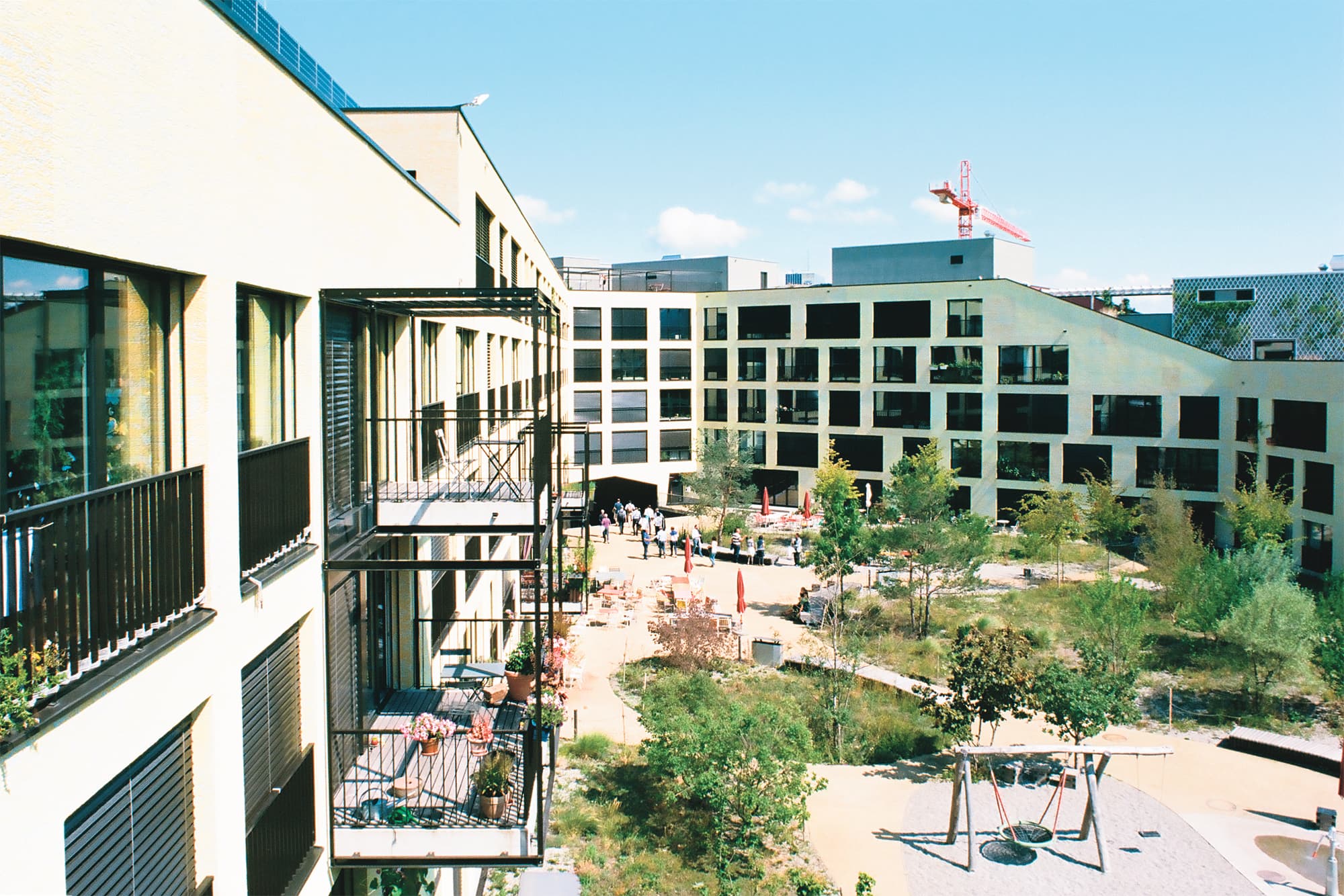
- Shared facilities (common rooms, workshops, gardens, compost, solar panels).
- Flexible entry and exit rules, supported by solidarity funds and low‑cost equity contributions (e.g., CHF 200 joining fee, CHF 1 000 share certificate).
Sustainability and Innovation
Projects showcase high sustainability standards: Luciole’s composting and wastewater treatment won the 2018 Cantonal Sustainable Development Award; Kalkbreite’s solar installations contributed to a 10 % national increase in renewable installations. Several cooperatives achieve Minergie P Eco® certification, producing up to 90 % of their electricity on‑site.
Impact on Housing Market
Swiss cooperative housing accounts for roughly 22.9 % of owned rental stock in Zurich (2020‑2022) and provides 20‑55 % cheaper rents compared with private rentals. The sector’s growth rate (7.2 % annually 2000‑2023) exceeds that of the broader market, indicating a scalable model for affordable housing.
Governance and Rights
Cooperatives operate under a bundle of rights framework: access, withdrawal, management, exclusion and alienation. Governance is democratic (one member = one vote) and regulated by ethical charters required by the Federal Housing Law (2003) and the Swiss Housing Cooperatives Federation (WBG).
Recognition and Awards
Cooperatives have received multiple accolades, including the European Architecture Award (CODHA Rigaud, 2020), the World Habitat Award (La Ciguë, 2024), and several cantonal sustainable‑development prizes, underscoring their architectural and social innovation.
Relevance for Pan‑European Sustainable Housing
The Swiss case demonstrates that legally protected, non‑speculative cooperative models can deliver affordable, energy‑efficient housing while fostering community cohesion and democratic governance. The findings suggest that similar frameworks could be adapted across Europe to address housing shortages, reduce carbon footprints and strengthen local participation in urban development.