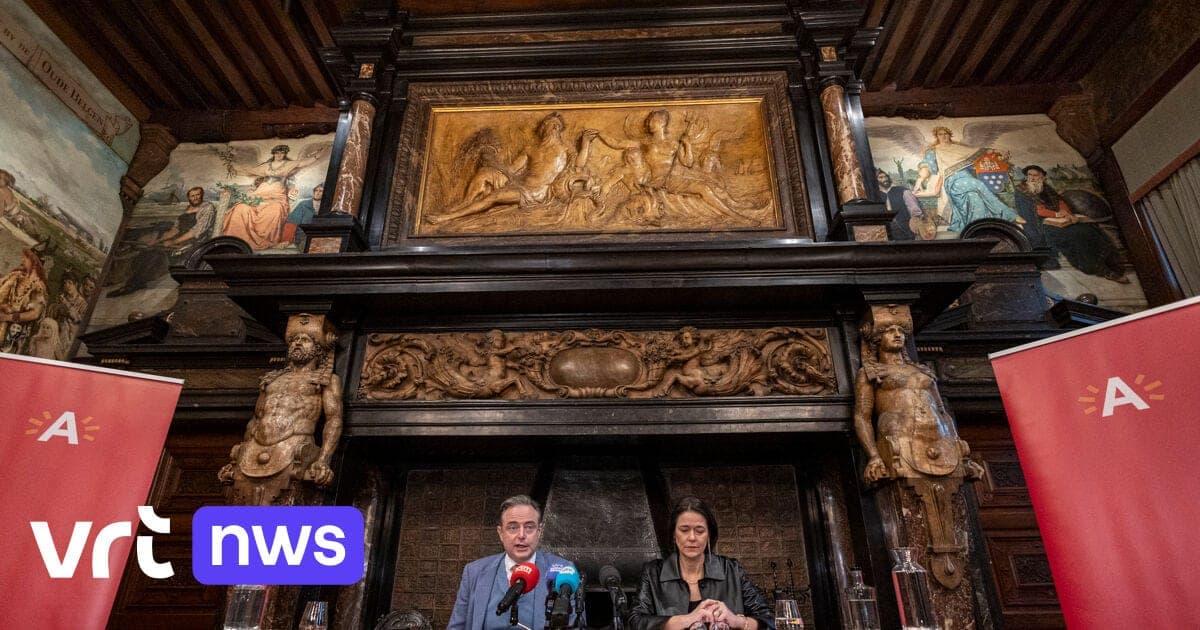
Overview of the Antwerp Coalition Agreement
The document “Dit staat in het Antwerpse bestuursakkoord” is an automatically extracted news/feature article published by VRT NWS, authored by journalist Bente Vandekeybus. It presents the key points of the 2024‑2025‑2030 coalition agreement between N‑VA and Vooruit for the city of Antwerp, focusing on social housing, mobility, urban development and sustainability.
Ambitious Sustainable Housing Targets
The agreement commits to delivering 7 500 new or renovated social homes, aiming to alleviate the current waiting list of roughly 40 000 households. Social dwellings that no longer meet modern standards will be thoroughly refurbished or rebuilt. In addition to social housing, the city will promote affordable rental units, such as the recent 20 units on Oudemansstraat and the 100 apartments at the Fierensblokken project. New construction will often be vertical, allowing higher‑density development on existing sites while preserving open space.
Climate‑Friendly Building Standards
Every new or renovated dwelling is required to include three visible trees, provide at least 30 percent climate‑green space, and maintain 300 metres of accessible green area. The policy favours “future trees” with large canopies and long lifespans, contributing to increased urban tree volume and improved air quality.
Sustainable Mobility Measures
The coalition sets clear rules for speed‑pedelecs and mopeds: vehicles exceeding 25 km/h must use the road or dedicated fast‑cycle lanes, with police monitoring for unsafe behaviour. Public transport will be expanded, including electrified or hydrogen‑powered buses, night trams, and a more extensive Waterbus network serving the harbour. A “Havenbus” concept will integrate existing shuttle services into a collective public system. Plans also include a cyclist‑friendly crossing at the Tijsman tunnel and a future cycling tunnel.
Public Transport Expansion Plans
New tram lines will connect the Bisschoppenhoflaan, the University Hospital (UZA) and various districts, while the metro network will be modernised and extended. The city will request that De Lijn operate night trams, and the final unused metro carriages will be put into service.
Urban Green Infrastructure and Public Spaces
The agreement emphasises pedestrian zones, notably the “Via Sinjoor” corridor linking the central station to the Scheldt, and the renovation of Meir as a long‑term attractive shopping street. Green infrastructure will be integrated into new developments, with mandatory tree planting and climate‑green percentages.
Energy and Infrastructure Initiatives
The city will pursue renewable energy solutions, including the electrification of public fleets and the promotion of sustainable mobility hubs. The harbour area will be better linked to public transport, and the Waterbus will be further expanded to improve connectivity.
Implementation and Governance
The coalition plans a refresh cycle in Q3 2026, with automatic approval under the tenant library‑promotion policy. Monitoring mechanisms will track waiting‑list reductions, housing delivery, and transport usage. The agreement also addresses social cohesion, proposing neutral uniform attire for public‑service staff to reduce polarisation.
Key Figures at a Glance
- Social housing target: 7 500 units
- Current waiting list: ≈ 40 000 households
- Affordable rentals opened recently: 20 units (Oudemansstraat) + 100 units (Fierensblokken)
- Speed‑pedelec speed limit for road use: > 25 km/h
- Green‑space requirement per dwelling: 3 trees, 30 % climate‑green, 300 m accessible green These facts illustrate Antwerp’s comprehensive strategy to combine sustainable housing, climate‑friendly urban design and inclusive mobility for a resilient future.