Overview of the Review
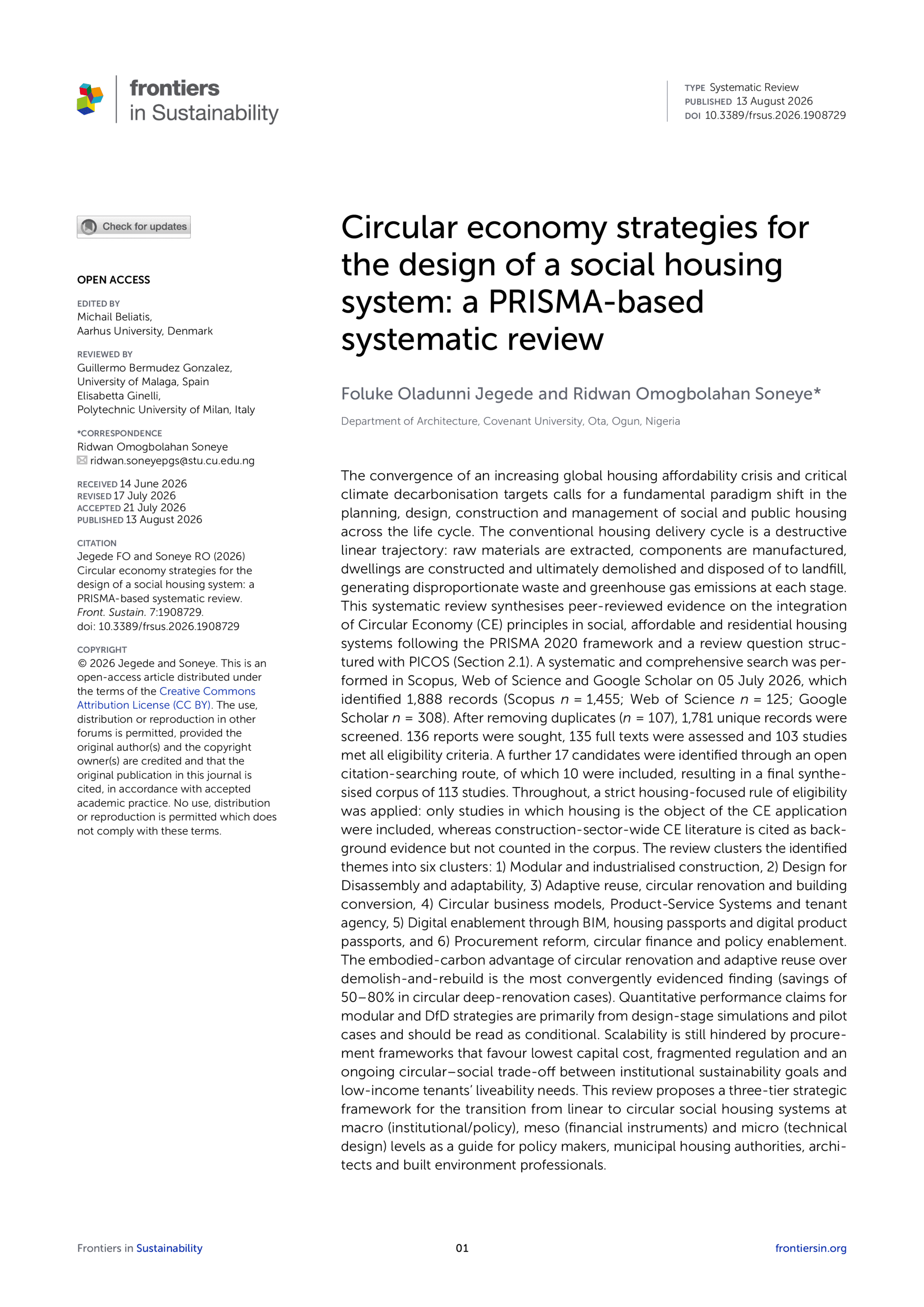
This systematic review, published by Frontiers Media SA, examines circular‑economy strategies for designing social housing across Europe. Although the authors are not individually named, the journal’s reputation for rigorous peer‑review and interdisciplinary research underscores the study’s credibility. The paper follows PRISMA guidelines, ensuring transparent methodology and comprehensive coverage of relevant literature.
Key Strategies Identified
The analysis highlights three primary interventions that deliver substantial carbon reductions: deep renovation of existing dwellings, adaptive reuse of under‑utilised buildings, and innovative financing frameworks that leverage public‑private partnerships. Deep renovation, which includes insulation upgrades, high‑efficiency heating systems and renewable energy integration, consistently achieves carbon cuts of 50‑80 %. Adaptive reuse—converting former industrial or commercial structures into residential units—offers similar emission benefits while preserving urban fabric and cultural heritage. Financial innovations, such as green bonds and performance‑based contracts, facilitate the upfront investment required for large‑scale retrofits.
Quantitative Findings
Across the reviewed studies, deep renovation projects report average primary energy savings of 55 % and operational CO₂ emission reductions ranging from 50 % to 80 %. Adaptive reuse cases show lifecycle emission reductions of up to 70 % compared with new construction, owing to avoided material extraction and embodied carbon. Financing mechanisms that tie repayment to energy‑performance outcomes improve project viability, with reported internal rates of return between 6 % and 12 % in several European pilot programmes.
Implications for Social Housing Design
The review underscores that integrating circular‑economy principles can transform social housing stock into low‑carbon, resilient assets. Deep renovation not only lowers emissions but also enhances thermal comfort and reduces energy bills for low‑income households. Adaptive reuse expands housing supply in dense urban areas without the environmental costs of new builds. Innovative financing reduces fiscal pressure on municipalities, enabling broader rollout of sustainable upgrades.
Policy Recommendations for Europe
To accelerate adoption, the authors recommend harmonising building codes to incorporate deep‑retrofit standards, establishing EU‑wide funding pools for circular‑economy projects, and incentivising private investors through tax credits linked to verified energy savings. They also call for standardised metrics to assess embodied carbon and for cross‑border knowledge exchange platforms that share best practices among member states.
Future Research Directions
The review identifies gaps in long‑term performance monitoring of retrofitted social housing and calls for more longitudinal studies to validate projected carbon savings. It also highlights the need for socio‑economic assessments that examine occupant satisfaction, health outcomes and community cohesion resulting from circular‑economy interventions. Further investigation into digital tools for energy management and the scalability of financing models is suggested to support widespread implementation.