Resource context
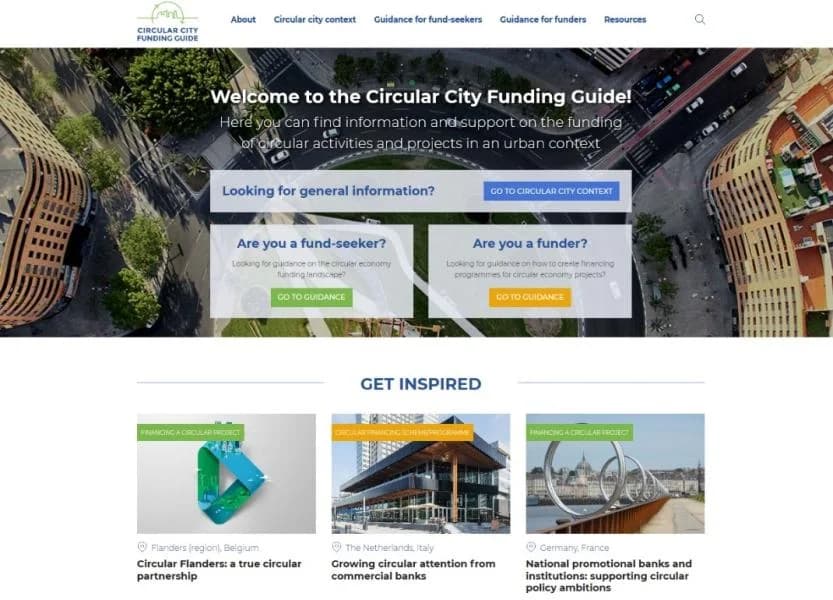
“Circular City Funding Guide” (2024) is a web-based guide produced by the Circular City Funding Guide initiative under the Urban Agenda Partnership for Circular Economy. It is published by the Circular City Funding Guide and was developed by external service providers together with experts from the European Investment Bank (EIB), mobilised and funded by the European Investment Advisory Hub. The resource is intended for municipalities, businesses, and other urban actors that need practical information on how to finance circular economy initiatives in cities; authorship is not individually credited (“not named”).
Core aim and audience
The guide addresses a recurring barrier for cities that want to transition to circular economy models: access to appropriate funding and finance. It positions circular approaches as increasingly important in urban contexts and frames financing as a prerequisite for moving from experimentation to scaling. While relevant to multiple urban sectors, its framing is particularly applicable to sustainable housing and neighbourhood development, where retrofits, material reuse, and circular construction require early-stage preparation work and bankable project structures to reach deployment at scale.
Two-part structure of the guide
The guide is organised around two main deliverables. First, it provides information on financing and funding sources that can support circular initiatives and projects. Second, it provides guidelines for setting up funding programmes designed to accelerate the transition to a circular economy. This combination aims to help local authorities and partners both navigate existing opportunities and build their own enabling mechanisms for future circular projects.
Financing instruments covered
Although the title highlights “funding” (often associated with grants and subsidies), the guide explicitly broadens the scope to cover multiple financing types and sources. It references financing structures such as debt, equity, and guarantees, recognising that circular projects may need blended approaches depending on scale, risk profile, and revenue model. By describing different instrument types, the resource supports stakeholders who are preparing projects for implementation and who need to match project needs to suitable capital sources.
Rationale: why circular city projects struggle to scale
The guide notes that many European cities have experimented with innovative circular projects for some time, yet upscaling and large-scale deployment have remained limited. It identifies difficulty accessing funding as a key factor contributing to slow progress. By consolidating knowledge on funding and finance, the guide aims to reduce friction in project preparation and help more initiatives move from pilots to broader adoption, including in areas connected to housing systems, the built environment, and urban infrastructure.
Evidence base and updates
Content is prepared following an extensive review of existing literature and resources related to financing the circular transition. The initiative recognises that this knowledge base is rapidly growing and explicitly invites suggestions for updates, signalling an intention to keep the resource current and relevant as new tools, programmes, and examples emerge.
Community exchange and EU support
To complement the guide, stakeholders are invited to share learnings, questions, and success stories via a dedicated LinkedIn group focused on financing circular economy initiatives in cities. The portal has been produced with financial assistance from the European Union, while also stating that the views expressed do not necessarily reflect the official opinion of the EU.