Overview of the Census Findings
The article, authored by journalist Manuela Trevisani for the Verona‑based newspaper L’Arena, analyses the 2023 Italian census data for the city of Verona. It highlights the distribution of vacant dwellings, car ownership and the prevalence of single‑person households, offering a detailed picture of urban residential patterns that are relevant to sustainable housing discussions across Europe.
Vacant Housing in Central Verona
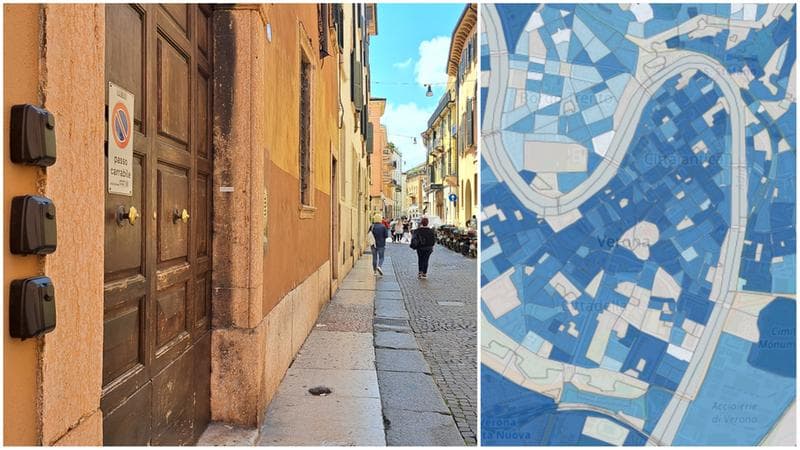
At 31 December 2023 Verona housed 255 298 residents in 124 773 families. Out of a total of 140 431 dwellings, 121 746 (86.7 %) were occupied by residents while 18 685 (13.3 %) were either empty or inhabited solely by non‑residents. In the historic centre, the share of vacant homes ranges from 13.4 % to 22.2 % and can reach 22.2 %–37.7 % in the most affected zones near the Arena and Piazza Bra. These vacancies are largely linked to short‑term tourist rentals such as bed‑and‑breakfast establishments.
Car Ownership Inversely Linked to Vacancies
The study shows a clear inverse relationship between the proportion of empty dwellings and the number of registered private cars. Central districts with high vacancy rates display very low car ownership, whereas peripheral areas like Borgo Trento exhibit higher vehicle densities. An exception is the Veronetta district, where car ownership remains relatively high despite a substantial number of vacant homes, suggesting a mixed residential‑tourist dynamic.
Rise of Single‑Person Households
Single‑person families constitute 34.9 % of all households in Verona, amounting to roughly 43 600 individuals. The highest concentrations of “singles” are found in Veronetta (48.5 %–56.9 % of the local population), the historic centre, and districts such as San Zeno, Borgo Venezia and the Cittadella area. Conversely, districts like Borgo Santa Croce, Valdonega, Borgo Nuovo and Santa Lucia display lower percentages of one‑person households.
Implications for Sustainable Housing Policy
The data underline several challenges for sustainable urban development. High vacancy rates in central areas reduce housing efficiency and can exacerbate affordability issues, while the prevalence of short‑term rentals may pressure local services and infrastructure. The inverse correlation with car ownership suggests that dense, vacancy‑rich zones experience lower private vehicle use, potentially contributing to reduced emissions, yet the overall sustainability impact depends on how these spaces are re‑purposed. The substantial share of single‑person households points to a growing demand for smaller, adaptable dwellings and highlights the need for policies that support flexible housing solutions.
Recommendations for European Cities
Cities aiming to improve housing sustainability can draw lessons from Verona’s experience:
- Implement monitoring tools to track vacancy rates and distinguish between long‑term emptiness and short‑term tourism use.
- Encourage conversion of vacant homes into affordable rentals or co‑living schemes to increase occupancy.
- Align transport planning with housing density, leveraging the lower car ownership in central districts to promote public transit and active mobility.
- Develop housing typologies that cater to the rising proportion of single occupants, ensuring energy‑efficient, affordable units. These evidence‑based insights provide a factual foundation for policymakers, urban planners and sustainability advocates across Europe seeking to enhance the efficiency and environmental performance of urban housing markets.