Loading...
🇪🇸Country profile
Spain
Spain spent fifty years teaching its citizens to buy. With three in four homes owned and barely a fifth rented, how does it now house the generation that can’t?
Read the profile
Loading...
Spain built its housing settlement around ownership. Four decades of policy steered families toward buying — through tax relief, the protected-sale vivienda protegida system, and a construction boom that ran until 2008 — and the result is one of the most owner-occupied societies in western Europe. That choice is why the housing question here is argued less over how to govern rental stock, of which there is little, than over how a country that taught a generation to buy now houses one that cannot.
The tenure mix carries the legacy. Around 75.1% of Spanish homes are owner-occupied, and only 24.9% are rented in any form. Within the rental base the non-market tier is thin: cooperative housing is just 0.2% of stock — about 6,000 homes across roughly 191 active right-of-use societies — and public housing another 2.5%, some 290,000 units. That leaves 22.2% in private rental. The non-market segment — cooperative plus public — comes to only 2.7% of all dwellings, among the smallest such shares on the continent and a fraction of what Austria, Denmark or the Netherlands hold.
Public housing barely registers as a permanent tier because for decades it was not meant to be one. The vivienda protegida designation capped a home’s price and reserved it for eligible buyers, but the protection expired after a fixed term, and most of the 2.7 million protected homes built since 1980 later returned to the open market. About 40% of households would qualify for protected housing on income grounds today — far more than the surviving binding stock can house. The 2026–2030 Plan Estatal de Vivienda is the first to make new state-funded protection indefinite, registered permanently on the land title.
The rent ladder shows what the missing non-market tier costs tenants. Protected VPO rents run at €3.2 per square metre a month, cooperative cesión-de-uso rents at €7.5, the all-stock median at €9.8, and newly-signed private contracts at €12.5; furnished lets reach €15.2 all-in. A new private contract costs nearly four times a protected home and two-thirds more than a cooperative one — the structural reason the right-of-use model is being looked to as affordable-housing infrastructure rather than a curiosity.
Net monthly rent per m² by tier (national median; furnished is gross, all-in). The cooperative cesión-de-uso floor sits well below the all-stock median and barely above a third of a new-let private contract — the gap that makes the form attractive in Barcelona and Madrid, even though it remains a fraction of the protected-housing tier in cost terms.
Empty homes shadow the shortage, a hangover from the 2008 crash. Residential vacancy still runs near 14% of the stock — roughly 3.4 million dwellings — much of it stranded in depopulating rural interiors rather than the tight coastal cities. Office vacancy has climbed to 11.8%, around 2.06 million square metres of empty floor concentrated in exactly the metros where housing is scarcest. And short-term tourist lets bleed homes out of the long-term market: in the seven Spanish cities tracked here, at least 31,841 whole homes sit on platforms full-time, a lower bound that runs into the tens of thousands more nationally.
On the demand side Spain absorbs one of Europe’s largest migration inflows — about 842,000 arrivals a year — against roughly 100,000 residential building permits, a supply gap that has widened sharply since 2022 across the country’s 26.6 million dwellings.
Housing policy is scandalously underfunded — we do not even reach 0.2% of GDP.The burden falls hardest on renters and the young, and it has stopped sparing the middle. Spanish tenant households spend about 23.5% of income on housing, against 15.9% for owners, and the gap widens in Barcelona and Madrid, where new leases routinely swallow well over a third of a median salary. Young Spaniards leave home later than almost any of their European peers, priced out of both buying and renting. Energy poverty compounds it: 17.1% of households cannot keep their home adequately warm. Around 28,000 people are homeless, and courts process roughly 28,000 residential evictions a year. The pressure is felt acutely — Spaniards consistently name housing among the country’s gravest problems in national barometers, and the Barcelona-and-Madrid comparison of how the two cities are tackling the crisis has become a national argument in its own right. The cooperative tier, for all its smallness, is the one part of the rental base built to stay affordable across generations, and it is the form the rest of this profile follows.
Spain’s cooperative tradition is old, but for most of its life it built homes to sell, not to keep. Cooperativas de viviendas (housing cooperatives) appeared with supportive legislation around 1911 and were reorganised by the state in 1957; through the post-war decades a cooperative was, in practice, a temporary vehicle that pooled members to commission a block, then dissolved once each member held the deed to their own flat. The Confederación de Cooperativas de Viviendas de España (CONCOVI), the national umbrella founded in 1988, still federates this homeownership-cooperative sector. The Housing Europe survey of European cooperative housing counts CONCOVI’s membership today at 191 affiliated societies with more than 10,500 homes under construction and some 45,189 direct jobs — a sizeable construction movement, but one historically aligned to ownership rather than to a permanent non-market stock.
What is new — and what the catalogue measures as the country’s cooperative tier — is the cesión-de-uso (right-of-use) model that arrived in the 2000s. Here the cooperative owns the building permanently and the member buys not a flat but a transferable right to occupy one at cost rent, returning the entry capital at face value on leaving. Nothing can be sold out from under the society, so the home cannot be repriced or speculated on. About 0.1% of Spaniards live in a cooperative home on this basis — roughly 6,000 units across some 25 active societies. It is a deliberately small, deliberately permanent counter-model to the homeownership cooperative, much closer to the Danish andel or the Uruguayan mutual-aid cooperative than to the dissolve-on-completion Spanish tradition.
The continuity that matters runs through Catalonia. The Sostre Cívic association, formed in 2004, imported the right-of-use principle and built the first such cooperative, Cal Cases; two decades on it remains the sector’s reference body and Cooperative Housing International’s sole listed Spanish member. In Madrid, Entrepatios carries the same model with an ecological, community-led emphasis. A thin but real institutional layer has grown around them: Coop57 supplies ethical finance, the architecture cooperatives LACOL and Celobert design the buildings, and foundations such as Fundació Hàbitat3 and La Dinamo Fundació hold land and broker public ground. The point of the form is that a society founded today can still be letting the same flat at cost rent in eighty years, because the right-of-use structure never lets the asset be cashed out.
Today the sector splits into two worlds that share a name but little else. One is the established CONCOVI movement — regional federations building protected and free-market homes for sale, advising hundreds of neighbourhood associations on Next Generation-funded rehabilitation, and lobbying for public land and EIB-backed guarantees. The other is the cesión-de-uso wave — Sostre Cívic, Entrepatios, Perviure and a handful of project cooperatives that hold their homes permanently. Their binding constraints differ: the building movement needs cheaper land and lighter bureaucracy at scale, while the right-of-use movement needs patient upfront capital and long municipal ground leases for each first project. Both, increasingly, get public land assigned on 75-year terms — the instrument that made La Borda possible — as administrations come to treat the cooperative as a delivery partner rather than a niche. The legal scaffolding for sharing finance and templates across small initiatives is captured in the study Funding the Cooperative City, which maps the patient-capital-plus-public-land recipe across Europe.
Spain’s housing policy turned a corner in 2023, after decades of treating ownership as the only real answer. The Ley de Vivienda — the country’s first national housing-rights law — lets regions designate zonas tensionadas (stressed zones) where rents are capped against an official INE index, freezes increases for small landlords and caps them for large ones, and for the first time recognises rental and right-of-use as protected legal forms alongside ownership. Sitting on top of it is the €7bn Plan Estatal de Vivienda 2026–2030, 60% funded by Madrid and 40% by the regions, which devotes 40% of its money to expanding protected housing and makes that protection — historically temporary — permanent on the land title.
Who actually pulls the levers is the catch, because Spanish housing is governed across three uneven levels. Madrid writes the framework law, runs the Plan Estatal and is mobilising the public developer SEPES and the bad-bank SAREB’s repossessed stock toward affordable supply. The comunidades autónomas (the seventeen autonomous regions) hold the decisive power: they alone decide whether to designate a single zona tensionada, and so far only Catalonia has done so across its tight municipalities. The town halls hold the operational tools — they assign the municipal land that a cesión-de-uso project needs, on the 75-year derecho-de-superficie leases that made La Borda possible. A national rent cap only bites where a region chooses to apply it, which is why the same law produces a frozen market in Barcelona and an untouched one a province away.
For cooperatives specifically, the support has become a set of named instruments rather than rhetoric. Public administrations now sign collaboration agreements to assign land for 75-year right-of-use terms aimed at the youngest and most vulnerable. The Plan Estatal routes financing and guarantees toward protected and right-of-use schemes, and CONCOVI is pressing for a dedicated EIB credit line and reduced VAT on cooperative subsidised supply. The integral rehabilitation of ageing post-war blocks — funded through five Next Generation programmes — has become a second front, with cooperatives advising neighbourhood associations on renewing the oldest stock. The analysis Why Is Spain’s Social Housing So Well-Designed? traces how the country’s scarce public and cooperative homes nonetheless punch above their number on architectural quality, an argument the new plan leans on to justify scaling the model.
The climate frame is tightening the terms. Spain’s building stock averages 47 years old and its renovation rate crawls at about 0.6% a year, far below the pace the EU’s decarbonisation timetable demands; energy poverty already touches one household in six. The Next Generation rehabilitation programmes push retrofit up the agenda for exactly the ageing cooperative and protected stock, and the long horizons of right-of-use societies — no resale pressure, no flip incentive — make them natural vehicles for deep renovation rather than demolition. The reuse of empty offices and the 2008-era vacancy glut feeds the same argument: in a country with millions of empty homes, adapting what exists is increasingly framed as the cheaper, lower-carbon route to new affordable supply.
Underneath the programmes runs an unresolved argument about whether the state is doing enough or doing the wrong thing. On one side, housing advocates argue the policy turn is real but starved of money. Carme Trilla, who has shaped Spanish housing policy since the 1980s and now presides over Barcelona’s metropolitan housing observatory, puts the charge bluntly: the sector is scandalously underfunded, well short of the spending peer countries commit. For this camp, the answer is a far larger permanent public and cooperative stock, more regions designating stressed zones, and the cesión-de-uso model scaled with public land. On the other side, much of the property and developer sector reads the same numbers as a warning — that rent caps and protection mandates deter the private investment new supply needs, and that the 2008 overhang shows what happens when building outruns demand. The Barcelona-and-Madrid contrast, where a rent-capping Catalan capital sits beside a supply-first regional government, has become the live test of which reading is right.
The post-war state organises Spain’s cooperativas de viviendas around building subsidised homes for sale — the homeownership-cooperative model that would dominate the sector for half a century.
The Confederación de Cooperativas de Viviendas de España is established as the national umbrella for the regional cooperative federations, succeeding the 1957 union.
The Sostre Cívic association forms in Catalonia, importing the Uruguayan-Danish right-of-use model; the first such cooperative, Cal Cases, follows soon after.
Spain’s construction-led boom collapses, leaving a glut of empty homes, mass evictions and a national vacancy rate that still runs near 14% of the stock.
Barcelona’s La Borda — 28 homes on a 75-year municipal ground lease — opens as the model demonstrator of cesión-de-uso housing on public land.
Spain’s first national housing-rights law lets regions designate zonas tensionadas (stressed zones) where rents are capped, and recognises rental and right-of-use as protected legal forms alongside ownership.
A €7bn state plan, 60% central and 40% regional, devotes 40% to expanding protected housing and — for the first time — makes the protection of state-funded homes indefinite via a permanent land-title note.
The plan’s horizon: a protected stock that no longer leaks back to the market, paired with Next Generation-funded integral rehabilitation of the ageing post-war housing the cooperative sector is being asked to help renew.
From the 1957 National Union of Housing Cooperatives through the 2008 crash, the 2023 Ley de Vivienda and the cesión-de-uso revival to the 2026–2030 Plan Estatal and its permanent-protection horizon.
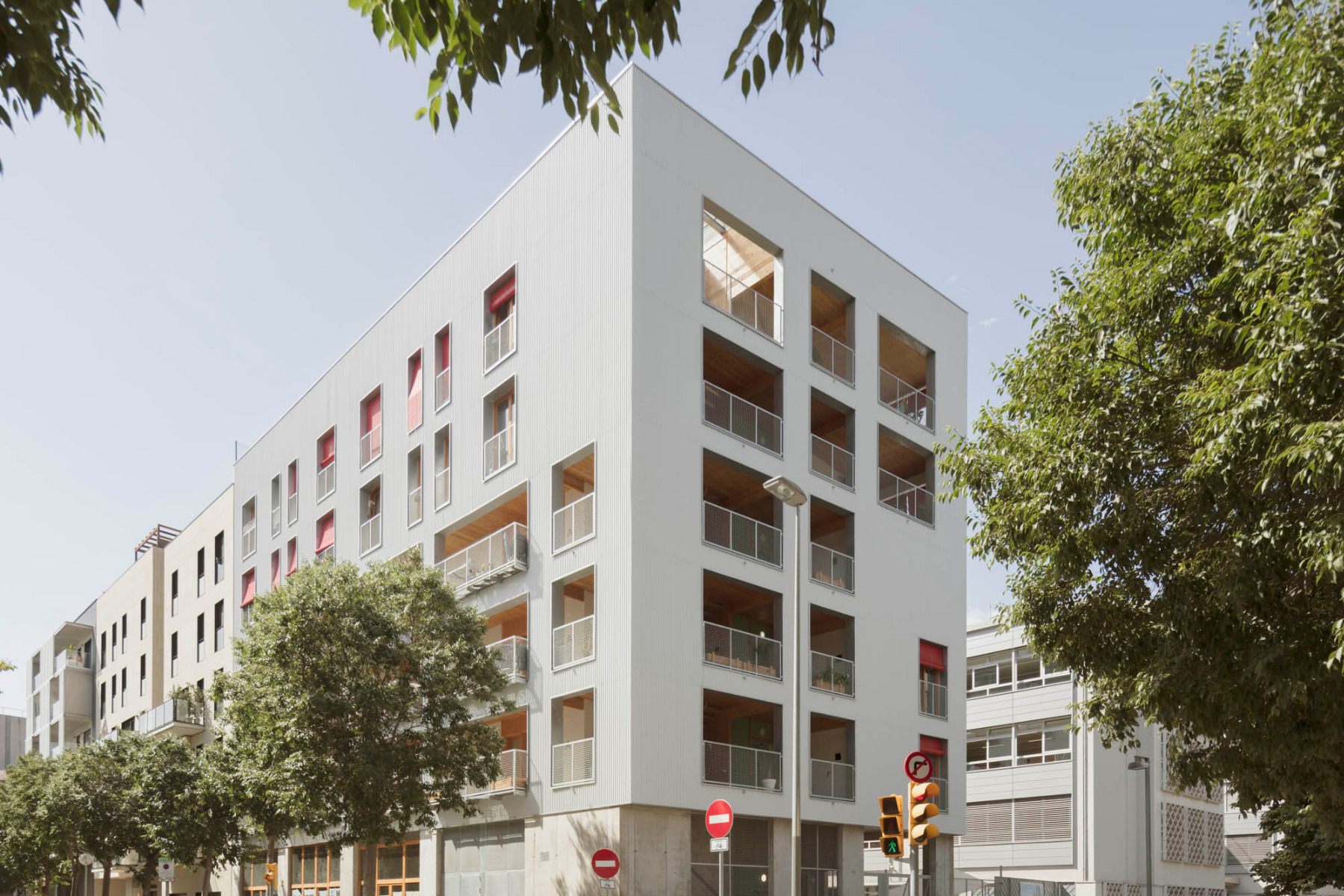
The clearest argument for the Spanish cesión-de-uso model is not in the Ley de Vivienda but in a cluster of buildings, almost all of them in Barcelona, where a city government, a federation and a handful of architects have turned the right-of-use idea into completed homes on public land.
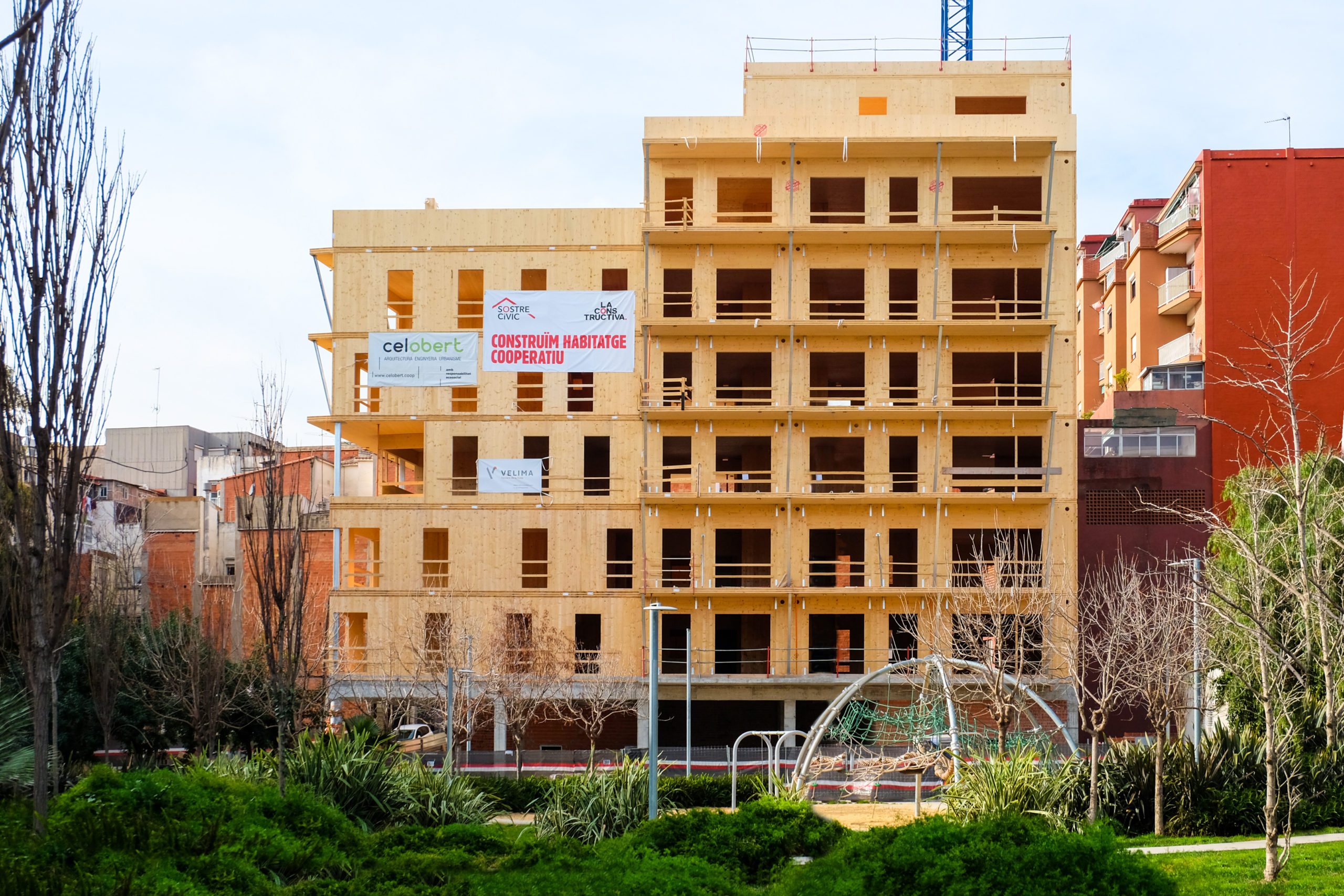
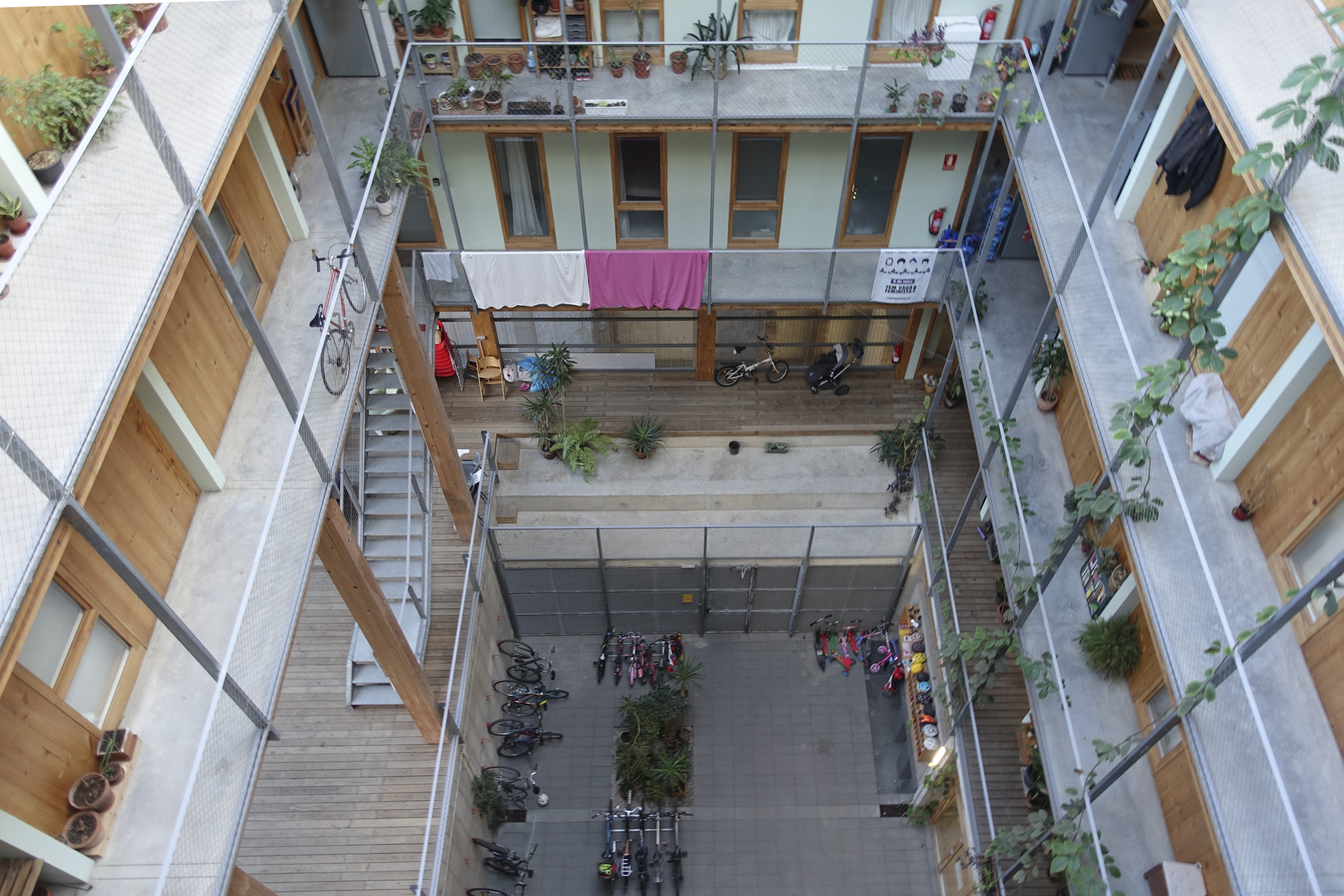
La Borda is the one everyone points to: 28 homes by the architecture cooperative LACOL on a 75-year municipal ground lease in Sants, a timber-framed block organised around a covered courtyard, built by and for its residents at cost rent. Nearby, La Balma and Cirerers extend the template — Cirerers is among the first cross-laminated-timber cooperative blocks in the city, La Balma a participatory, care-oriented building with shared services. Princesa49 and La Chalmeta take the model into denser plots, while La Raval and Can 70 adapt it to the inner-city fabric.
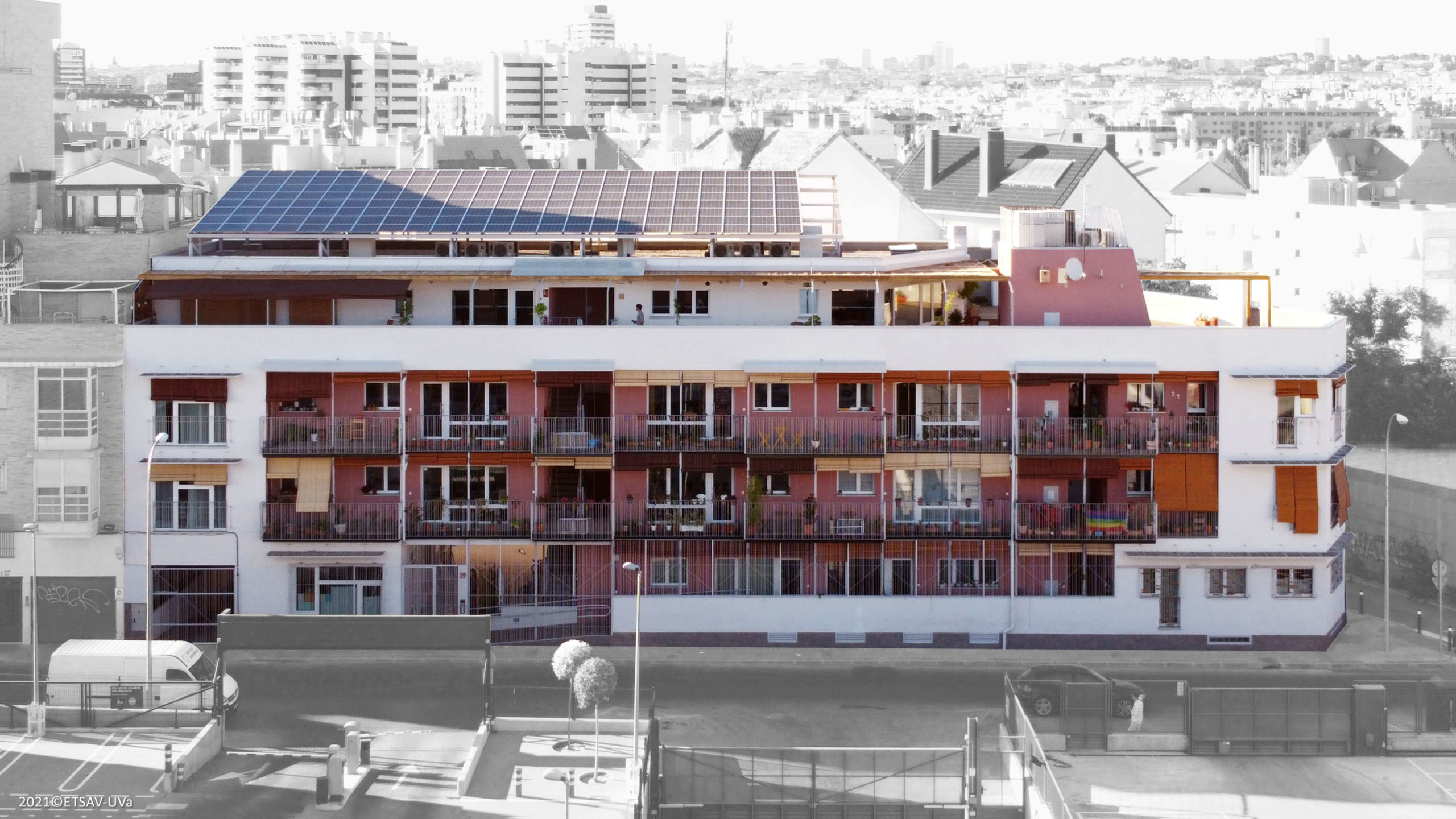
The model is spreading beyond Catalonia, if slowly. In Madrid, Entrepatios built Las Carolinas — a passive-house cooperative block in Usera — and is followed by further right-of-use projects pushing the form into the capital. Vallekas and Terrazas para la vida test cooperative and care-led layouts on the city’s southern edge, where the affordability squeeze bites hardest and the public-land question is most acute.
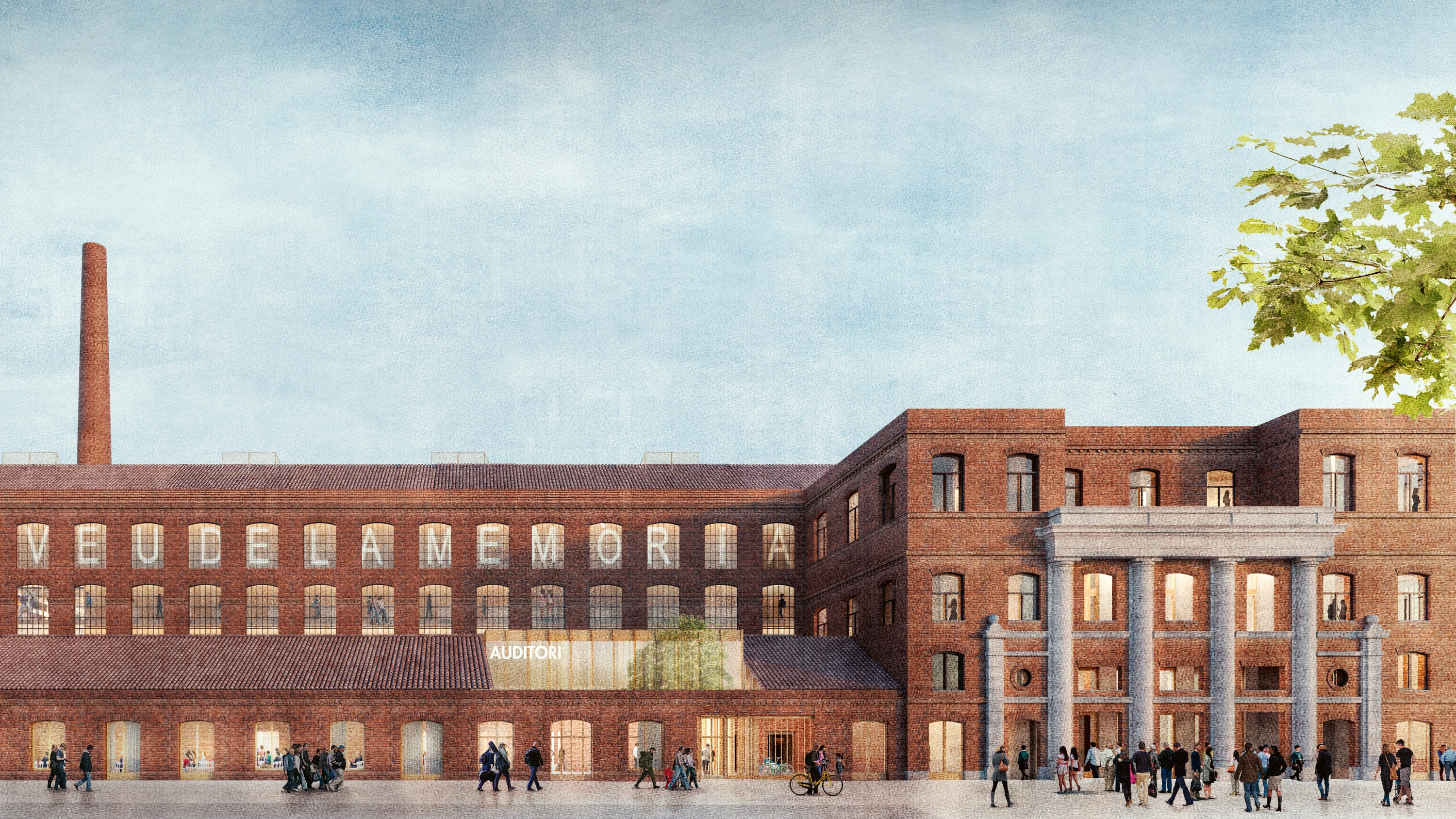
Behind the homes sits the connective tissue that makes them repeatable. Can Batlló and Fabra & Coats — reclaimed industrial complexes turned community grounds — gave the Barcelona movement the public sites and the self-management culture that the housing cooperatives grew out of. The Sostre Cívic federation pools members, finance and legal templates; Coop57 supplies the ethical capital; LACOL, Celobert and Perviure carry the design and development; and Fundació Hàbitat3 and La Dinamo broker the public ground. The Report of the HOUS mission to Barcelona records how a visiting European delegation read this ecosystem as a model worth studying — patient capital, municipal land and a federating body, the same recipe Funding the Cooperative City finds wherever the form takes root.
What La Borda set in motion is a proposition still being tested at small scale: that a country which spent fifty years teaching its citizens to own can keep a slice of its homes permanently out of the market, at cost rent, governed by the people who live in them. Six thousand homes is a rounding error against twenty-six million dwellings. Whether the form stays a Barcelona experiment or becomes national infrastructure is the open question the next decade of public-land decisions will answer.