A renters’ city running short of rooms
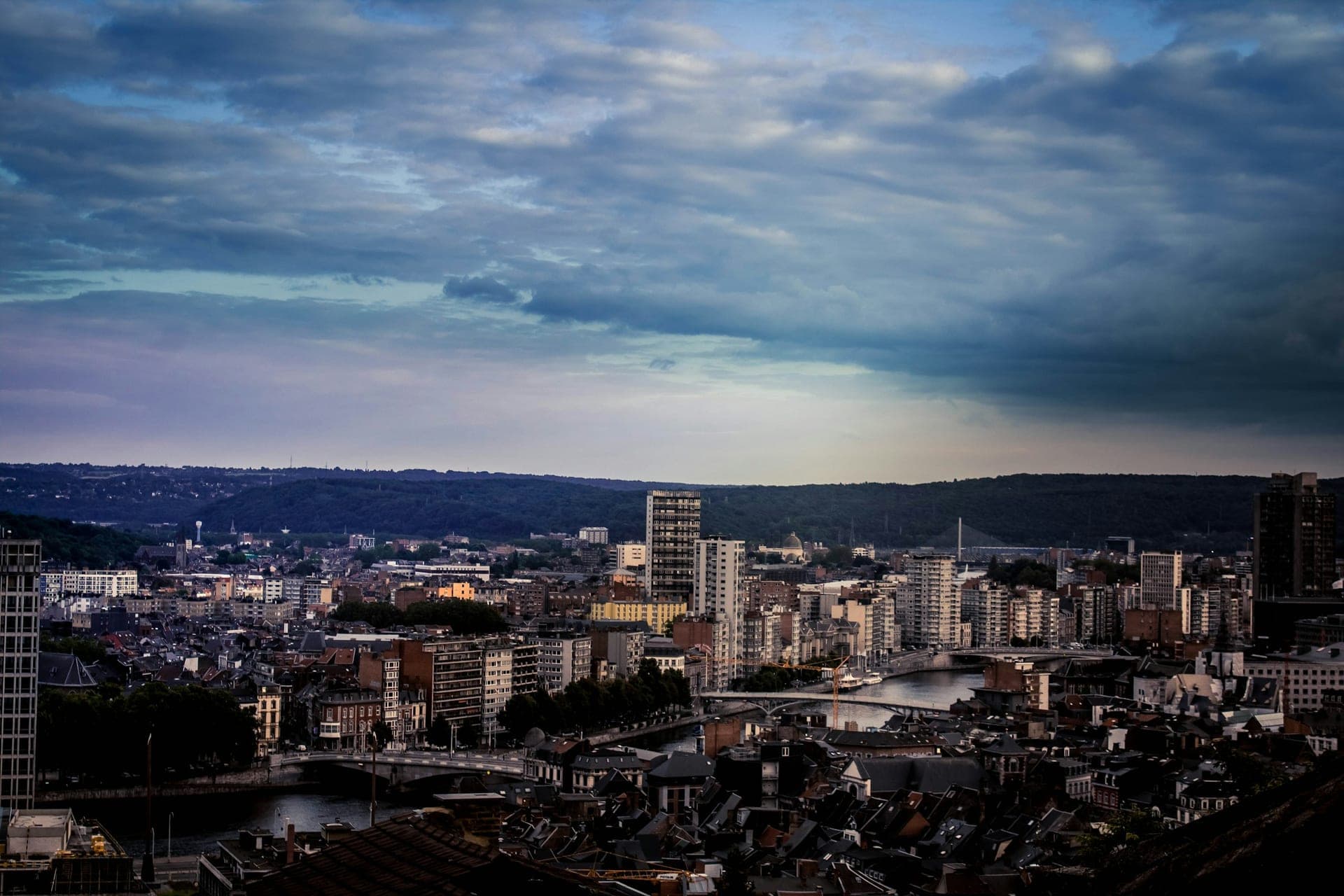
Liège wears its reinvention on the skyline. Where the Ougrée and Seraing furnaces once lit the Meuse valley red, Santiago Calatrava’s Guillemins station opened in 2009 as a white vault of steel and glass, the symbol of a post-industrial city betting on knowledge and mobility. Yet under that confident roof sits a quieter housing emergency. Nearly 49% of households here rent rather than own, the highest renter share of any large Walloon city, and the rooms they need are running short.
The squeeze is sharpest for the students who give Liège its energy. The Université de Liège and its Sart Tilman campus draw tens of thousands, and although more than 7,000 private kots ring the city, the national broadcaster RTBF reports Belgium is still short of roughly 70,000 student rooms, with the gap pushing monthly rents from the university’s subsidised tier well past what a grant covers. Migration keeps the pressure on: Liège gains around 11,500 new arrivals a year, faster than its building pipeline can absorb.
What makes the shortage bite is that Liège is not actually empty of buildings. The city carries a residential vacancy rate near 6.5%, and municipal inspectors have already flagged 1,150 presumed-empty houses since 2024, of which 250 were never declared for the vacancy tax. The dominant tension is the gap between a city of renters who cannot find a home and a stock of buildings that nobody is living in.
Cheap by Belgian standards, tightening fast
By Brussels or Antwerp standards, Liège is still affordable, and that is the city’s double-edged inheritance. A furnished one-bedroom lets for about €750 a month, and building land changes hands at roughly €180 per square metre, a fraction of the Flemish cities. Low prices have long made Liège a refuge for lower-income households and a magnet for buy-to-let investors, but they also starve the new construction that would ease the squeeze.
Indicative monthly rent for a one-bedroom flat across Liège’s housing segments. Short-stay shown as a 30-night equivalent. Source: EHC geographic catalogue (Numbeo, Immoweb, AirDNA, SWL, 2024)
The spread tells the story. A short-stay flat at around €75 a night earns its owner several times what a capped social tenancy returns, which is exactly the arbitrage that thins the long-term rental pool. Office space tells a parallel tale: Liège holds tens of thousands of square metres of unused commercial floor at the very moment it is short of homes, the empty desks of a post-industrial economy. The market is not overheated so much as misallocated.
A wide social safety net, a thin cooperative thread
Liège leans heavily on public and social landlords, and barely at all on cooperatives. Public and social housing together make up roughly 14% of the stock, managed by operators such as La Maison Liégeoise under the Société Wallonne du Logement. The need dwarfs the supply: around 55% of Liège households meet the income ceilings to qualify for a social home, against fewer than 14,500 public units available, so waiting lists run for years.
- Owner-occupied48.0%
- Cooperative1.0%
- Public & social14.0%
- Private market rent37.0%
The cooperative thread is genuinely thin. The catalogue records just 1 cooperative housing organisation in the city, and the energy that elsewhere flows into housing cooperatives here gathers instead in community-led experiments. In the Laveu quarter, HaGIP, an intergenerational and participatory project, has shared a building since 2022 on community-land-trust principles, with its Arcades du Laveu foundation holding the land. The cooperative developer Les Tournières and the regional network Habitat & Participation, alongside CLT Liège, keep the model alive. It is a culture of pioneers, not yet of scale.
Turning empty stock into a regeneration pipeline
If Liège has a structural advantage, it is the sheer volume of stock waiting for a second life. The vacancy register counts roughly 6,800 empty buildings, and around 14,669 square metres of office floor sit idle at a 2% vacancy rate. The city’s most convincing answer is reuse rather than sprawl.
The flagship is the Val Benoît, the modernist former applied-sciences campus of the Université de Liège built between 1932 and 1939 by architects Joseph Moutschen and Albert Puters, abandoned in the 2000s and rescued by the provincial development agency SPI as a mixed quarter of offices, student flats, housing and an urban park; its restored Génie Civil building reopened in 2016. On the Île d’Outremeuse, the Site de Bavière, a former hospital, is becoming a pedestrian neighbourhood, with some €30 million of works, nearly €12 million of it European money, funding an 8,000 square-metre resource centre.
Two larger schemes show the ambition scaling up. At Coronmeuse, the Rives Ardentes eco-quarter is rising on a former exhibition site, and the broadcaster RTBF reports three-quarters of its first authorised homes are already sold. On a Burenville brownfield, the developer Matexi plans an éco-quartier of around 450 homes, with first residents expected from 2030. Liège is learning to treat its empty fabric as a pipeline.
Who gets to stay, and on what terms
Housing in Liège is governed as much from Namur as from the Hôtel de Ville, and the Walloon Region is rewriting the rules. Under regional housing minister Cécile Neven, Wallonia has approved a "warm rent" reform that, from 2027, will index social-housing rents to a dwelling’s energy-performance certificate rather than income alone. Around two-thirds of public tenants currently pay a rent capped near 20% of their income regardless of how leaky the flat is, which the government argues penalises good buildings and starves renovation.
The reform promises tenants in the most efficient homes an average energy saving near €990 a year, for a monthly rent rise of roughly €29 to €68 once a home reaches the top energy band. Housing-rights voices such as the Rassemblement Wallon pour le Droit à l’Habitat warn that linking rent to renovation risks charging the poorest tenants for upgrades they did not choose, and the debate over fairness is live.
At city level the fight is over enforcement. Liège now cross-checks water and electricity consumption to trace logements inoccupés, and its taxe sur les immeubles abandonnés is framed less as a revenue tool than as a lever to push good homes back onto the market. The political question that runs through every Liège housing file is simple: in a city this affordable, who gets to stay, and on what terms.
Beacons on the Meuse
For all the pressure, Liège’s housing imagination is visible in built form. The Val Benoît shows a whole modernist campus brought back as a living quarter rather than demolished, its preserved concrete frames now holding student flats and workplaces beside a riverside park. It is the clearest proof that the city’s empty monuments can become homes.
Across the water, the Site de Bavière is knitting a former hospital island back into the city as a walkable neighbourhood of housing, learning and public space. At Coronmeuse, the Rives Ardentes eco-quarter is delivering hundreds of low-energy homes on a reclaimed exhibition ground, while in Laveu the HaGIP community has shown that intergenerational, community-owned living can take root even where the cooperative tradition is faint.
Put the materials on the table together and a quiet answer to the opening question takes shape. A city that turned its dead steelworks into a cathedral of glass already knows how to make something new from what it inherited. Those empty buildings are not only a problem; in the hands of the people who built Val Benoît, Bavière and HaGIP, they are the raw stock of the cooperative, reuse-first city Liège could choose to become.
References
Statistics10Click on any number to see the source
Housing market
Tenure & affordability
Cooperative, social & public
Adaptive reuse & vacancy
Population & migration
Further sources15
- Montagne de Bueren — Wikipedia
- Port autonome de Liège — Wikipedia
- Liège-Guillemins railway station — Wikipedia
- Kots trop chers, logements insuffisants : la galère des étudiants — RTBF · 2025
- 1.150 logements inoccupés identifiés à Liège — Today in Liège · 2025
- Le Val Benoît — le quartier — Ville de Liège
- Val-Benoît (Liège) — Wikipedia
- Bavière Liège — Bavière-Liège
- Rives Ardentes — écoquartier de Coronmeuse — Rives Ardentes
- Futur éco-quartier de Coronmeuse à Liège — RTBF · 2025
- Un éco-quartier d’environ 450 logements en projet à Liège — La Libre · 2025-01-30
- Réforme des logements sociaux en Wallonie : le loyer indexé selon le PEB — Certinergie · 2025-08-01
- La lutte contre les immeubles inoccupés — UVCW
- Règlement relatif à la taxe sur les immeubles bâtis inoccupés ou délabrés — Ville de Liège
- HaGIP — Habitat Groupé Intergénérationnel et Participatif — HaGIP Liège
Funding & land tenure
What a housing cooperative could actually build on hereLiège is not in the funding registry yet — the tenure figures above are national.