An owners’ city with too few places to rent
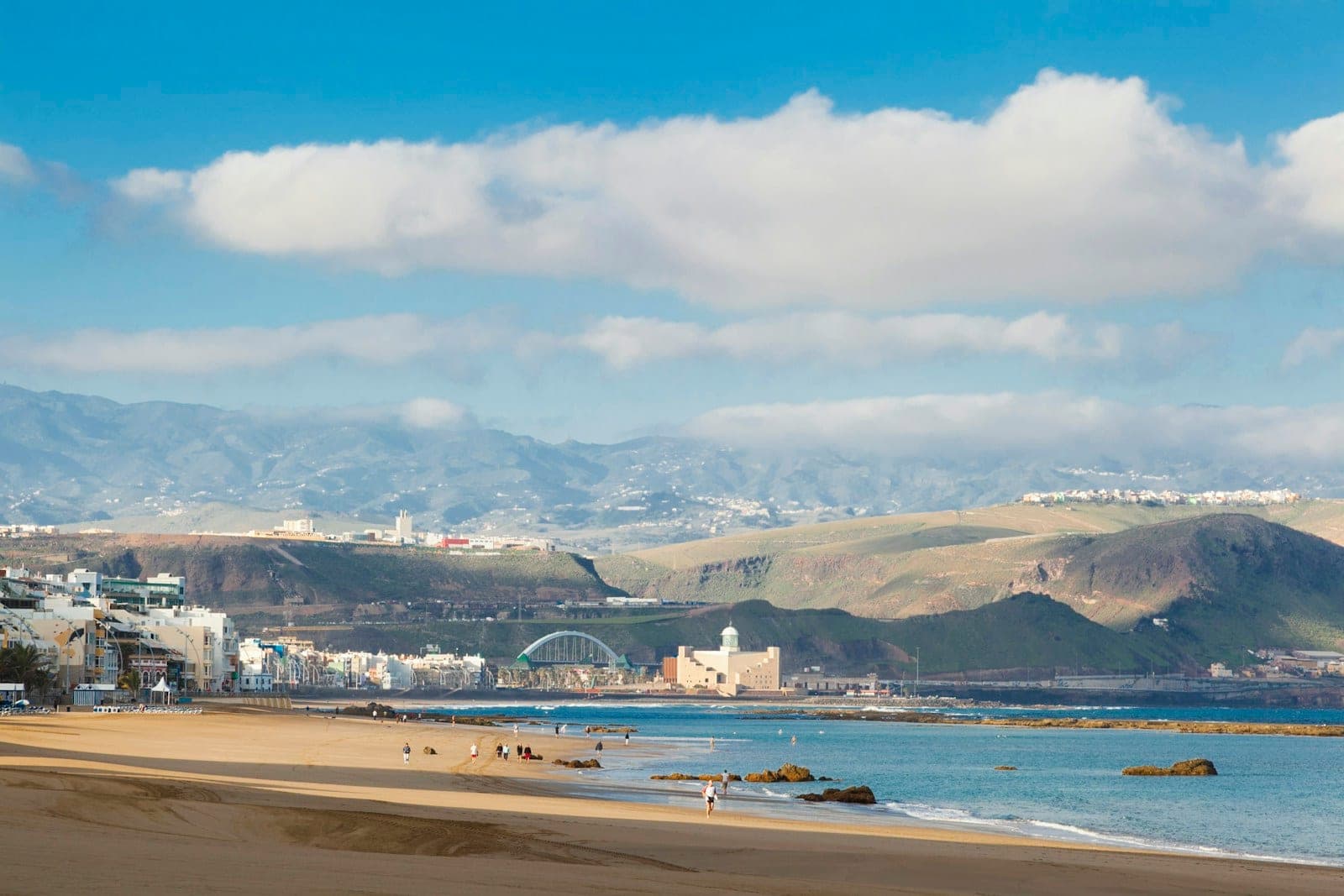
Las Palmas de Gran Canaria was founded in 1478 as a Castilian camp on an Atlantic sandbar, and it has lived off its port ever since. Sailors, traders, students and northern European retirees have always passed through, and remote workers now winter beside Las Canteras beach. Housing is where those arrivals meet a city of 381,868 residents and 175,181 dwellings.
Owning is the norm. About 80% of households own their home and 20% rent, a split much like Valencia’s and far from Vienna’s or Berlin’s. Nearly every tenant rents privately: private rental makes up 19.8%. Public and non-profit rental registers at just 0.15%, because the figure counts only the 268 municipal rental homes commissioned by GEURSA, the city’s urban-management company. Stock held by Visocan, the regional government’s public housing company, is not broken out, so the true public share is higher but still small. Cooperatives have no tenure of their own. Spanish housing cooperatives usually build homes for members to buy and then wind up, so their homes are counted as owner-occupied. The catalogue records 1 active cooperative organisation in the city.
- Owners
- Owner-occupier80.0%
- Renters
- Public & non-profit rental0.15%
- Cooperative0.00%
- Private rental19.8%
Social housing in Spain is a set of rules rather than a landlord. Vivienda protegida (price-controlled housing built with public support) can be sold or let. Its caps on price and on the buyer’s income last as long as the scheme that financed it requires. It therefore cuts across the owner and rental slices, and no city-level count of protected dwellings is published. The queue for it is measurable, though: more than 4,500 families are registered as seeking a home in the municipality.
Tenure decides the rent. Municipal rental homes let at about €5.62/m², a little over half the €9.9/m² median across existing private leases. A flat signed today costs about €14.6/m². Furnished and serviced lets, with utilities and furniture priced in, reach €16.8/m². Households who must move within the city feel the gap between the sitting-tenant median and a new contract most sharply.
- Public/municipal housing
- All-stock median
- New contracts
- Furnished / serviced (gross)
Monthly rent per m², net cold except the furnished tier, which is gross and includes utilities and furniture. No cooperative rent tier exists because local cooperatives build for ownership.
The city holds more empty homes than anywhere else in the archipelago. The 2021 census counted 24,822 vacant dwellings, about 14% of the stock. Some are second homes or inheritances; others are ageing flats that need work before anyone can live in them. Homes actually available to rent are scarce, with roughly 2% of the rental stock free at any time. Offices add a smaller reserve. An estimated 11.8% of office floorspace, around 53,648 m², stands empty, although that figure is apportioned from national data rather than counted locally.
Arrivals keep the pressure on. In-migration to the province runs at about 31,672 people a year, and roughly 16,000 people stay for three to twelve months, many of them students and remote workers. Holiday lets compete for the same flats, at around €84 a night for a one-bedroom home. Meanwhile the long-term market has shrunk. Advertised rentals fell from 26,019 to 18,809 in the data the regional government uses to argue against rent controls. No cap applies, because the city has not been declared a stressed rental market.
The burden falls hardest on low-wage tenants, and it is spreading upwards. The IX FOESSA report on social exclusion found that housing costs had pushed 122,000 Canarian households into severe poverty, and that the median rent in Las Palmas rose 19%. Cáritas’ 2025 figures show who is caught: 58% of the families it helped in Las Palmas fell into severe poverty after paying rent, and 21% of those it assisted had a job. Middle-income renters are exposed too. The council’s own study puts the average rent effort at 38.5% of household income, above the 35% threshold that the national housing law treats as a warning sign. Public opinion agrees. In a May 2026 survey of the islands, 47.3% of Canarians named housing the gravest problem, twenty points ahead of immigration.

Against that backdrop the cooperative share is close to zero on paper, yet the city built some of its most combative neighbourhoods as cooperatives.
From a bus workers’ estate to shared-use cooperatives
In Spain, a housing cooperative is usually a way to build rather than a way to live. Members pool deposits, the cooperative acts as its own developer, and each member takes title when the keys arrive. That model is regulated in the islands by the Ley 4/2022 de Sociedades Cooperativas de Canarias (the 2022 Canary cooperatives law). The same law created a second form, the cooperativa de vivienda colaborativa (a collaborative housing cooperative that keeps the building for good). Its members hold a cesión de uso (a right to use a home rather than own it). They pay an entry contribution, refunded when they leave, and a monthly fee tied to running costs rather than market rents.
The city’s cooperative memory lives in its working-class south. In 1966 employees of the Jardineras bus company founded the Tres Palmas cooperative, and its members received their keys in 1974. Residents then finished streets and gardens themselves on Sábados Rojos (“Red Saturdays” of volunteer work). The estate went on to resist an eviction threat in 1979 and to fight a dispute over water in 1983. Its slogan still circulates in the city: social housing had become big business, until Tres Palmas stopped it.
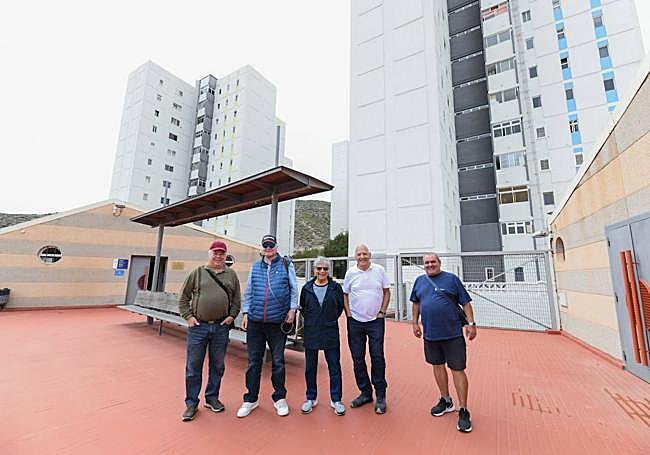
Today the sector falls into two camps with different problems. The first is the build-to-own cooperative, which still produces new blocks, among them 159 homes in Tamaraceite whose first stone was laid in January 2025. These projects compete with developers for land and pay the same construction costs, around €1,280/m². Their homes pass into private ownership and leave the non-market sector for good. The second camp is the shared-use cooperative. El Ciempiés in Arucas and Los Girasoles in Firgas sit just beyond the municipal boundary, and cohousing groups inside the city are still looking for land. Their obstacles are financing and access to plots, not market competition, and most of their members are older people planning to age together.
Government has started to treat the shared-use model as a policy tool. The regional social-welfare department is funding 11 collaborative housing projects across three islands with Next Generation EU money. It frames them as a way to keep older residents independent. The city’s own February 2026 housing package lists support for cooperatives and collaborative housing among its measures, alongside public building and a request for rent controls.
A rent cap on hold, a pipeline on public land
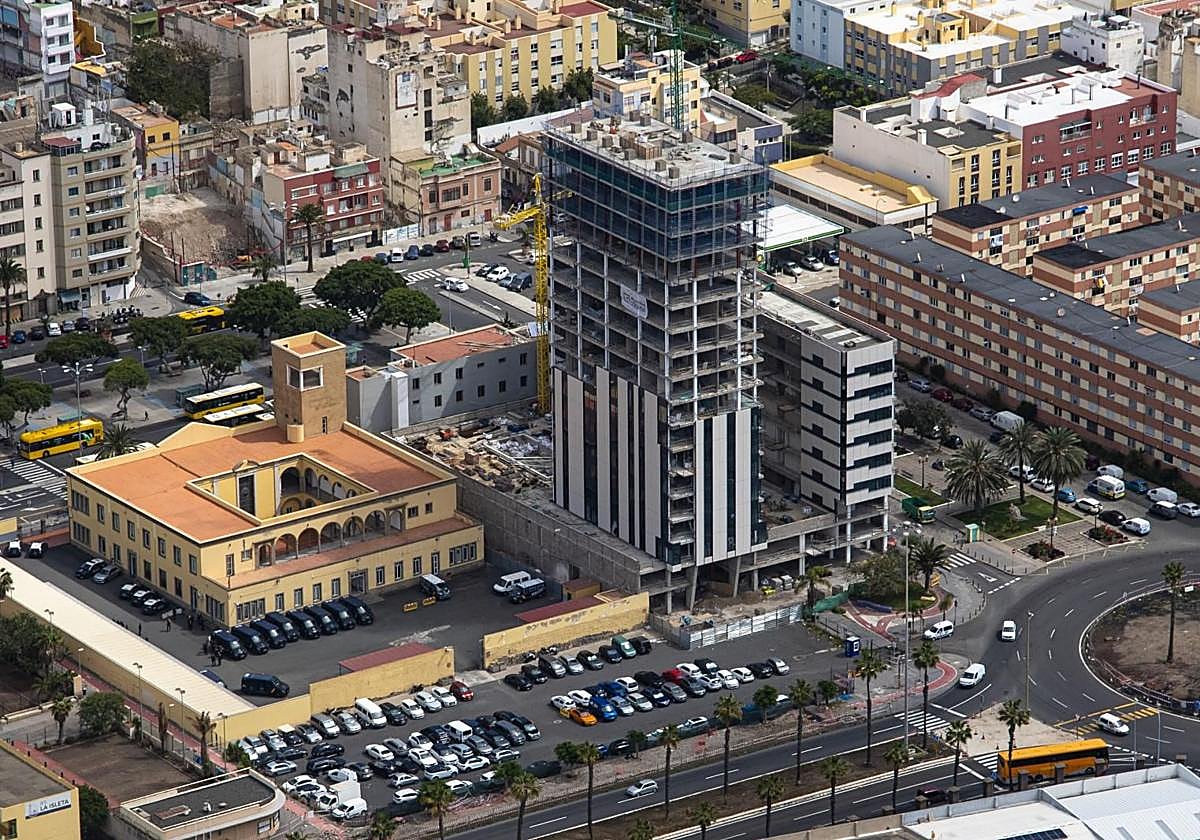
The city council, run since 2023 by a coalition of the Socialists (PSOE), Nueva Canarias and Unidas Sí Podemos, has made housing its priority. Its February 2026 package promises to build and buy public rental homes, to use first-refusal rights on sales, and to explore usufruct deals that let owners lend empty flats for affordable rent. It also creates a housing division inside GEURSA and a municipal housing observatory. The target is 1,000 public rental homes this term. The 2026 budget puts €30.8 million into housing, 47% more than in 2025. In June 2026 the council opened eleven municipal plots to 1,812 affordable rental homes, most of them in Tamaraceite and Las Torres.
Each level of government holds a different lever. The state’s Ley 12/2023 por el derecho a la vivienda (the national right-to-housing law) lets regions declare stressed rental markets, where new leases are capped. The Canary government, a Coalición Canaria and Partido Popular coalition, decides whether to make that declaration. Its Canary Housing Institute (ICAVI, the regional housing agency) is also drafting the Plan de Vivienda de Canarias 2026-2030 (the regional housing plan), built around new protected homes, renovation and rent support. The Cabildo, the island council, co-funds municipal blocks through its housing consortium. The city owns the land and, through GEURSA, builds on it. The stressed-market request has stalled between the two lowest tiers. The region says the city’s data were not official and that caps shrink supply, and the city has sent its evidence twice.
They don’t want neighbours to have their rent lowered, even by 5%. Learn from other regions such as Catalonia or the Basque Country: why do their residents get that opportunity and we don’t?The regional minister answers that caps are the wrong tool. Pablo Rodríguez, the Canary government’s minister for public works, housing and mobility, has said repeatedly that he will not approve a measure that reduces the supply of rental homes. Local reporting has followed the dispute closely, from the rival studies each side relies on to the mayor’s September 2026 accusation that the region was laughing at residents.
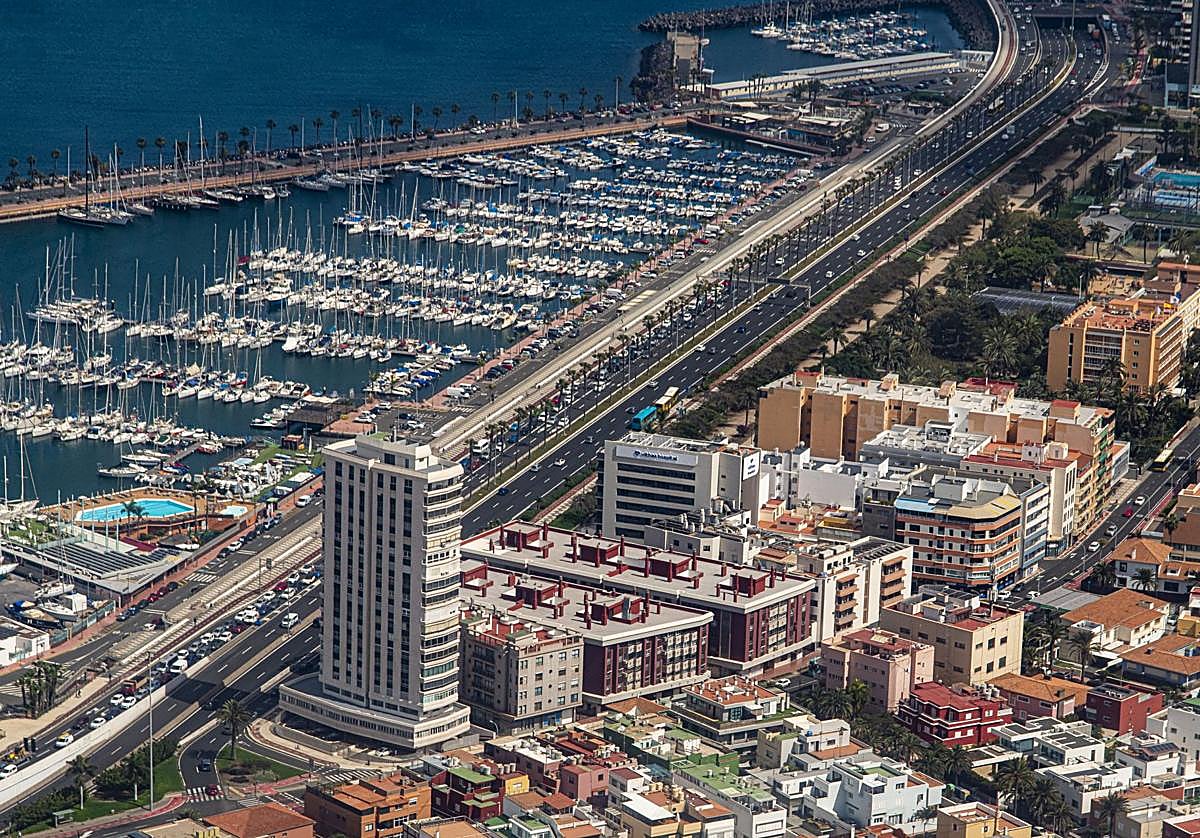
There is no single cause behind this problem and, therefore, no single solution either, but several.Cooperatives are named in the programme, but the tools to help them are still being defined. In a September 2026 interview, Mauricio Roque, the councillor for urban development and housing, set out what collaborative housing groups such as Semilla del Norte need. His list: financing lines, land ceded by the city, fee exemptions and planning changes. The council has already cut the ICIO (the municipal construction tax) by 50% for protected housing. There is not yet a concept-led land tender or a ground-lease scheme reserved for cooperatives, of the kind that Zurich or Barcelona use.
The response to empty buildings comes mainly from regional law. The Decreto-ley 1/2024 (the Canary emergency housing decree) lets owners turn offices, shops and tertiary buildings into homes. Where a whole tertiary building is converted, at least half of the new flats must be protected housing. The Ley 6/2025 (the Canary law on holiday lets) reserves most residential land for permanent homes and automatically suspends new holiday-let permits in a declared stressed market. That ties the city’s request for rent controls to its fight against holiday lets. Meanwhile the council uses provisional ordinances and inspections against unlicensed holiday lets, and it is studying usufruct and first-refusal deals to bring some of its empty flats back into use.
Climate goals run through the same programmes. The city’s climate and energy plan commits to cutting CO2 emissions by at least 40% by 2030. In practice, retrofitting municipal estates with solar panels and insulating coatings delivers much of that goal in housing. Land is the other limit. Half of the islands’ territory is protected, so building on already urbanised public plots, as the June 2026 rezoning does, avoids consuming new ground.
- Sep 1966[source]
Bus workers found the Tres Palmas cooperative
Employees of the Jardineras bus company found the cooperative that hands over its keys in April 1974 and finishes the estate through volunteer work.
- Feb 2024[source]
Canary emergency housing decree
Decreto-ley 1/2024 allows offices, shops and tertiary buildings to become homes, with at least 50% protected housing in converted tertiary buildings.
- May 2024[source]
City asks to be declared a stressed rental market
Las Palmas applies for rent-control zoning under the national housing law; the request is resubmitted in February 2026 and is still pending.
- Jul 2024[source]
131 public rental homes awarded in Tamaraceite
GEURSA awards two blocks of 131 affordable rental homes for €18.9 million, funded by Next Generation EU.
- Sep 2025[source]
La Paterna retrofit fully contracted
The last of the contracts to retrofit 819 homes in 23 blocks is awarded, completing a €19.2 million programme.
- Dec 2025[source]
Canary law on holiday lets
Ley 6/2025 reserves at least 80% of residential land for permanent homes and suspends new holiday-let permits in stressed markets.
- Apr 2026[source]
Doctor Chiscano works halted
The council ends the contract for 152 replacement homes in Las Rehoyas after costs rose by 49.79%.
- Jun 2026[source]
Eleven municipal plots opened to affordable rental
The council approves 1,812 affordable rental homes on public land, 209 fewer than first proposed.
- 2029[source]
Las Torres block fully funded
The last €10.5 million instalment of the Cabildo agreement for 240 affordable rental homes falls due.
- 2030[source]
Climate plan deadline
The city’s climate and energy plan commits to cutting CO2 emissions by at least 40% against its baseline.
Milestones from the first worker cooperatives to the city’s 2030 climate target.
The results so far can be seen in a handful of neighbourhoods, where the city is rebuilding, retrofitting and building new homes at the same time.
Rebuilding Las Rehoyas, retrofitting La Paterna
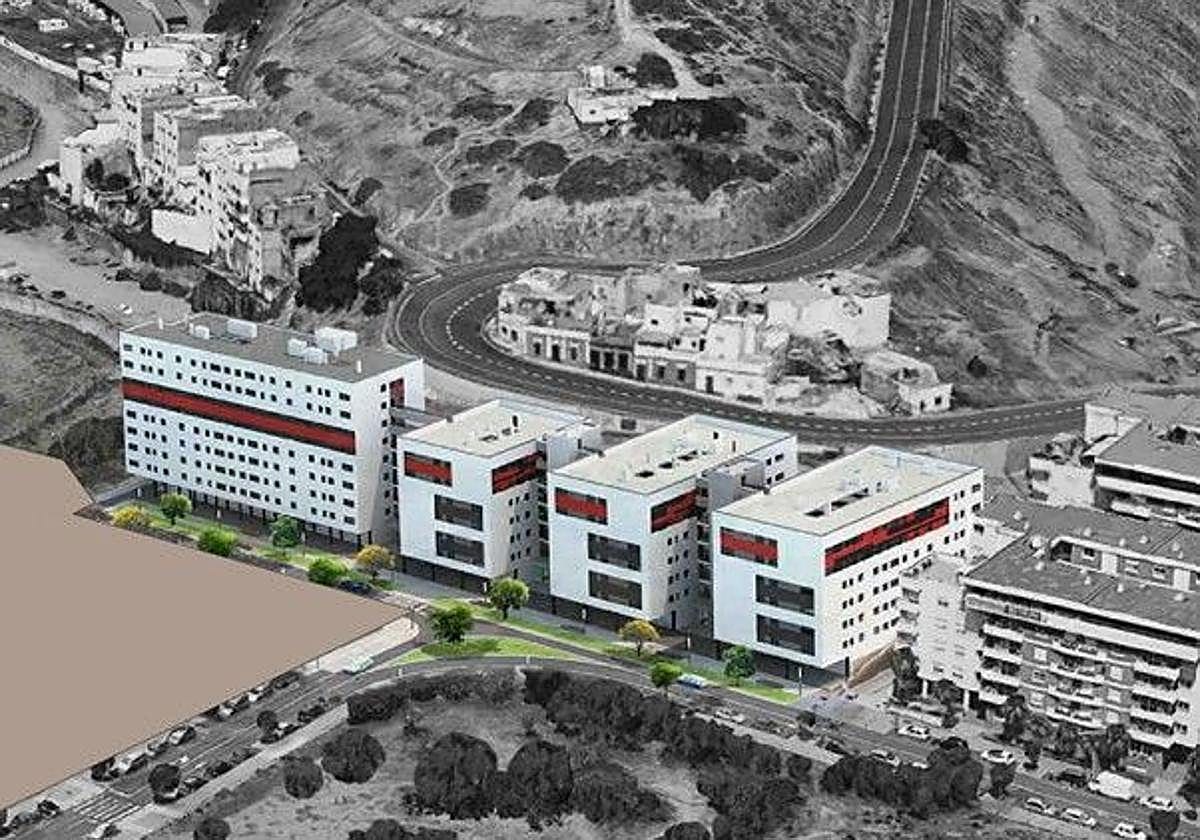
Las Rehoyas-Arapiles is the city’s largest housing undertaking and its most difficult. The 1960s estate is being replaced block by block under a plan for about 2,600 homes in seven phases, budgeted at €183 million over at least 16 years. The first 148 new homes by the park are finished. The second building, 152 homes on Doctor Chiscano street, was halted in April 2026 with less than a fifth built, after new building rules pushed costs up by 49.79%. Residents waiting to move have run out of patience. “The work is stopped, everything is stopped,” Pino Sánchez, former coordinator of the neighbourhood platform, told El Espejo Canario.
La Paterna shows the quieter route of renovating what is already there. The council has contracted the renovation of 819 homes in 23 blocks for €19.2 million, 70% of it from Next Generation EU. The works add 407 solar panels, thermal coatings and new lifts. They should cover more than 60% of the blocks’ energy use from renewables. The programme has been let in stages over several years, and its final contract went to Construplan, the firm whose Doctor Chiscano contract the city later ended.
GEURSA’s blocks on Avenida 8 de Marzo in Tamaraceite mark the city’s return to building public rental housing. The 131 homes in two buildings, 46 two-bedroom and 85 three-bedroom flats, were awarded in July 2024 for €18.9 million, with more than 30% of the site kept as green space and community gardens. They are the largest single piece of the council’s public-rental pledge for this term, which will be hard to meet in time.
Las Torres is where the next wave lands. Under an agreement signed in January 2026 with the Cabildo, the city will build 240 affordable rental homes behind the Las Ramblas shopping centre for €39.6 million, with construction from 2027. Augusto Hidalgo, the Cabildo’s vice-president, presented it as housing for the middle class. The June 2026 rezoning adds 595 homes in the same district. It was not uncontested. After objections the council dropped a Tamaraceite plot, and Coalición Canaria councillor David Suárez argued that land for about 3,000 homes was already available elsewhere.
El Ciempiés, on the hillside in neighbouring Arucas, is the model the shared-use movement points to. Founded in 2018, the cooperative owns its homes and lets them to members, young and old together. It received €450,000 from the regional housing institute. Its sibling Los Girasoles in Firgas plans about 24 flats for people aged 50 to 70, with shared kitchens, workshops and gardens, and hopes to open in 2027. Both depend on grants and on land outside the capital, where it is cheaper. That is the gap the city’s own cohousing groups are asking the council to close.
Columbus stopped here in 1492 to mend a rudder, and the city has been a stopping place ever since. The question is who gets to stay. Rebuilt estates for families who have waited years, public blocks on council land and a few shared-use cooperatives in the hills are the beginnings of an answer. Whether they can grow fast enough to keep workers, students and returning children in the city is still open.
References
Statistics13Click on any number to see the source
Housing market
Cooperative, social & public
Adaptive reuse & vacancy
Population & migration
From our library8
- El coste de la vivienda arrastra a la pobreza severa a 122.000 hogares canarios — Knowledge
- Vivienda y empleo precario: las claves detrás del aumento de la pobreza en Canarias, según Cáritas — Knowledge
- La vivienda dispara el malestar social: seis de cada diez canarios creen que las Islas han ido a peor — Knowledge
- Llegó Tres Palmas y mandó a parar — Knowledge
- El Ayuntamiento de Las Palmas de Gran Canaria abre la puerta a la construcción de 1.812 nuevos pisos de alquiler asequible — Knowledge
- Los estudios en los que se ampara el Gobierno para la zona tensionada discrepan con Las Palmas de Gran Canaria — Knowledge
- Mauricio Roque: Queremos convertir 11 parcelas municipales en hasta 2.000 viviendas protegidas — Knowledge
- Parón a Las Rehoyas: el Ayuntamiento de Las Palmas de Gran Canaria suspende la construcción de los pisos de Doctor Chiscano — Knowledge
Further sources20
- Darias acusa al Gobierno canario de reírse de los vecinos con la zona tensionada — Canarias7 · 2026-09-25
- El Gobierno avisa de que no aprobará la zona tensionada de Las Palmas de Gran Canaria si hace que disminuya la oferta — elDiario.es · 2025-02-11
- Las Palmas de Gran Canaria impulsa nuevas medidas para facilitar el acceso a la vivienda en la capital — Ayuntamiento de Las Palmas de Gran Canaria · 2026-02-23
- Darias presenta un presupuesto de 559 millones para 2026 — Ayuntamiento de Las Palmas de Gran Canaria · 2026-01-28
- El Ayuntamiento adjudica la construcción de 131 viviendas públicas para alquiler asequible — GEURSA · 2024-07-04
- Ayuntamiento y Cabildo de Gran Canaria firman un convenio para construir 240 nuevas viviendas en alquiler asequible — Ayuntamiento de Las Palmas de Gran Canaria · 2026-01-13
- El Ayuntamiento adjudica el último de los proyectos para la rehabilitación de 819 viviendas del barrio de La Paterna — Ayuntamiento de Las Palmas de Gran Canaria · 2025-09-25
- Las Palmas de Gran Canaria recibe el visto bueno de Europa para desarrollar su Plan de Acción por el Clima y la Energía Sostenible — Ayuntamiento de Las Palmas de Gran Canaria · 2022-10-14
- Ley 12/2023, de 24 de mayo, por el derecho a la vivienda — BOE · 2023-05-24
- Decreto-ley 1/2024, de 19 de febrero, de medidas urgentes en materia de vivienda — BOE · 2024-02-19
- Ley 6/2025, de 10 de diciembre, de Ordenación Sostenible del Uso Turístico de Viviendas — BOE · 2025-12-10
- Ley 4/2022, de 31 de octubre, de Sociedades Cooperativas de Canarias — BOE · 2022-10-31
- Canarias impulsa la vivienda colaborativa como modelo alternativo para propiciar la longevidad autónoma — Gobierno de Canarias · 2026-05-22
- El Gobierno de Canarias abre el periodo de consulta pública del Plan de Vivienda de Canarias 2026-2030 — Gobierno de Canarias · 2026-06-17
- Pablo Rodríguez asiste a la colocación de la primera piedra de 159 viviendas privadas en régimen de cooperativa — Gobierno de Canarias · 2025-01-17
- La reposición de viviendas en Las Rehoyas-Arapiles se estanca y los vecinos siguen «sin respuestas claras» — El Espejo Canario · 2026-01-27
- El Ayuntamiento de Las Palmas de Gran Canaria licita la construcción de viviendas en el entorno del parque de Las Rehoyas — elDiario.es · 2025-05-26
- El Ciempiés — cooperativa de viviendas colaborativas — El Ciempiés · 2024
- Los Girasoles — Cooperativa de vivienda colaborativa — Los Girasoles · 2026
- Las Palmas — Wikipedia · 2026