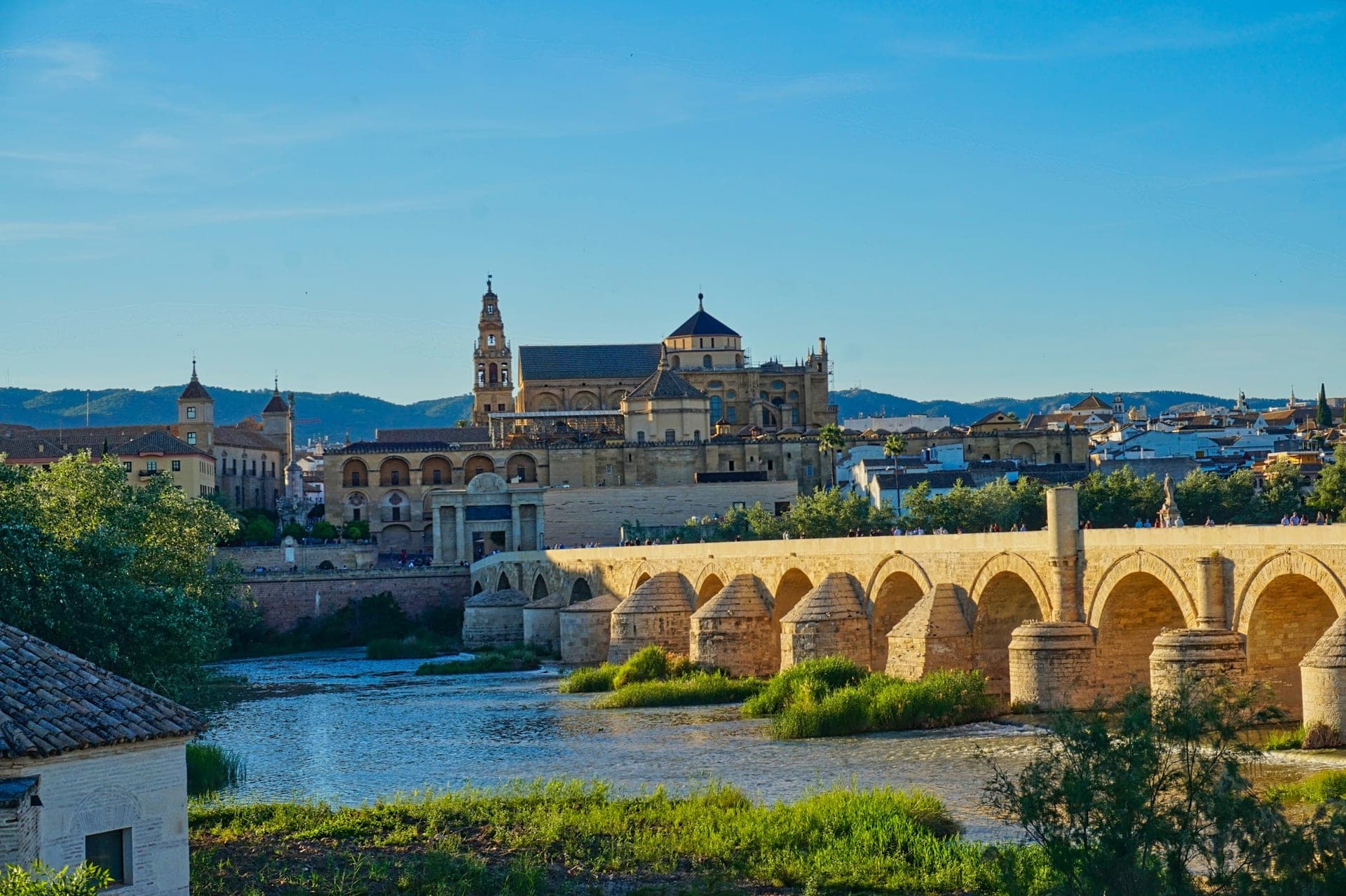
A city of owners, running out of rooms to rent
For centuries Córdoba lived around a shared courtyard. The casa de vecinos, a house of many households gathered round one patio, is the reason UNESCO lists the city's May patio festival as a practice of "sustainable communal coexistence". Today most of those courtyards hold one family or none, and the city's housing question is about who can still afford to stay.
Córdoba is a city of owners. Around 90% of households own their home, and the 2021 census counted only 10% as renters, one of the lowest shares among Spain's provincial capitals. A third of all households, 33.7%, are still paying off a mortgage. The public tenure is small: VIMCORSA (Viviendas Municipales de Córdoba, the city-owned housing company) lets 971 social rental homes, 155 of them for residents over 65. Cooperative tenure barely registers, because Spanish housing cooperatives usually hand each member a freehold flat once building ends. That leaves private landlords with 10% of the stock, the whole rental market in all but name.
- Owners
- Owner-occupier90.0%
- Renters
- Public & non-profit rental0.00%
- Cooperative0.00%
- Private rental10.0%
Social housing here is a label, not a landlord. Vivienda de protección oficial, or VPO (price-capped housing for households under an income ceiling), can be owned or rented, so it cuts across the tenure slices rather than forming one. The city's own housing plan counted 2,700 households on the register of applicants for protected housing, and estimated real demand at 6,000 households. Nine in ten applicants earn no more than three times the IPREM, Spain's public reference income for benefits.
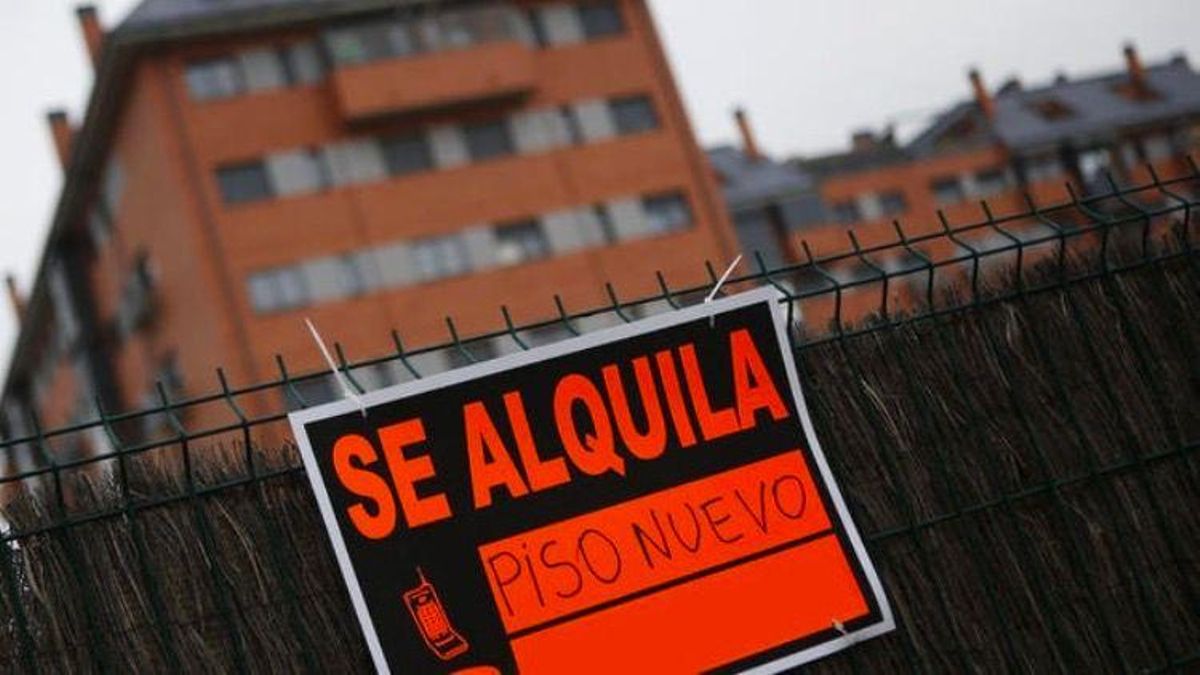
Rents are low by European standards and rising fast. The median rent across all tenancies is €6.4/m² a month, while a new let costs €8.9/m², a gap of more than a third. Furnished flats let on standard leases ask €10.2/m² with bills included, and flexible mid-stay lets are estimated at €15.1/m². According to a 2026 analysis of the Ministry of Housing's tax-return index, rents rose 30.3% in a decade. Asking rents closed 2025 4.6% higher than a year earlier.
- All-stock median
- New contracts
- Furnished (gross)
- Serviced / mid-stay (gross, est.)
Monthly rent per m² by segment. Net cold rent for the all-stock and new-let tiers; gross, bills included, for furnished and mid-stay lets. The mid-stay figure is an estimate.
The sharper story is supply. A 2026 review of the rental market found that half the flats advertised for rent in 2020 had gone by 2025, a 53% fall, while prices rose 25%. Part of the stock has moved to shorter stays. Seasonal lets grew from 18.7% of rental listings in September 2024 to 34% in August 2026. Tourist flats take another slice. A report on the first months of the tourist-flat freeze found that 12.6% of homes in the Centro district were let to visitors in mid-2025.
Empty homes are a quieter reserve. The 2021 census found a vacancy rate of 6.2%, or 9,699 dwellings with no one living in them, many in the historic centre's run-down patio houses. No reliable figure exists for empty office space, which is a small market in a city of civil servants, students and shops.
Demand is not driven by growth. Córdoba had 323,017 residents at the start of 2026, 1,142 fewer than a year earlier, the steepest loss of any Spanish provincial capital. The builders' view is that the city simply stopped making homes. María Dolores Jiménez, president of Construcor, the Córdoba builders' association, told an interview in July 2026 that "we stopped producing land and housing for many years, and that wound takes much longer to close".
The strain falls hardest on the young and the poor. Across Spain, only 14.5% of people aged 16 to 29 live away from their parents, a record low, and an average rent would absorb 98.7% of a young person's wage. In Córdoba, Cruz Roja (the Red Cross) reported that two in three families it helps cannot cool their homes in one of Europe's hottest cities. An estimated 32.6% of the city's households spend too much of their income on housing, which puts the middle as well as the margins under pressure. Nationally, the CIS barometer (Spain's state polling institute) ranked housing the country's top problem in January 2026, cited by 42.6% of respondents, and the share hit a record 48.8% in May.
We have a haemorrhage in the jugular and we are treating it with sticking plasters.Against that backdrop, the few families who have chosen to rebuild a courtyard house together, as a cooperative, stand out all the more.
Grant of use, one patio at a time
Spain's housing cooperatives come in two very different forms. The common one is the cooperativa de viviendas in ownership: members pool savings to build at cost, and each receives the deeds to a flat when the building is finished. The cooperative then usually dissolves. The rarer form is cesión de uso (grant of use), where the cooperative keeps the building for good and members hold an indefinite right to live there. They pay an entry contribution, refunded when they leave, and a monthly fee. Only the second keeps homes out of the market permanently.
Córdoba's cooperative history runs through its courtyards more than through any federation. The casas de vecinos were an informal commons long before the word cooperative arrived: shared wells, washing places and flowerpots, with rent paid to a single landlord. When the twentieth-century suburbs of Fuensanta, Sector Sur and Ciudad Jardín pulled families out of the crowded centre, many patio houses emptied. Developers demolished a large part of them during the building boom, and others fell into ruin as elderly tenants died. The city answered with conservation, not tenure reform. Its rehabilitations for social rent go back at least to the 1990s, with 18 VPO rental flats at Ronquillo Briceño 12.
Today's sector falls into three clusters. The first is the ownership model, which can deliver new VPO blocks and competes for the same scarce land as any developer. The second is a small grant-of-use movement born in the historic centre. PAX Patios de la Axerquía was started in 2018 by architects and anthropologists. Its founders describe it, in a paper for the Andalusian heritage institute's journal, as "a strategy for urban renewal of empty patio houses through cooperative processes", financed through ethical banking. COPATIO, a senior cohousing project run by the association La Tribu Educa, seeks the same model for older residents and won the council's backing in 2018. The third cluster is professional: Espacio Común, an Andalusian architects' cooperative, drafted the city's housing plan. The grant-of-use groups face problems the ownership model does not. They need buildings or land they cannot outbid tourists for, and loans that Spanish banks rarely write for a collective tenant.
The city has begun to name them. In February 2021 the council passed a unanimous motion on housing for older people asking VIMCORSA to treat grant-of-use cooperatives as being in the public interest and to reserve land for them. The Plan Municipal de Vivienda y Suelo 2024–2029 (the municipal housing and land plan) sets an explicit aim to favour "self-organised access to housing through cooperatives". It also lists support for cooperative, collaborative and self-built housing among its programmes. The new Andalusian housing law adds the tool that was missing: public land can now be granted to private groups for protected rental housing.
Building fast, capping tourists, sharing land
Córdoba's council, governed by the Partido Popular (PP, the centre-right party) with an absolute majority under mayor José María Bellido, has made building its answer. The housing plan approved on 9 May 2024 targets 2,144 protected homes, with €212 million of investment in new building. VIMCORSA alone plans 948 VPO homes, 759 for sale and 189 to rent. Plan Vives adds 600 small rental flats for young people on municipal land, with around €72 million fronted by VIMCORSA. Since June 2026 protected homes are allocated by lottery rather than by points. The mayor has also pledged that half of all homes in future developments will be protected, up from 30%.
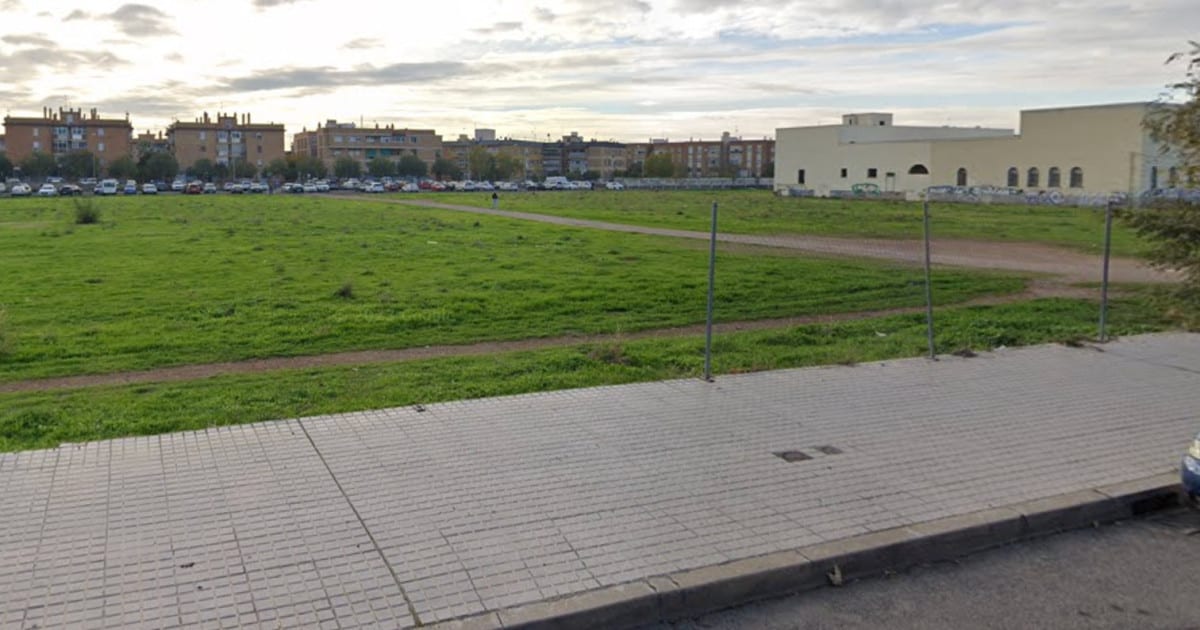
Each tier of government holds a different lever, and they rarely pull together. Madrid writes the tenancy framework. Its Ley 12/2023, the national housing-rights law, lets regions declare stressed markets and cap rents there, but the Junta de Andalucía (the regional government) has refused to declare any. The state funds, too: the Plan Estatal de Vivienda 2026–2030 carries €7,000 million, and SEPES, the state land company, became CASA47, a public housing developer, in December 2025. The Junta sets planning and subsidy rules. Its Ley 5/2025, the Andalusian housing law, passed with PP votes alone and took effect in January 2026, while Madrid disputes 16 of its articles. Since July 2026 housing has its own regional ministry under Rocío Díaz. The city holds land and VIMCORSA. The friction is visible on the ground: 174 of VIMCORSA's planned homes sit on former prison land held up by a transfer between two state companies.
Support for cooperatives is written into the rules more than into budgets. The Andalusian law lets councils grant surface rights, usufruct or grant of use on public land for protected rental housing, and lets cooperatives recruit members from the protected-housing register. The city plan has a cooperative objective but no dedicated land tender yet. No dedicated land tender for cooperatives has been announced so far.
The reply to empty space is conversion and a brake on tourism. Under the Junta's Decreto-ley 1/2025, an emergency housing decree, which aims at 20,000 protected homes in five years, Córdoba agreed in May 2025 to allow protected housing on plots zoned for offices or tourist lodging. A regional decree of 2024 lets councils cap tourist flats, and Córdoba used it: since April 2025 new tourist-flat licences are frozen for three years in the Centro and Sur districts. The Junta cancelled 106 registrations in the capital in the first five months of 2026. Critics point to a gap, as licences for tourist apartments, a separate category, neared 200 in 2026. The national law also allows a surcharge of up to 150% on the IBI property tax for long-empty homes; Córdoba has leaned on building instead.
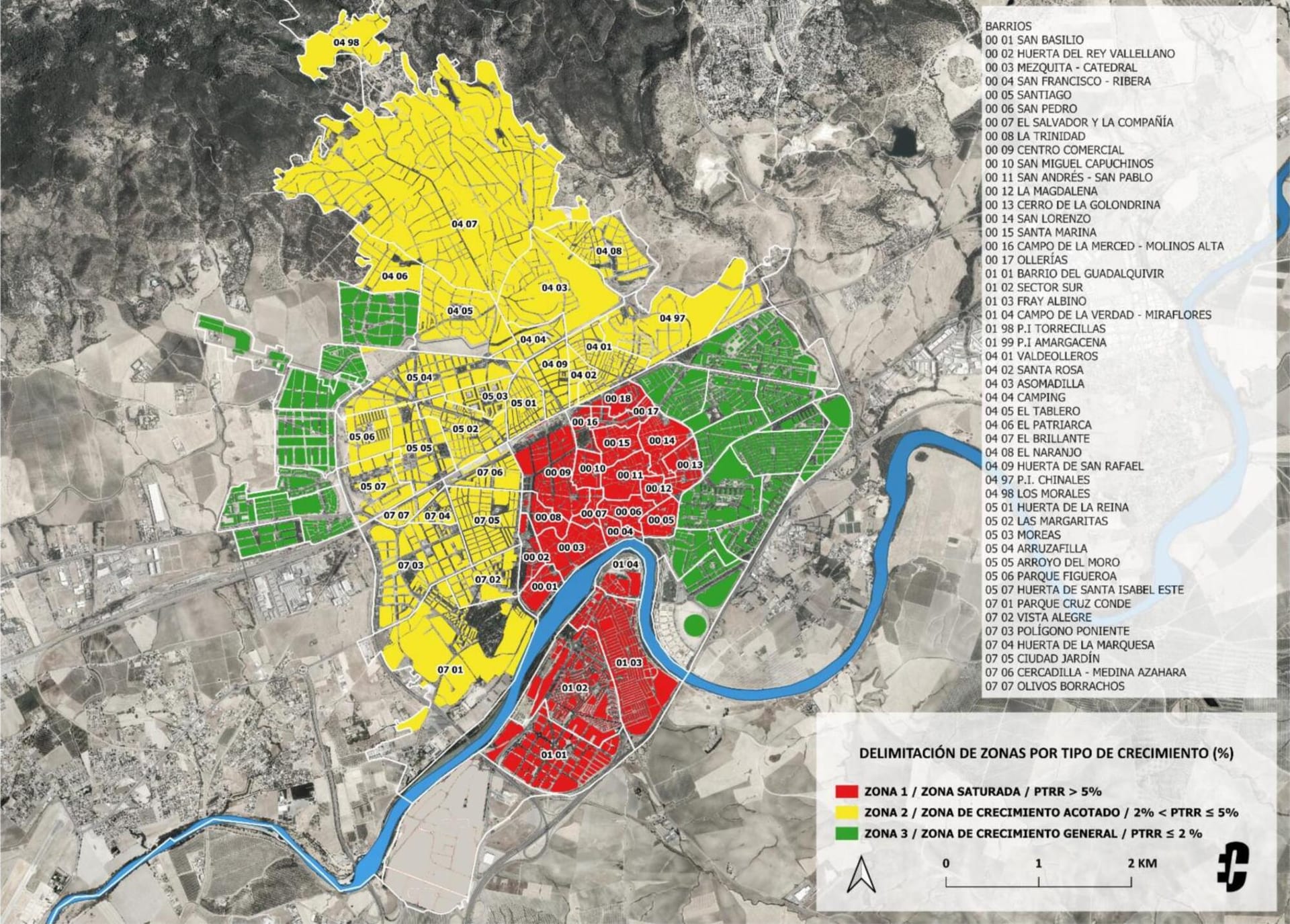
Heat makes retrofit a housing policy. AVRA, the Junta's housing agency, is renovating 586 public homes in 12 projects with EU regional funds. A map by the Córdoba architects' college found that 95% of homes need new windows. In the summer the council opens air-conditioned climate refuges. Compact rehabilitation of the historic centre, rather than new suburbs, is the lower-carbon path, and it is where cooperatives and VIMCORSA already work.
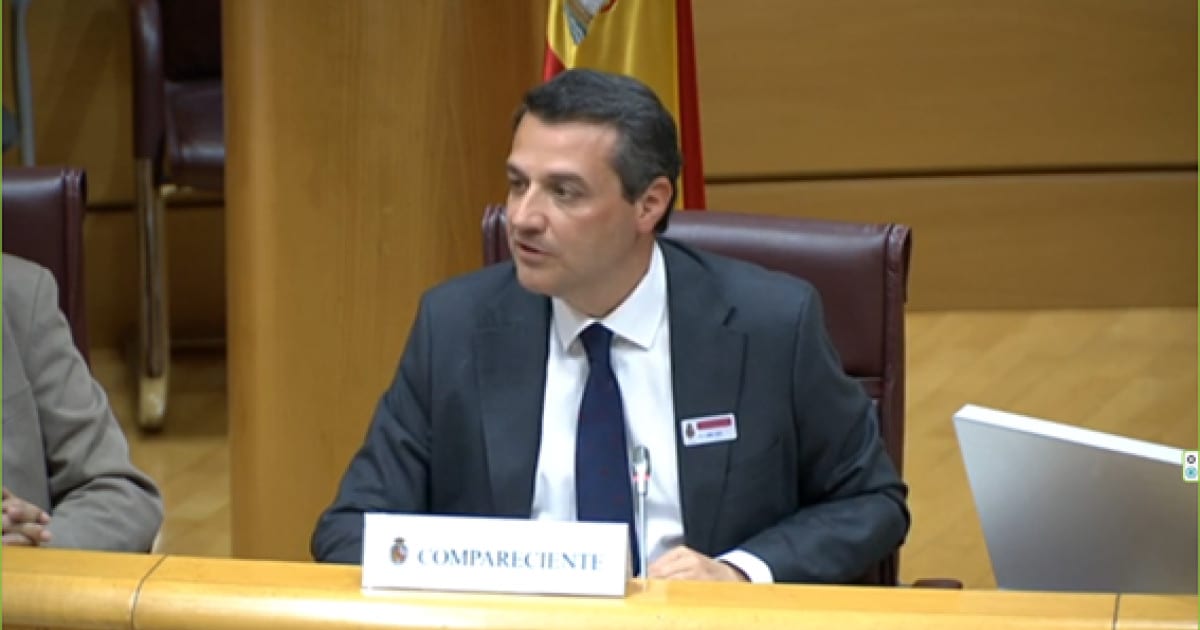
Those years of delay are years that fuel inflation, because we cannot keep up the pace our own general plans set for us.On the other side, tenant groups read the regional law as a law for builders. The mayor's case to the Senate is that faster land release will cool prices. Tenant organisers argue that without rent controls new supply will not reach those already squeezed.
It is very ideological, very populist, and it criminalises poverty.- 1981[source]
VIMCORSA founded
The city creates its municipal housing company to run social housing policy.
- 2020[source]
Plan Vive en Andalucía
The Junta adopts its regional housing plan to 2030, with retrofit and neighbourhood regeneration among its aims.
- May 2023[source]
National housing-rights law
Ley 12/2023 allows stressed-market rent controls and a surcharge on long-empty homes.
- Jan 2024[source]
Councils may cap tourist flats
Decreto 31/2024 lets Andalusian councils limit tourist flats by building, area or zone.
- May 2024[source]
Municipal housing plan approved
The 2024–2029 plan targets 2,144 protected homes and names cooperatives as a route to housing.
- Dec 2024[source]
Plan Vives announced
600 rental flats for young people on seven municipal sites, around €72 million.
- Apr 2025[source]
Tourist-flat moratorium
New tourist-flat licences frozen for three years in the Centro and Sur districts.
- May 2025[source]
Offices and hotels opened to protected housing
Córdoba adopts the regional emergency decree, allowing protected homes on office and tourist-lodging plots.
- Jan 2026[source]
Andalusian housing law in force
Ley 5/2025 lets public land be granted for protected rental housing.
- Apr 2026[source]
State housing plan 2026–2030
The national plan is approved with €7,000 million, triple its predecessor.
- 2027[source]
First Plan Vives building due
The first youth rental building could be finished early in the year.
- 2028[source]
Moratorium ends
The three-year freeze on new tourist flats in Centro and Sur expires unless renewed.
- 2030[source]
Regional and state plans close
Plan Vive en Andalucía and the Plan Estatal de Vivienda both run to 2030.
From the municipal housing company to the 2030 horizon.
The argument will be settled less in the Senate than in a handful of buildings already standing in the city.
Courtyards, kept in common
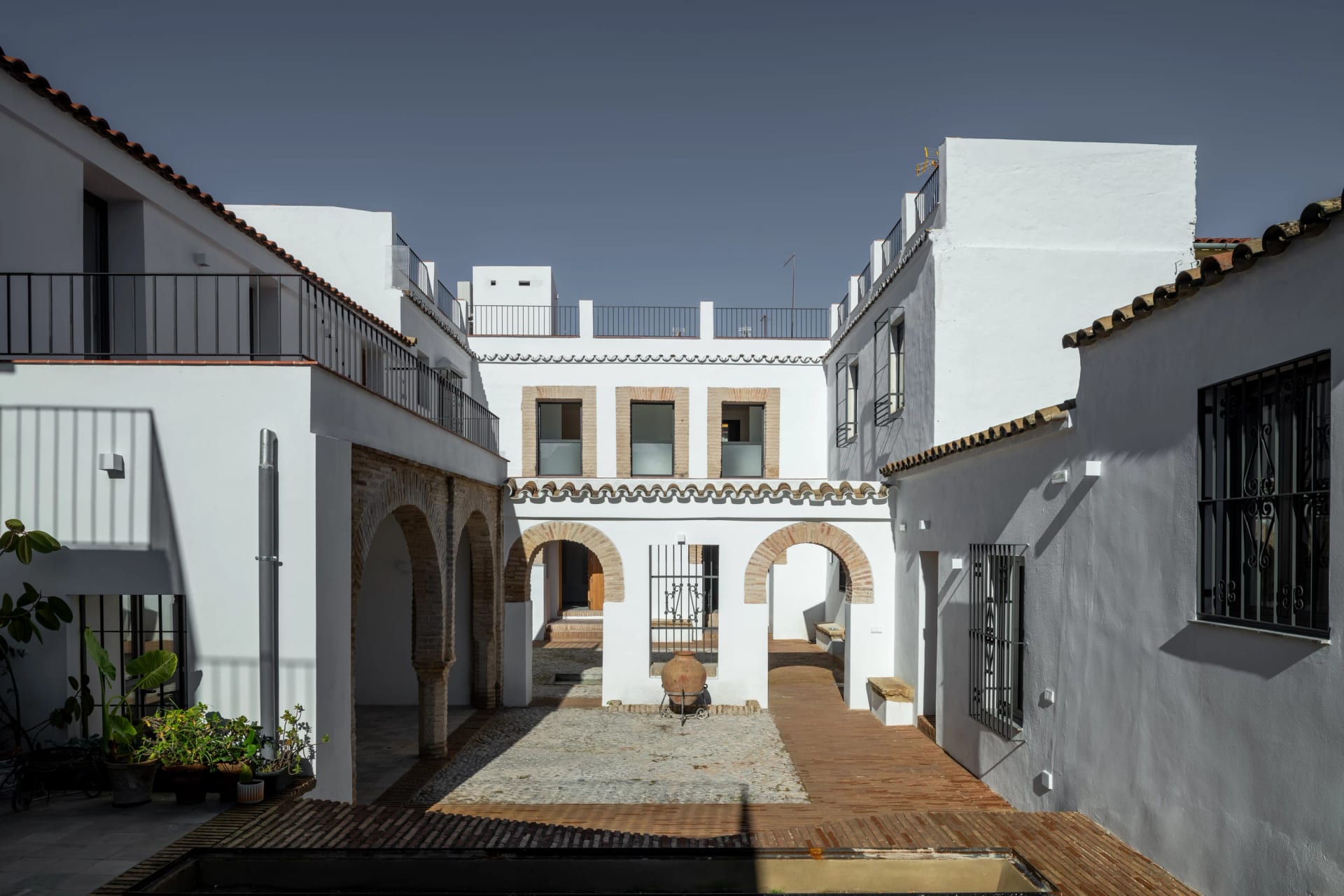
PAX Patios de la Axerquía is the project Córdoba's housing debate keeps returning to. Its first house, Calle Montero 12, is an eighteenth-century casa de vecinos in the Axerquía, the old quarter east of the Mezquita, that once housed as many as 18 families. The six-family cooperative PAX-Astronautas bought it, rehabilitated it around its patio and moved in in May 2022. The programme won a Europa Nostra award that year. Its method is written for others to copy: find an empty patio house, form a cooperative, buy or lease the building, then finance it with ethical banks.
VIMCORSA's senior homes on Calle Don Rodrigo show the municipal version of the same idea. The 23 rental units in the Axerquía were paid for with €1,312,500 of EU urban-strategy funds and handed over in September 2024, with the stated aim of keeping residents in the old centre. On the edge of the city, the company's Sama Naharro complex for older tenants reached 268 units with its second phase.
Plan Vives carries the approach to the young. Its first building, at El Pretorio, holds 52 flats, and rents across the programme are expected to fall between €180 and €220 a month. The sites were municipal plots for public facilities, rezoned under the regional decree, so the programme doubles as a test of building homes on public land.
The retrofit at Plaza de la Corredera 43 works inside a listed building on the city's great arcaded square. AVRA is insulating 27 public rental flats with aerogel on the protected walls, cork outside where rules allow and new timber windows, for €627,499. Further out, the agency's works at Las Palmeras began on 286 homes in 2017, and it is cutting energy use in 76 flats in Moreras.
Huerta de Santa Isabel is where the new city is being drawn. The PAU O-4 sector can hold 3,663 homes, and its first 60 protected homes came from a land-for-flats swap with the Junta in 2025. VIMCORSA's next 231-home VPO block is planned on the same sector.
The Concurso de Patios, the city's courtyard competition since 1921, is the unlikely institution beneath all of this. The council now spends up to €300,000 a year on prizes and participation payments, and a patio only qualifies if the house is lived in. It also bought the patio house at Calle Trueque 4 to become an interpretation centre. A city that pays people to keep courtyards alive has the start of a housing policy for them too.
References
Statistics9Click on any number to see the source
Housing market
Tenure & affordability
Adaptive reuse & vacancy
Population & migration
From our library9
- Plan Municipal de Vivienda y Suelo de Córdoba 2024-2029 — documento de síntesis — Knowledge
- El alquiler de vivienda ha subido un 30% en la última década en Córdoba — Knowledge
- Radiografía del alquiler en Córdoba en 2025: las viviendas disponibles se reducen un 53% y los precios suben un 25% — Knowledge
- Córdoba se llena de alquileres de temporada — Knowledge
- El número de pisos turísticos en Córdoba se reduce en tres meses de moratoria de nuevas licencias — Knowledge
- «No tendría sentido que Córdoba creciera hacia el exterior mientras el centro histórico pierde población» — entrevista a María Dolores Jiménez (Construcor) — Knowledge
- PAX Patios de la Axerquía: rehabilitación de casas-patio vacías a través de procesos cooperativos (revista PH, IAPH) — Knowledge
- Vimcorsa denuncia que el Gobierno frena 174 VPO en Córdoba — Knowledge
- Bellido presenta en el Senado el modelo Córdoba como respuesta municipal a la crisis de la vivienda — Knowledge
Further sources46
- UNESCO Intangible Cultural Heritage: Fiesta of the patios in Cordova — UNESCO Intangible Cultural Heritage: Fiesta of the patios in Cordova
- idealista, from INE Censo 2021 — idealista, from INE Censo 2021
- Plan Municipal de Vivienda y Suelo de Córdoba 2024–2029 (síntesis) — Plan Municipal de Vivienda y Suelo de Córdoba 2024–2029 (síntesis)
- Cordópolis, from the Ministry of Housing rent index — Cordópolis, from the Ministry of Housing rent index
- Cordópolis / idealista, December 2025 — Cordópolis / idealista, December 2025
- Cordópolis / idealista — Cordópolis / idealista
- Cordópolis / idealista — Cordópolis / idealista
- El Salto, July 2025 — El Salto, July 2025
- Cordópolis, from INE (1 January 2026) — Cordópolis, from INE (1 January 2026)
- Consejo de la Juventud de España, Observatorio de Emancipación (via CES Andalucía) — Consejo de la Juventud de España, Observatorio de Emancipación (via CES Andalucía)
- El Debate / La Voz de Córdoba: Cruz Roja on energy poverty — El Debate / La Voz de Córdoba: Cruz Roja on energy poverty
- CIS barometer, January 2026 — CIS barometer, January 2026
- Infobae, CIS barometer May 2026 — Infobae, CIS barometer May 2026
- Puerta de los Patios: casas de vecinos — Puerta de los Patios: casas de vecinos
- BOJA no. 100, 2 July 1994 — BOJA no. 100, 2 July 1994
- La Tribu Educa: Proyecto CO-PATIO — La Tribu Educa: Proyecto CO-PATIO
- Hábitat Colaborativo: moción 40/21 — Hábitat Colaborativo: moción 40/21
- Boletín Oficial de la Provincia de Córdoba no. 102, 29 May 2024 — Boletín Oficial de la Provincia de Córdoba no. 102, 29 May 2024
- VIMCORSA: Plan Municipal de Vivienda y Suelo 2024–2029 — VIMCORSA: Plan Municipal de Vivienda y Suelo 2024–2029
- El Debate / La Voz de Córdoba, December 2024 — El Debate / La Voz de Córdoba, December 2024
- El Debate: new requirements for protected housing in Córdoba — El Debate: new requirements for protected housing in Córdoba
- El Debate / La Voz de Córdoba, June 2026 — El Debate / La Voz de Córdoba, June 2026
- BOE: Ley 12/2023, de 24 de mayo, por el derecho a la vivienda — BOE: Ley 12/2023, de 24 de mayo, por el derecho a la vivienda
- Infobae / Europa Press, October 2024 — Infobae / Europa Press, October 2024
- La Moncloa, Consejo de Ministros, 21 April 2026 — La Moncloa, Consejo de Ministros, 21 April 2026
- El Salto: Andalusian housing law in force — El Salto: Andalusian housing law in force
- El Debate / La Voz de Córdoba, September 2025 — El Debate / La Voz de Córdoba, September 2025
- BOJA no. 247, Ley 5/2025 de Vivienda de Andalucía, art. 96 — BOJA no. 247, Ley 5/2025 de Vivienda de Andalucía, art. 96
- idealista: Decreto-ley 1/2025 de medidas urgentes en materia de vivienda — idealista: Decreto-ley 1/2025 de medidas urgentes en materia de vivienda
- BOP Córdoba no. 123, 27 June 2025 — BOP Córdoba no. 123, 27 June 2025
- Cordópolis / Europa Press, May 2026 — Cordópolis / Europa Press, May 2026
- Cordópolis, September 2026 — Cordópolis, September 2026
- Construible, December 2023 — Construible, December 2023
- Construible, February 2023: COACo rehabilitation map — Construible, February 2023: COACo rehabilitation map
- El Debate: Córdoba activates eight cooled spaces — El Debate: Córdoba activates eight cooled spaces
- José María Bellido, Mayor of Córdoba (PP), presenting the city's housing model to the Spanish Senate, May 2026 — José María Bellido, Mayor of Córdoba (PP), presenting the city's housing model to the Spanish Senate, May 2026
- Ibán Díaz, geographer and spokesperson for the Sindicato de Inquilinos de Sevilla (Seville tenants' union), on the Andalusian housing law, September 2025 — Ibán Díaz, geographer and spokesperson for the Sindicato de Inquilinos de Sevilla (Seville tenants' union), on the Andalusian housing law, September 2025
- New European Bauhaus Prizes: PAX Patios de la Axerquía — New European Bauhaus Prizes: PAX Patios de la Axerquía
- VIMCORSA: Alojamientos para mayores C/ Don Rodrigo — VIMCORSA: Alojamientos para mayores C/ Don Rodrigo
- La Voz de Córdoba, December 2024 — La Voz de Córdoba, December 2024
- Construible, August 2017 — Construible, August 2017
- Construible, April 2022 — Construible, April 2022
- El Debate / La Voz de Córdoba, July 2025 — El Debate / La Voz de Córdoba, July 2025
- VIMCORSA: nuevas promociones — VIMCORSA: nuevas promociones
- BOP Córdoba, 2 February 2026: bases del Concurso de Patios — BOP Córdoba, 2 February 2026: bases del Concurso de Patios
- El Debate / La Voz de Córdoba, August 2025 — El Debate / La Voz de Córdoba, August 2025