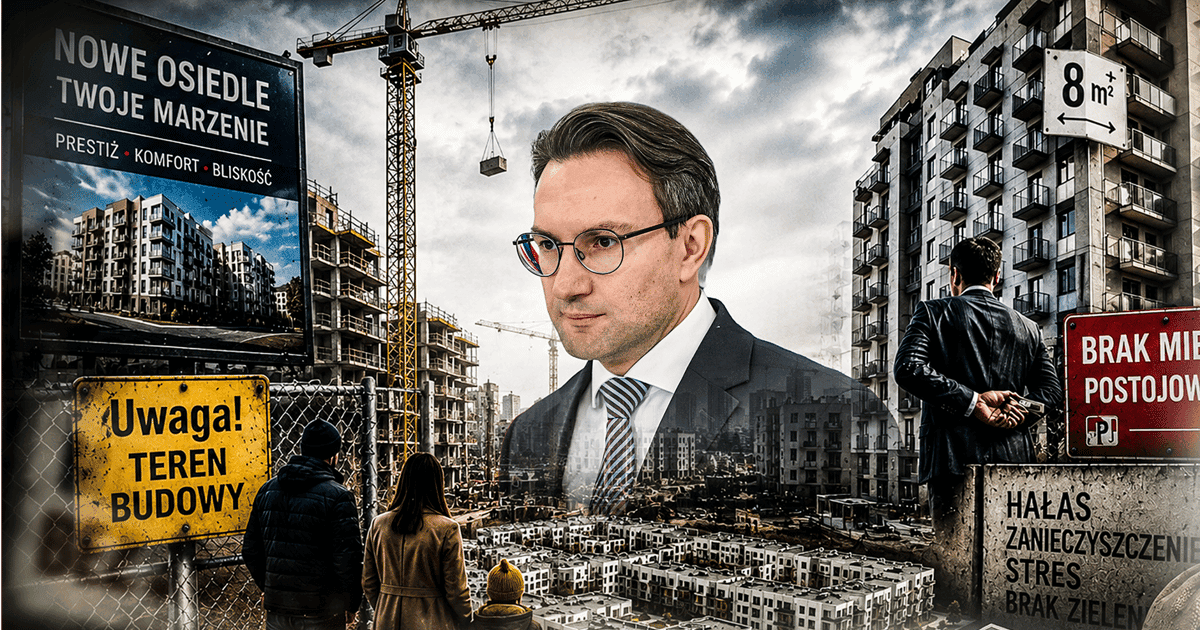
Overview of the Publication
The article titled “Wiceminister Lewandowski: Nie każdy musi być właścicielem mieszkania” is published by Zero.pl, a Polish news outlet covering social and political issues. It is authored by journalist Marek Mikołajczyk, who regularly reports on housing policy and economic matters for the portal. The piece presents the deputy housing minister Tomasz Lewandowski’s arguments for prioritising rental and social housing over private home ownership subsidies.
Current Housing Prices and Affordability
According to the interview, the average price of a new flat in Warsaw has risen to about 20 000 zł per square metre, with similar levels in Gdańsk, Kraków and Wrocław. In 2025 the average Polish salary could purchase only 0.9 m² of new housing, highlighting a significant affordability gap. Compared with the rest of Europe, Poland sits roughly in the middle of the price‑to‑salary ratio, not at the extreme high end.
Scale of Social and Communal Housing Projects
The government plans to contract the construction and renovation of 18 000 apartments in 2026, increasing to over 20 000 the following year. A broader legislative package aims to deliver a total of 250 000 social‑housing units and 128 000 communal units over ten years – roughly 40 000 new units per annum. This is contrasted with the private sector’s output of about 120 000 new flats each year.
Rental Market and Policy Rationale
Lewandowski argues that home ownership is not a prerequisite for a decent life and that the state should strengthen the rental market and expand social‑housing construction. He points to the “housing‑rent gap” affecting 1 / 3 of the population – an estimated 4,4–5,1 million Polish families who are too affluent for communal housing yet unable to afford market rents or purchase a home.
Quality, Mobility and Financial Risks
The article notes that mortgage‑based ownership can lock individuals to a location, limiting labour mobility and increasing financial stress. Many buyers end up with undersized, poorly connected flats and high loan servicing costs, especially when the market lacks sufficient social‑housing alternatives.
Regulatory Responses to Developer Misconduct
Recent scandals, such as the collapse of HREIT founder Michał Sapota with debts of up to 2,8 billion zł, have prompted calls for a stronger Developer Guarantee Fund and stricter oversight of primary‑market sales. Proposed amendments would make developers liable for defects even after the dissolution of special‑purpose companies, extending warranty responsibilities to parent shareholders for at least five years.
Political Context and Future Outlook
The piece mentions upcoming elections and the minister’s confidence that forthcoming housing legislation will survive the parliamentary process. It also highlights depopulation trends in smaller towns, stressing the need for coordinated housing policy to retain residents in regional centres.
European Relevance and Sustainability Angle
For a pan‑European audience, the article illustrates how Poland is tackling the twin challenges of housing affordability and sustainability by shifting resources from ownership subsidies to rental and social‑housing provision. The emphasis on large‑scale public construction, tighter regulation of developers, and the integration of housing policy with labour‑market mobility aligns with broader EU objectives for inclusive, sustainable urban development.