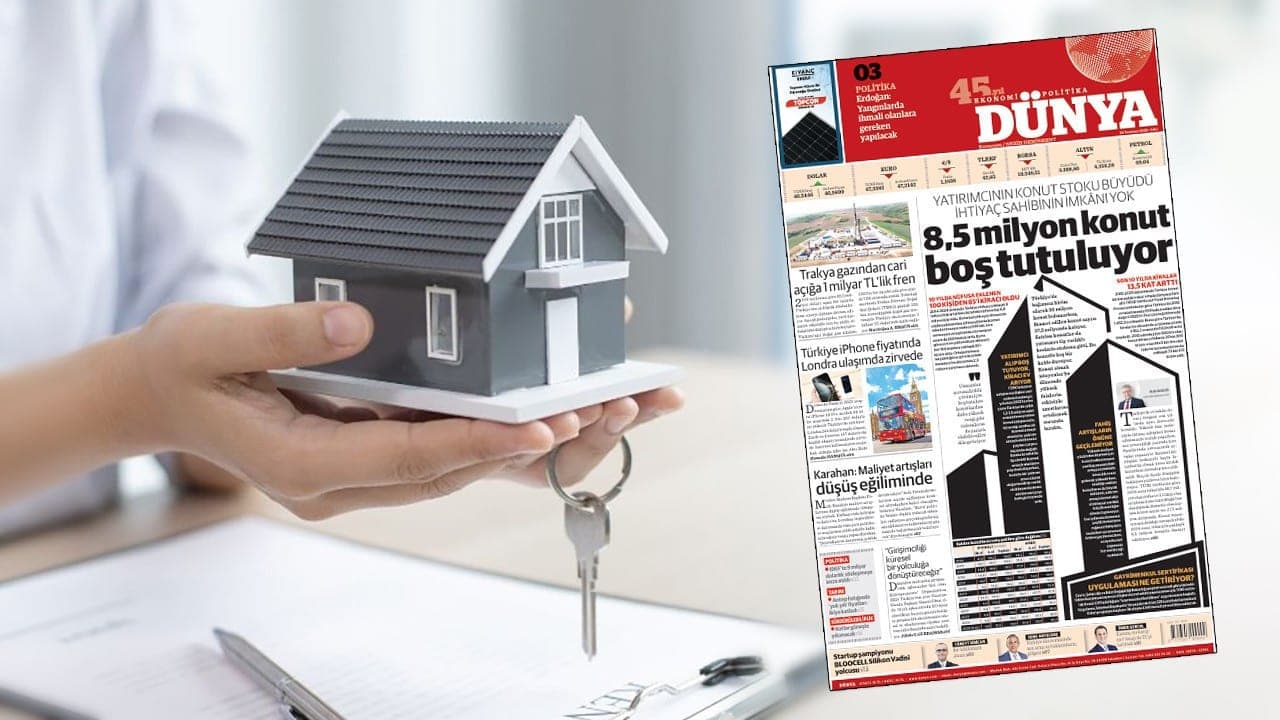
Overview of Turkey’s Housing Vacancy Crisis
The article “Ülkede 8,5 milyon konut boş tutuluyor” was authored by journalist Naki Bakır for the Turkish daily Dünya Gazetesi, a publication known for in‑depth analyses of socio‑economic issues. It examines the scale of vacant dwellings in Turkey, drawing on official data from the Ministry of Environment, Urbanisation and Climate Change, the Turkish Statistical Institute (TÜİK) and recent governmental statements.
Scale of Empty Homes
According to the piece, Turkey’s total housing stock is estimated at roughly 31 million independent units, while the number of dwellings actually occupied is about 27,5 million. This leaves an estimated 8,5 million homes empty – equivalent to around 27 % of the total stock. The vacancy is attributed to a combination of speculative buying, high mortgage rates and a lack of affordable purchase options for ordinary citizens.
Rising Rents and Mortgage Pressures
The article links soaring rental prices to the same forces that generate vacant units. Between 2014 and 2024, the share of owner‑occupied families fell from 61,1 % to 56,1 %, while the proportion of renters rose from 22,1 % to 28 %. By 2024, about 15 % of households were neither owners nor renters, often living in informal accommodation. High inflation and tight monetary policy have pushed mortgage costs upward, making home‑ownership increasingly unattainable for many.
Government Measures and “Real Estate Certificate”
In response, the Ministry of Environment, Urbanisation and Climate Change, together with TOKİ (the State Housing Agency) and Emlak Konut GYO, introduced a “Gayrimenkul Sertifikası” (Real Estate Certificate) scheme. The programme aims to channel investment into new construction rather than speculative holding, with certificates to be listed on Borsa İstanbul. The first pilot involves 5 325 units in Istanbul’s Başakşehir district, with a phased rollout expected through 2028.
Investment Patterns Shifting Toward Speculation
Data from TÜİK show that between 2013 and 2024, the share of mortgage‑financed, owner‑occupied sales fell dramatically – from 17,6 % to 2,6 % of total transactions. Conversely, purchases made without mortgage financing (cash or alternative funding) rose from 60,2 % to 89,3 %. This shift reflects a market dominated by investors who acquire properties for capital gains, often leaving them empty.
Implications for Sustainable Housing
The prevalence of vacant homes undermines sustainable urban development by wasting resources and exacerbating housing shortages. Empty dwellings contribute to higher energy consumption per occupied unit and increase pressure on rental markets, leading to social inequities. The article highlights that without targeted policies – such as higher taxes on vacant properties or incentives for affordable housing – the vacancy trend may persist, impeding Turkey’s broader sustainability goals.
Policy Recommendations Highlighted
While the piece refrains from editorialising, it notes suggestions from experts: imposing higher taxes on unoccupied dwellings, expanding social housing programmes, and improving access to affordable credit. These measures are presented as potential ways to convert vacant stock into usable housing, thereby reducing rental pressures and supporting more sustainable, inclusive cities.