Overview of the Publication
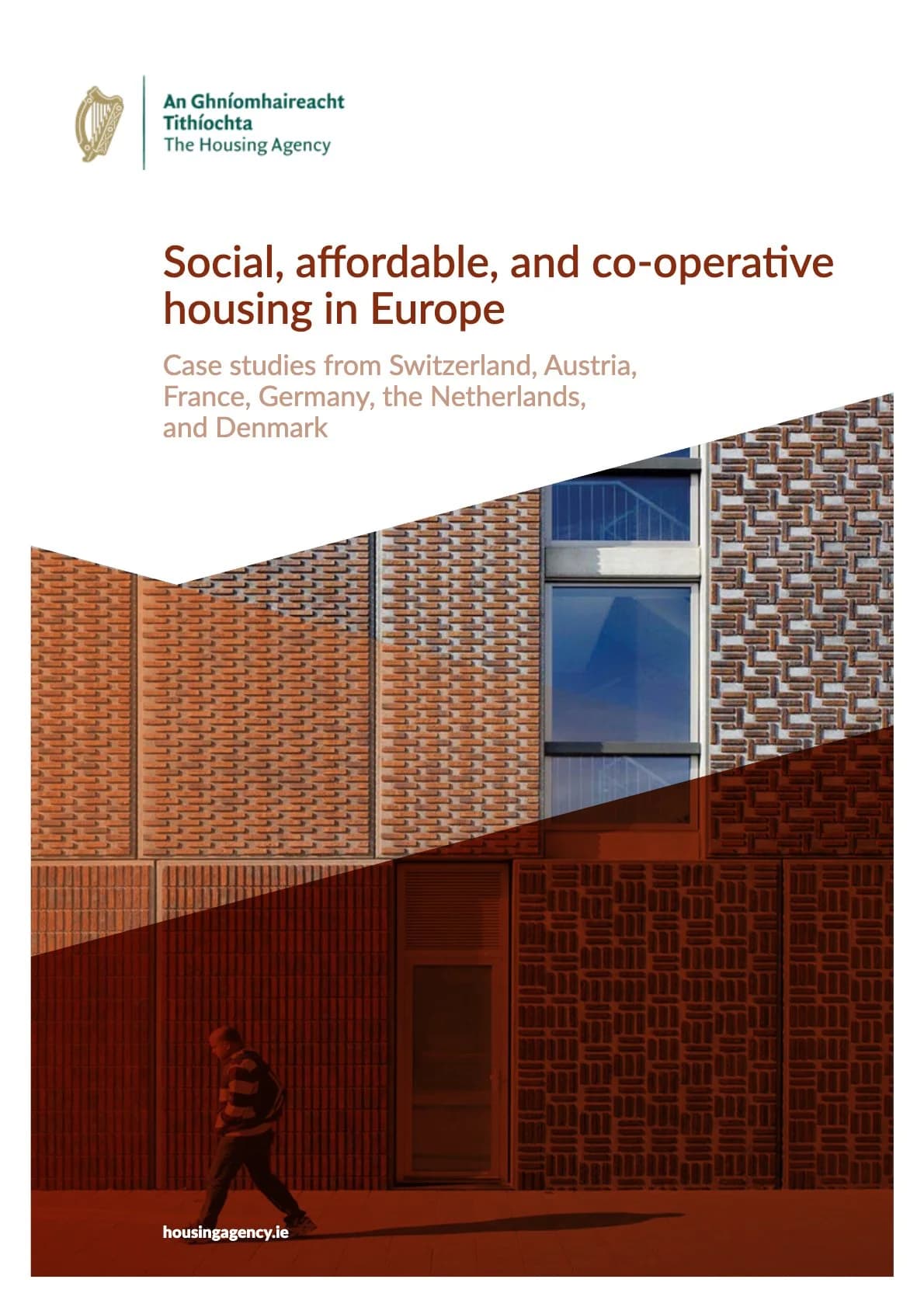
The report “Social, affordable, and co-operative housing in Europe” is produced by The Housing Agency, Ireland’s public body responsible for research and policy support in the housing sector. Edited by Isoilde Dillon, the document compiles 44 recent case studies from Switzerland, Austria, France, Germany, the Netherlands, and Denmark, offering a comparative look at design, financing, and sustainability practices across the continent. The material was extracted verbatim from the original PDF and is intended for educational, non‑commercial use, with all intellectual property rights retained by the source organisations.
Scope and Geographic Coverage
The study examines a total of 44 housing projects, distributed as follows: Switzerland (8 case studies), Austria (4), France (6), Germany (7), the Netherlands (7), and Denmark (6). Each case illustrates a distinct approach to delivering social, affordable, or co‑operative housing, ranging from car‑free apartment blocks in Winterthur to eco‑villages in Copenhagen. The selection reflects a broad spectrum of urban, suburban, and rural contexts, highlighting how local policies, cultural norms, and market conditions shape housing outcomes.
Financial Highlights and Budgets
Budgets for the featured projects vary widely. Notable figures include a €21 million timber‑concrete hybrid development in Switzerland, a €19.3 million cost for the Hagmannareal project, a €12.47 million modular scheme in Berlin, and a €25 million passivhaus‑standard complex in Munich. In Denmark, the BIG‑designed Dortheavej scheme achieved a cost of €1 377 per square metre while delivering high ceilings and flexible layouts. The Dutch “Holland Park West” plan anticipates 212 social rental homes within a €5 billion overall development budget for the larger district.
Sustainability and Energy Performance
Sustainability is a recurring theme. Many projects meet Minergie‑P or Passivhaus standards, emphasizing low‑energy consumption, high indoor air quality, and renewable energy integration. The UN17 eco‑village in Copenhagen aims to address all 17 UN Sustainable Development Goals, employing recycled concrete, timber, and extensive rooftop gardens. Swiss case studies frequently cite robust, low‑maintenance materials, while German and Dutch projects incorporate prefabricated elements to reduce construction waste and accelerate timelines.
Design Elements and Flexibility
Flexibility in spatial planning is highlighted across the case studies. Examples include the modular “Smart” apartments in Vienna, which allow conversion from residential to commercial uses, and the “Kalkbreite Complex” in Zurich, which combines co‑operative housing with cultural and workspaces. The German “wagnisART” complex features cluster apartments with shared kitchens and communal areas, fostering community interaction while maintaining private living zones. Dutch “De Flat Kleiburg” encourages resident‑led renovations, offering a DIY model that lowers initial costs and promotes personalisation.
Tenure Mix and Social Integration
All examined projects blend multiple tenures to promote social diversity. In Zurich, 42 % of dwellings are owned by co‑operatives or public foundations, offering rents one‑fifth below market rates. Austrian developments often combine subsidised rentals with market‑rate units, while French schemes allocate a minimum of 20 % of apartments to social rent. The Danish “Venligbolig Plus” pairs student residents with refugees, creating a buddy system to support integration. The German “Co‑operative housing, River Spreefeld” includes both subsidised and free‑market apartments within the same building.
Statistical Context and Impact
Across the six countries, social rent averages range from 4.2 % in Germany to 20 % in Switzerland, reflecting differing national housing policies. Household expenditure on housing, fuel, and energy is approximately 20 % of disposable income in Switzerland, aligning with EU averages. The report notes that 44 % of the examined projects have explicit community facilities such as shared gardens, childcare centres, or coworking spaces, underscoring the link between design and social wellbeing.
Policy Implications and Lessons Learned
The compilation suggests that competitive architectural procurement, strong resident participation, and flexible design standards are key drivers of successful affordable housing. Countries with well‑established co‑operative sectors, like Switzerland and the Netherlands, demonstrate higher durability and lower long‑term maintenance costs. The German emphasis on modular construction and the Danish focus on prefabricated timber illustrate pathways to reduce carbon footprints while maintaining affordability.
Conclusion for Pan‑European Stakeholders
For policymakers, planners, and architects across Europe, this report provides a data‑rich reference on how diverse financing models, sustainability certifications, and participatory design can be combined to deliver high‑quality, affordable housing. The 44 case studies collectively illustrate that adaptable layouts, mixed‑tenure strategies, and community‑centred amenities are effective tools for addressing current housing shortages while advancing environmental goals.