
Overview of the Report
The document is a written report from the Federal Ministry for Housing, Urban Development and Building (BMWSB) presented to the German Bundestag’s Committee for Housing, Urban Development, Construction and Municipal Affairs. It analyses the nationwide office vacancy situation, its causes, and policy responses, emphasizing the transformation of unused office space into sustainable residential housing.
Current Office Vacancy Landscape
Since the low of roughly 2 % vacancy in 2019, office vacancy rates have risen steadily. The ZIA spring 2025 study records a 5.6 % vacancy for 127 major German office markets in 2024, representing 11.0 million m² of empty space—a rise of 80 basis points (16.7 %). In the seven largest cities (Berlin, Hamburg, Munich, Cologne, Frankfurt, Stuttgart, Düsseldorf), vacancy reached about 8.1 % (≈7 million m²) in 2025 Q2, with the lowest at 5.5 % in Cologne and the highest at 11.9 % in Frankfurt. Smaller B‑ and C‑cities also show increasing vacancies, now around 5 % and 4 % respectively.
Drivers of Vacancy Growth
The surge is linked to the pandemic, the expansion of home‑office, and flexible work models that have permanently altered space demand. While high‑quality, energy‑efficient offices in central locations remain sought after, older, non‑ESG‑compliant buildings face higher vacancy, prompting a “flight to quality” where tenants prefer modern, sustainable premises.
Policy Initiative: “Gewerbe zu Wohnen”
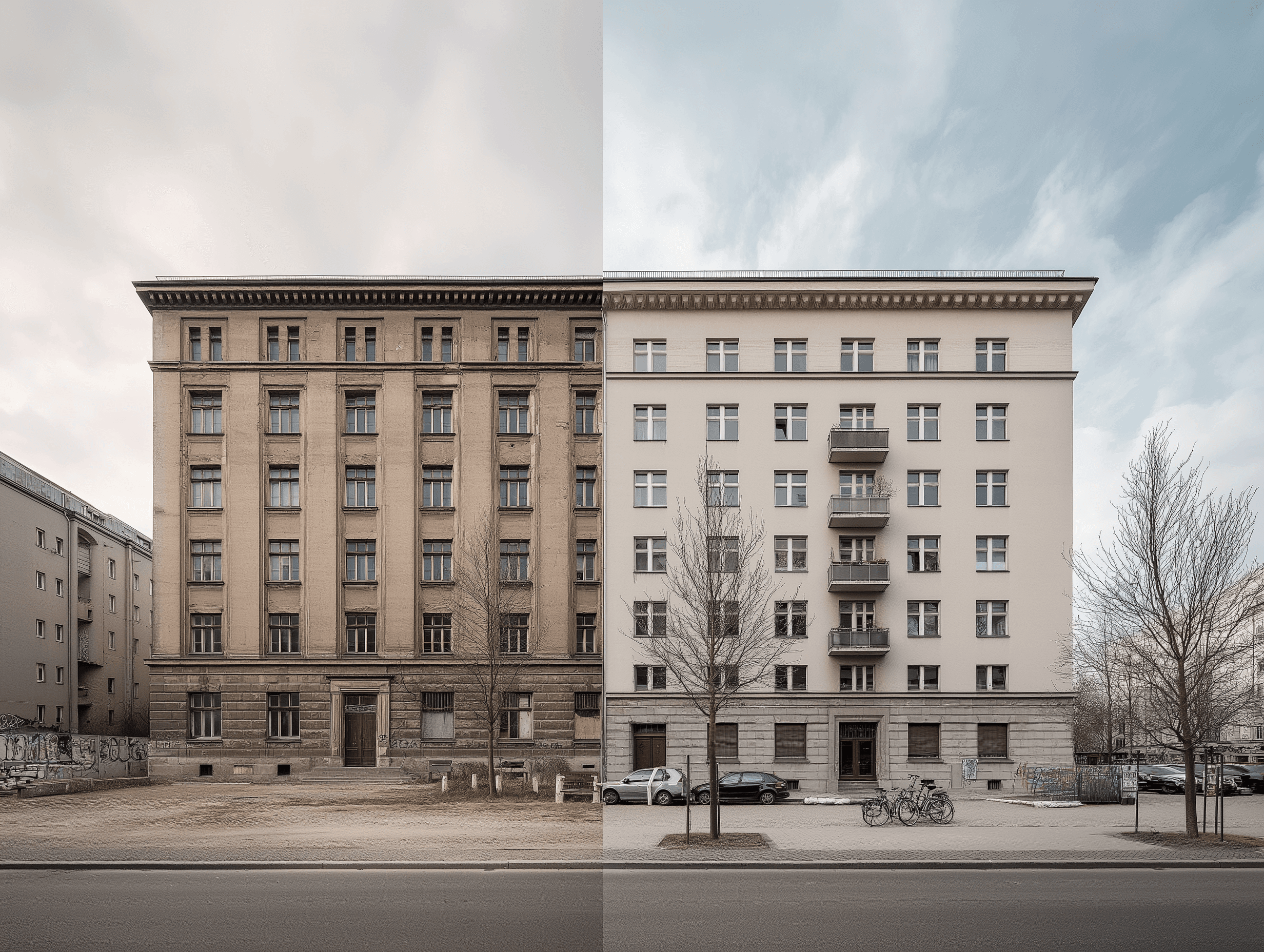
The federal government is drafting a funding program titled “Gewerbe zu Wohnen” to encourage the conversion of surplus office buildings into residential units. The draft allocates €360 million for 2026 within the special infrastructure and climate‑neutrality fund, aiming to address housing shortages, support climate‑friendly retrofits, and remove market barriers to conversion.
Financial Incentives and Tax Measures
Potential support includes special depreciation for new rental housing, provided the conversion creates legally compliant residential units. The program may also integrate “Bauturbo” provisions, allowing flexible building extensions, additions, or courtyard developments even when they deviate from existing zoning plans, thereby easing conversion processes.
Role of Urban Development Funding
Through the Städtebauförderung (urban development funding) programmes, the federal and state governments provide financial aid for revitalising city spaces. Funding is targeted at projects that align with overall urban planning objectives, such as converting vacant offices for cultural or residential use, though direct profit‑driven re‑use is not supported.
Sustainable Housing Implications
Converting office space to housing supports climate goals by reusing existing building shells, reducing the need for new construction, and improving energy performance of retrofitted structures. It also contributes to urban densification, preserving inner‑city vitality and offering new residential opportunities in well‑served locations.
Implementation Challenges
Successful conversion depends on meeting building code requirements, achieving ESG standards, and navigating complex legal frameworks. Coordination between federal, state, and municipal authorities, as well as clear funding criteria, are essential to overcome these hurdles.
Outlook for European Stakeholders
For a pan‑European audience, the German experience illustrates how coordinated policy, targeted financing, and regulatory flexibility can transform office vacancy into sustainable housing supply. The report provides concrete data on vacancy trends, financial allocations, and legislative tools that can inform similar initiatives across Europe, promoting efficient land use and climate‑positive urban development.