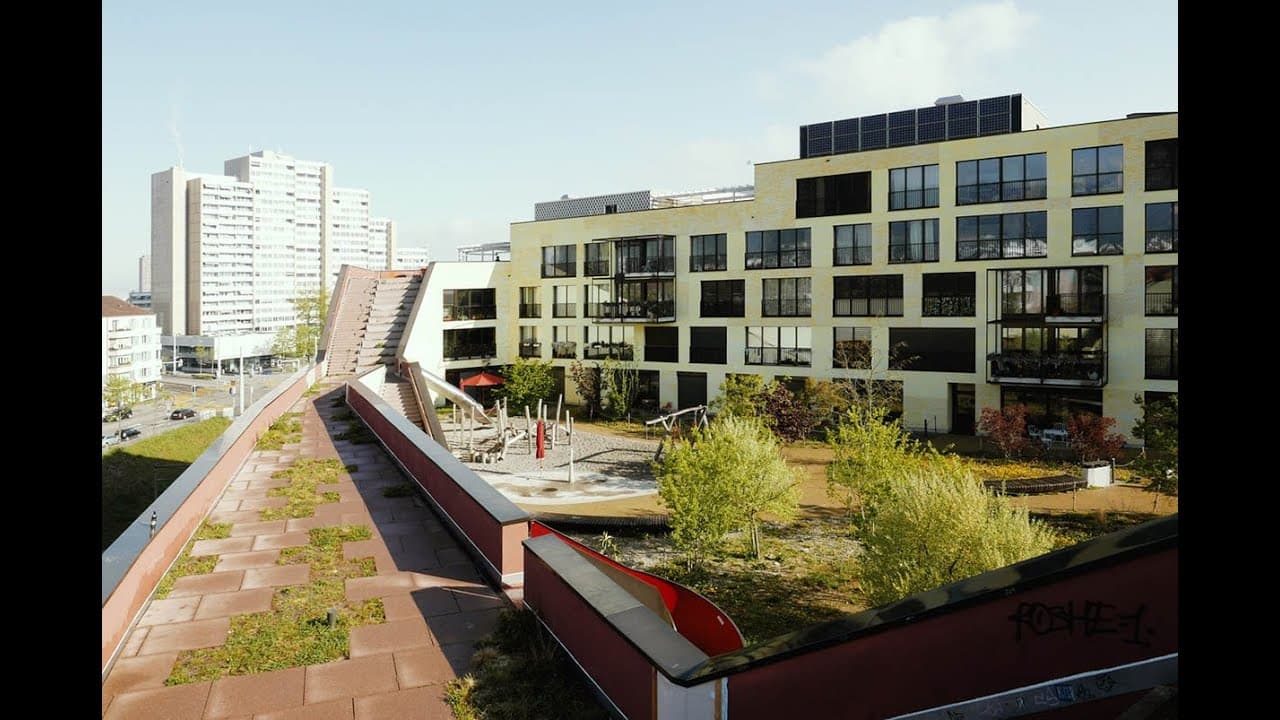
Introduction – Resource Overview
The video “Co‑op Urbanism – A Co‑operative Response to Common Myths of Housing Production” is a recorded talk presented by Sascha Delz on the Harvard Graduate School of Design (GSD) YouTube channel. Delz is an architect, researcher and assistant professor at the University of Southern California, with extensive experience in urban design, cooperative housing and international development, notably in Ethiopia, Switzerland and Singapore. The presentation explores how cooperative housing models challenge conventional myths about housing production and offers sustainable, inclusive alternatives for Europe.
Cooperative Housing – Core Concepts
Delz defines cooperative housing as a collective ownership model where members democratically control the development, financing and management of residential projects. Unlike traditional private or state‑run housing, cooperatives combine collective ownership with one‑share‑one‑vote governance, enabling residents to influence design, allocation of resources and long‑term affordability. The model is highlighted as a response to linear, market‑driven development that often neglects social equity and environmental sustainability.
Key Statistics – Global Impact
The speaker cites that roughly twelve percent of the world’s population participates in some form of cooperative, generating a turnover of about 2.2 trillion USD annually and providing employment for nearly ten percent of the global workforce. In Switzerland, cooperative housing accounts for a significant share of affordable homes, with Zurich alone dedicating 33 percent of its housing stock to non‑profit cooperatives by 2040. In the United Kingdom, similar models have begun to emerge, supported by policy incentives for community land trusts and limited‑equity cooperatives.
Myths Debunked – Housing Production
Three dominant myths are addressed: (1) that housing is solely the domain of the state or market; (2) that property must be either public or private; and (3) that profit‑maximisation is the only viable development driver. Delz demonstrates how cooperatives provide a third sector that blends public support with private initiative, allowing collective ownership, democratic decision‑making and non‑profit operation that prioritises long‑term affordability over short‑term gains.
Sustainable Design – Environmental Benefits
Cooperative projects often incorporate shared facilities, communal spaces and energy‑efficient building practices. Examples from Zurich illustrate compact, mixed‑use developments with communal kitchens, workshops and shared gardens, reducing per‑capita energy consumption and material waste. The collective procurement of renewable technologies and the avoidance of speculative land markets further enhance ecological outcomes.
Innovative Financing – Reducing Barriers
The talk outlines financing mechanisms that lower entry costs for members. In Zurich, cooperatives benefit from city‑backed guarantees allowing down‑payments as low as eight percent, contrasted with the typical twenty‑percent requirement for conventional mortgages. Limited‑equity structures prevent speculative resale, while revolving funds and mutual banks supply capital for new projects. These models are being replicated in other European cities through public‑private‑cooperative partnerships.
Governance – Democratic Participation
Each member possesses an equal vote regardless of share size, ensuring inclusive governance. The presentation notes that voting rights are not accrued over time; instead, all members share decision‑making from the moment they join. This structure mitigates power imbalances and sustains community cohesion, as evidenced by long‑standing cooperatives in Switzerland that have operated for nearly a century.
Case Studies – Zurich and Beyond
Several illustrative projects are described: the “Abz” cooperative in Zurich, notable for early women’s voting rights; the “More Than Living” umbrella cooperative linking 55 individual societies; and a mixed‑use tower that integrates affordable units with commercial spaces and shared amenities. These examples demonstrate scalability, from small neighbourhood houses to high‑rise developments, while maintaining cooperative principles.
Policy Context – European Relevance
European municipalities are increasingly recognising cooperatives as tools for meeting housing targets and climate commitments. The presentation references the European Union’s emphasis on social housing, community land trusts and limited‑equity ownership as complementary to national strategies. The Swiss model, supported by federal and cantonal subsidies, offers a template for other nations seeking to combine affordability with sustainability.
Conclusion – Path Forward for Sustainable Housing
Delz’s talk provides a data‑rich, practice‑oriented overview of cooperative urbanism, positioning it as a viable alternative to conventional housing production across Europe. By leveraging collective ownership, democratic governance and innovative financing, cooperatives can deliver affordable, environmentally responsible homes while fostering social cohesion. The video serves as a resource for policymakers, architects, planners and community activists aiming to integrate cooperative models into sustainable housing strategies.