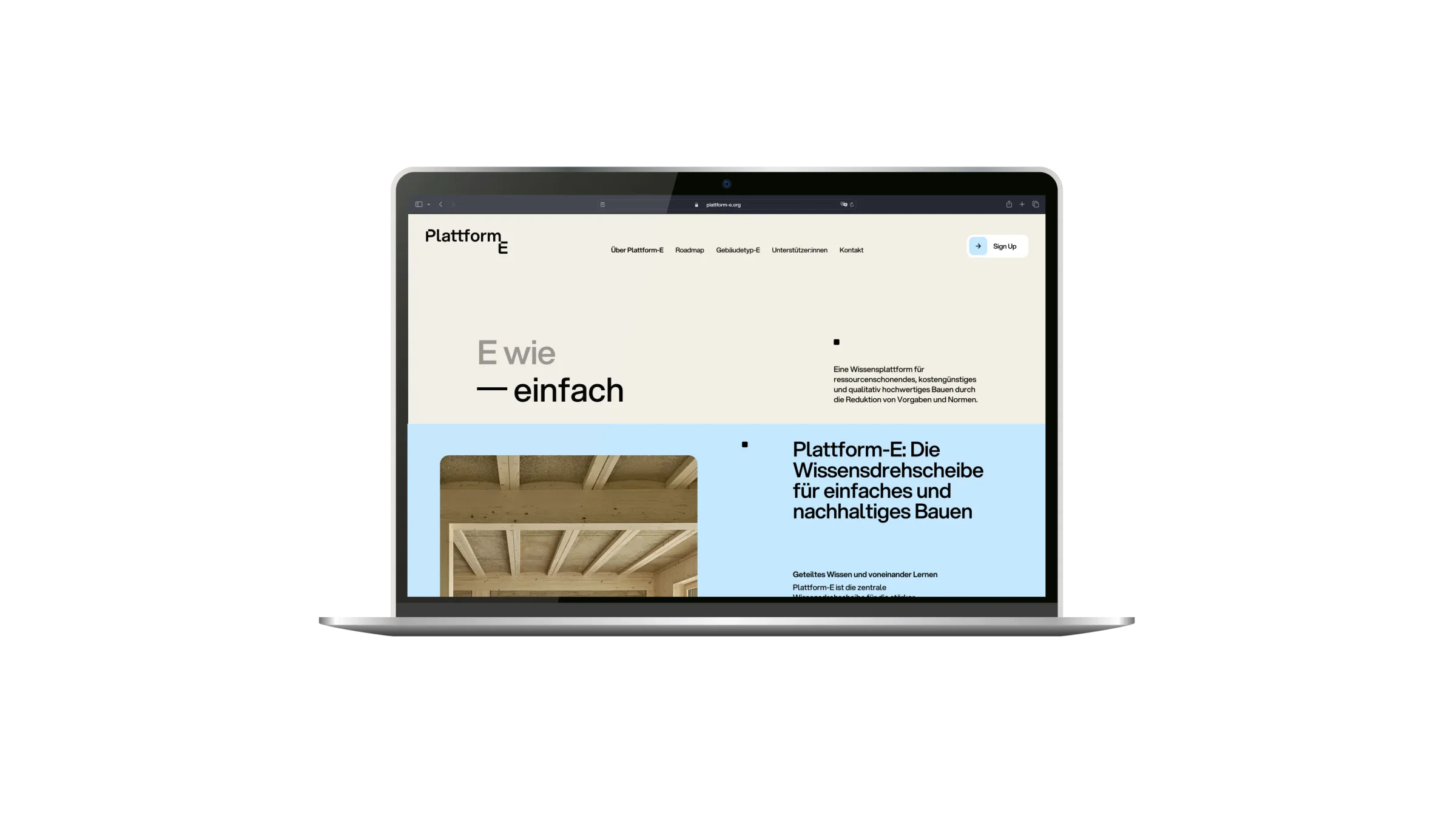
Overview of Plattform‑E and Its Mission
Plattform‑E is a pan‑European knowledge‑transfer platform dedicated to simple and sustainable building practices. Published by the organization “Plattform E,” it aggregates practical experiences from architects, planners, builders, legal experts, insurers, and public institutions. The platform aims to lower barriers in construction, making building processes more resource‑efficient, affordable, and environmentally friendly.
Core Functions and Services
The platform serves as a central hub where project insights, case studies, and tools are systematically collected and made accessible to industry stakeholders. It offers a searchable database of pilot projects—such as the 19 “Gebäudetyp‑E” prototypes in Bavaria and various Hamburg‑Standard initiatives—providing concrete examples of innovative, low‑cost construction methods.
Commitment to Sustainable Housing
Plattform‑E emphasizes that simplification does not compromise essential safety standards (structural integrity, fire protection, health, and environmental safeguards). Instead, it focuses on reducing non‑essential comfort and finishing standards, which can lead to significant savings in material, time, and cost while maintaining durability and safety.
Contributors and Expertise
The platform features contributions from a diverse group of professionals: Andrea Bitter (architect and sustainability advisor), Johanna Puchner (project lead for München Wohnen), Prof. Dr‑Ing. Christos Chantzaras (entrepreneurship professor), Patrizia Haggenmüller (Built by Nature network), Alexander Bendzko (non‑profit housing developer), Prof. Elisabeth Endres (building climate specialist), Dr‑Ing. Anne Niemann (resource‑efficient design professor), Máté Péntek (digital engineering expert), and many others. Their combined expertise spans academia, industry, and policy, ensuring a comprehensive perspective on sustainable building.
Development Timeline and Milestones
The initiative began with a feasibility study in January 2025, followed by a validation phase from April to December 2025, during which target groups helped shape the platform’s knowledge‑transfer capabilities. In June 2026, Plattform‑E launched its public website (plattform‑e.org), integrating AI‑driven tools, reference projects, and experiential reports to support planners and developers across Europe.
Key Projects and Impact Highlights
- Gebäudetyp‑E: A series of experimental building types that test simplified construction methods, resulting in reduced heating and cooling requirements.
- RESI Project: Demonstrates a frugal building without conventional heating or cooling systems, documenting both successes and challenges for replication.
- Pilot Projects: Over 19 building prototypes in Bavaria and numerous collaborations with the Hamburg Standard illustrate practical pathways to cost‑effective, sustainable housing.
Data‑Driven Knowledge Sharing
Plattform‑E provides quantitative data on material consumption, energy performance, and cost reductions achieved through simplified designs. These metrics enable stakeholders to evaluate trade‑offs and adopt evidence‑based solutions for new housing developments.
Relevance for a Pan‑European Audience
The platform’s open‑access model encourages cross‑border collaboration, allowing European policymakers, architects, and developers to learn from successful experiments in Germany and adapt them to local contexts. By highlighting scalable, low‑cost building techniques, Plattform‑E contributes to addressing the continent’s housing shortage and climate goals.
Access and Future Directions
The website offers free access to its repository, including project documentation, best‑practice guides, and an AI assistant that personalizes information retrieval. Ongoing plans include expanding the database to include more international case studies, enhancing AI capabilities, and fostering a community of practice that continuously updates the knowledge base as new experiments emerge.