Summary written by AI · 3 min read
Overview of the Report and Its Origin
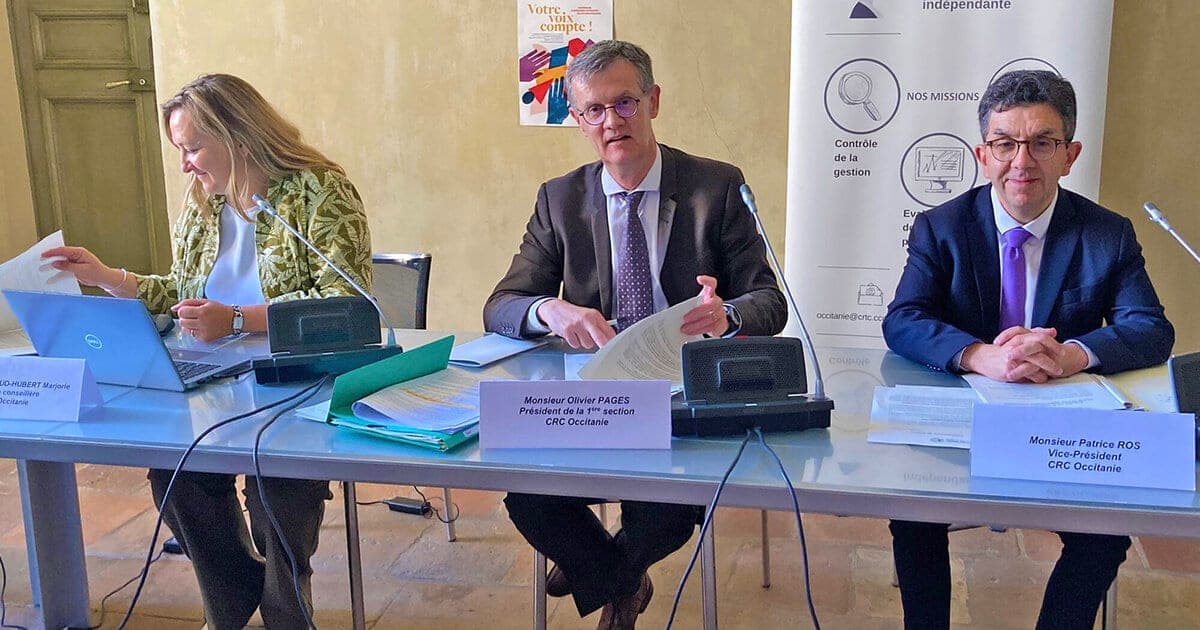
The article « Logement social dans la grande agglomération toulousaine : un système à bout de souffle » is published by La Gazette du Midi, a regional newspaper covering the Midi‑Pyrénées area. The investigation was presented by Marjorie Merliaud‑Hubert (première conseillère), Olivier Pages (président de la 1ᵉʳ section) and Patrice Ros (vice‑président of the Chambre régionale des comptes d’Occitanie). Their analysis, delivered on 19 May 2026 in Toulouse, draws on the regional audit court’s review of social‑housing policy in the greater Toulouse metropolis.
Key Statistics on Demand and Supply
- Average waiting time for social housing rose from 13 months (2021) to 16 months (2024).
- Applicants increased by 31 % to roughly 55 000.
- The territory held 86 227 social‑housing units in 2022 (16.7 % of the total housing stock) with about 9 000 annual admissions.
- Since 2019, public subsidies amount to €44.6 million from five inter‑communalities and €52 million of state‑funded “aid to the stone”, totalling over €96 million.
Governance Structure and Stakeholders
Three to four actors shape policy and delivery:
- EPCI/inter‑communalities – set inter‑communal housing plans, coordinate state aid and manage allocation conferences.
- Communes – retain urban‑planning and land‑ownership powers.
- Social landlords – build new units and propose candidates.
- State – enforces the SRU law (25 % social housing for communes > 3 500 inhabitants), can impose penalties or intervene directly in municipalities deemed “deficient”.
Production Capacity and Recent Deliveries
- Around 3 300 social units were completed in 2024, up from roughly 1 000 in 2009.
- Approximately 54 % of the current stock is less than 15 years old.
- Construction timelines average three to four years from project launch to hand‑over.
Allocation Ratios and Social Mix
- In the first‑ring suburbs, the ratio is one unit for every 5‑12 requests, making the area the most pressured after Paris since 2023.
- Only 24 % of new construction is “very social” (PLAI), far below local‑habitat plan targets.
- Priority households represent 26 % of allocations (target 37 %).
- Job‑seekers constitute 17 % of demand but receive only 9 % of assignments.
Turnover, Tenure Length and Policy Proposals
- Tenant turnover fell from 8.2 % (2019) to 6.9 % (2024), indicating longer stays and fewer units becoming available.
- Minister Vincent Jeanbrun has advocated a “three‑six‑nine” lease model (minimum nine‑year lease, renewable every three years) to improve mobility and match household changes.
Challenges Impacting Future Supply
- Decline in construction permits and agréments, especially in 2023, limits forthcoming projects beyond 2027.
- Rising material, energy and interest‑rate costs, driven by the COVID‑19 pandemic, the Ukraine war and broader economic instability, inflate building budgets.
- Limited public land availability and reduced municipal permits further raise land costs.
- Urban‑renewal programmes divert funds from new builds to refurbish existing priority‑area housing.
Strategic Levers for Sustainable Housing
The report suggests several evidence‑based actions for a pan‑European audience interested in sustainable housing:
- Enhance transparency and targeting in allocation processes to prioritise the most vulnerable.
- Promote flexible lease structures to increase turnover and better match demographic shifts.
- Strengthen tripartite dialogue among inter‑communalities, communes and landlords to coordinate supply with demand.
- Secure stable, long‑term funding streams to offset volatile construction costs and encourage the building of energy‑efficient, socially mixed dwellings. Overall, the Toulouse metropolitan area faces a severe imbalance between soaring demand and constrained supply of social housing. The data underline the urgency of coordinated policy, financial support and innovative tenancy models to achieve a more sustainable and equitable housing system.