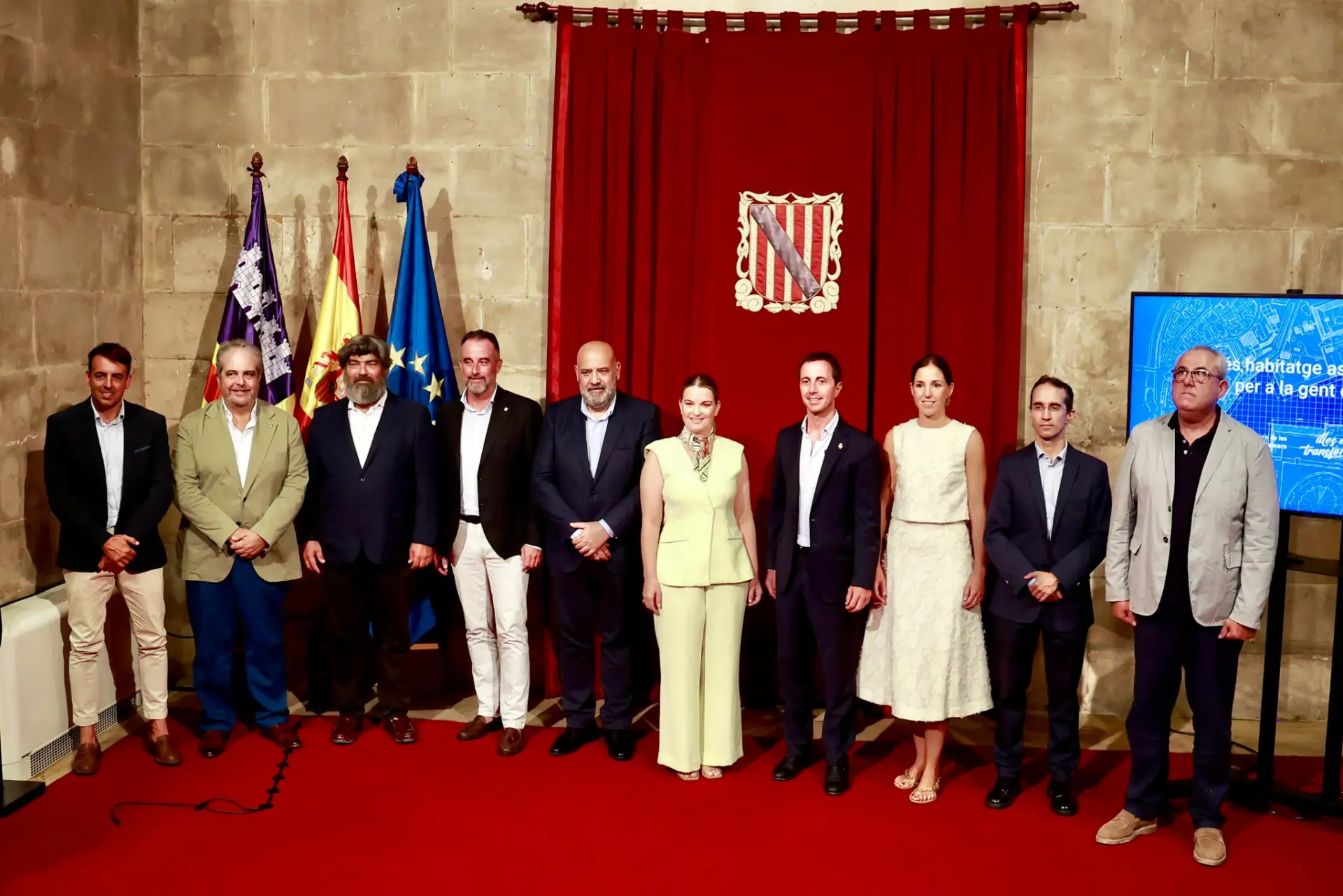
Overview of the Housing Initiative
The project concerns the construction of 323 public‑protected homes (VPO) on a 33,000 m² plot in Palma, Mallorca, transferred by the Consell de Mallorca to the Ibavi (Balearic Institute of Housing). The development will be the largest single public housing scheme ever undertaken in the Balearic Islands, aiming to increase affordable housing stock for long‑term residents.
Scale and Financial Details
The site, valued at €4.6 million, is currently undeveloped adjacent to the Velódromo Illes Balears. The plan will deliver 323 units, surpassing the previous maximum of 240 allowed on the parcel. In addition, the Consell will receive 35 social‑use apartments (15 one‑bedroom, 12 two‑bedroom, 8 three‑bedroom), a 400 m² ground‑floor space for a cultural rehearsal centre, and a 3,000 m² area for a future Casa de la Infancia (children’s centre).
Timeline and Process Acceleration
The scheme is classified as a Projecte Residencial Estratégic (PRE) and an investment of autonomous interest, mechanisms designed to speed up approvals. Authorities anticipate a reduction of the procedural period to roughly 18 months, compared with a ten‑year timeline under standard processes. No precise construction schedule is set, but delivery is projected for the next legislative term.
Residency Requirement for Allocation
Eligibility for the 323 homes will require applicants to have at least 15 years of legal residence in the Balearic Islands. This condition, defended by President of the Government Marga Prohens, is intended to prioritise long‑standing locals over newcomers, addressing concerns about over‑population and land scarcity on the islands.
Institutional Roles and Commitments
The initiative is overseen by the regional government (Govern) and the Consell de Mallorca, with the Ibavi acting as the executing body. The Consell, lacking direct housing competence, exchanges the land for a portion of the new homes and community facilities. The project aligns with the region’s broader housing strategy, which currently supports over 1,200 public units across new developments.
Impact on Sustainable Urban Development
By increasing density on an already designated urban site, the project reduces the need for further land consumption, supporting sustainable land‑use policies. The PRE status also permits a higher building envelope, optimising the use of existing infrastructure and mitigating sprawl. The inclusion of cultural and social facilities contributes to mixed‑use neighbourhoods, fostering social cohesion and reducing travel distances for residents.
Statements from Key Figures
President Marga Prohens highlighted that the scheme addresses a “principal priority” after years of inaction, emphasizing the need for affordable housing for those already residing on the islands. Consell President Llorenç Galmés underscored the Consell’s awareness of the housing access problem, noting that the government is acting “for the people of here.” Housing Minister José Luis Mateo indicated that design will likely proceed via an ideas competition, ensuring architectural quality.
Publication Context
The article appears in Ultima Hora, a major Balearic daily, authored by journalist Blanca Pou. The outlet provides regular coverage of regional political and social issues, lending credibility to the reported details. The piece was automatically extracted from the newspaper’s website and submitted to the European Housing Commons (EHC) database for broader dissemination.