Context and Origin
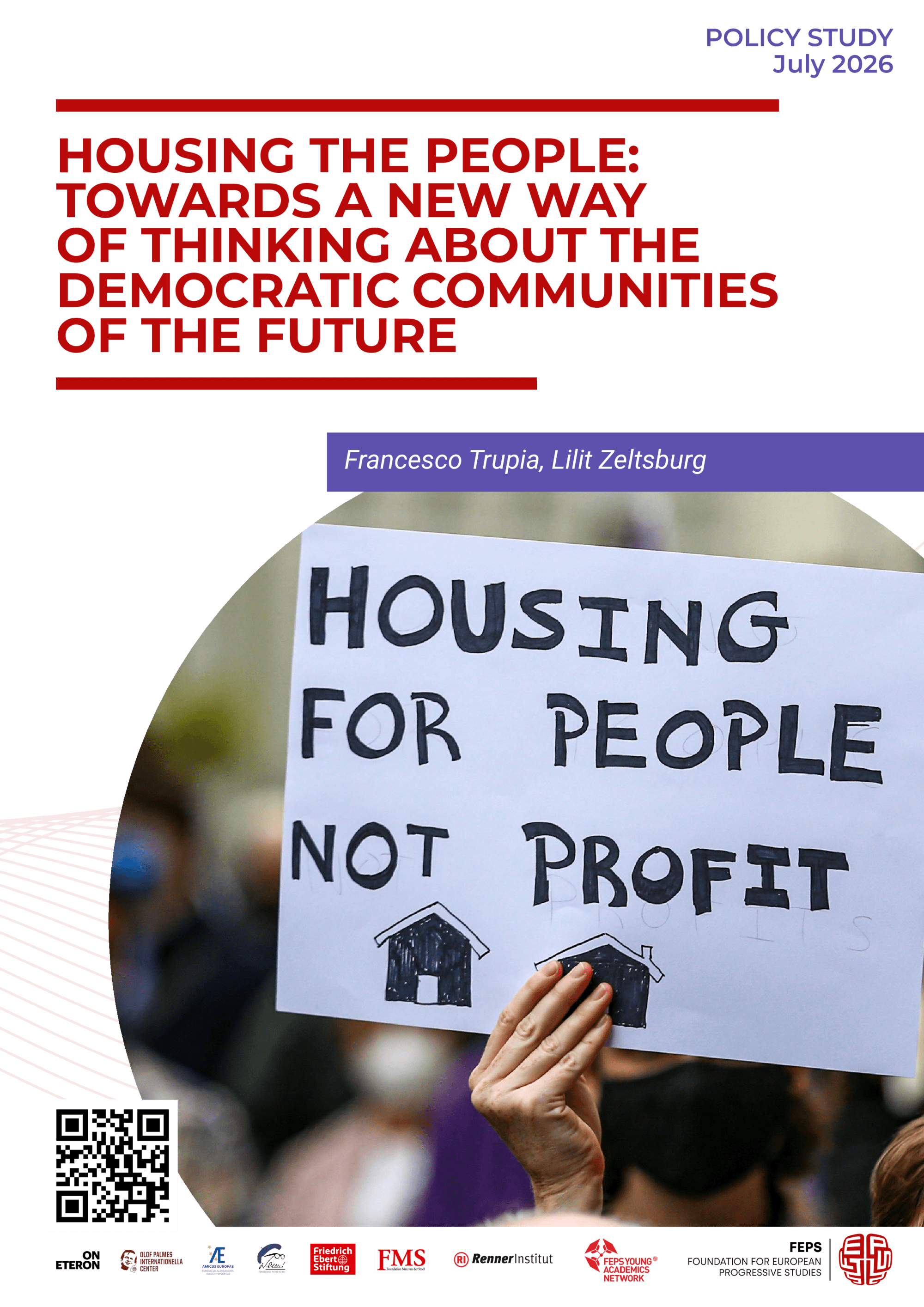
This policy study, titled “Housing the People: Towards a New Way of Thinking About the Democratic Communities of the Future,” was published in July 2026 by the Foundation for European Progressive Studies (FEPS), a pan‑European think‑tank supporting progressive politics across the EU. The authors, Francesco Trupia (Adjunct at Nicolaus Copernicus University, post‑doctoral researcher at CEU Democracy Institute) and Lilit Zeltsburg (researcher and policy advisor with experience in the Dutch Senate), bring expertise in political philosophy, migration, and radicalism. The study is publicly available on the FEPS website and was produced with financial support from the European Parliament.
Scope and Methodology
The research combines qualitative interviews with policy experts, activists and practitioners across EU cities, alongside a review of academic and policy literature. Case studies include Gent, Amsterdam, Paris, Vienna, Sofia and several German, Belgian and Dutch locales. The authors explicitly avoid generalising findings, instead illustrating a range of housing‑related interventions and their impacts on community cohesion and far‑right mobilisation.
Key Findings: Housing Crises as Interconnected Issues
The authors identify multiple, interlinked “Housing Crises”: unaffordable rents, gentrification‑driven displacement, structural vacancy, and the commodification of urban space. In 2025, the Netherlands reported ≈18 million m² of vacant property (about 200 000 apartments), while Paris faced ≈145 000 structurally uninhabited units, many owned by ultra‑wealthy individuals. Vacancy taxes are already in use in Flemish municipalities such as Mechelen, showing early signs of reducing abandonment. The study links rising housing pressure to increased support for far‑right parties in cities like Frankfurt, Gent and Sofia, where displacement erodes democratic participation and fuels nationalist narratives.
Policy Recommendations: Local Level
- Protect socially vital actors (local businesses, cultural venues) through targeted regulations.
- Involve residents directly in neighbourhood improvement plans, ensuring rights to remain after renovations.
- Impose and enforce vacancy taxes, allowing authorities to seize long‑term empty buildings for housing.
- Prioritise the creation of social and affordable rental stock in municipal development strategies.
- Retain a share of developer profits for community reinvestment.
Policy Recommendations: National Level
- Design housing programmes that integrate schools, health services and cultural spaces to build cohesive neighbourhoods.
- Enshrine equal renter‑owner rights, limit evictions and treat rent payments comparably to mortgage obligations in credit assessments.
- Promote renting over home ownership to reduce price inflation and enhance mobility.
- Implement universal rent‑control frameworks adaptable to local contexts.
- Recognise diverse living arrangements (co‑operatives, squats) within legal frameworks, supporting communal ownership models. 🇪🇺 Policy Recommendations: European Level
- Codify the right to housing and protection from displacement as a fundamental EU right.
- Adjust fiscal rules to allow non‑discretionary state investment in social housing.
- Condition EU funding on the inclusion of affordable units in residential projects.
- Regulate speculative foreign real‑estate investment to curb price spikes.
- Review EU legislation that unintentionally hinders social‑housing development, such as equal corporate tax treatment for housing corporations in the Netherlands.
Implications for Sustainable Housing
The study stresses that sustainable housing must go beyond energy efficiency; it requires social sustainability, i.e., stable, inclusive communities where residents have secure tenure and participation rights. By reframing housing as a common good rather than a profit‑driven commodity, the authors argue that Europe can mitigate both ecological pressures (through efficient retrofits and shared spaces) and democratic erosion linked to far‑right ascendancy.
Conclusion
“Housing the People” provides a comprehensive, evidence‑based roadmap for policymakers at municipal, national and EU levels. It combines quantitative data on vacancy, rent levels and political shifts with qualitative insights from grassroots actors. The recommendations aim to create resilient, affordable, and democratically vibrant neighbourhoods, positioning sustainable housing as a cornerstone of Europe’s social‑political future.