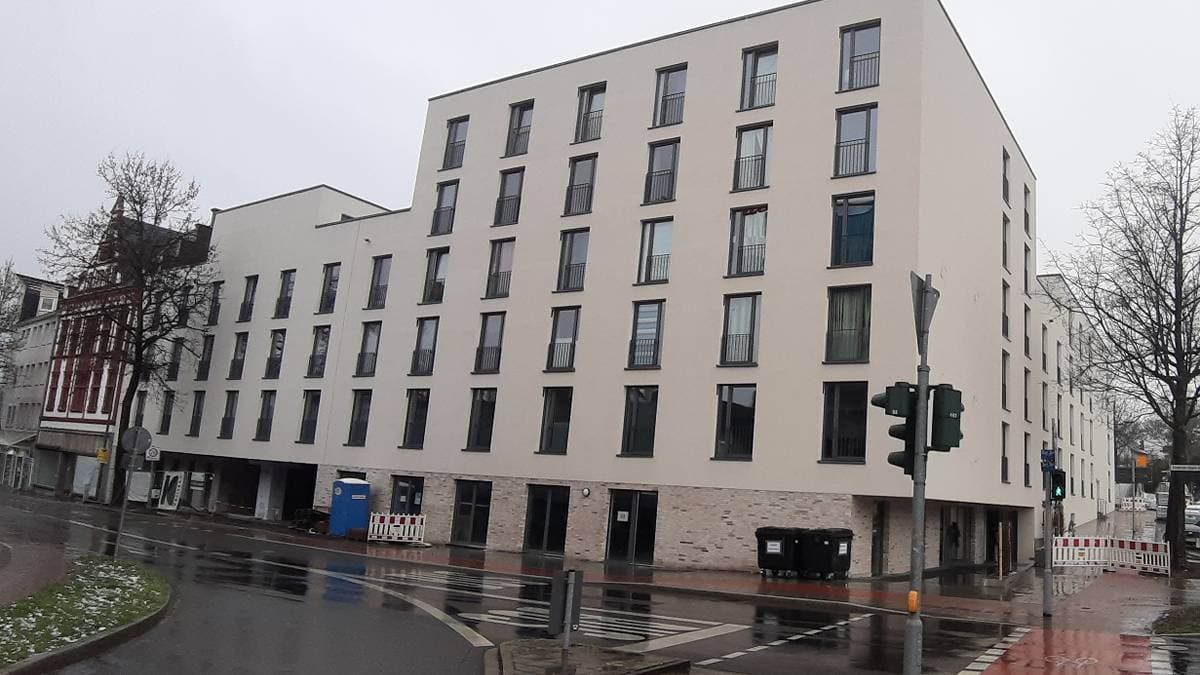
Overview of the Public Housing Funding Initiative
The City of Mönchengladbach, through its Department for Housing Promotion and Market Development, has published a detailed report on the 2025 public housing funding programme. The municipal authority, responsible for allocating and managing state‑provided subsidies, highlights the scale of investment, the number of units approved, and the strategic role of the city‑owned housing developer WohnBau in delivering affordable homes.
Funding Amounts and Budget Amplification
In 2025 the city secured €43.2 million in public housing subsidies, matching the previous record year. The original municipal allocation of €16.4 million was increased to 263 % of the initial sum through multiple applications to the state of North Rhine‑Westphalia. This amplified budget enabled the approval of 218 new or modernised dwellings, a slight rise from 217 in 2024.
Types and Numbers of Housing Units
The approved projects comprise 86 newly built rental apartments, 90 modernised rental units, 27 newly constructed owner‑occupied homes, and 15 modernised owner‑occupied homes. A total of 65 units that had been applied for in earlier years were completed in 2025, including a twelve‑unit multi‑family building on Langer Weg in Lürrip. Additional completions comprise 20 units in Giesenkirchen, 33 units in Gladbach (14 on Waldhausener Straße and 19 on Yorckstraße), and a mix of 44 two‑room, 12 three‑room, eight four‑room and one five‑room apartments, catering to a range of household sizes.
Role of WohnBau and Lever‑Based Financing
WohnBau, the city‑owned housing construction company, is presented as a pivotal lever for affordable housing. The municipal council decided to forego dividend payments from WohnBau, redirecting those funds into further housing investment. Each euro contributed by WohnBau is reported to generate four euros of investment via housing‑fund loans, magnifying the impact of the public funding.
Demand Pressures and Future Outlook
The report notes that demand for public housing subsidies has outstripped the 2025 budget despite several top‑ups, prompting the transfer of some projects into the next funding year. The state of NRW has already announced higher allocations for 2026 and 2027, indicating a continued commitment to expand affordable housing stock. The city anticipates that these additional funds will allow all eligible projects to be approved in the coming years.
Sustainable Housing Implications
While the document focuses on financial and quantitative aspects, it underscores the importance of public subsidies in maintaining affordable rental markets amid rising construction costs and borrowing rates. By supporting both new builds and modernisation, the programme contributes to the sustainability of the housing sector, ensuring that renovated buildings meet contemporary energy standards and that new constructions incorporate efficient design.
Institutional Collaboration and Communication
The initiative is communicated as a joint effort between municipal officials, the state housing agency, and private investors. Key spokespersons include Alicé Herle, head of the city’s housing department, and Technical Deputy Claudia Schwan‑Schmitz, who highlight the city’s proactive outreach to both institutional and private stakeholders.
Key Statistics at a Glance
- Total 2025 subsidy: €43.2 million
- Municipal budget increase: 263 % of original €16.4 million
- Approved units: 218 (86 new rentals, 90 modernised rentals, 27 new owner‑occupied, 15 modernised owner‑occupied)
- Completed units in 2025: 65 (including 12‑unit Langer Weg project)
- Additional state funding pledged for 2026–2027 These facts provide a comprehensive picture of Mönchengladbach’s public housing funding landscape, illustrating the scale of investment, the diversity of housing solutions, and the strategic mechanisms employed to amplify the impact of public resources for sustainable, affordable accommodation across the region.