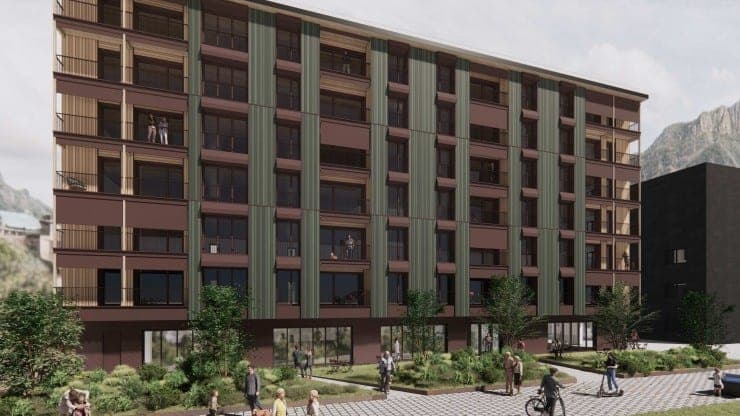
Overview of Sustainable Affordable Housing Initiative
The article, published by La Veu Lliure and authored by journalist Joel Picón, details a new affordable‑housing project in Santa Coloma, Andorra‑la‑Vella. The initiative forms part of a broader collaboration between the Andorran Government and local municipalities to increase the supply of energy‑efficient rental homes. The project focuses on the Cedre site, where a timber‑frame building will be erected to meet rising demand for low‑cost, environmentally friendly accommodation.
Project Scope and Financial Structure
Construction of the Cedre building has been awarded to Construccions i Edificacions les Valls for €8 267 114,34. The contract stipulates a roughly 30‑month timeline for completion. Funding is split between the national Government, covering 83 % of construction costs, and the municipal authority, responsible for 17 % of the ground‑floor works. This cost‑sharing model underscores the joint commitment to affordable housing while leveraging public resources efficiently.
Housing Units and Design Features
The development will comprise thirty apartments ranging from one to three bedrooms, distributed across the first to sixth floors. Unit sizes vary between 35 m² and 82 m², reflecting the differing bedroom counts. A ground‑floor commercial space will be allocated to the local council for the Casa Pairal de Santa Coloma, integrating community services within the residential complex. The timber‑frame structure is chosen for its high energy‑efficiency performance, aligning with Andorra’s sustainability goals.
Sustainability and Energy Efficiency Measures
The Cedre building’s wooden construction material contributes to lower embodied carbon compared to conventional masonry. The design prioritises thermal performance, reducing heating demand in the mountainous climate. This approach mirrors recent sustainable housing efforts, such as the second phase of the Pessebre‑Escaldes‑Engordany project, demonstrating a consistent policy direction toward low‑impact building practices.
Institutional Collaboration and Land Allocation
The project is the second land lease granted by the Andorran municipality of Andorra‑la‑Vella, following a 2020 concession for the Borda Nova development. The 40‑year lease of the Cedre parcel reflects a long‑term strategy to secure land for affordable housing across multiple communes, including collaborations with Escaldes‑Engordany, La Massana, Encamp, and Sant Julià de Lòria. This coordinated effort enhances regional housing resilience and promotes equitable access to rental accommodation.
Broader Impact on Housing Supply
By adding thirty new units, the Cedre project contributes significantly to the local rental market, addressing a documented shortage of affordable homes. The Government’s 83 % financial contribution signals a strong policy emphasis on housing affordability, while the timber construction aligns with European Union objectives for greener building sectors. The initiative also supports ancillary community functions through the ground‑floor space, fostering social cohesion.
Related Developments and Future Outlook
The article references the forthcoming Hermus project in Encamp, where the National Institute of Housing will soon allocate twenty additional affordable apartments. Together with the Cedre development, these projects illustrate a pan‑European trend of integrating sustainable construction methods with public‑private partnerships to expand affordable housing stock.