Overview of the Article
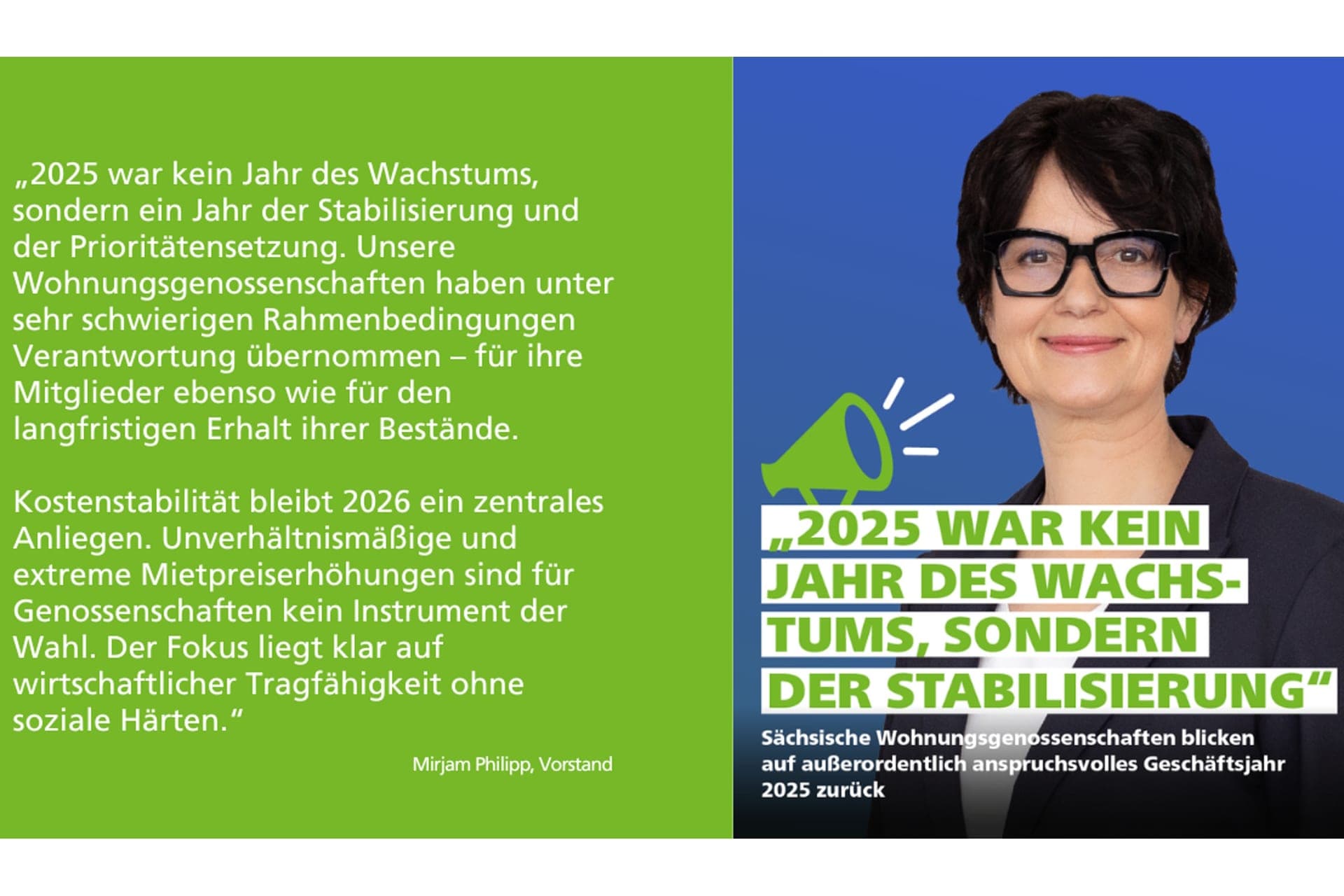
The piece, published by Leipziger Zeitung, analyses the challenging business year 2025 for Saxon housing cooperatives. It highlights rising construction and financing costs, tight housing market conditions and uncertain funding frameworks that have limited new‑build investments. The article draws on statements from Mirjam Philipp, board member of the Verband Sächsischer Wohnungsgenossenschaften (VSWG), and incorporates data from the VSWG’s own surveys.
2025 Performance and Constraints
In 2025 the sector experienced stabilisation rather than growth. High building prices, increased interest rates and lengthy permit procedures caused a pronounced “new‑build kink”, with many projects only viable under very tight economic conditions. The VSWG reports that new‑build costs now require rents of €15‑20 per m², rendering such projects risky for cooperatives focused on social housing.
Market Trends and Vacancy Rates
Regional differences are evident. In the major Saxon cities Dresden, Leipzig and Chemnitz vacancy levels remain at the necessary turnover reserve, while a birth deficit of roughly 2,000 people per year persists across all three cities. Rural areas face structural oversupply, limiting the potential to reduce vacancy. The VSWG estimates overall vacancy at 8.3‑8.5 percent, similar to the previous year.
Social Commitment Amidst Pressures
Despite financial strain, social engagement stayed high. A recent VSWG survey shows 65 percent of cooperatives organised neighbourhood or tenant festivals, and 75 percent offered regular tenant consultation hours, often supplemented by social counselling. These activities underscore the cooperatives’ role as community anchors beyond mere landlords.
Policy Instruments and the “Bauturbo”
The article outlines new policy tools introduced in 2025, notably the “Bauturbo” experiment aimed at accelerating planning and approval processes. While the VSWG views the concept positively, it stresses that practical impact depends on proactive municipal implementation. The VSWG also advocates for a legally defined basic housing standard – “simple building” – to lower costs while maintaining safety and usability.
Outlook for 2026
Looking ahead, the VSWG foresees no rapid easing of conditions. Key challenges include controlling operating costs and securing long‑term financing pathways. The sector expects higher heating cost repayments for 2025 billing, but a modest relief in 2026 as some energy price components stabilise. Positive developments include the reinstatement of KfW funding for efficiency houses (EH 55) and Saxon programmes for affordable rent and climate‑neutral construction.
Economic Scale of Saxon Cooperatives
The VSWG represents 200 member cooperatives that manage 294,091 units, accounting for 21.4 percent of Saxony’s total rental stock and housing roughly half a million people. Annual turnover reaches approximately €1.51 billion, contributing 1.0 percent to the state’s GDP, employing 2,510 staff and supporting 120 apprentices and students.
Relevance for Sustainable Housing
For a pan‑European audience interested in sustainable housing, the article provides concrete data on how cost pressures, demographic shifts and policy measures shape the viability of socially oriented, low‑energy residential construction in Saxony. It highlights the sector’s commitment to community‑focused services while navigating economic and regulatory challenges.