
The ownership republic the 1990s built, and the rents it never planned for
Croatia owns its homes more completely than almost any other country in the European Union. That is not an old peasant-proprietor tradition but a recent political act. When the country left Yugoslavia, sitting tenants were sold their socially-owned flats for a fraction of their worth, and within a few years the rental sector had all but vanished. The institutional memory that shapes housing here is therefore the opposite of Germany's or Austria's: not a layered tradition of cooperatives and municipal landlords, but a single decade in which the state handed the stock to its occupants and then largely stepped back. The consequences are now arriving as a rental and affordability crisis the give-away never anticipated.
The tenure mix records that decision almost without ambiguity. Around 89.7% of Croatians are owner-occupiers and just 10.3% are tenants of any kind. Within the small rental base, the private market accounts for 9.0% of all dwellings and the entire non-market segment — public plus cooperative — for just 1.3%. Registered cooperative housing is, in the catalogue's terms, 0% of the stock: zero units, zero organisations, zero residents. There is no cost-rent floor of the kind that anchors the German or Viennese markets. Whatever is not owned is rented from a private landlord, very often informally.
- Owners
- Owner-occupier89.7%
- Renters
- Public & non-profit rental1.3%
- Cooperative0.00%
- Private rental9.0%
Social housing barely registers as a category. The combined public and POS-subsidised stock comes to roughly 18,000 units, about 1.3% of dwellings — among the thinnest social sectors in the EU. The Program društveno poticane stanogradnje (POS, socially-incentivised housing construction) that produces it has historically built for ownership rather than rent, so even this slice mostly converts subsidy into private equity. On income grounds something like 20% of households would qualify for assistance, far more than the binding stock can reach.
The rent ladder is short because so little sits below the market. Heavily-subsidised public and POS lets run at around €2.5 per square metre, but the all-stock median is already €8.5, a newly-signed private contract €11.5, and a furnished or serviced let €14.5 all-in. With no cooperative tier and almost no public rental, a household priced out of ownership has nothing between the tiny subsidised stock and the open market — and a new contract costs more than four times the subsidised rate.
- Public / POS housing
- All-stock median
- New contracts
- Furnished / serviced (gross)
Net monthly rent per m² by tier (national median; furnished is gross, all-in). With no cooperative floor and barely any public stock, the heavily-subsidised POS rate is the only thing sitting below the open market — and a new private contract runs more than four times it.
And yet much of the housing is not lived in at all. Residential vacancy runs at about 18.5% — extraordinarily high — concentrated in two very different places: depopulating interior villages, and the coast, where flats are held for the summer-tourism market rather than for residents. Short-stay platforms registered roughly 37.7 million guest nights in Croatia in a single year, a volume that on the Adriatic coast pulls entire buildings out of long-term supply (no clean national tourist-let count exists; the platform-nights figure is the firmest lower bound). The government itself now frames the problem this way: around 40% of the 2.3-million-unit stock, it says, is not used for permanent housing — left empty, kept for the season or turned into short-term rentals.
Demand, meanwhile, is rising faster than supply. Croatia takes in about 34,000 people a year through immigration — increasingly returning workers and non-EU labour migrants — against roughly 14,000 residential building permits, across a total stock of about 1.55 million dwellings. House prices grew 14.1% year on year at the last reading, among the fastest in the EU.
For the first time in 35 years of Croatian statehood we have a comprehensive housing strategy — because access to affordable housing, especially for young people, has become harder.The weight of all this falls hardest on the young. The OECD's 2026 survey of Croatia found young Croatians leave the parental home at an average age of 33, against an EU average near 26 — the practical meaning of an ownership market with no rental ladder beneath it and prices climbing in double digits. Roughly 4,000 people are recorded as homeless, and energy poverty touches about 5.8% of households, much of it in the ageing, poorly-insulated coastal and rural stock. The crisis here is less about a shortage of buildings than about which buildings are reachable, and by whom.
The cooperative that barely exists — and the activists trying to invent it
On the catalogue's numbers, Croatian cooperative housing does not yet exist: the registered cooperative share, the cooperative unit count and the number of cooperative organisations all stand at zero, and effectively no Croatians live in a cooperative home. This profile is therefore not a description of an established sector but of an attempt to build one from almost nothing. The honest starting point is that the 1990s privatisation left no institutional carrier for the form, and general cooperative law gives housing cooperatives no explicit statutory shape — a regulatory blank the pioneers have had to work around.
There was a tradition to lose. A zadruga — the Croatian cooperative — has deep roots, both in the rural extended-household zadruge of the nineteenth century and in the worker-housing cooperatives of the early twentieth, before the socialist period absorbed housing supply into self-management and the 1990s sell-off dissolved what remained. The thread the present pioneers are trying to pick back up runs to that older idea: collective ownership of shares rather than of flats, occupancy secured by membership, and a price held off the speculative market.
The carrier of the revival is a small federation rather than a mass movement. MOBA Housing SCE, founded in 2017 and registered in Pula in 2020 as the first European Cooperative Society in Croatia, links pioneering cooperatives from Zagreb, Ljubljana, Belgrade, Budapest and Prague and supplies shared project design and policy advocacy. Its indispensable partner is the Zadruga za etično financiranje — the Cooperative for Ethical Financing, or ZEF — the largest cooperative in Croatia with some 1,400 members, which is assembling the patient, member-owned capital the banks will not lend. A third body, Zadruga Otvorena Arhitektura (Open Architecture cooperative), supplies the design. Together they are, in effect, hand-building the institutional layer that exists by default elsewhere.
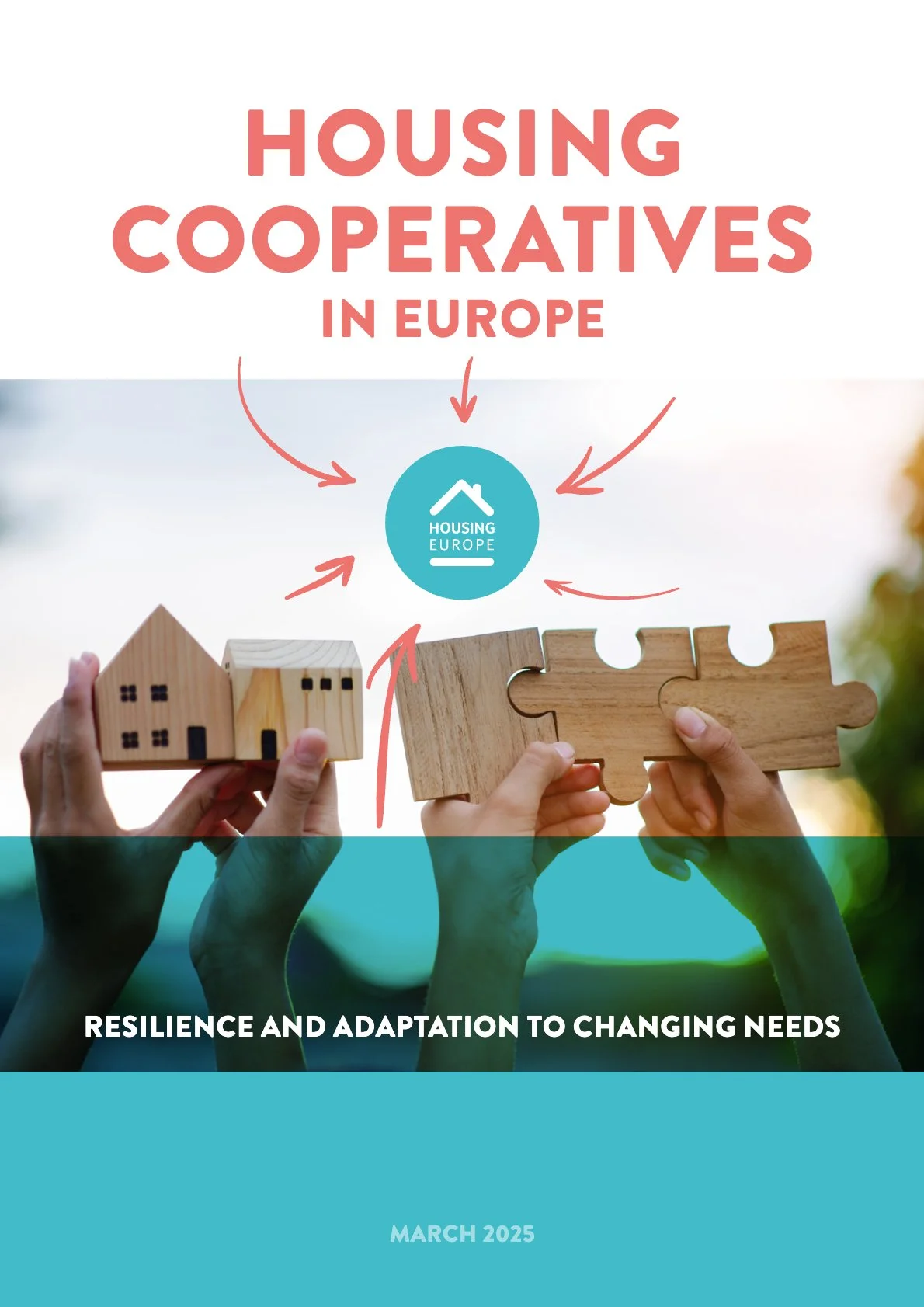
The role of a bank is to be a catalyst, using the resources of the community for those creating new value for that community.The Housing Europe and ICA Housing survey of European cooperative housing — the same continental review that maps the dense federations of Germany, Austria and the Nordics — places Croatia firmly at the emergent end of that spectrum, a country with the ambition and the activists but not yet the stock. The Cooperative Housing International country profile reaches the same conclusion: a nascent sector of a few city initiatives, operating under general cooperative law without dedicated recognition, leaning on municipal land leases and ethical finance to function at all. The wider question of how the cooperative form has held up and adapted across Europe is the subject the catalogued study Housing Cooperatives in Europe - Resilience and Adaption to Changing Need takes up directly.
The legal form they use is improvised from the parts available. Because there is no housing-cooperative statute, the pilots combine a long pravo građenja — a building right, a ground lease of fifty to seventy-five years granted by a friendly municipality — with members holding shares in the zadruga rather than title to a flat, and with ZEF-pooled ethical finance standing in for the long-term mortgage the sector cannot get. It is limited-equity by design: shares are repaid at face value, so there is no capital gain to chase and the building cannot be sold out from under its members. The model is real but fragile, and its scaling problem is acute — the research and activist base, including bodies like the IDIZ — Institute for Social Research in Zagreb and the housing-justice network Pravo na grad (Right to the City), is thin but engaged, and it is what is keeping the idea alive while the stock is still effectively zero.
A first housing strategy in 35 years — and the fight over what counts as affordable
For three decades Croatia governed housing mostly by not governing it, trusting the ownership market the 1990s created to do the work. That ended in 2025. The government led by Andrej Plenković adopted the Nacionalni plan stambene politike (National Housing Policy Plan to 2030) — by its own account the first comprehensive housing strategy in thirty-five years of statehood — with a 2025–27 action plan funded at nearly €2.03bn. The strategy is run from the centre, through the Ministarstvo prostornoga uređenja, graditeljstva i državne imovine (the Ministry of Physical Planning, Construction and State Assets), and built around a single new law.
That law is the Zakon o priuštivom stanovanju, the Affordable Housing Act, adopted in 2025 as an umbrella framework. It defines affordability concretely — rental or purchase costs no greater than 30% of household income, with eligibility capped at about 2.5 times the median salary — and sets a delivery target of 20,200 dwellings by 2030: 8,000 new apartments built by the state agency APN and 9,000 vacant flats reactivated for affordable rent. It introduces, for the first time, a national affordable-rental programme rather than another route into ownership, and it leans on the empty-stock problem as a supply lever, channelling vacant and seasonal flats back into year-round use.
The delivery instrument is the Agencija za pravni promet i posredovanje nekretninama (APN, the Agency for Transactions and Mediation in Immovable Properties), recast from a builder of subsidised owner-occupied POS flats into the central body for affordable rental — acquiring vacant properties, running the rental programme and managing the new stock. The honest difficulty is scale: APN built only about 9,000 apartments in its first 24 years, so the plan asks it to roughly match its entire history in five. Cooperative-specific support remains the weakest link; the pilots still rely on individual municipalities granting a pravo građenja and on ZEF-pooled finance rather than on any dedicated cooperative line in the Act.
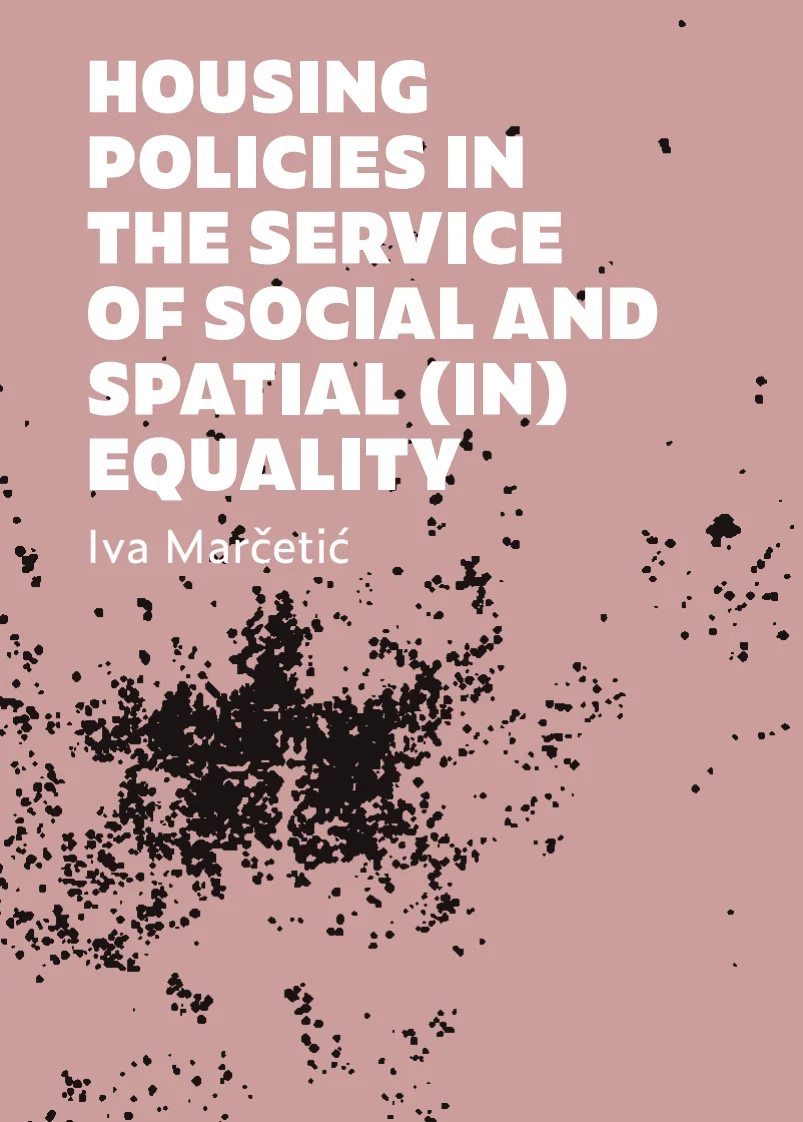
On the demand side the older POS programme was sharpened rather than retired: amendments give buyers under 45 a 50% VAT refund on a first home and lift the POS price ceiling from about €1,792 to €1,912 per square metre. Critics — including parts of the research and housing-justice community — warn that subsidising first-time purchase in a market already growing in double digits mostly feeds the price spiral it is meant to cool, and that the empty-flat tax and short-let limits matter more. The study Housing Policies in the Service of Social and Spatial (In)Equality makes exactly this structural case, tracing how Croatian housing policy has tended to reproduce ownership-based inequality rather than relieve it.
Two camps now frame the argument. The government's position, voiced by Construction Minister Branko Bačić, is that the answer is to build and reactivate supply at scale through the state agency while nudging ownership within reach of the young — a supply-and-subsidy programme run largely through APN. Against it stands a tenure-reform camp drawn from the cooperative pioneers, the housing-justice movement and academic critics, who argue that without a permanent non-market tier — cooperative or genuinely public rental — every euro of subsidy ultimately capitalises into the price of an owner-occupied flat. Both agree the empty stock and the runaway coast must be tackled; they disagree on whether ownership subsidy or a new rental tenure should be the spine of the response. The 2025–26 legislative package, with new physical-planning, building and energy-efficiency acts taking effect in January 2026, is the first real test of which reading prevails.
- 1991–96[source]
Give-away privatisation
After independence, sitting tenants buy their socially-owned flats at a fraction of market value. Within a few years owner-occupation jumps toward 90% and the public rental stock is all but extinguished — the structural cause of every housing problem since.
- 2001[source]
POS subsidised-construction programme
The Program društveno poticane stanogradnje (POS, socially-incentivised housing construction) launches via the APN agency to build subsidised owner-occupied flats. Over its first 24 years APN delivers roughly 9,000 apartments.
- 2017–20[source]
First housing cooperatives
MOBA Housing SCE is founded in 2017 and registered in Pula in 2020 as the first European Cooperative Society in Croatia; the Cooperative for Ethical Financing and Zadruga Otvorena Arhitektura begin designing the country’s first co-op housing projects.
- 2021[source]
Križevci pilot launched
The city of Križevci grants a 50–75-year ground lease over a former barracks for a 36-apartment cooperative — the first municipality to back the model with public land.
- 2025[source]
National Housing Policy Plan + Affordable Housing Act
The government adopts the first comprehensive housing strategy in 35 years and the umbrella Zakon o priuštivom stanovanju (Affordable Housing Act), with a 2025–27 action plan funded at nearly €2.03bn.
- 2030[source]
20,200 units target
Under the plan the state aims to build and reconstruct 20,200 dwellings by 2030 — 8,000 new APN apartments and 9,000 vacant flats reactivated — backed by €2bn of state investment.
- 2034[source]
EU co-financing horizon
A further €3.5bn is earmarked through the EU Multiannual Financial Framework to 2034 to scale the affordable-rental stock — the long horizon against which the new agency model is meant to mature.
From the 1990s give-away privatisation through the 2001 POS subsidy programme and the first cooperative pilots to the 2025 Affordable Housing Act and the EU-funded 2034 investment horizon.
Križevci, Pula and the first buildings of a sector that has none
With the registered cooperative stock still at zero, Croatia's lighthouse projects are not a portfolio of completed buildings but a short list of firsts — the demonstrators a sector with no stock is trying to bring into being, each carrying more weight than its size suggests.
Križevci is the one everyone points to. The continental Open Architecture and Cooperative for Ethical Financing pioneers, working with the European federation MOBA Housing SCE and the city itself, secured a fifty-to-seventy-five-year ground lease over a barracks vacated in 2003 to build 36 cooperative apartments around 260 square metres of shared space and a 240-square-metre coworking floor. It is the first time a Croatian municipality has backed the model with public land, and the template — city land on a long lease, members holding shares not titles, ethical finance instead of a mortgage — is the one every later project is expected to copy.
Pula, where MOBA is registered, is the second front: its local government has pledged land for a student-housing cooperative aimed at a mixed-income, sustainable design — the city's first official support for the form, and a signal that the Adriatic coast, where the short-let economy bites hardest, might host a cooperative answer rather than only suffer the problem. Zagreb, for its part, has seen the cooperative idea grafted onto discussion of its POS estates, the nearest thing the capital has to a public-housing pipeline.
Behind these few buildings sits the connective tissue a sector needs before it has any stock: the Cooperative for Ethical Financing pooling the patient capital, MOBA carrying the cross-border design and advocacy, and a research and housing-justice base — the IDIZ — Institute for Social Research in Zagreb documenting the housing-inequality case, Pravo na grad (Right to the City) keeping the pressure on the short-let and ownership-subsidy debates — that lends the pilots legitimacy and an evidence base. It is a far thinner layer than the established federations of Central Europe, and nobody involved pretends otherwise. The open question is whether a homeownership republic, now writing its first housing strategy in a generation, will give the cooperative form the statute and the land it would need to grow from these few barracks-and-student-block experiments into something that registers in the tenure mix at all.

References
Statistics14Click on any number to see the source
Housing market
Tenure & affordability
Cooperative, social & public
Population & migration
From our library4
Further sources11
- National Housing Policy Plan to 2030 + 2025 legislative package — MGIPU (Ministry of Physical Planning, Construction and State Assets)
- Affordable Housing Act (Zakon o priuštivom stanovanju) — MGIPU
- Minister Bačić — State to build/reconstruct 20,200 units by 2030 — MGIPU
- Affordable Housing Bill aims to slow rising property prices, says minister — Croatian Parliament (Sabor)
- OECD Economic Surveys: Croatia 2026 — Tackling housing challenges — OECD
- Cooperative Housing International — Croatia country profile — Cooperative Housing International / ICA Housing
- MOBA Housing SCE — MOBA Housing SCE
- Cooperative for Ethical Financing (ZEF) — Zadruga za etično financiranje
- Križevci cooperative-housing case study — RE-DWELL
- The cooperative pioneers challenging conventional housing practice (Jeras / Pula) — World Habitat
- Eurostat — Distribution of population by tenure status (ilc_lvho02) — Eurostat