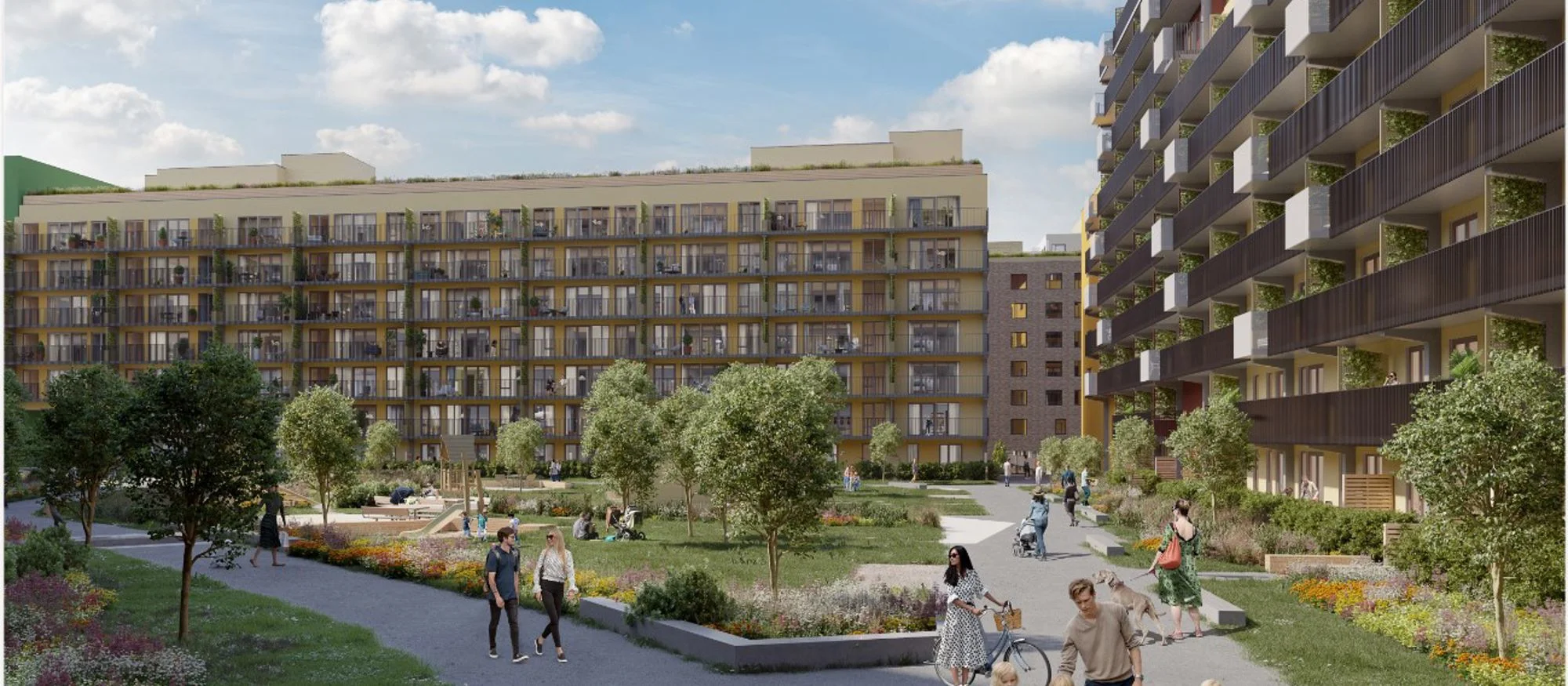
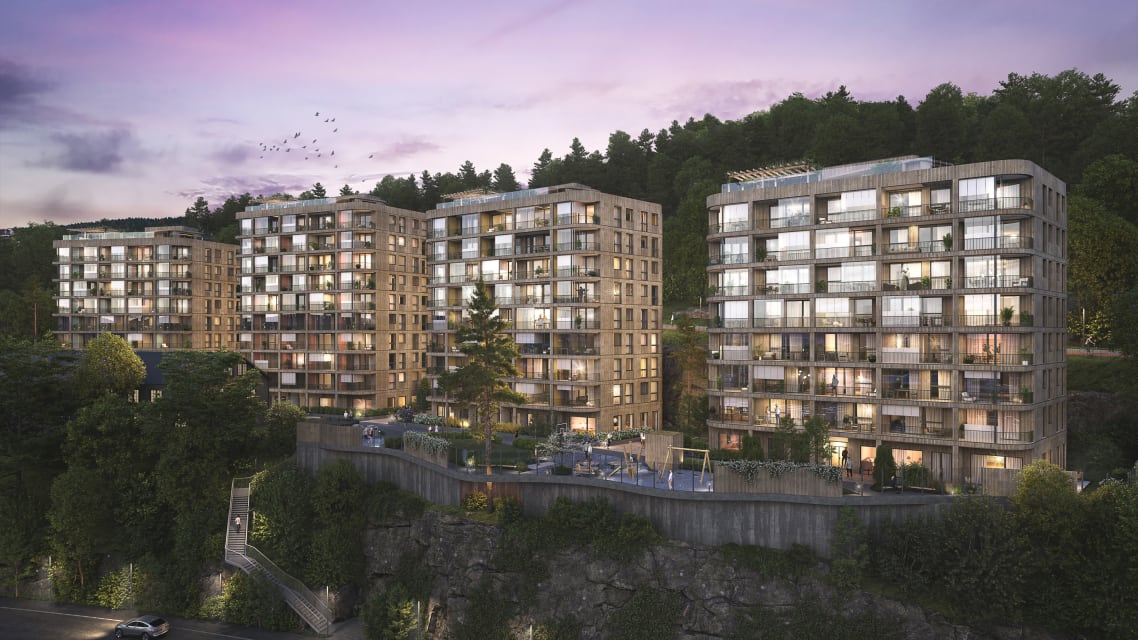
Oslo's borettslag housing cooperatives manage roughly forty percent of the city's flats. The OBOS and USBL federations and the contemporary Klimaplan 2030 framework are the city's two principal housing-policy frames.
Oslo is built on the Norwegianborettslag cooperative-housing tradition — OBOS, founded in 1929, has grown into Norway's largest cooperative-housing federation, holding hundreds of thousands of apartments across the country in the borettslag right-of-occupancy form. The city today combines that cooperative depth with one of Europe's most expensive ownership markets — apartment prices in Oslo sit at over €9,000 per square metre.
Tenure mix: 29% renters, 71% owner-occupied (including borettslag), 3.5% public housing (about 11,000 Boligbygg apartments). The borettslag form — tradeable cooperative share giving permanent occupancy right — accounts for the majority of the 'owner-occupied' tier.
Oslo's tenure mix
Cooperative members effectively own their unit, so cooperatives are grouped with owner-occupiers in national statistics.
Owners
Owner-occupier39.0%
Cooperative32.0%
Renters
Public & non-profit rental3.5%
Private rental25.5%
The Norwegian borettslag right-of-occupancy form is classed as owner-occupier; OBOS is the dominant federation.
Social housing in Oslo runs through Boligbygg (the city's municipal housing administration) for the small kommunal bolig tier, and through Husbanken-financed cooperative + non-profit housing at federal scale. The borettslag form holds the bulk of non-pure-ownership housing — members buy a cooperative share giving permanent occupancy in a specific apartment, with the borettslag (cooperative society) owning the building permanently. Around 22% of Oslo households qualify for some form of housing-allowance or municipal-housing support on income.
Rent spread: public housing €13.50, all-stock €23.50, new contracts €28, furnished €30 per square metre. Apartment prices €9,074 per square metre.
Rent spread in Oslo
Public housing
All-stock median
New contracts
Furnished (gross)
Net-cold monthly rent per m². Oslo combines high private rents with a small municipal housing tier.
Vacancy: residential 1.8%, office 7.8% with 740,000 vacant square metres. Net migration 36,000 inbound per year.
“
Oslo combinerer en av Europas dyreste boligmarkeder med OBOS som dominerende boligkooperativ — borettslag-modellen er navet i norsk boligpolitikk.
The OBOS-anchored borettslag tradition + the Boligbygg municipal stock + the Husbanken-financed wider non-profit tier — the part of the housing landscape that the Norwegian welfare-state tradition built — is the subject of the next section.
OBOS + borettslag: 95 years of Norwegian cooperative housing
Cooperative housing in Oslo follows the Norwegian borettslag tradition. A borettslag is a cooperative housing society that owns its building permanently; members buy a cooperative share (andel) that gives a permanent right of occupancy in a specific apartment, plus a vote in society governance. The share is tradeable at market prices, which means the borettslag form combines cooperative governance with market-priced individual flat values — closer to the Swedish bostadsrätt than the Continental Genossenschaft model.
OBOS (Oslo Bolig- og Sparelag) is the dominant cooperative federation — founded in 1929 as a cooperative housing-and-savings society, it has since become Norway's largest housing-cooperative organization with hundreds of thousands of apartments across the country. The post-WWII Husbanken state-housing-finance bank provides long-term low-interest loans into the cooperative + non-profit housing pipeline. Cultura Bank operates as the ethical-banking + cooperative-financing alternative.
The contemporary FutureBuilt programme — Oslo's climate-adapted-housing demonstrator network — has produced over fifty pilot projects across cooperative + private + public housing. Vestre runs the public-realm + cooperative-housing furniture + design conversation alongside.
What's distinctive about Oslo is that the borettslag form is the dominant non-pure-ownership tenure — even more than the bostadsrätt in Stockholm. The cooperative tradition is institutionally consolidated through OBOS but remains effectively part of the ownership market through tradeable shares.
OBOS, Husbanken and FutureBuilt: cooperative + climate-housing pipeline
Oslo housing politics runs through OBOS at cooperative-federation scale, Husbanken at federal financing scale, and Boligbygg at municipal scale. The FutureBuilt programme coordinates climate-adapted housing demonstrators across cooperative + private + public delivery.
The borettslag + Husbanken sector is the structural delivery channel for Norwegian housing. The post-2010 climate-housing strategy has integrated cooperative + non-profit delivery into the broader Oslo + Norwegian housing-and-climate policy framework.
Adaptive reuse: Oslo's 7.8% office vacancy + 740,000 vacant office square metres feeds a meaningful conversion pipeline. The Bjørvika + Nydalen post-industrial regeneration zones include cooperative + private mixed-tenure components.
Political debate: rent-affordability for non-borettslag-owning newcomers (very high), Boligbygg waiting-list lengths, climate-housing-delivery pace. Aftenposten, Dagens Næringsliv and NRK track from different angles.
The Norwegian State Housing Bank established as the state housing-finance institution — provides long-term low-interest loans for non-profit + cooperative + housing-allowance-receiving households.
Oslo runs FutureBuilt as the climate-adapted-housing demonstrator programme — produces over fifty pilot projects across the city.
From OBOS founding 1929 through Husbanken to the post-2010 climate-housing programmes.
Next: the demonstrator + studio layer.
OBOS at scale: borettslag + FutureBuilt + Nordic architecture
Oslo's cooperative-housing + climate-adapted-housing pipeline produces demonstrators at every scale through OBOS + FutureBuilt + private partnerships.
Among the named demonstrators: Fyrstikkbakken 14 — the post-2020 climate-adapted housing reference — anchors the FutureBuilt cooperative-housing portfolio in Oslo.
Architecture studios. Snøhetta — the internationally-recognised Norwegian practice — has shaped much of the post-2000 Norwegian housing and cultural-infrastructure portfolio. Nordic Office of Architecture, DARK Architects and MAD architects work at the cooperative + climate-adapted housing intersection.
Institutional + patient-capital layer. OBOS is the dominant cooperative federation. Cultura Bank operates as the ethical-banking + cooperative-financing alternative. Vestre coordinates public-realm + design work alongside FutureBuilt. The ENHR Annual Conference 2026 will bring the European housing-research community to Oslo.
What the OBOS-anchored borettslag tradition + the FutureBuilt climate-housing programme demonstrate is that the Norwegian cooperative + climate-housing combination has become a continental reference for sustainable-housing-at-scale.