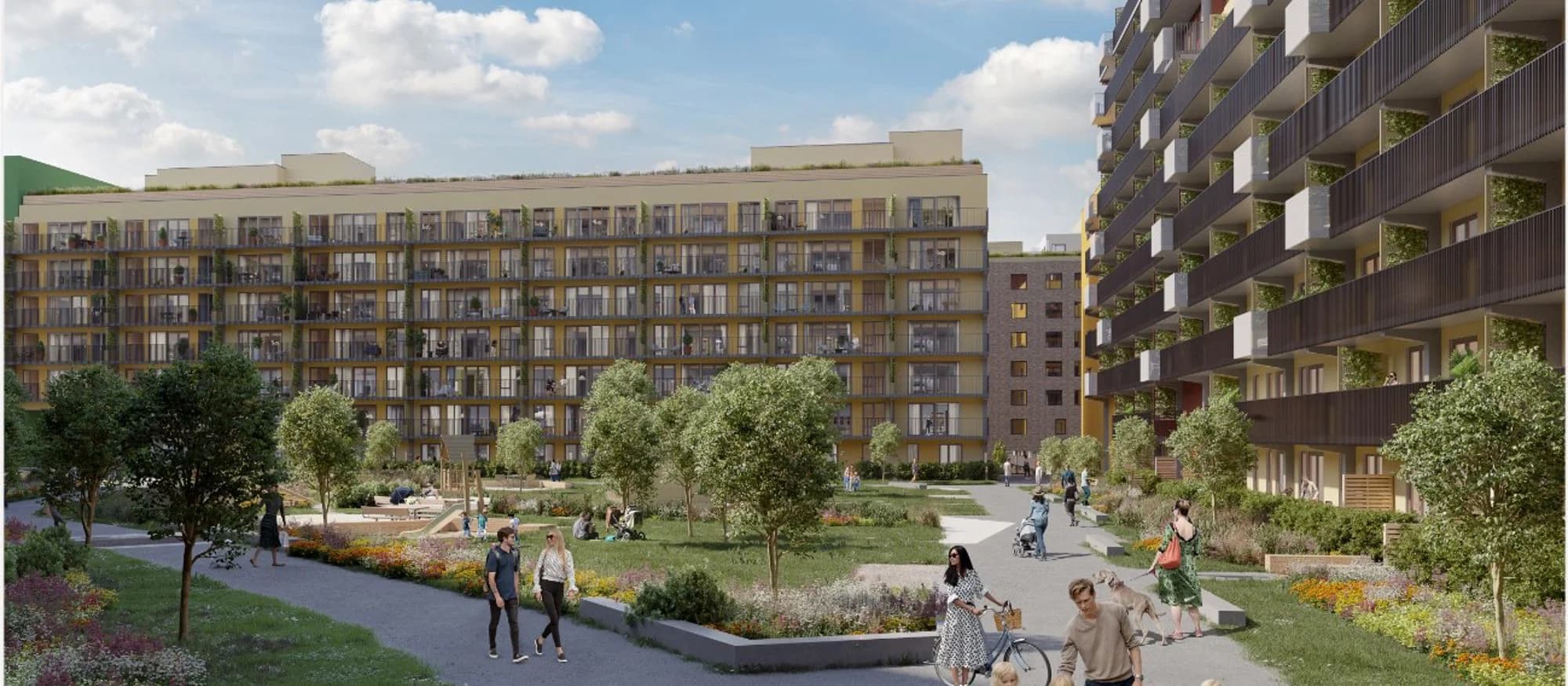
OBOS, short for Oslo Bolig- og Sparelag, is a member-owned cooperative that has helped shape modern Oslo since 1929. Founded in the midst of a housing crisis, it was created to give ordinary residents a route into home ownership at cost-based prices through collective savings and large-scale construction.
From its base at Hammersborg Torg in central Oslo, OBOS has grown into Norway’s largest housing developer and one of the leading residential players in Scandinavia. It remains a cooperative: hundreds of thousands of members (over 600,000 according to recent figures) own the organisation, and post-tax profits are reinvested in housing and related activities rather than paid out as dividends.
Historically, OBOS built large cooperative estates that defined post-war Oslo, supplying tens of thousands of flats for working- and middle-class households. Over time, it expanded beyond the capital and into Sweden, following the same model of member-based residential development.
Today, OBOS’s scope extends across the housing chain. It develops and sells new homes, manages housing cooperatives, runs real estate brokerage and property management, and offers banking and financial services linked to home purchase and savings. A separate subsidiary, OBOS Eiendom, owns and manages commercial properties, particularly retail and office space in the Oslo area, often integrated into OBOS residential neighbourhoods.
Current projects range from infill developments in established Oslo districts to new-build communities in Norwegian and Swedish towns, frequently presented with an emphasis on energy efficiency and dense, transit-accessible living rather than detached suburban sprawl.