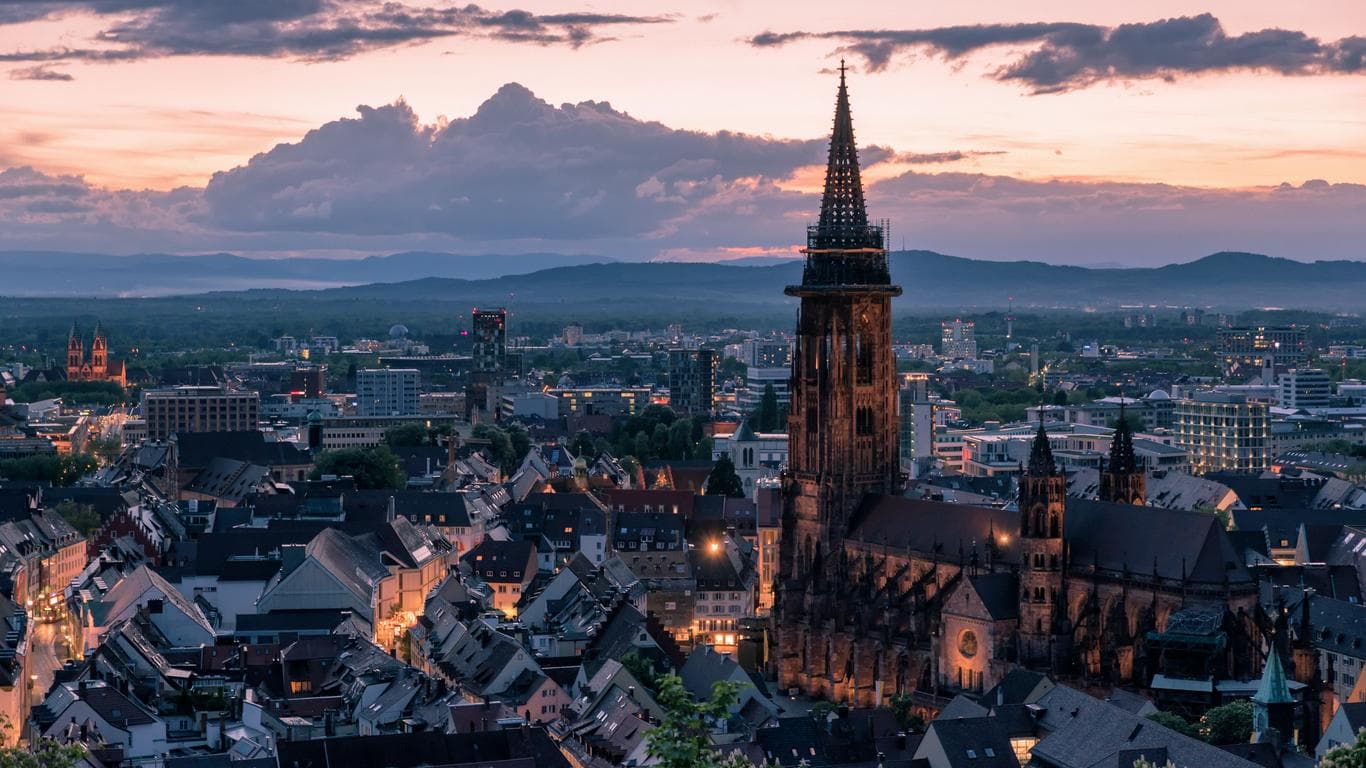
A full city on the Aa
Münster made its name by settling disputes at a table. The Peace of Westphalia was negotiated in its town hall, and the city still lives from institutions rather than factories: a bishopric, courts, the regional government and one of Germany's largest universities. That mix draws a steady stream of students, civil servants and young professionals. It has also made the city one of the tightest housing markets in North Rhine-Westphalia.
The pressure recently changed shape. The official count put Münster at 306,368 residents at the end of 2025, 1,890 fewer than a year earlier. It was the first year since 1999 in which more people left than arrived. Meanwhile the city finished 1,402 homes in 2025, about a quarter more than the year before, and approved 1,831 more.
The 2022 census count of Münster's housing found 166,045 dwellings. Owners live in 27.2% of them. Measured against occupied homes only, the ownership rate is 29.2%, far below the state's 40.6%. Some 70.5% are rented out. Cooperatives own 3,218 of those flats, about 1.9% of all dwellings. The city and its company own 8,048, and the federal and state governments 801, together about 5.3% of the stock. Churches and other non-profit bodies hold 7,182. Everything else, 83.6% of rented flats, belongs to private individuals, owners' associations and commercial landlords.

- Owner-occupied27.2%
- Cooperative1.9%
- Public & non-profit rental5.3%
- Private rental63.3%
- Vacant / holiday homes2.2%
Social housing in Germany is not a tenure of its own. It is a time-limited covenant attached to a subsidy. The rent is capped, and only households holding a Wohnberechtigungsschein (the income-tested housing permit) may move in. Münster counted 9,591 publicly subsidised homes at the end of 2024, roughly 5.6% of the stock. They are spread across the slices above: in the estates of Wohn+Stadtbau, the city's own company, in cooperatives and in private buildings whose investors took state loans. Every covenant expires. New schemes bind investors for at least 25 years.
Rents depend above all on when you signed. The census average was €8.71 per m² net cold, well above the state's €6.82. The Mietspiegel (the legally recognised index of typical local rents) put the average at €9.85 per m² from April 2025. A re-let flat was advertised at €12.50 per m² in 2024, a new-build at €15.82. At the other end, cooperative members paid €5.60 on average, and tenants of the city's company €6.38.
- Cooperative
- Public/municipal housing
- All-stock average
- Rent index (Mietspiegel)
- Re-let, existing flats
- New contracts, new-build
Net cold rent per m² per month. Landlord-type averages and the all-stock average come from Zensus 2022; the rent index is from 2025; asking rents from 2024.
Empty homes are scarce. The census found 3,337 vacant dwellings, a vacancy rate of 1.98% against 3.33% across the state. More than half of them, 52.9%, were due to be let again within three months. That is churn, not a hidden reserve. Holiday letting is modest too: a 2019 council motion counted about 300 listings that could otherwise have housed residents.
Growth drove the squeeze. From 2010 to 2023 the population rose by about 1.28% a year. Then construction stalled. Completions fell from 2,220 in 2023 to 1,115 in 2024 as interest and building costs climbed. At the end of 2025, 4,154 approved homes were still unfinished, 1,583 of them under construction. The Mietpreisbremse (the rent brake, which caps new lets at 10% above the rent index) has applied since 2015. In 2025 the state renewed its Mieterschutzverordnung (tenant-protection ordinance) for Münster, limiting rises for sitting tenants to 15% in three years until February 2030.
Who carries the strain? Movers do, far more than sitting tenants. A 2025 city profile by Andrej Holm and Christoph Trautvetter found asking rents 76% above median sitting rents in 2022, against 18% in 2010. That gap classes Münster as a 'housing emergency' market. It lands hardest on the young: the university alone had 41,217 students in winter 2025/26. It reaches well beyond students. In 2024, 3,230 households received a housing permit, and 8.6% of residents relied on minimum-income benefits. Nearly 5,000 households drew Wohngeld (the state housing allowance) in 2023. Local media treat it as the city's defining issue: Münster Aktuell's survey of the 2025 mayoral candidates called housing one of the campaign's central topics.
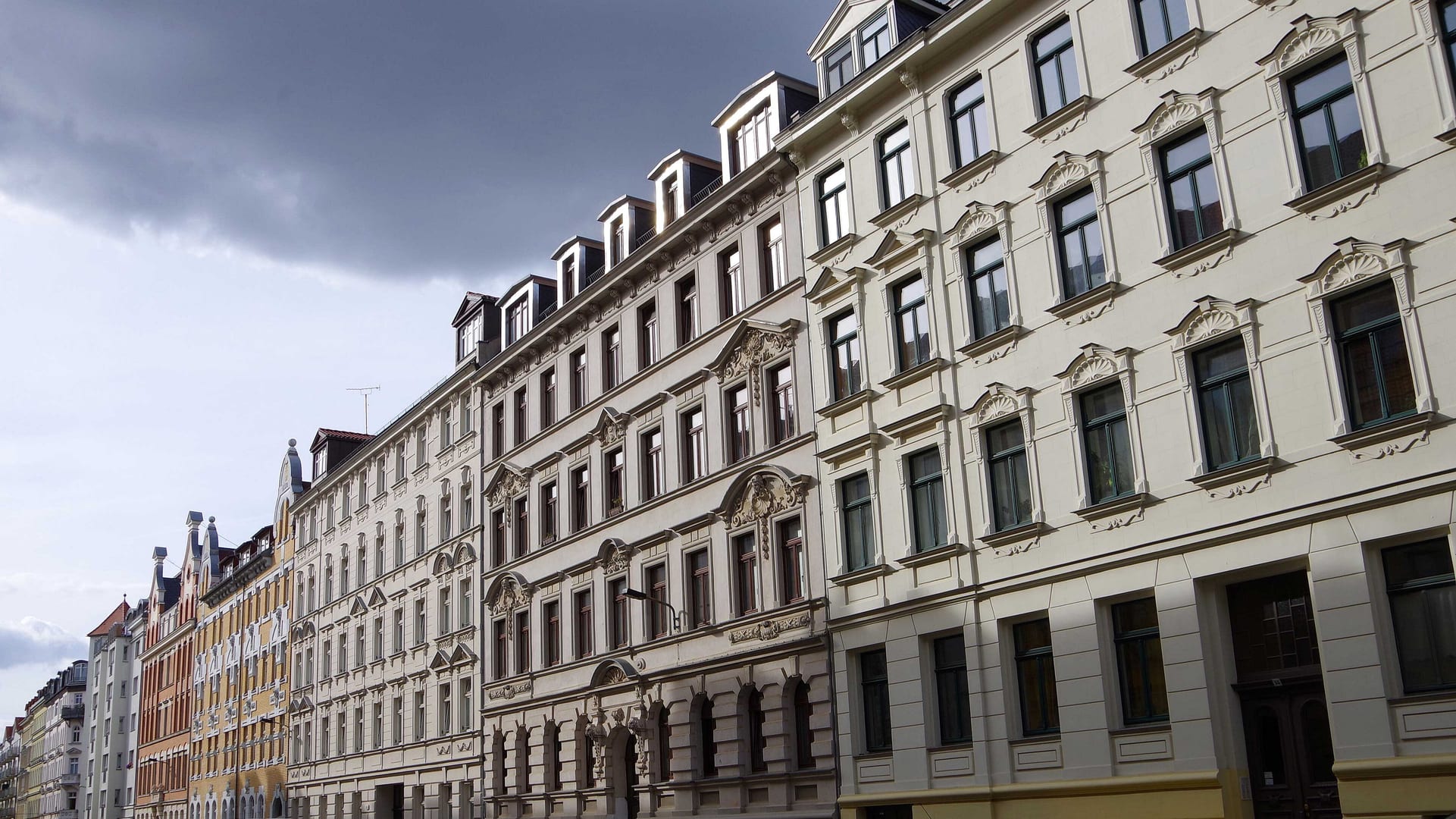
Given the high rents, young people in particular are having a hard time on Münster's housing market. So it is good that the funding focuses on them.Cooperatives own less than 2% of that stock. Their influence is larger than the number suggests, and it is now growing from below.
From civil servants' club to project cooperatives
Münster's cooperatives are rental cooperatives. Members buy Genossenschaftsanteile (member shares, repaid when they leave) and gain a lifelong right to a flat at cost-based rent. Nobody owns their own unit, and nobody can sell it. Some newer groups use a second model. The Mietshäuser Syndikat (a national federation of self-organised rental houses) co-owns each house with its residents and holds a veto on any sale, so the building stays off the market for good.
The oldest society grew out of a very local problem. In 1893, 56 civil servants founded the Beamten-Wohnungs-Verein because junior officials could not find decent flats they could afford. By 1931 it owned 779 homes. Bombing destroyed 279 of its flats in the Second World War, and the last ruined plot was rebuilt only in 1959. Today, as Wohnungsverein Münster von 1893, it manages 1,960 homes.
The sector now falls into two clusters with different problems. The traditional societies are full. The Wohnungsverein closed its waiting list to outside applicants and told members in 2026 it does not expect to reopen it. Its board describes rising repair bills, scarce builders and a new climate pathway for the stock as its main tasks. The second cluster is project cooperatives founded by their future residents. Grüner Weiler eG began with 77 founders in 2016 and now has more than 600 members. Südviertelhof eG, Drubbel Wohnen eG, the Hiltruper Wohngenossenschaft and Haus Coerde followed the same route, and a few Syndikat houses such as Grafschaft 31 in Berg Fidel complete the picture. These groups have no stock to borrow against. They must buy land, pay planners and raise members' shares long before the first rent arrives.
The city has begun to treat that difference as policy. Since 2014 part of every new building area has been sold on social criteria rather than to the highest bidder. On the former barracks, concept tenders have opened plots to cooperative groups. And since spring 2026 the city lends money to exactly those groups that lack reserves.
Buying land first, lending to groups
Tilman Fuchs of the Greens won the mayoralty in September 2025 with 57.91% of the run-off vote, ending the long tenure of the CDU's Markus Lewe. He inherited a land policy more than a decade old. Its core is SoBoMü, Sozialgerechte Bodennutzung Münster (socially fair land use), adopted in April 2014. On open land, the city creates new building rights only once it has bought at least half of the area. It then resells plots at damped prices, by social criteria. Where planning rights change on land already in use, contracts require at least 30% of the floor area as publicly subsidised housing and allow at most 40% at free-market rents.
Each tier of government holds different tools. The federal government writes tenancy law, the rent brake and the housing allowance. The state decides which towns count as tight markets and funds social housing through NRW.BANK (the state development bank). In 2025 Münster approved a record €81 million of state money for 650 homes. Most went to the 'Junges Wohnen NRW' programme for students and trainees. The city itself holds land, planning and two companies: Wohn+Stadtbau, which manages around 8,100 homes, and KonvOY, which is turning the former British barracks into neighbourhoods.
The newest instrument is aimed squarely at cooperatives. On 25 March 2026 the council approved a €5 million loan fund for project cooperatives founded since 2010 and for Syndikat houses. Loans run two percentage points below the city's own borrowing rate, at up to €350 per m² of subsidised floor space. Investor-backed schemes and owner-occupied flats are excluded, and the homes stay rent-bound for the longest period state rules allow. The first contract went to Drubbel Wohnen on 30 June: about €280,000 towards a multigenerational house where public money covers €5 million of a €7 million build.
With the new funding we are creating better conditions for communal housing projects. We are supporting forms of housing that rely on financing through shared commitment instead of individual wealth-building and profit.With so little standing empty, the vacancy answer is about protection and reuse. A Wohnraumschutzsatzung (housing-protection by-law), first adopted in 2015 and renewed in 2020, bans turning homes into offices or holiday lets without a permit and forbids avoidable vacancy. Conversion now adds real numbers. Of the homes finished in 2025, 205 came from converting existing buildings, and 356 of those approved will follow. The largest conversion is the barracks themselves: a listed crew building in the Oxford-Quartier is becoming the 'OX Camp', with about 180 places for trainees and students by summer 2027. Local tools are appearing too. The Münster firm syte uses AI to screen plots and buildings for densification and retrofit potential.

Climate targets ride on the same vehicles. The city aims to cut energy use in its own buildings by 50% and their CO2 emissions by 70% by 2030, and its companies were asked to adopt the same standards. New municipal buildings must be net-zero on balance, and the whole stock is to be decarbonised by 2045. Wohn+Stadtbau is retrofitting close to 200 flats from the 1970s in Kinderhaus for about €20 million, with state support, to keep their rents affordable. The 2025 campaign exposed the tension. The Greens backed net-zero land sealing, while the CDU and SPD called it a brake on housing.
Münster is growing and needs considerably more housing. So for me the rule is: we have to build now, in a targeted and swift way. To do that we must speed up planning, scrap unnecessarily high self-imposed building standards, finally build on the areas already designated and designate even more land.- 1893[source]
Civil servants found a housing cooperative
Fifty-six officials set up the Beamten-Wohnungs-Verein, today's Wohnungsverein Münster.
- 1928[source]
The city's housing company begins
Wohn+Stadtbau starts building for the city; it now manages around 8,100 homes.
- April 2014[source]
Socially fair land use adopted
The council adopts SoBoMü: the city buys land before rezoning and ties new building rights to subsidised quotas.
- March 2015[source]
Housing-protection by-law
Turning homes to other uses now needs a permit, and avoidable vacancy is banned. The by-law was renewed in 2020.
- July 2015[source]
Rent brake arrives
New lets may not exceed the local comparative rent by more than 10%.
- 2016[source]
Grüner Weiler founded
Seventy-seven people found a project cooperative; its first scheme opens in the Oxford-Quartier in 2025.
- March 2025[source]
State renews tenant protection
Münster is one of 57 municipalities where rises for sitting tenants are capped at 15% in three years, until February 2030.
- September 2025[source]
A Green mayor
Tilman Fuchs wins the run-off with 57.91% and succeeds Markus Lewe on 1 November.
- 2025[source]
Record social housing funding
The city approves about €81 million of state funding for 650 homes, most of them for students and trainees.
- March 2026[source]
Loans for project cooperatives
The council approves a €5 million fund lending at two points below municipal rates; the first contract goes to Drubbel Wohnen in June.
- Summer 2027[source]
OX Camp opens
A listed barracks building in the Oxford-Quartier is due to offer about 180 places for trainees and students.
- 2030[source]
Climate target for city buildings
Energy use in municipal buildings is to fall by 50% and CO2 emissions by 70%; the 15% rent-rise cap also runs until February 2030.
- 2045[source]
A decarbonised housing stock
Heating and hot water across the building stock are to be free of CO2 emissions.
Milestones from the first cooperative to the city's climate deadlines.
Courtyards on the old parade grounds
The York-Quartier in Gremmendorf shows the scale of the barracks opportunity. More than 50 hectares of former British army land are becoming a mixed district, from subsidised rental flats to studios in listed halls. KonvOY sells the plots through public concept tenders, so each investor is judged on its idea rather than its price. The design code is 'the right density'. One scheme alone, Gartenwohnen, is building 753 homes. Skulptur Projekte has chosen the district as a venue for 2027.
Weiler 1 Oxford is the cooperative answer on the second barracks site in Gievenbeck. Grüner Weiler eG planned it with its members and moved them in during spring 2025. More than 100 homes surround a shared green courtyard, and about half of the floor space is publicly subsidised. It also uses solidarity financing. Heat pumps, tenant-generated solar power, a bicycle hall and shared cargo bikes are built in. The cooperative is already planning a second Weiler, and projects elsewhere in the Münsterland now visit it as a model.
Oxford Höfe Münster, the first residential courtyard on the same site, shows the mainstream route. Two firms from Ahaus bought the plot from KonvOY and are building 198 homes, 89 of them inside the listed former crew building, with timber in parts of the new blocks. Next door, a joint-building group of 23 owner households bought a plot for a three-storey timber house with a cinema, workshop and shared garden.
Südviertelhof eG brought the model into the inner-city Südviertel. Its tenant cooperative opened three blocks with 57 homes in 2024, 36 of them publicly subsidised. Four cluster flats group small private units around one large shared kitchen. Every flat is step-free, and solar panels on the roof terrace power the car chargers below.
Drubbel Wohnen eG is the newest test of the city's loan. On a plot in Rumphorst it is building a house for around 40 people, with 21 flats, two common rooms and a space open to neighbours. Supporters lend it money directly, and the city's discounted loan completes the finance. Its members also co-produce a monthly Wohnprojekte-Radio show with other Münster housing projects on local community radio.
Together these projects answer the question the city's cyclists already know. Münster shares its streets well. On the old parade grounds it is learning to share courtyards, kitchens and balance sheets too.
References
Statistics5Click on any number to see the source
Housing market
Population & migration
From our library4
- Zensus 2022: Wohnungen in Münster (Statistik-Newsletter der Stadt Münster, August 2024) — Knowledge
- Stadtprofil Münster: So wirkt der Mietendeckel (Rosa-Luxemburg-Stiftung, 2025) — Knowledge
- Wohnungspolitik in Münster: Bauen oder begrenzen? Die Antworten der OB-Kandidaten (Münster Aktuell, 2025) — Knowledge
- syte — Organisation
Further sources29
- Münster Aktuell, citing IT.NRW (2026)
- Stadt Münster, building statistics 2025
- Stadt Münster statistics office, Zensus 2022
- Rosa-Luxemburg-Stiftung city profile (Holm & Trautvetter, 2025), Zensus 2022 data
- Stadt Münster, social housing funding 2025
- Münster Aktuell on the Mietspiegel 2025
- NRW.BANK Wohnungsmarktprofil Münster 2025
- SPD council motion A-R/0007/2019
- Land NRW press release, Mieterschutzverordnung 2025
- Universität Münster, facts and figures
- Münster Aktuell (2025)
- Wohnungsverein Münster, history
- Wohnungsverein Münster, about us
- Wohnungsverein Münster, members' meeting 2026
- Klimastadt-Vertrag profile of Grüner Weiler eG (2026)
- Stadt Münster, mayoral run-off 2025
- Stadt Münster, Sozialgerechte Bodennutzung
- Wohn+Stadtbau, about us
- Stadt Münster, first cooperative loan (2026)
- Stadt Münster, loans for housing cooperatives
- Council paper V/0028/2020, Wohnraumschutzsatzung
- Stadt Münster, Klimastadt: building and retrofit
- Münster Aktuell, mayoral candidates on housing (2025)
- KonvOY, York-Quartier
- Münster Aktuell on Grüner Weiler
- Stadt Münster, Oxford Höfe
- Stadt Münster, B³OX joint-building plot
- Südviertelhof eG
- Drubbel Wohnen eG