The city that bought itself
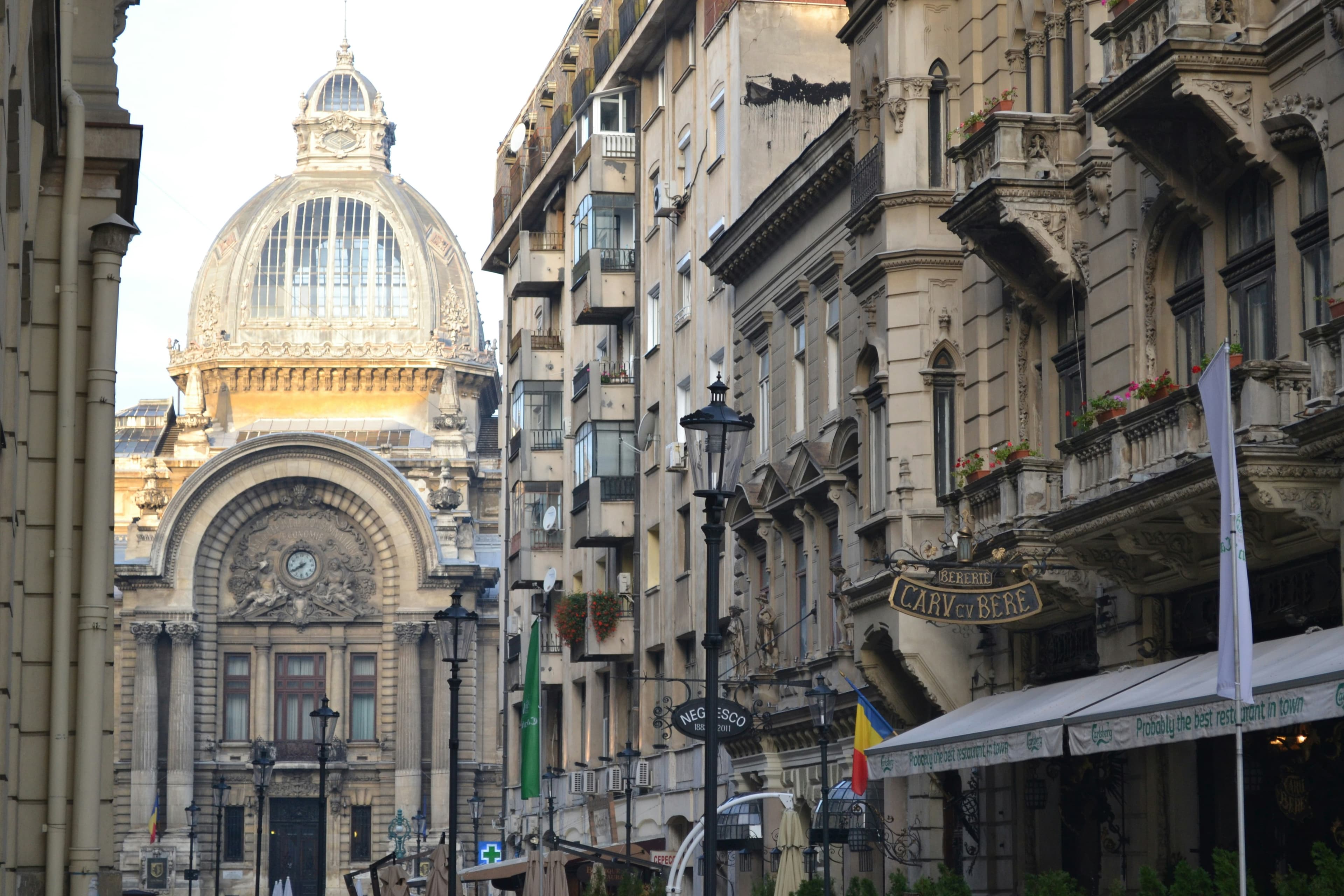
Bucharest is a city of grand contradictions, where interwar boulevards once nicknamed it the Paris of the East and a single communist-era palace still ranks as the heaviest building on Earth. It is also a city of about 1.7 million people that, after 1989, handed almost all of its housing to private owners faster and more completely than almost anywhere on the continent. That choice still defines the market: near-total ownership, a sliver of a rental sector, and a public stock so small the city is only now building any of it back.
One number captures the whole privatisation arc: 96% of Bucharest households own their home and only 4% rent — the highest ownership share of any EU capital, the photographic negative of Vienna or Berlin. The municipal landlord holds just 0.8% of dwellings, about 6,800 flats, and the genuinely non-market segment is barely 0.8% of the stock. There is, in effect, no cooperative tenure at all: the catalogue records zero cooperative dwellings, because Romania's housing cooperatives dissolved into individual ownership after the right-to-buy. The remaining 3.2% is private rental, almost all of it informal and let without a written contract.
- Owners
- Owner-occupier96.0%
- Renters
- Public & non-profit rental0.80%
- Cooperative0.00%
- Private rental3.2%
What Bucharest calls social housing is a thin label rather than a sector. Only about 0.5% of Bucharest's dwellings are reserved for social-housing purposes, a targeting layer that sits on top of the small municipal stock rather than forming a tenure of its own. The rules under Law 114 of 1996 are means-tested: by the city's own criteria roughly 35% of households would qualify on income, yet the supply covers a tiny fraction of them. With no cooperative or social-rental sector to fall back on, a low-income Bucharester has almost nowhere to go but the open market or a waiting list.
What the few who rent actually pay spans a startling range. Tenants in the city's regulated municipal flats pay around €0.65 per square metre, an almost symbolic figure frozen since the 2000s. Step into the open market and the typical lease runs near €7.80 per square metre, a newly signed contract asks a median €10.30, and furnished, serviced lets reach €11.50 per square metre gross. The distance from the regulated floor to a market contract is vast, but the deeper point is that the rental tier is so thin that most Bucharesters never use it at all.
- Public/municipal housing
- All-stock median
- New contracts
- Furnished / serviced (gross)
Net-cold monthly rent per square metre by tier (furnished is gross, all-in). The regulated municipal floor is almost symbolic; a newly-let market contract runs many times higher, but the rental market itself is so small that most Bucharesters never enter it.
Vacancy weighs less heavily here than in the tourist capitals, but it is far from trivial. When enumerators went door to door for the 2021 census they logged a residential vacancy of about 12%, totalling some 218,000 unoccupied dwellings across the city — much of it inherited flats, unmodernised stock and second homes. Offices are looser: around 414,700 square metres stand vacant, roughly 13.5% of the office stock. Holiday letting barely registers against that backdrop. Roughly 2,763 dwellings run year-round as entire-home short-term rentals, clustered in the central historic districts, where a one-bedroom flat fetches a median €65 a night — a tourist economy, not yet the city-wide displacement seen in Lisbon or Barcelona.
Even a tiny rental tier feels the pull of newcomers. Jobs, universities and the wider economy draw roughly 35,000 moves a year into the city, yet it issues only about 7,500 building permits a year and the permitting itself remains slow. And the strain is no longer confined to the poorest households. Across fast-growing Central and Eastern European regions, including Bucharest, workers now pay about 19% of their income in rent, up six percentage points since 2005, and a 2023 European study counts the capital among the cities where rising prices outrun wages. Housing's place in public anxiety is sharp: the city records around 1,800 residential evictions a year and an estimated 4,000 homeless residents, and the housing-justice movement has spent a decade arguing that the shortage of public stock is a political choice, not an accident.

Romania's housing problem is already hitting the middle class too, and that makes it more visible.The cooperative that privatisation erased
Bucharest is the rare European capital with almost no cooperative-housing tenure to describe. The geographic catalogue records zero cooperative dwellings, zero cooperative organisations and a 0% cooperative share — not because the form was never tried, but because it was almost entirely converted to individual ownership after 1989. Where Vienna or Zurich built a permanent non-market rental cooperative, Romania built a ladder into ownership and then pulled it up behind itself.
The history explains the gap. Under state socialism, much of Bucharest was built as standardised panel blocks, the blocuri that still house most of the city, allocated through the state and through quasi-cooperative construction associations. The right-to-buy of the early 1990s let occupants purchase their flats for a token sum, and the construction cooperatives dissolved into the new owner-occupier majority. What replaced the cooperative was not a non-market landlord but the asociație de proprietari — the owners' association, a body of individual flat-owners that jointly manages a single block's common parts, lift, roof and heating.
Today the live actors who carry the cooperative idea forward are civic rather than residential, and they cluster into a few small groups with different problems. One cluster is the adaptive-reuse and maker community around Nod Makerspace and Halele Carol, which turned disused factories into shared workspace and showed Bucharesters they could reclaim empty buildings without a developer; their challenge is precarious tenure and short funding cycles. A second cluster is the architecture-research layer at the CSAU research centre and the Uniunea Arhitecților, which studies housing and the city but does not build it. A third is the housing-justice movement, which organises tenants and evictees but has no vehicle to deliver homes. The common gap is structural: Romania still has no legal or financing framework for not-for-profit housing providers, so even a willing cooperative has nothing to plug into.
Whether any of this becomes a tenure depends on choices made in city hall and parliament, not on the will of the people involved. The cooperative-housing model is being re-examined across central and south-eastern Europe as a way to build affordable homes without permanent subsidy, and the broader European federation argues the form has proved resilient where a legal home exists for it. For Bucharest the precondition is policy, not appetite: a not-for-profit framework, access to municipal land and a financing line. Without those, the cooperative stays an idea in a research centre rather than a tenure on the ground.
Rebuilding a tier the city never kept
Bucharest's housing politics is the politics of starting from almost nothing. Ciprian Ciucu of the centre-right PNL won the snap mayoral election in December 2025, after Nicușor Dan left the office to become President of Romania, and inherited a city with a few thousand municipal flats and no machinery to build many more. The lead municipal move so far is a contested reform of the city's locuințe convenabile — the so-called convenient flats, a stock of around 4,050 below-market rentals whose rents had been frozen since 2007, some as low as a few euros a month. The city wants to raise them toward market levels, a step it says could add half a billion lei to the budget.
Most of the real power over housing sits in Bucharest's ministries, not its city hall. The city owns and allocates its small fond locativ; the national government holds the money and the main programmes. The Agenția Națională pentru Locuințe — the National Housing Agency — runs the youth-rental scheme that builds flats for people under 35 and hands them to local councils to let, and is borrowing €175 million from the Council of Europe Development Bank to expand it. The dominant national instrument, though, is Noua Casă — the New Home mortgage-guarantee programme — which has backed more than 334,000 loans since 2009 and was renewed for 2026. It props up ownership, not rental, which is the structural choice at the heart of the whole system.
Where a cooperative or non-market tier might sit, there is mostly a vacuum. Romania has no dedicated funding line for not-for-profit housing, no concept-led land tenders, and no cost-rental vehicle of the kind Ireland or Austria use. The National Housing Strategy 2022-2050 names the missing rental and social tiers as a structural gap to close over a generation. The social-economy framework lets Bucharest agencies attest social enterprises, but neither yet channels land or finance into cooperative delivery. The instruments are named on paper more than funded on the ground.
The empty space from the city's stock has a partial answer in reuse rather than tax. Bucharest has no vacant-homes tax and a large overhang of unoccupied and unmodernised flats, so the live frontier is adaptive reuse — turning disused industrial halls and offices into housing and workspace, a route the European reuse-first literature treats as both a climate and a supply tool. The binding constraint is the same one the housing strategy names: slow permitting and weak municipal capacity, which make even cheap conversions hard to deliver at scale.

- 1990[source]
Right-to-buy and mass privatisation
After 1989, state flats are transferred to their occupants almost in full, pushing owner-occupation toward 96% and leaving Bucharest with one of the smallest rental sectors in Europe.
- 2001[source]
National Housing Agency youth-rental programme
The Agenția Națională pentru Locuințe begins building rental flats for people under 35 who cannot buy or rent on the open market, allocated through local councils.
- 2014[source]
Common Front for the Right to Housing launched
Evicted residents, activists and cultural workers found the Frontul Comun pentru Dreptul la Locuire, putting forced evictions and the social-housing shortage onto the public agenda.
- 2014[source]
Văcărești declared a nature park
An abandoned communist-era reservoir site is recognised as a 183-hectare urban wetland, later a model for nature-based climate adaptation inside the city.
- 2022[source]
National Housing Strategy 2022-2050
Romania adopts its first long-horizon housing strategy, naming the missing rental and social tiers as a structural gap to close over a generation.
- May 2025[source]
Mayor becomes President
Nicușor Dan resigns as General Mayor of Bucharest after being elected President of Romania; the deputy mayor takes over until a fresh election.
- Dec 2025[source]
Ciprian Ciucu elected General Mayor
Ciprian Ciucu of the centre-right PNL wins the snap mayoral election, inheriting a city with almost no municipal housing and a contested social-rent regime.
- 2026[source]
New Home programme extended
The government renews the Noua Casă mortgage-guarantee scheme into 2026, the main national instrument propping up first-time ownership rather than rental supply.
- 2030[source]
EU retrofit and emissions horizon
With energy-efficient dwellings still in the single digits and a renovation rate near zero, Bucharest faces the EU energy-performance deadlines that will force a deep retrofit of its panel-block stock.
From the post-1989 mass privatisation and the right-to-buy, through the housing-justice movement and the youth-rental programme, to the first municipal blocks in two decades and the EU retrofit horizon.
In Bucharest the green agenda and the affordability agenda turn out to be one and the same, and the numbers are stark. Only about 9% of Bucharest's dwellings are energy-efficient, the housing stock averages around 50 years old, and the renovation rate crawls at roughly 0.3% a year — far short of the EU's deep-retrofit targets, and a problem concentrated in the panel blocks where most people live. Energy poverty touches around 11% of households. The EU energy-performance deadlines will force a deep retrofit of that panel stock, which ties the climate goal directly to the affordability problem: a warmer, cheaper-to-run block is also a more liveable one.
What divides the city's voices is not the need to act but the question of who the system is for. Mayor Ciprian Ciucu frames the convenient-flats reform as a fairness measure, arguing that the old allocation rewarded connections over need and that market-level rents would let the city rebuild its stock. Enikő Vincze, a professor at Babeș-Bolyai University and a housing-justice activist, argues the deeper crisis has now reached the middle class, which makes it both more visible and harder to dismiss as a problem of the poor alone. Neither disputes that the non-market tier has to grow; what they contest is whom it should shelter first, and at what speed.
Whoever had pull, relationships and so on, contacts, probably received this kind of housing with priority.Reuse, wetland and the thin civic layer
Bucharest's working examples are not housing estates but a handful of reclaimed buildings and a reclaimed marsh, and the thread that connects them is a city relearning how to use what it already has. There are no flagship cooperative blocks to tour here, because none exist. What the city does have is a string of bottom-up reuse projects and a thin civic layer trying to make reuse repeatable. They matter less as housing — almost none of them deliver homes — than as proof that Bucharest can act on its empty buildings at all. The examples below run from a single factory hall to a reclaimed marsh, before turning to the people trying to make such one-off rescues repeatable.
Halele Carol is the clearest proof that Bucharest's industrial shells can become commons. Between 2013 and 2015 a group of architects and cultural workers turned part of the 130-year-old Hesper factory into an events and workshop space, kick-starting an adaptive-reuse identity through temporary uses rather than a master plan. Its story also carries the city's deepest scar: the project stalled in 2015 after the Colectiv nightclub fire on the same site killed dozens and triggered a national reckoning over safety and corruption. The buildings still wait for a permanent use, a reminder that reuse without secure tenure and proper safety is fragile.
Nod Makerspace is the version that survived and scaled. Opened in 2015 in a former cotton factory on the Dâmbovița river, it began across 650 square metres and had grown to a 1,050-square-metre maker community by 2016 — co-working, prototyping workshops and the region's first shared materials store — largely through in-kind donations and private investment rather than public money. It is documented in studies of community finance as a model of doing a great deal with a little, but its caveat is the maker-space caveat everywhere: it is workspace and culture, not housing, and the leap from reclaiming a factory floor to delivering affordable homes is one no Bucharest project has yet made.
Văcărești Nature Park shows the same reclaim-what-exists logic at landscape scale. An abandoned communist-era reservoir, never filled, was left to nature for three decades and became a 183-hectare urban wetland, recognised as a protected nature park in 2014 and now home to nearly a hundred bird species. The circular-economy literature treats it as a low-cost climate asset — flood sponge and heat sink in one — but it sits under constant development pressure on its edges, and its survival depended as much on luck as on planning.
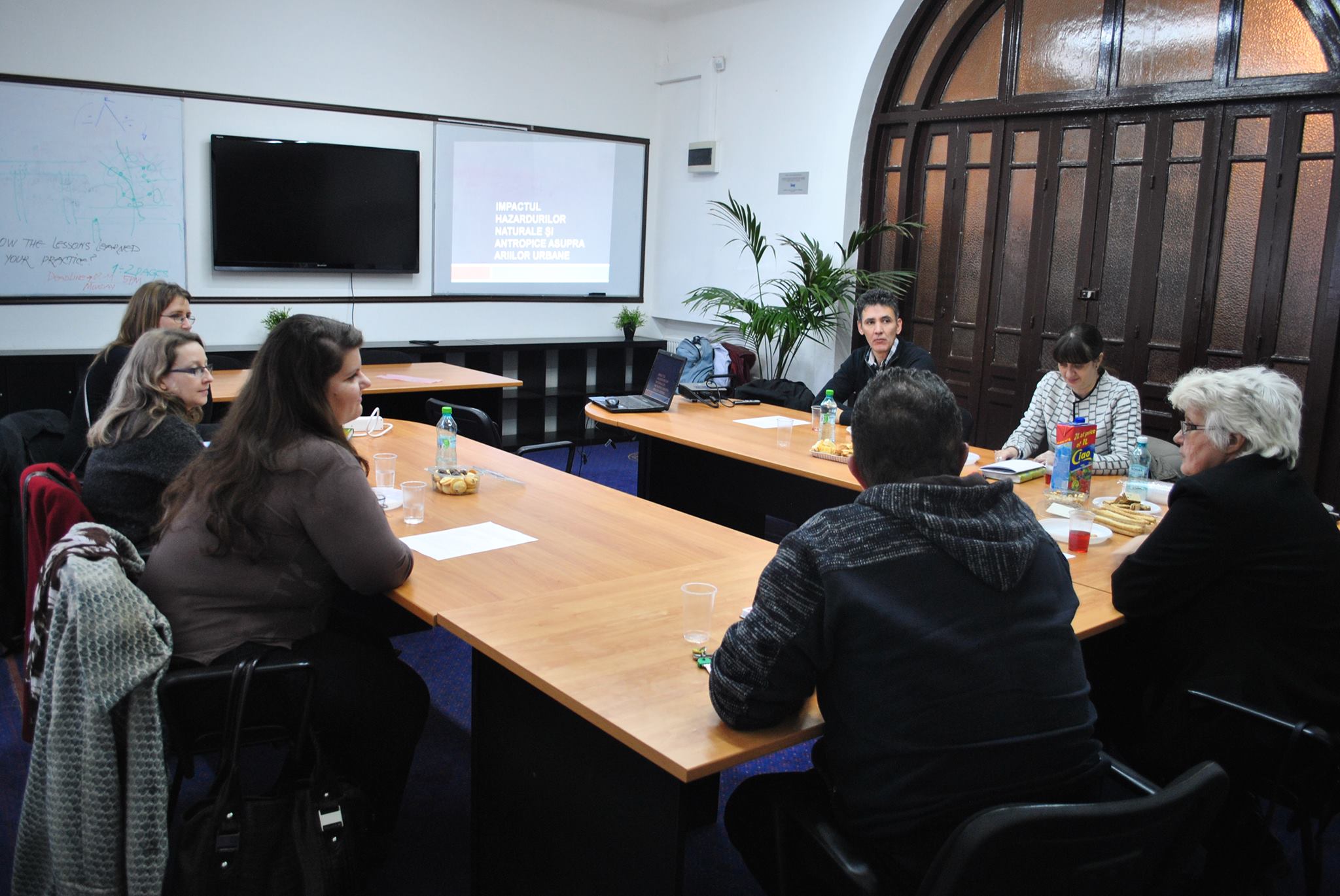
What underpins these one-off rescues is knowledge rather than money — a small but genuine institutional layer. The CSAU research centre at the Ion Mincu University studies how the city is built and unbuilt, and the Centrul de Cultură Arhitecturală at the Uniunea Arhitecților keeps the archive and exhibition rooms that hold the architectural memory of the panel-block city. Bucharest Housing Stories, a documentary series on the diversity of the city's housing lives, does the cultural work of making the housing question legible to ordinary residents. It is a thinner layer than Vienna's or Berlin's — research and culture far ahead of delivery — but it is the foundation on which any future cooperative or non-market sector would have to be built.
References
Statistics17Click on any number to see the source
Housing market
Tenure & affordability
Cooperative, social & public
Adaptive reuse & vacancy
Population & migration
From our library10
- Unaffordable and inadequate housing in Europe — Knowledge
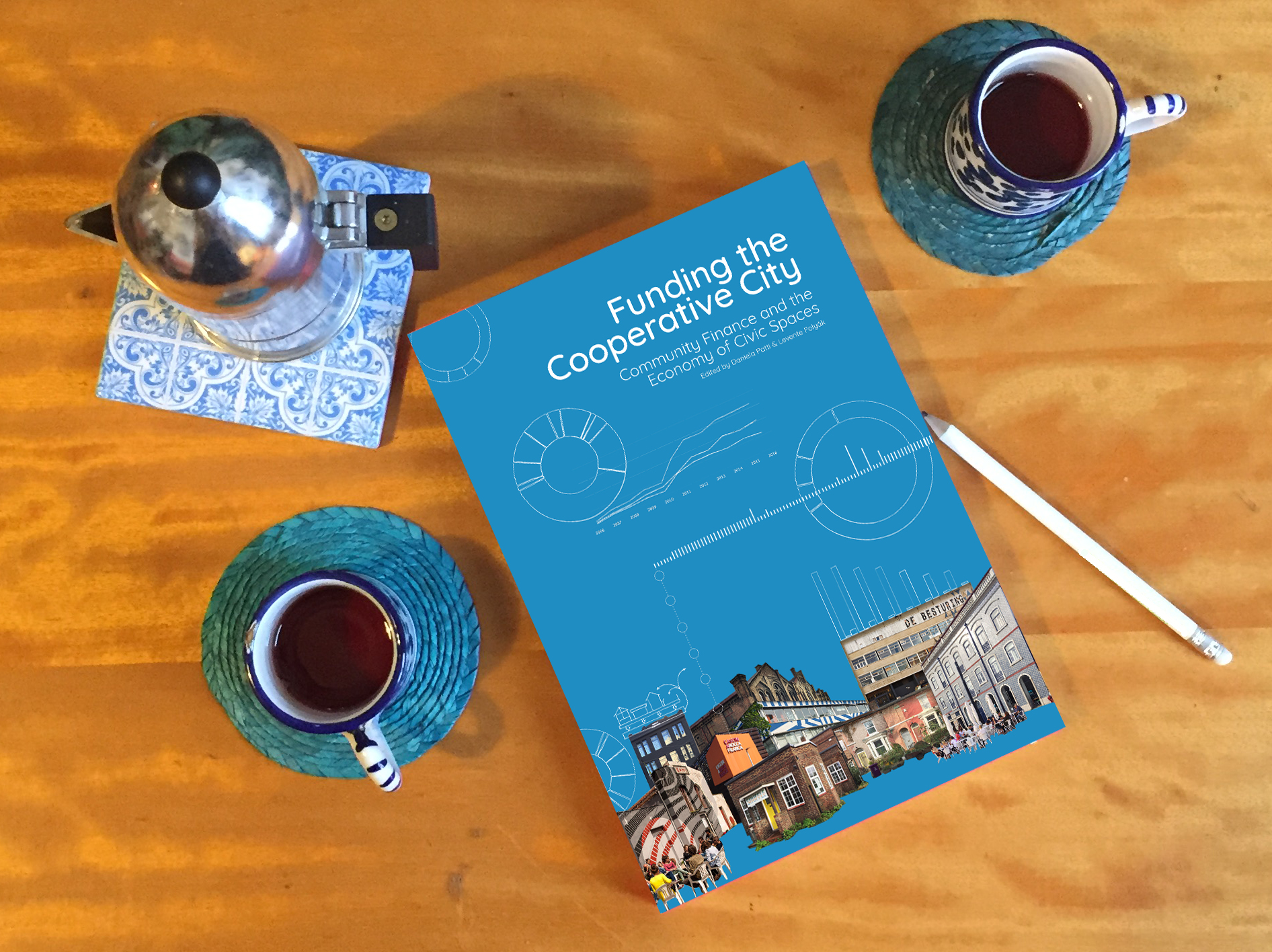
- Funding the Cooperative City: Community Finance and the Economy of Civic Spaces — Knowledge
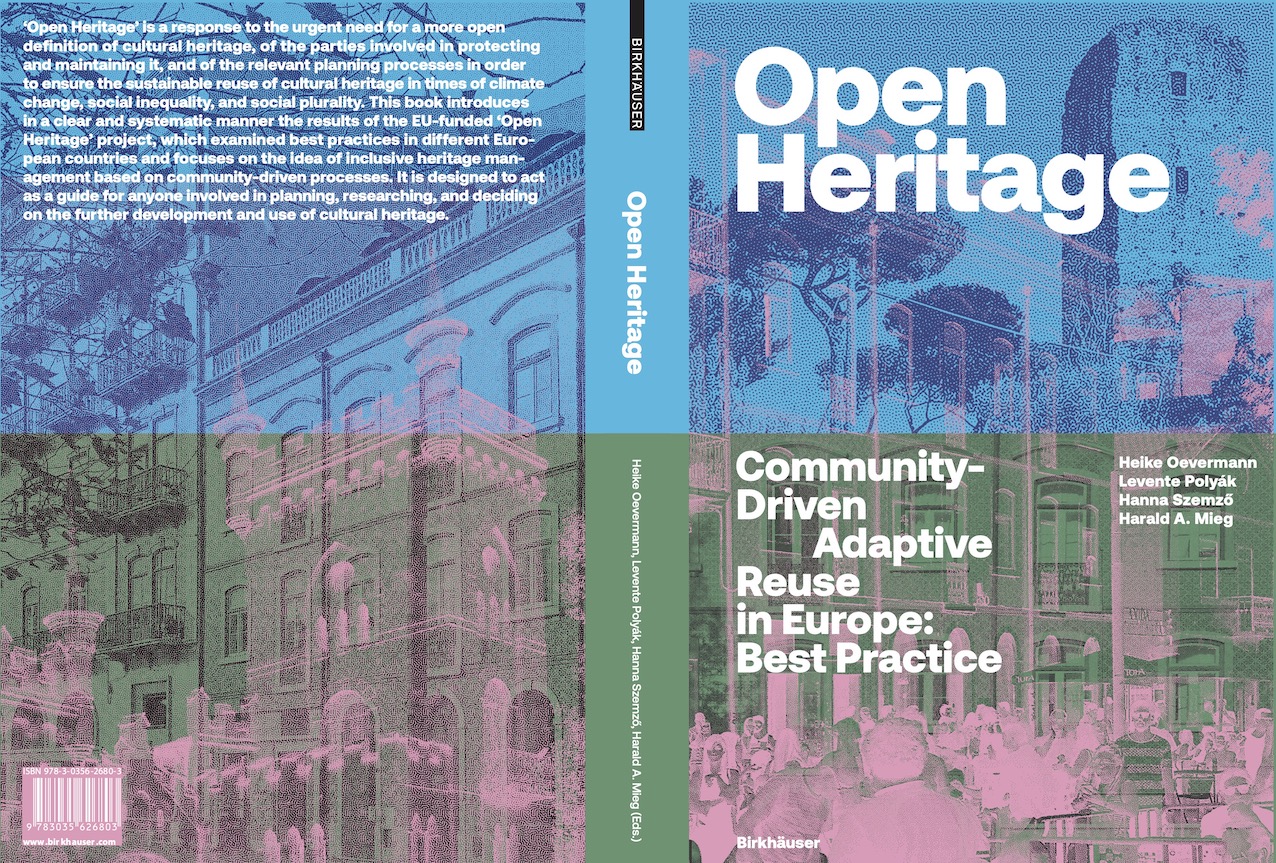
- Open Heritage - Community-Driven Adaptive Reuse in Europe: Best Practice — Knowledge
- CSAU — Centrul de Studii Arhitecturale și Urbane (UAUIM) — Organisation
- Centrul de Cultură Arhitecturală (UAR — Uniunea Arhitecților din România) — Organisation
- International policies to promote cooperative housing — Knowledge
- Housing Cooperatives in Europe - Resilience and Adaption to Changing Need — Knowledge
- Housing policies in the European Union — Knowledge
- Building Prosperity: unlocking the potential of a nature-positive, circular economy for Europe — Knowledge
- Bucharest Housing Stories — Organisation
Further sources13
- Romania has the highest share of home ownership in the EU — Romania Insider / Eurostat
- Bucharest general mayor election, December 2025 — Romania Insider
- Nicușor Dan resigns as mayor to become President — Romania Insider
- Ciucu on the convenient-flats allocation — Mediafax
- Ciucu on the frozen convenient-flat rents — Ziarul Financiar
- Enikő Vincze — the housing crisis reaches the middle class — Baricada
- ANL — Rental Housing for Young People — Agenția Națională pentru Locuințe
- Romania borrows €175m from the CEB for ANL youth housing — Government of Romania
- New Home (Noua Casă) programme extended into 2026 — Romania Insider
- Frontul Comun pentru Dreptul la Locuire — European Action Coalition
- Eviction and housing racism in Bucharest — openDemocracy
- Reuse through temporary functions at Halele Carol — OpenHeritage
- Văcărești Nature Park — Wikipedia