
The city that sold itself to its tenants
Budapest is a grand nineteenth-century capital of thermal baths, Danube bridges and Habsburg-era apartment blocks, home to about 1.7 million people. Its housing system, though, was reshaped almost overnight. After 1989 the city's districts sold their council flats to sitting tenants at a fraction of market value. Budapest turned, in barely five years, from a socialist rental city into one of the most owner-occupied capitals in Europe.
Three decades on, the dwelling figures still carry the imprint of that sell-off. Around 86.5% of households own their home and only 11.2% rent. Cooperatives are a small 3% of dwellings as a legal tenure, though their real footprint is larger: roughly 3.6% of Budapesters live in a lakásszövetkezet (a housing cooperative that mostly manages blocks its members already own), around 29,300 flats across about 480 cooperatives. Municipal landlords hold just 4% of dwellings, some 41,800 önkormányzati (council-owned) flats, and the formal private-rental market is about 7.2% of the stock. A further 2.3% sits outside the standard categories — institutional, tied and family arrangements the census does not slot neatly.
- Owners
- Owner-occupier83.5%
- Cooperative3.0%
- Renters
- Public & non-profit rental4.0%
- Private rental7.2%
- Unclassified2.3%
- Unknown / Other2.3%
In Budapest there is almost nothing the rest of Europe would recognise as a distinct social-housing sector. About 4% of dwellings carry a social-housing rule, and in practice that overlaps almost entirely with the small municipal stock, which districts allocate by income rather than as a tenure of its own. Hungary built almost no dedicated social housing after the war and has no national social-housing law. So the means-tested council flat, plus a thin housing-allowance system, is most of the safety net: only about 12.5% of households would even qualify for subsidised housing on paper.
Stack the price tiers and the affordability problem is laid bare in a single column. Tenants in the city's regulated municipal flats pay around €1.60 per square metre, and members of older cooperatives about €2.30, both deeply below the market. A newly-let private flat asks a median €14.50, the all-stock median sits near €16.50, and furnished, serviced lets run about €16.50 per square metre gross. Because Budapest's private market is thin and premium, the all-stock figure tracks the new-let one almost exactly. From the council floor to a market contract is a leap of roughly nine to one — the whole crisis compressed into one ratio.
- Public/municipal housing
- Cooperative
- New contracts
- All-stock median
- Furnished / serviced (gross)
Net-cold monthly rent per square metre by tier (furnished is gross, all-in). The deeply-regulated municipal and cooperative floor sits far below the market, where a new private contract runs several times the council rate. The thin, premium private market puts the all-stock figure close to the new-let one.
Not every empty home is available, either. When the 2022 census counted heads it found a residential vacancy of about 9.4%, some 55,000 unoccupied flats — though much of that is inherited, unmodernised or second-home stock rather than usable supply. The office picture is slacker still: around 589,000 square metres stand vacant, roughly 13.4% of the office stock. What bites harder than idle stock is tourist letting. An estimated 7,051 dwellings operate as full-time entire-home short-term rentals, packed into the inner Pest districts, where they have stripped long-term homes out of exactly the streets most visitors walk.
Jobs and universities keep pulling people in faster than flats appear: net inbound migration runs at roughly 24,500 moves a year, against permits for only about 4,000 new homes a year. The pain is no longer confined to the poorest. The European Commission's affordable-housing study finds that a Budapester spending a third of an average income can buy only about 14.7 square metres of a home, the least of any EU capital it measured. The same study notes that Budapest rents rose between 50% and 100% over the decade to 2023, among the steepest jumps on the continent. At the sharp end, about 8,000 people sleep rough or in shelters, and the courts process roughly 1,400 residential evictions a year.
The cooperative that has to be reinvented
Hungary has two very different things that both answer to the word cooperative. The older and far larger is the lakásszövetkezet, a housing cooperative that maintains and manages an apartment block its members already own as individuals. It is closer to a condominium board than to a rental cooperative, and that is why the census counts its members among owner-occupiers. The newer and tiny thing is the rental housing cooperative: a building owned collectively by a legal entity, where members have a secure tenancy and no landlord, but no tradable flat either.
The arc explains the gap. Construction cooperatives built a large share of the panel estates that ring Budapest in the 1960s to 1980s, when the lakásszövetkezet was a main semi-private route to a flat. After 1989 the right to buy hollowed the form out: members converted their shares to individual ownership, and for two decades the cooperative all but vanished as a way to build something genuinely shared. The rental-cooperative idea had to be started again from nothing, with no legal template and no public funding line to lean on.
Today the sector splits into two camps with opposite problems. The legacy lakásszövetkezetek, federated nationally, now spend their energy on the slow, capital-hungry job of retrofitting ageing panelház blocks their members own. The new wave is the self-organised rental collective: the Rákóczi Collective's house in Zugló, the Gólya cooperative's community building, and the alliance behind them, Szövetség a Közösségi Ingatlanfejlesztésért (an alliance for collaborative real-estate development that pools legal and financial know-how). The legacy coops struggle with retrofit cost and ageing membership. The new ones struggle with land and finance, because banks read collective ownership as risky and the state offers them nothing.

What lifts the cooperative out of the margins is the use city hall now makes of it. Budapest treats community-led and cooperative housing as a deliberate affordable-housing channel rather than a private leftover. It works through its Housing Agency and the EU-funded AHA Budapest project, and it links the local pioneers to the wider MOBA network of Central-European cooperatives building a shared revolving fund. The model is being knitted together across borders, and Budapest is one of its hardest test beds.
Two answers to the same question, one city and one state
Budapest's housing politics is a contest between two levels of government with different answers. The city, led by mayor Gergely Karácsony with Ambrus Kiss as general deputy mayor for housing, has built a rental-and-affordability agenda. Its strategy, branded “Home, for Everyone”, runs through the Budapest Housing Agency, which leases private flats and re-lets them affordably, and the EU-funded AHA Budapest project, which is converting a disused Újpest school into energy-efficient social housing. The senior adviser behind the approach, Bálint Misetics, reframed homelessness as an affordability problem rather than a policing one.
City hall and the national government hold different controls, and they pull in opposite directions. Parliament sets the money and the law, and its headline answer is ownership. The Otthon Start programme, launched in September 2025, offers first-time buyers a 3% fixed-rate mortgage capped at 100 million forints for a flat, and it dominated new lending within months. The city, which cannot match that firepower, leans on EU structural funds for its rental schemes. Those funds are themselves caught in the rule-of-law dispute between Budapest's central government and the European Commission, so the city's programme is real but fragile.
The cooperative sits deliberately inside the city's programme. Budapest does not yet have the German-style instruments — there is no concept-led land tender, no ground-lease pact, no dedicated cooperative funding line. So the city improvises: it routes EU money into its Housing Agency and AHA, links the rental cooperatives to the MOBA network's revolving-fund work, and treats community-led building as a way to add affordable homes the budget cannot build directly. It is a frank position, because the legal and financial scaffolding a cooperative needs simply does not exist nationally yet.
The idle stock catalogued earlier has begun to draw policy responses, the sharpest of them aimed at tourism. Short-term letting is the front line: Terézváros, the inner sixth district, voted in a referendum to ban Airbnb-style lets outright from 2026, the Supreme Court upheld it, and the city froze all new short-term-rental registrations until the end of 2026. On vacancy more broadly, Budapest's Rákosrendező masterplan turns a derelict rail yard into up to 10,000 homes, and Europe's wave of office obsolescence offers a conversion frontier the city is only starting to use. There is no national vacant-homes tax, and slow permitting remains the binding constraint.
- 1990-1994[source]
The great sell-off
After 1989, Budapest's districts transfer almost all municipal flats to their sitting tenants at a fraction of market value. Public ownership collapses from a majority of the stock to a sliver, and the city becomes one of Europe's most owner-occupied capitals.
- 2018[source]
First cooperative house
The Zugló Collective House, run by the Rákóczi Collective, buys a three-unit building and becomes the first collectively-owned, rental-based housing cooperative in Hungary, financed mostly by member savings and community loans.
- 2019[source]
The City is For All in city hall
Gergely Karácsony is elected mayor and brings housing campaigners into the administration; homelessness is reframed as an affordability problem rather than a policing one.
- 2021[source]
Budapest Housing Agency
The city sets up a social rental agency to lease private flats and re-let them affordably, backed by EU structural funds of roughly 1.5 billion forints from the ESF and 8.5 billion from the ERDF.
- 2024[source]
AHA Budapest launched
The EU-funded Affordable Housing for All project begins, converting a disused Újpest school into energy-efficient social housing and setting up a Housing Office, on a roughly €5 million European Urban Initiative grant.
- Sep 2025[source]
Otthon Start mortgage
The national government launches a 3% fixed-rate mortgage for first-time buyers, capped at 100 million forints for a flat, sharpening the contrast between an ownership-led national policy and the city’s rental-led one.
- Nov 2025[source]
Terézváros votes to ban Airbnb
A District VI referendum backs a full short-term-rental ban by 54%; the Supreme Court upholds it, making Terézváros the first Hungarian district to ban Airbnb-style lets outright.
- Jan 2026[source]
STR ban + city-wide freeze
The Terézváros ban takes effect and the city freezes all new short-term-rental registrations until the end of 2026, the sharpest tool yet against tourist-let pressure in the historic core.
- ~2030[source]
Rákosrendező masterplan
The city plans one of Europe’s largest brownfield revitalisations on the Rákosrendező rail yards: up to 10,000 apartments, at least 25 hectares of green space and a new transport hub, pitched explicitly against an earlier "mini-Dubai" investor scheme.
From the post-socialist right-to-buy and the near-total privatisation of council flats to the first cooperative house, the Housing Agency, the Otthon Start mortgage and the Rákosrendező masterplan.
Decarbonising the stock and making it affordable have become, in Budapest, one and the same task. The city's housing averages around 55 years old, only about 14% of dwellings are energy-efficient, and the renovation rate crawls at roughly 0.7% a year, far short of EU deep-retrofit targets. Residential buildings produce more than a third of the city's carbon. The Green Panel Programme is the city's main vehicle: grants of at least 30% to renovate the prefabricated panelház estates where one in four Budapesters live, tying the climate goal directly to the most affordable slice of the stock.
We are starting from the principle that homelessness is, first and foremost, a housing affordability issue.Nobody in Budapest denies the crisis; the fight is over which tenure should carry the weight of fixing it. The city argues that secure, affordable rental and prevention come first. Bálint Misetics, the mayor's senior housing adviser, frames homelessness as fundamentally a question of whether people can afford a home at all. The national government argues the opposite: that the answer is ownership, and that a subsidised mortgage is the surest route to a stable home. Prime minister Viktor Orbán has cast ownership as the core of the Hungarian dream and rental schemes as a form of dependency. The shared premise — that the squeeze is real — only sharpens the split over whether Budapest should grow renters or the state should mint owners.
The Hungarian dream is a home of your own.After the sell-off: collectives, ruin-bar commons and a school made of homes
Budapest's working examples are small, recent and hard-won, and the thread that connects them is a city relearning shared, non-market housing after privatising almost everything. The cases below run from a self-organised collective house up to a city-led conversion, before turning to the actors trying to make the model repeatable.
The Zugló Collective House, built by the Rákóczi Collective, is where the new cooperative story starts. After seven years of organising, the group bought a small building in 2018 and turned it into the first collectively-owned, rental-based housing cooperative in Hungary, home to seven people who pay around 60% of market rent. The friction was the whole point: no bank would lend to a non-family group with unstable income, so members raised roughly €100,000 in private community loans within two weeks and did much of the renovation themselves. As one member, Zsuzsi Pósfai, put it, there is no landlord and the housing can be stable for the long run.
The Gólya cooperative shows the same instinct at neighbourhood scale. A bar and political-organising space threatened by gentrification, Gólya bought its own building and now anchors the Kazán community house in the old Ganz industrial compound, nearly 1,000 square metres shared by nine organisations and run as an energy community with solar panels and a collective efficiency fund. Its caveat is the one every Budapest commons faces: civic projects here survive on precarious deals with private and public landlords, the lesson the city's earlier ruin-bar and cultural-space experiments taught the hard way.
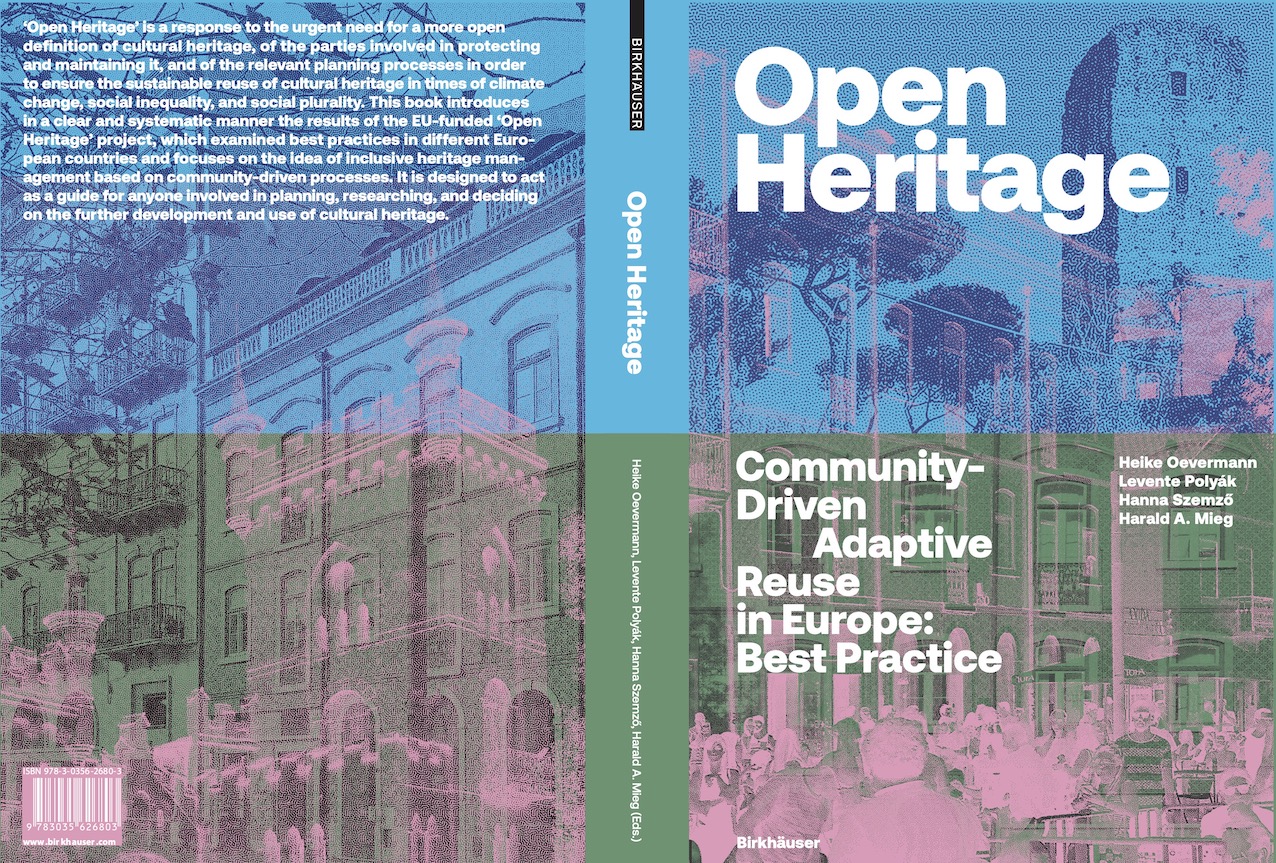
Budapest's ruin bars are the unlikely ancestors of all this. The conversion of disused inner-Pest buildings into self-organised cultural commons — Szimpla Kert the most famous — became an internationally studied model of bottom-up adaptive reuse, documented in studies of community finance and of European adaptive-reuse practice. The pattern proved that Budapesters could turn empty shells into shared space without waiting for a developer. It also proved how easily a thriving civic space is pushed out once the property becomes valuable.
Demo Hub is the clearest sign of the new municipal ambition. The flagship of the AHA Budapest project, it converts a 1970s vocational school in Újpest into energy-efficient affordable housing, designed by NARTARCHITECTS and funded with about half of a roughly €5 million EU grant. Its caveat is the one that shadows the whole city programme: the build depends on EU money that is entangled in the rule-of-law dispute, and final construction was still going to tender in 2025. E-Co Housing, a renovated 14-unit block heated by heat pumps and solar with rainwater-fed gardens, is the smaller demonstrator alongside it.
Holding these scattered demonstrators together is a still-slender web of institutions — and one outsized wager. The Metropolitan Research Institute and the alliance Szövetség a Közösségi Ingatlanfejlesztésért supply the policy and legal scaffolding the cooperatives lack, and the MOBA network links them to peers in Prague, Ljubljana, Zagreb and Belgrade. Above them all looms the Rákosrendező masterplan, the city's plan to turn a derelict rail yard into up to 10,000 homes, pitched explicitly against an investor scheme some had called a “mini-Dubai”. It is a far thinner institutional layer than Vienna's or Berlin's, and almost everything is recent. But it is real, and it rests on the one asset privatisation could not erase: a dense, walkable city full of brick and panel shells waiting to become homes again.
References
Statistics20Click on any number to see the source
Housing market
Tenure & affordability
Cooperative, social & public
Adaptive reuse & vacancy
Population & migration
From our library10
- Understanding the housing crisis: Staff Working Document accompanying the European Affordable Housing Plan — Knowledge
- Szövetség a Közösségi Ingatlanfejlesztésért (SZaKI) — Organisation
- Demo Hub — Project
- MOBA: Rethinking needs and financing for affordable rent and cooperative housing in Central and South-Eastern Europe — Knowledge
- Cooperative Housing Pioneers in Central and South- Eastern Europe: Mainstreaming Alternatives through Translocal Networks — Knowledge
- Rethinking European Offices 2030 - Risks and Opportunities from Obsolesence — Knowledge
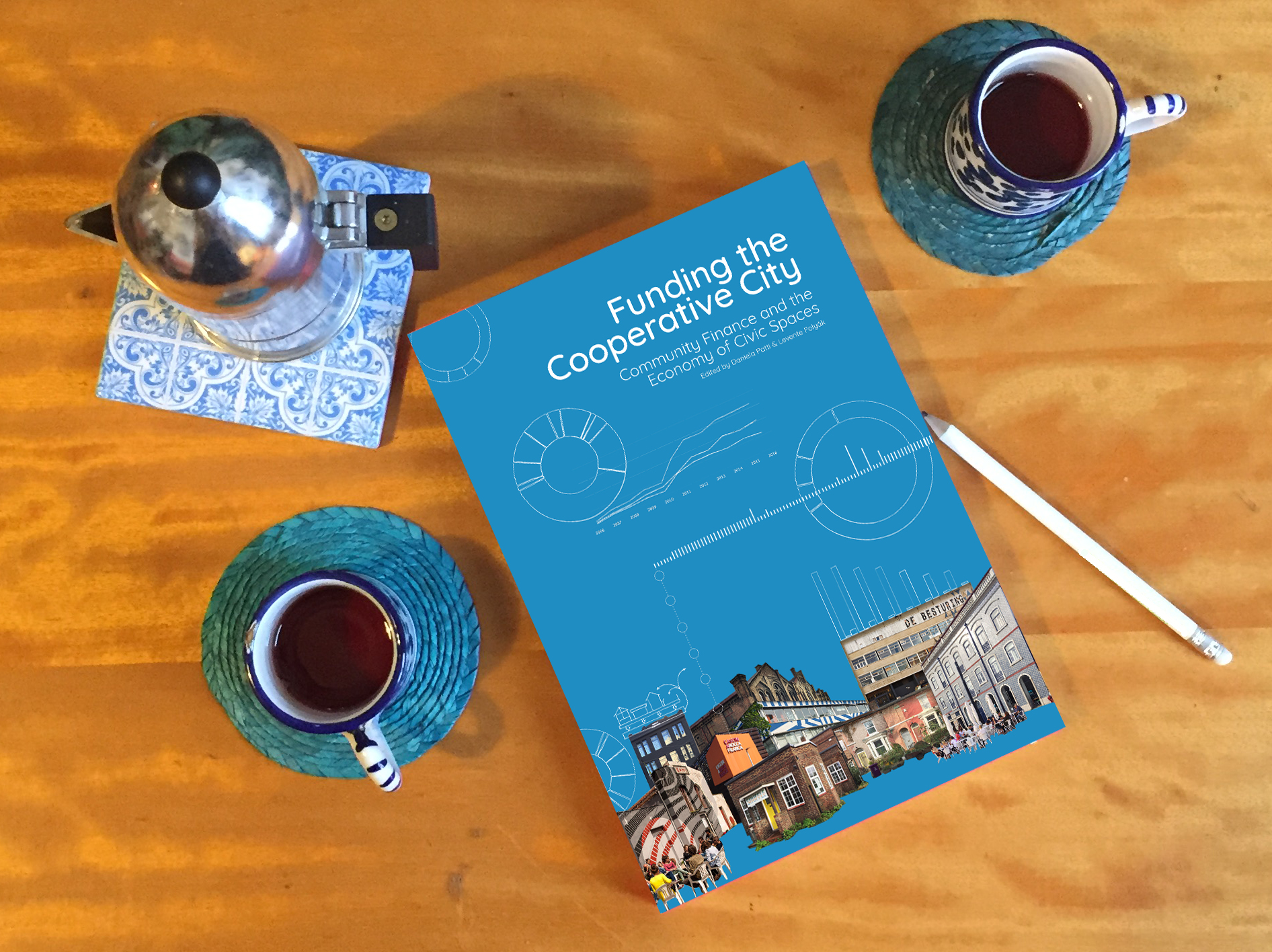
- Funding the Cooperative City: Community Finance and the Economy of Civic Spaces — Knowledge
- Open Heritage - Community-Driven Adaptive Reuse in Europe: Best Practice — Knowledge
- NARTARCHITECTS — Organisation
- E-Co Housing! — Project
Further sources16
- Home, for Everyone — Budapest housing strategy — Housing Europe
- AHA Budapest — Affordable Housing for All — MEHI
- AHA Budapest — European Urban Initiative project page — European Urban Initiative
- Budapest Green Panel Programme — Hungarian Conservative
- Budapest social rental housing agency — Daily News Hungary
- Ambrus Kiss — housing-crisis measures — Daily News Hungary
- How Budapest is changing the narrative on homelessness (Misetics) — World Habitat
- PM Orbán: the Hungarian dream is homeownership, not dependency — Hungarian Conservative
- Otthon Start 3% mortgage programme — Hungarian Conservative
- Terézváros referendum to ban Airbnb — Hungarian Conservative
- Budapest two-year STR registration moratorium — ShortTermRentalz
- Rákóczi Collective — a new cooperative house in Budapest — World Habitat
- Gólya — collective ownership in a self-organised centre — Cooperative City
- SZaKI — implemented community-housing projects — SZaKI
- Rákosrendező masterplan — Budapest brownfield revitalisation — Architektura & Biznes
- MNB Housing Market Report 2026 — Magyar Nemzeti Bank