
A provisional capital that became a city of tenants
In 1949 a quiet university town on the Rhine was chosen over Frankfurt to host a provisional government. That "provisional" lasted half a century, and it left Bonn with ministries, embassies and, today, 27 United Nations institutions. A city built to house officials on short postings now has to house a population that stays. That tension runs through every housing number below.
Bonn is a city of tenants. 68.6% of dwellings are rented and only 29.6% are owner-occupied, out of 176,968 homes counted in the 2022 census. Cooperatives hold an estimated 3%, about 5,000 flats. Public housing, meaning stock owned by the city, is smaller still. VEBOWAG (the Vereinigte Bonner Wohnungsbau AG, the city's own housing company) owns about 6,700 flats, 3.8% of the stock. The remaining 61.8% is let by private landlords, from single owners to listed companies.
- Owners
- Owner-occupier29.6%
- Renters
- Public & non-profit rental3.8%
- Cooperative3.0%
- Private rental61.8%
- Unclassified1.8%
- Unknown / Other1.8%
Social housing is not a tenure of its own here. It is a time-limited covenant (Mietpreis- und Belegungsbindung, a cap on rent and a rule on who may move in) attached to homes built with state loans. The city counted 8,900 subsidised flats at the end of 2024, just under 5% of the stock, and the number is falling. About 2,700 of them belong to VEBOWAG. The rest sit with private and cooperative owners whose covenants expire on a schedule.
Rents climb steeply the newer the lease. Cooperative members pay around €6.45 per m² net of heating and service charges, and VEBOWAG tenants about €7.60. The median across all existing leases is €9.50. A flat advertised today asks €14.05. Furnished and serviced lets, priced gross with utilities and furniture included, reach €24.05. For students the room is the budget: a typical room costs €525 a month against a national average of €505, according to a winter 2025/26 survey of student housing costs.
- Cooperative
- Public/municipal housing (VEBOWAG)
- All-stock median
- New contracts
- Furnished / serviced (gross)
Net cold rent by tier, except the furnished tier, which is gross and includes utilities and furniture.
Empty homes are scarce. The 2022 census found 2.9% of dwellings vacant, and the local tenants' union now puts real vacancy at 1% to 2%, around 1,800 flats, in its January 2026 note on empty homes. Offices are a different story. About 140,960 m² of office space stood empty at the end of 2025, a vacancy rate of 3.48%, up from 3.09% a year earlier. Take-up fell sharply once public-sector demand dried up.
People keep arriving. Around 28,908 people moved to Bonn in 2024, many of them students, researchers and staff of federal and international bodies. The federal research institute BBSR forecasts a need for about 1,600 new homes a year. The city completed 592 in 2023 and 1,244 in 2024. A study for the developers' association puts the gap to 2040 at about 35,000 homes, as BFW NRW's December 2025 review of Bonn sets out. New leases are capped at 10% above the local reference rent, under the state's extended tenant-protection ordinance.
The squeeze reaches well beyond the poorest. Under state income limits, 50% of households could claim a Wohnberechtigungsschein (the certificate that entitles a household to a subsidised flat). Anja Ramos, then head of the city's social and housing office, put it plainly: "every second Bonn household could apply". Nationally, poorer city households pay about 46% of their income in rent, against about 20% for high earners. The Hans-Böckler-Stiftung (the trade unions' research foundation) found Bonn's rent burden clearly above the German average. At the sharp end, 3,675 people were registered homeless in 2024. Then-mayor Katja Dörner called housing "the central social question of our time" in a growing city.
Against that backdrop, the cooperative 3% is small, but it is older and more varied than the number suggests.
The growing pressure on the regional housing market shows how urgently new and effective strategies against vacancy, misuse of housing and housing shortage are needed.From workers' houses to project cooperatives
Bonn's cooperatives are almost all rental cooperatives. Members buy a Genossenschaftsanteil (a refundable share that makes them co-owners of the whole cooperative, not of their own flat) and in return rent at cost. The Gemeinnützige Wohnungsgenossenschaft (GWG) promises members a lifetime right to stay. It also rules out notice for a landlord's own use, the most common ground on which German tenants lose a home. Its members live in more than 1,100 flats across the city.
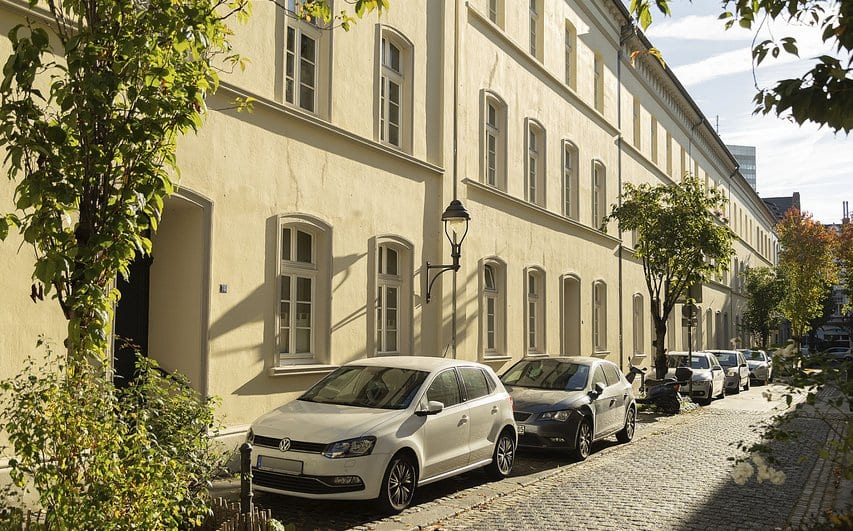
The tradition began with workers' housing. After some hesitation from the town council, an Arbeiterwohnungs-Genossenschaft (workers' housing cooperative) was founded in 1898. Between 1899 and 1908 it built 30 houses on Graurheindorfer Straße and Paulstraße, and both ensembles are still in non-profit hands. The GWG dates from the same year and went on to build 1,197 flats in 211 buildings. Capital status in 1949 brought a different answer. Local builders founded a municipal company in 1950 to house the new officials, the forerunner of VEBOWAG, and from then on the city's own company, not the cooperatives, carried most non-market building. The Raiffeisen movement's international federation, the International Raiffeisen Union, still keeps its seat in Bonn.
Today the sector falls into four clusters. The first is the traditional cooperative, led by the GWG, whose task is keeping old stock affordable while meeting climate rules; it is fitting solar panels to its existing buildings. The second is the project cooperative founded by a group of future residents. Amaryllis in Vilich-Müldorf started it in 2005, and the Mühlenbach-Wohngenossenschaft grew out of it in 2009. The third is self-organised ownership under the Mietshäuser Syndikat model, where a federation holds a veto on any sale. The fourth is new: a cooperative founded jointly by landlords and tenants. The project groups share one problem the old cooperative does not have. They need land and start-up equity at today's prices, and every project so far has depended on a church, a foundation or the city to supply the plot.
The city has begun to treat that as a policy lever. Its land rule is to grant long ground leases (Erbbaurecht, a lease of up to 99 years for which the builder pays an annual rent instead of a purchase price) rather than sell. Its Baulandmodell (a rule that a share of homes on newly zoned land must be subsidised) steers developers towards the same public-subsidy lines cooperatives can use. Whether those tools reach cooperatives at scale is now a political question.
A new mayor, an old quota and the land question
Bonn changed direction at the ballot box in 2025. Guido Déus of the centre-right CDU beat the Green incumbent Katja Dörner in the September run-off with 53.99% of the vote and took office on 1 November. His party now governs through a CDU, SPD and FDP cooperation agreement that lacks a majority of its own. Its programme for 2025 to 2030 sets a need of at least 1,000 new homes a year. It promises building permits within six months where planning law already allows housing. It keeps the Baulandmodell "in principle" and holds to ground leases instead of land sales. A second housing conference in March 2026 fed a revised Handlungskonzept Wohnen (the city's housing action plan), due before the council in autumn.
The tools sit at three tiers of government. Berlin writes tenancy law: the Bundestag extended the rent brake to the end of 2029. Its "Bau-Turbo" (a clause, §246e of the Federal Building Code, letting councils approve housing that departs from the local plan until 2030) is now a local choice. Bonn is also a federal town in its own right. The BMWSB (the federal ministry for housing, urban development and building) keeps its second seat here, and so does its research arm, the BBSR (the federal institute for building, urban affairs and spatial research). The state of North Rhine-Westphalia pays for subsidised building. It approved €2.4 billion for 13,356 homes in 2025, including 8,037 rented flats, according to the state housing ministry's 2025 funding results. It also sets the tenant-protection ordinance that caps rent rises for sitting tenants at 15% in three years. The city decides on land. Since 2017 the Baulandmodell has required up to 50% of new floor space to be subsidised on larger schemes. VEBOWAG adds 100 to 150 subsidised flats a year.


The fight is over how hard to push. Developers argue the quota has "not yet had any effect" in practice because so few schemes reach the ground. In May 2026 the Greens, now in opposition, attacked a proposal to scrap the Baulandmodell and demanded closer control of VEBOWAG's lending. Meanwhile expiring covenants drain the subsidised stock. Social affairs chief Azra Zürn warned that 3,000 more flats will leave the scheme in the medium term, while eligible households do not fall. Across the state, the housing companies' federation reports completions by its members down by more than 30% in 2025, in its 2026 annual press conference. Trade press links the slump to construction costs that keep rising.
The conflict in Iran shows once again how quickly crises and uncertainty hit the construction of new housing.Cooperative support in Bonn runs mostly through land. In October 2022 the council agreed to hand the former city nursery on the Dransdorfer Berg to a community project on a ground lease rather than sell it. The CDU-led alliance keeps that principle. There is no dedicated cooperative funding line, so project groups combine state subsidy loans with members' shares.
Empty space is the obvious reserve, and the answers are piecemeal. The city enforces a Zweckentfremdungssatzung (a by-law that bans turning homes into holiday lets or leaving them empty), which the tenants' union wants tightened. The new alliance wants to buy empty, unrenovated federal flats from the BImA (the federal property agency, itself headquartered in Bonn). Nationally, a federal report on empty offices counted 11 million m² standing empty. A new programme, "Gewerbe zu Wohnen" (commerce to housing), has €360 million budgeted for 2026. Bonn's largest conversion idea failed, however. A plan for about 800 flats on the former state offices site in the Bundesviertel was dropped over its €1 billion cost.
Climate targets run through all of it. The council set climate neutrality by 2035 in 2023, and the alliance has kept the date. In July 2025 Bonn adopted its first municipal heat plan a year ahead of the legal deadline, including a river heat pump for Plittersdorf. ICLEI, the global network of local governments for sustainability, has its world secretariat in the city. In practice the cooperatives are ahead of the rules. The GWG is putting solar on old roofs, and the newest project cooperative plans to build in timber to passive-house standard.
- 1898[source]
Workers' housing cooperative founded
Its houses on Graurheindorfer Straße and Paulstraße remain in non-profit ownership.
- 1950[source]
Municipal housing company founded
Bonn builders found GEBOWAG after the capital decision; it later becomes VEBOWAG.
- 2017[source]
Bonner Baulandmodell adopted
Up to 50% of new residential floor space on larger schemes must be subsidised.
- 2023[source]
Council sets climate neutrality for 2035
- March 2025[source]
NRW tenant-protection ordinance covers Bonn
The ordinance grows from 18 to 57 municipalities; rent rises for sitting tenants are capped at 15% in three years.
- June 2025[source]
Bundestag extends the rent brake
New-let rents stay capped at 10% above the local reference rent until the end of 2029.
- July 2025[source]
First Bonn heat plan adopted
- September 2025[source]
Guido Déus elected mayor
The CDU candidate wins the run-off with 53.99% and takes office on 1 November.
- October 2025[source]
Federal "Bau-Turbo" in force
Councils may approve housing outside the local plan until the end of 2030.
- 2027[source]
Zusammenstehen cooperative completes its first building
53 subsidised flats and a nursery on the former Godesberg school site.
- 2029[source]
Rent brake expires; WohnWerk residents move in
The Mühlenbach cooperative plans 30 multigenerational units in timber on a ground lease.
- 2035[source]
Target date for a climate-neutral Bonn
Small houses on long leases
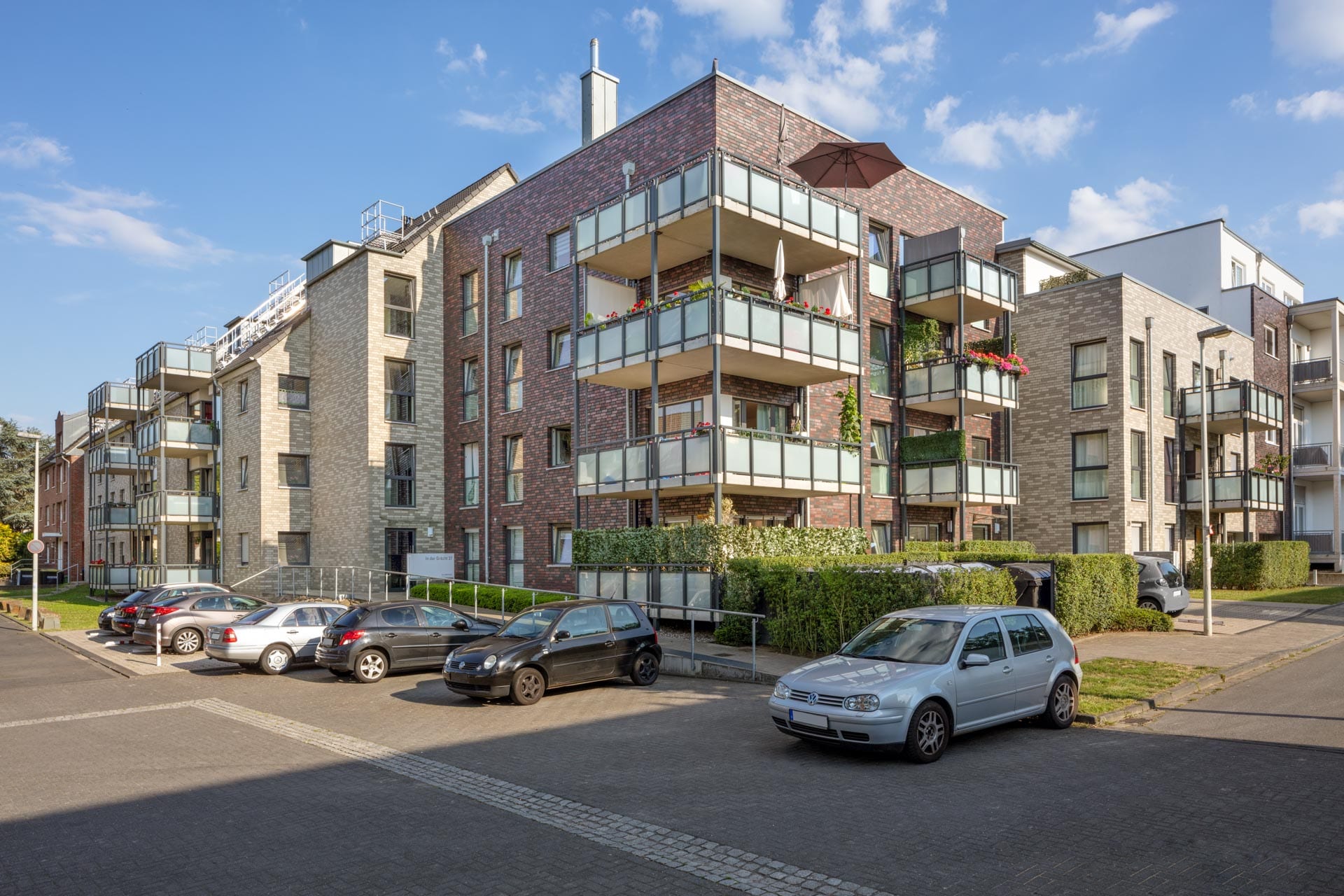
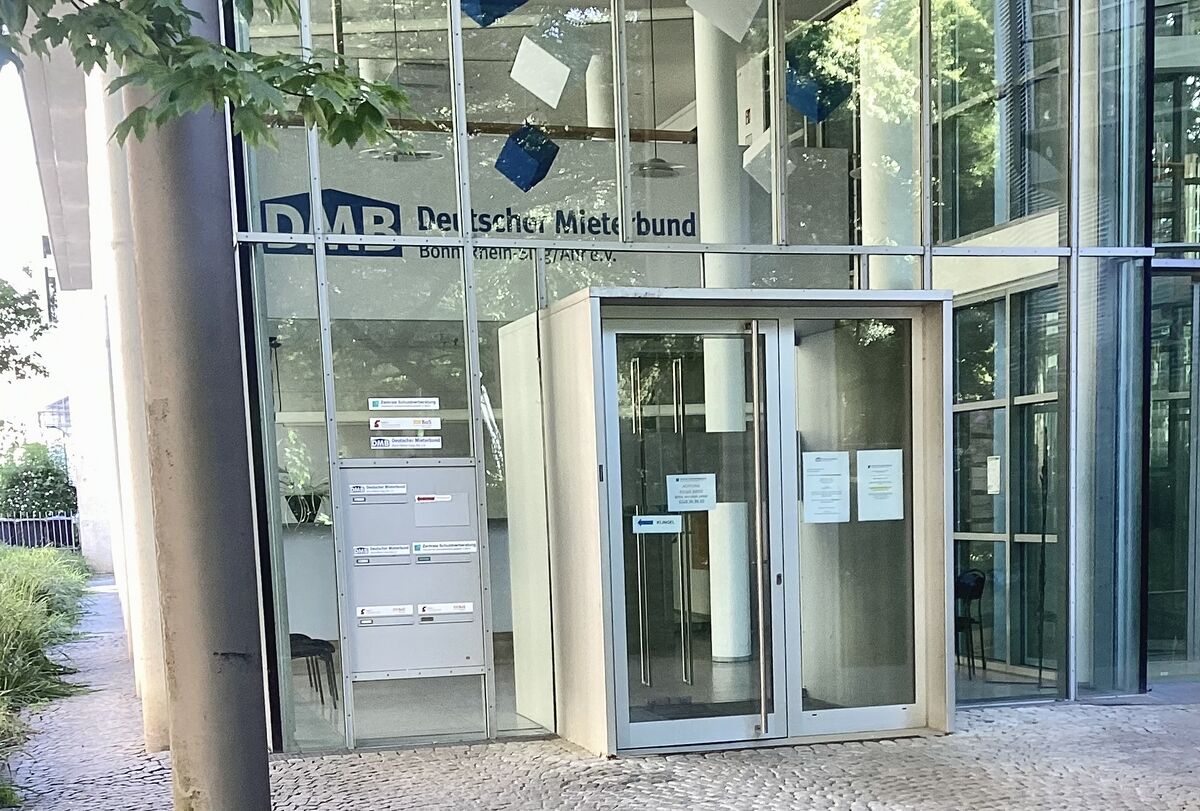
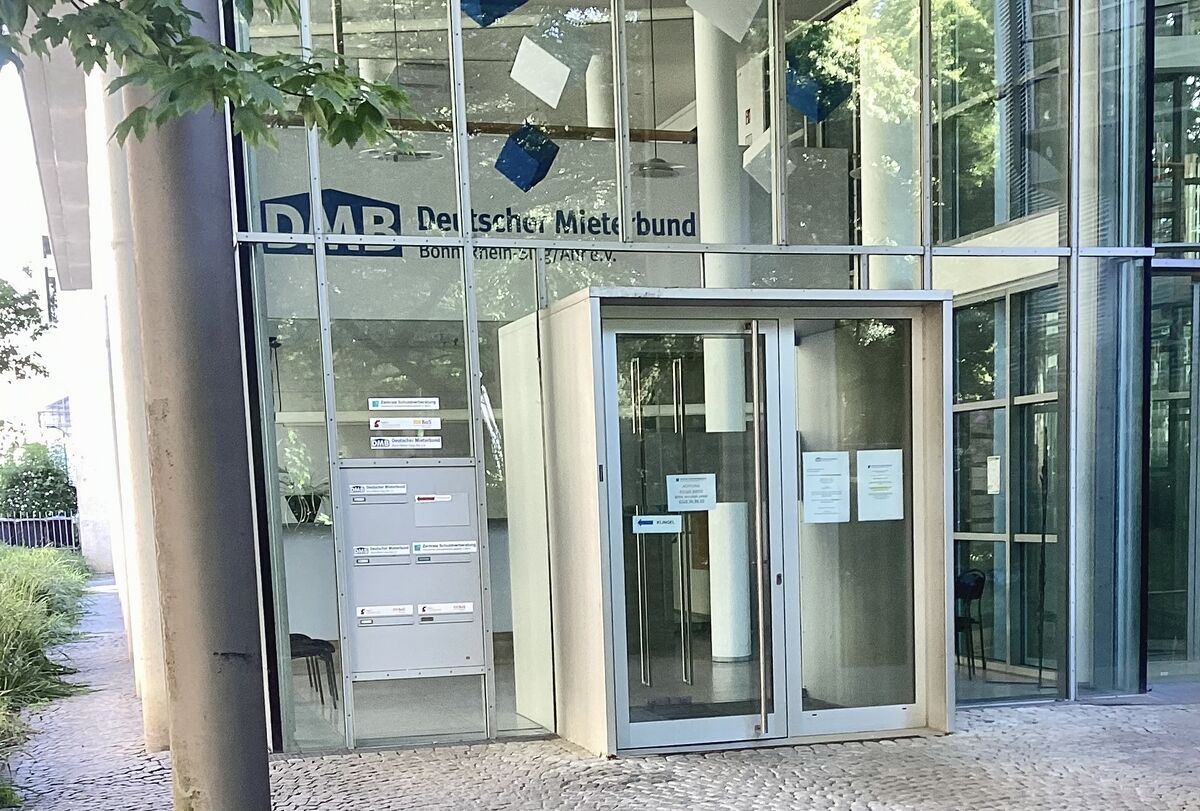
Wohnungsbaugenossenschaft Zusammenstehen is the project other German cities ask about. It was founded in 2021 by two usual opponents: the Bad Godesberg landlords' association and the Deutscher Mieterbund Bonn/Rhein-Sieg/Ahr. On the site of a former primary school on Friesdorfer Straße it is building 53 flats, all publicly subsidised, and a nursery. The foundation stone was laid in June 2025 and completion is due in 2027. Caritas, Diakonie, the city and its utility company have since joined as members.
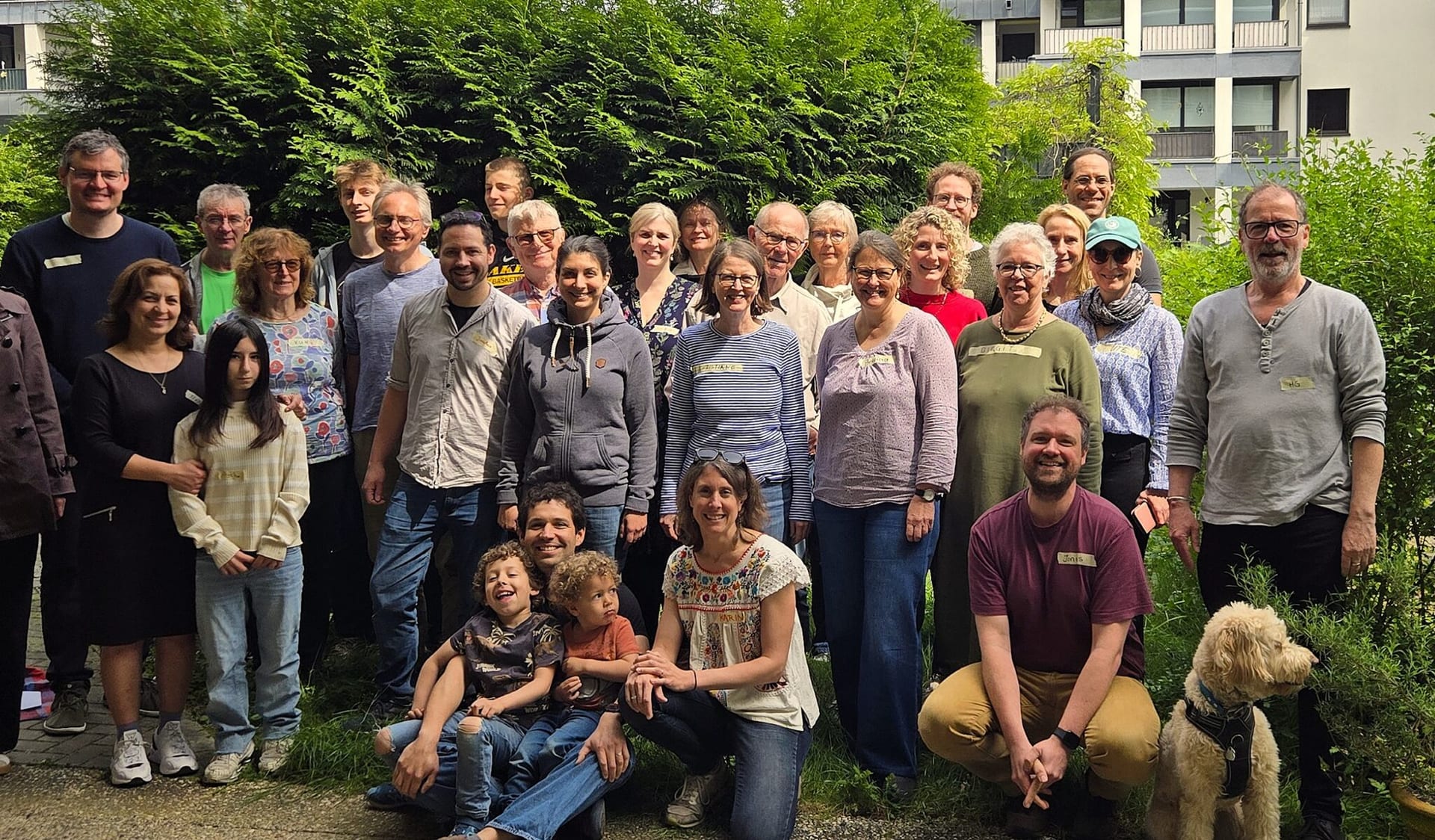
Amaryllis has been the city's proof of concept since 2007. Around 70 people, from babies to residents in their nineties, share three buildings and 33 homes on the right bank of the Rhine. They built to high ecological standards, halved the usual parking and share cars. Neighbours carry each other through illness and old age, and roughly one flat a year comes free.
The Mühlenbach-Wohngenossenschaft was founded by Amaryllis members to do it again. Its Villa Emma opened in 2010 with 12 barrier-free flats, five of them subsidised, for people of any age, health or income. Its next project, WohnWerk, will take the site of a former church chapel in Plittersdorf on a ground lease from the Protestant parish. It plans 30 multigenerational homes, a cluster flat and a shared-care flat community, built in modular timber to passive-house standard. Residents are due to move in in 2029.
The Zukunftsort Dransdorfer Berg shows what a foundation can add. The Bonn-based Montag Stiftungen are developing the 2.8-hectare former city nursery, derelict since 2004, under their "Initialkapital" model. The foundation takes the site on a ground lease and reinvests the returns in the neighbourhood. A community housing project with social housing for about 100 people is planned beside space for local uses. A design competition was decided in 2025.
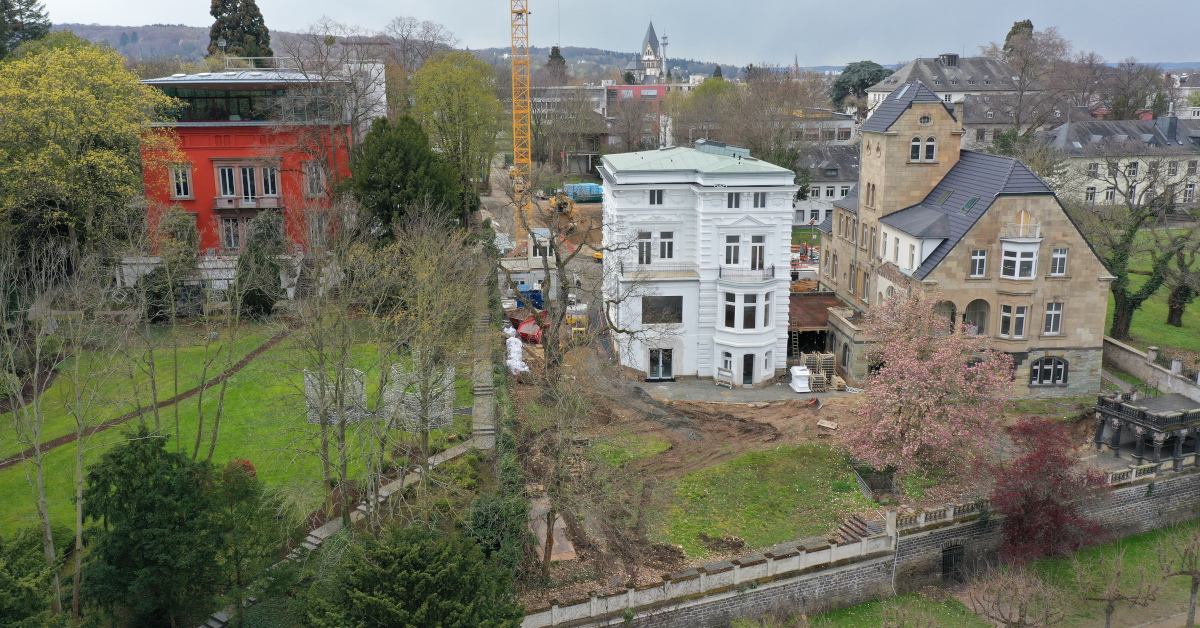
Wahlverwandtschaften Bonn-Endenich is reuse on a domestic scale. The cooperative bought a listed villa from 1864 and its gatehouse in 2018 and turned them into nine homes, four of them subsidised. Twenty residents aged 3 to 78 moved in from 2020. In the Altstadt, Hausprojekt Krausfeld took a 1948 house off the market for good in 2020. Eight residents pay €10.50 per m² and the house joined the Mietshäuser Syndikat in 2024, so it can never be sold again.
VEBOWAG remains the city's volume builder. Its Am Vogelsang scheme in Endenich finished in 2025 with 57 subsidised flats and a nursery, and Mainzer Straße in Mehlem added 27 more. The federal government is the other large landlord in town. The BImA plans about 500 flats in Bonn, mostly for federal staff, including on the former Ermekeil barracks. Whether that land serves the wider city is one of the open questions of the next five years.
None of these projects is large. Together they show a city that has learned to trade land for long leases, to let tenants and landlords build side by side, and to plan for old age as a household matter. The former capital has room to grow into that. What it lacks is the finance and the pipeline to make the exception the rule.
References
Statistics15Click on any number to see the source
Housing market
Tenure & affordability
Cooperative, social & public
Adaptive reuse & vacancy
Population & migration
From our library16
- VEBOWAG – Vereinigte Bonner Wohnungsbau AG — Organisation
- Studentische Wohnkosten an Hochschulorten, Wintersemester 2025/26 — Knowledge
- Leerstand in Bonn — Knowledge
- Im Fokus: Bonn gibt Bauen und Wohnen neuen Stellenwert — Knowledge
- Aus 18 werden 57 – Nordrhein-Westfalen weitet Mieterschutzverordnung aus — Knowledge
- Gemeinnützige Wohnungsgenossenschaft eG Bonn (GWG) — Organisation
- IRU - International Raiffeisen Union e.V. — Organisation
- Mühlenbach-Wohngenossenschaft eG — Organisation
- Bundestag: Mietpreisbremse verlängert — Knowledge
- Der Förder-Boom für bezahlbare Mieten und Eigentum geht weiter – Rund 2,4 Milliarden Euro für 13.356 Wohnungen bewilligt — Knowledge
- VdW Rheinland Westfalen Jahrespressekonferenz 2026 — Knowledge
- In Nordrhein-Westfalen: Baukosten bremsen Wohnungsneubau weiter aus — Knowledge
- Schriftlicher Bericht des BMWSB zum deutschlandweiten Büroleerstand — Knowledge
- ICLEI — Organisation
- Deutscher Mieterbund Bonn/Rhein-Sieg/Ahr — Organisation
- Montag Stiftungen — Organisation
Further sources23
- Wohnen in Bonn: Nachhaltige Entwicklung und zukunftsfähige Strategien — Stadt Bonn · 2025-06-23
- Leerstand in Bonn — Deutscher Mieterbund Bonn/Rhein-Sieg/Ahr · 2026-01-14
- Bonner Büromarkt 2025: deutlich geringerer Flächenumsatz — Stadt Bonn · 2026-02-26
- Berechtigt zum Wohnen — Soziales Bonn · 2022-02-09
- Böckler Impuls 11/2021: Mietbelastung — Hans-Böckler-Stiftung · 2021
- Miete: Vier von zehn Haushalten in deutschen Großstädten tragen eine prekär hohe Mietbelastung — Hans-Böckler-Stiftung · 2017-09-13
- Flashmob zum Tag der wohnungslosen Menschen — Caritas Bonn · 2025-09-11
- United Nations in Germany: Bonn UN Campus — Federal Foreign Office · 2026-01-22
- Bauten der Arbeiterwohnungs-Genossenschaft Paulstraße und Graurheindorfer Straße — Rheinische Industriekultur
- Gemeinnützige Wohnungsgenossenschaft Bonn — Bonn.wiki
- Guido Déus wird neuer Oberbürgermeister in Bonn — Stadt Bonn · 2025-09-28
- Bonner Ratskooperation von CDU, SPD und FDP endgültig besiegelt — Radio Bonn/Rhein-Sieg · 2026-02
- Kooperationsvereinbarung CDU, SPD und FDP 2025–2030 — SPD Bonn · 2025-12
- Bezahlbaren Wohnraum sichern, Bauland-Modell stärken — Bündnis 90/Die Grünen Bonn · 2026-05-29
- Bonner Baulandmodell — Stadt Bonn · 2022-10-27
- Bundestag beschließt Bau-Turbo — Deutscher Bundestag · 2025-10-09
- Neues Quartier Bundesviertel — Bonn.wiki
- Rat beschließt Fahrplan zur Klimaneutralität — Stadt Bonn · 2023-03-24
- Erster Bonner Wärmeplan — Stadt Bonn · 2025-07-04
- Zweite Wohnungsbaukonferenz: Handlungskonzept Wohnen weiterentwickelt — Stadt Bonn · 2026-03-05
- Was plant die BImA in Sachen Wohnungsbau in Bonn? — RheinPublik · 2023-02-03
- Abgeschlossene Projekte — VEBOWAG
- Hausgemeinschaft Villa Emma — Mühlenbach-Wohngenossenschaft