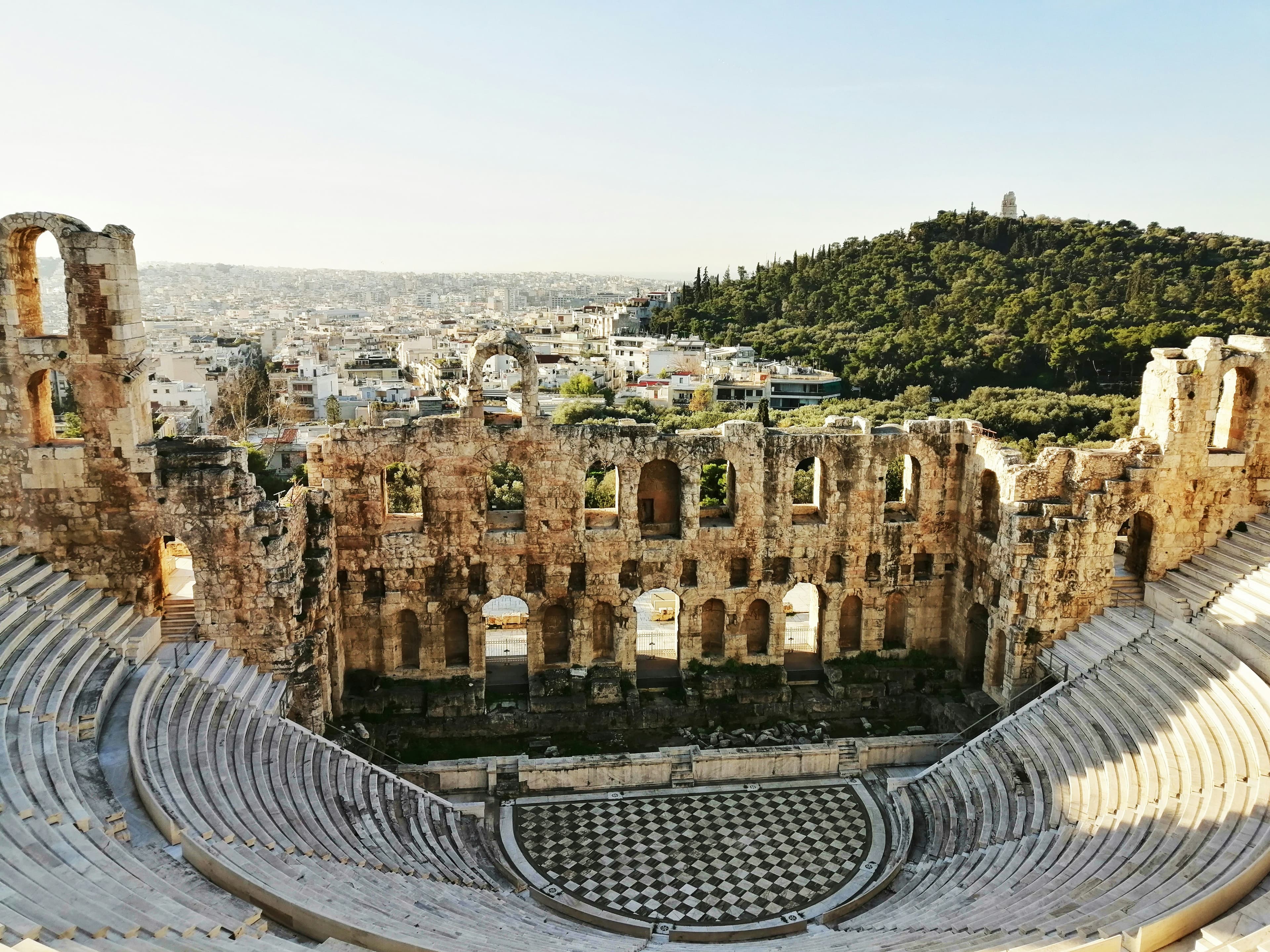
The city of owners with nowhere to rent
Athens is the oldest city in Europe still lived in, a capital of 643,452 people whose marble ruins, neighbourhood tavernas and dense apartment blocks sit layered on top of one another. Most of those blocks went up fast, privately, in the decades after the civil war, built through a barter system called antiparochi in which a landowner gave a builder the plot in exchange for flats. That system made Athens a city of small owners. It also left it with almost no public or cooperative housing to fall back on now the market has turned against renters.
That barter legacy is written straight into how Athenians hold their homes. About 64.5% of households own their home and 28.4% rent, one of the highest ownership rates of any European capital. There is barely a non-market sector beneath that. Municipal and state landlords hold just 0.4% of dwellings — roughly 4,200 flats, the residue of a defunct workers'-housing agency — and the cooperative share is effectively zero. The remaining 28% is private rental, and the small gap between owners and renters sits in family and informal arrangements.
- Owners
- Owner-occupier64.5%
- Renters
- Public & non-profit rental0.40%
- Cooperative0.00%
- Private rental28.0%
- Other7.1%
- Rent-free / provided free7.1%
Layered faintly over that stock is a social-housing function that Greece never really built out. Only about 0.6% of Athens's dwellings are reserved for social-housing purposes, a thin targeting layer over the small public stock rather than a tenure of its own. Greece built almost no dedicated social housing in the twentieth century, leaving a means-tested housing allowance as the main support. Around 18.2% of residents qualify for it. The first real national framework, the 2025 Social Housing law, is the country's opening attempt to change that.
What a tenant pays depends almost entirely on when and how they signed. Tenants in the tiny regulated public stock pay around €2.50 per square metre. Because many leases are long-standing, the all-stock median sits near €6.80; a newly-let apartment, by contrast, asks a median €11.50, and furnished, serviced lets reach €14 per square metre gross. The distance from the sitting-tenant floor to a new market contract is more than four to one. For a young renter signing today, the old median is irrelevant.
- Public/municipal housing
- All-stock median
- New contracts
- Furnished / serviced (gross)
Net-cold monthly rent per square metre by tier (furnished is gross, all-in). The tiny regulated public floor sits far below the market median; a newly-let private contract runs more than four times the public rate, while the city has almost no cooperative or social tier in between.
The paradox is that a city short of homes is also full of empty ones. Of the dwellings counted in the 2021 census, about 24.8% stood empty — some 120,000 unoccupied flats, made up of second homes, inherited flats locked in disputed estates, and unmodernised stock no one will let. The office market tells the same story: around 259,000 square metres stand vacant at a 12.5% office-vacancy rate. Sharper still is short-term letting. Roughly 7,898 dwellings now run as full-time entire-home short-term rentals, heavily concentrated in the historic core, where they have thinned long-term supply in exactly the streets visitors crowd.
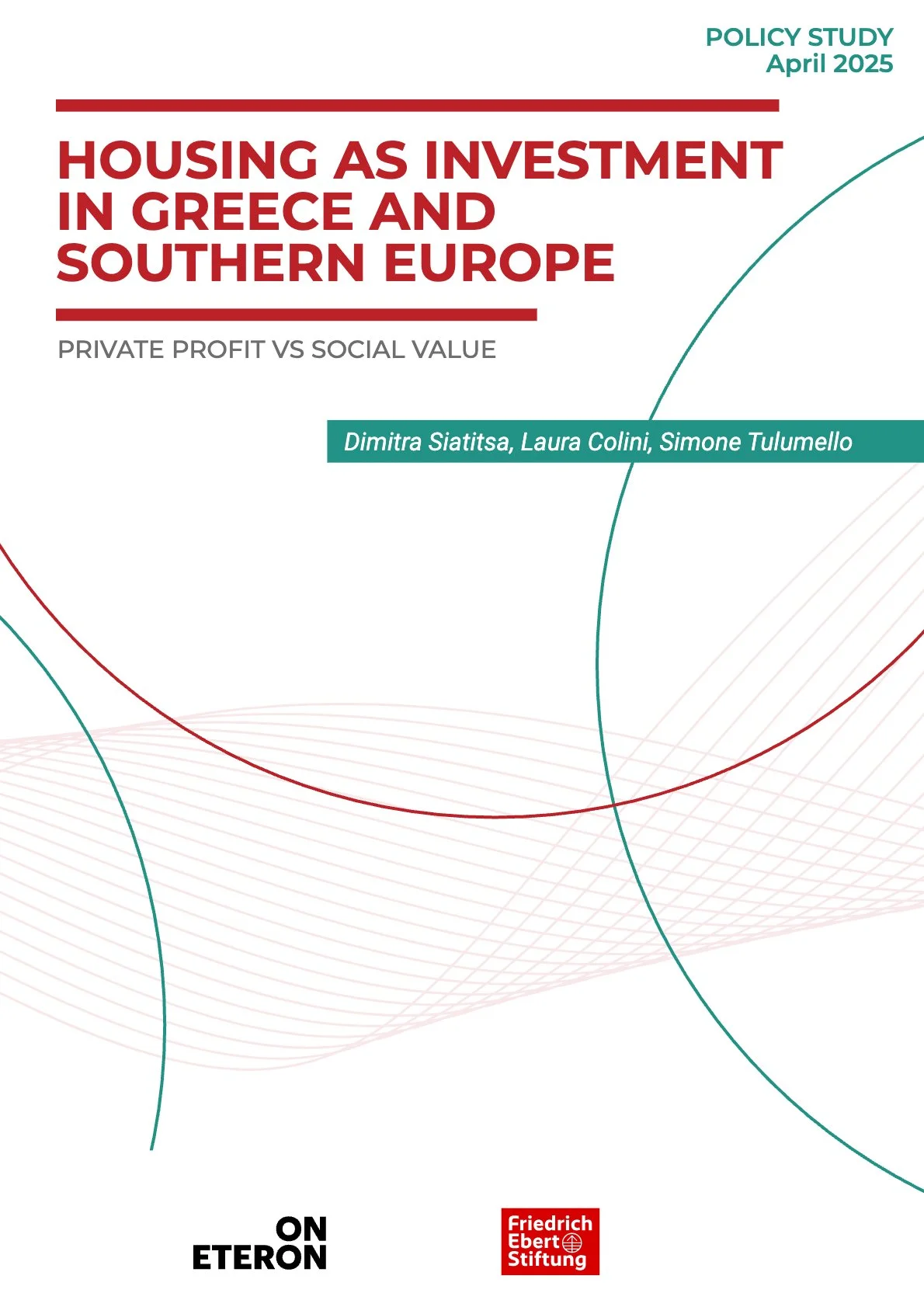
Jobs, universities and returning Greeks pull in net inbound migration of roughly 32,000 moves a year, yet the city issues only about 1,100 housing permits a year and construction has barely recovered — demand rising into a supply that does not. The pressure no longer stops at the poorest households. Greece now ranks first in the EU for housing-cost overload: nearly one in three citizens spends over 40% of income on housing, and in Athens the rent on a one-bed flat eats around 70% of an average salary. A study of Greek housing as an investment asset captured by private profit at the expense of social value sets out the diagnosis; a parallel account of institutional investors and financialisation tracks how, under austerity, ownership flipped from a pillar of security to a trap of tax and debt.
The cooperative that has not been built yet
Athens is the rare European capital with no cooperative-housing tenure to speak of. The catalogue records a cooperative share of effectively zero, and there is no established legal form for a not-for-profit housing cooperative in Greek law. Where Vienna or Zurich have a rental cooperative whose members hold a use-right rather than equity, Athens has the antiparochi flat: privately owned, individually traded, built by the family that lives in it. Collective, non-speculative tenure is the gap, not a niche.
The reasons are historical. In the decades after the civil war, the state stepped back and let private self-build solve the housing question. Landowners and small builders raised the apartment blocks through antiparochi, and the result was mass ownership without a public landlord or a cooperative movement. A workers'-housing agency built a modest public stock, but it was wound down, and Greece entered the modern era with one of Europe's thinnest non-market sectors. The cooperative idea never took root because cheap, owner-occupied flats made it look unnecessary.
Today the contemporary cooperative sector is a small advocacy and design movement rather than a builder. CoHab Athens, a research-and-advocacy collective formed in 2016, runs participatory workshops to map housing needs and draft scenarios for the city's first cooperative-housing project. It develops the legal and financial prototypes on paper, studies how existing social-economy law might host a cooperative, and links Greek practice to the pan-European MOBA network. Wind of Renewal, a social-economy organisation, and the Bodossaki Foundation, a long-standing Greek philanthropic body, support the wider civil-society ecosystem these experiments grow in. The shared challenge is the same for all of them: no enabling legal framework, no public land pipeline, and no patient finance for non-market housing.
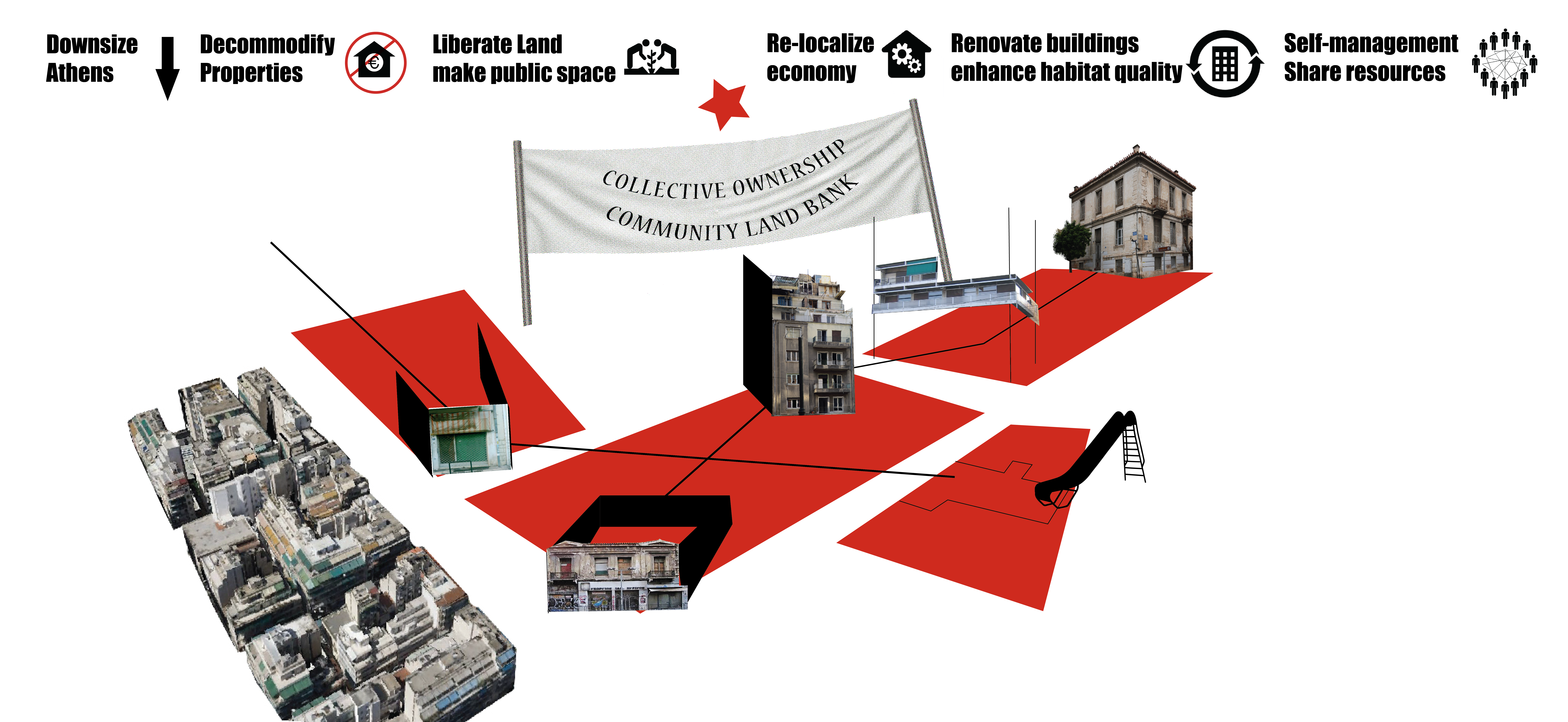

Whether the state makes room for cooperatives is the question that leads into Athens's politics. For decades the answer was silence: cooperatives appeared nowhere in housing policy. That is beginning to shift. The 2025 Social Housing law introduces social-rent and social-counterpart vehicles, and the December package floats tax relief for properties placed into social-housing schemes or community land trusts. Comparative history across Europe, Australia and Latin America shows cooperatives scale only when land, finance and a legal home arrive together. Athens has none of the three yet, but is, for the first time, writing the rules that could supply them.
Building a tier the city never had
Athens's housing politics is the politics of starting from almost nothing. Mayor Haris Doukas of PASOK, elected in 2023, has made housing a signature theme. His administration proposes a Housing Observatory and a Social Housing Office as new municipal structures, is auditing the city's own real estate for housing use, and has begun small: seven social apartments near Omonia in a municipally-owned building, and rent subsidies for 257 private flats let to young adults on the minimum wage. It is modest against the scale of need, but it is the first time the city has acted as a housing provider rather than a bystander.
The instruments that can move at scale, though, belong to the national government, which has acted quickly since 2025. The Ministry of Social Cohesion and Family, under Domna Michailidou, carried the first national Social Housing law — on Social Antiparochi and Social Rent — through parliament in September 2025, with a phased target reaching 20,000 apartments, much of it on under-used public and former military land. A December package added an idle-property tax, tax incentives for affordable lets modelled on Spain, and a renovation drive aimed at 30,000 to 35,000 long-empty flats. The city allocates and audits; the state writes the law and finds the land and money.
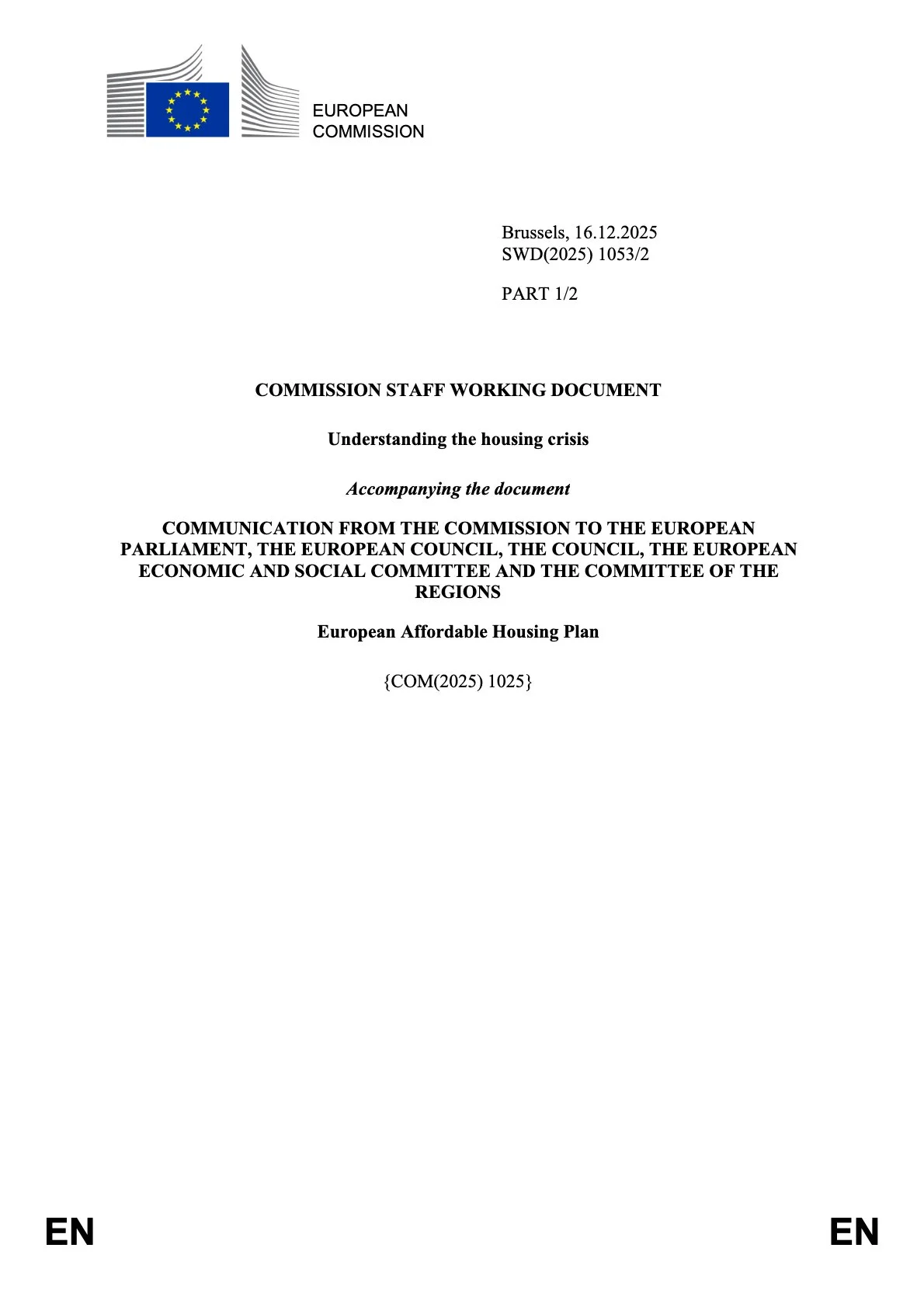
Cooperative and community tenure is, tentatively, written into this for the first time. The new law creates social-rent and social-counterpart vehicles, and the December measures float reduced property tax for homes placed into social-housing schemes or community land trusts. These are instruments, not yet a pipeline: there is no concept-led land tender and no dedicated cooperative funding line. But naming community land trusts in a government bill is itself new for a country whose housing policy was, until recently, almost entirely demand-side. The European Affordable Housing Plan's accompanying staff analysis sets the Greek effort against the wider continental search for affordable supply.
Against the city's stock of idle flats, the state has begun to legislate. The Anakenizo renovation programme offers subsidies of up to 80% to bring long-closed flats back to the market, and the idle-property tax aims to penalise leaving them shut. On short-term lets, the government froze new registrations across central Athens through 2026 and raised the daily tourist-rental tax sharply. A European Parliament review of short-term-rental regulation maps how cities across the EU are reaching for exactly these tools, and how thin the data behind them often is.
In Athens the climate question and the supply question turn out to be one and the same. The city's housing stock averages around 52 years old, only about 8% of dwellings are energy-efficient, and the renovation rate crawls at roughly 0.6% a year — far short of EU deep-retrofit targets. Energy poverty bites: around 23% of households struggle to keep their homes warm. The renovation subsidies are framed as much around energy upgrades as around supply, which ties the climate goal to the same empty flats the supply policy is trying to reopen.
- 2008[source]
Debt crisis hits the housing market
The financial crisis collapses household incomes and freezes construction. Home-ownership, once a pillar of security, becomes a burden of tax and debt for hundreds of thousands of families.
- 2013[source]
Golden Visa launched
Greece offers residence permits to non-EU buyers of property, drawing international capital into central Athens. A large share of the assets acquired through the scheme are later turned into tourist flats.
- 2019[source]
Recovery and gentrification
As the economy stabilises, investor interest and short-term letting reshape neighbourhoods around the historic core, pushing long-term rents sharply upward.
- Jan 2025[source]
Short-term-rental freeze in central Athens
A one-year freeze on new short-term-rental registrations begins across the three central municipal districts — Plaka, Kolonaki, Koukaki, Exarcheia and beyond.
- Apr 2025[source]
Athens unveils a municipal housing strategy
Mayor Haris Doukas proposes a Housing Observatory and a Social Housing Office, social apartments near Omonia, and rent subsidies for young adults on the minimum wage.
- Sep 2025[source]
First national Social Housing law
Parliament passes the law on Social Antiparochi and Social Rent — Greece's first serious framework for building and renting public-backed affordable homes, with a phased target reaching 20,000 apartments.
- Dec 2025[source]
The Mitsotakis housing package
The government adds an idle-property tax, tax incentives for affordable lets on the Spanish model, and a renovation programme aimed at 30,000 to 35,000 long-empty apartments.
- 2026[source]
STR freeze extended; Prosfygika restoration begins
The central-Athens short-term-rental freeze is extended through 2026, and the Region of Attica starts restoring the first four Prosfygika blocks into social housing — over the resistance of the squatter community living there.
- ~2027[source]
Spiti Mou 2 disbursements close
The €2 billion demand-side loan scheme for first-time buyers aged 25-50 winds down its final disbursements, having reached more than 11,000 households — a programme critics say lifts demand without adding supply.
From the debt crisis and the Golden Visa years to the short-term-rental freeze, the first national Social Housing law and the contested Prosfygika restoration.
The sharpest live debate is over tourism and short-term lets, and it has turned personal. Mayor Doukas, after warning in interviews that the historic core is becoming a hotel zone, argues the city must impose limits. He frames it as a matter of basic liveability for residents being squeezed out of the centre.
Athens does not need beautification from late-coming defenders. Uncontrolled tourism growth is threatening its iconic neighborhoods.Tourism Minister Olga Kefalogianni has pushed back hard, accusing the mayor of damaging the city's image rather than helping its residents. Neither denies the pressure exists; what divides them is whether saying so out loud protects residents or scares off the visitors who pay their wages. The exchange captures a wider tension between protecting a tourism economy the country leans on and protecting the residents priced out by it.
Athens does not need manufactured images of crisis. It needs serious work, a responsible stance and policies that genuinely address the pressures created by increased tourist demand.Commons, squats and the first drafts of a public tier
Athens's working examples are not finished cooperatives — the city has none — but the experiments that are testing whether collective, non-market housing can take hold here at all. They run from a contested refugee-block restoration to a paper cooperative and a reclaimed market hall, and the thread between them is a city improvising a public tier it never built.
Prosfygika of Alexandras Avenue is the most charged of them. The 228 interwar apartments across eight Bauhaus-influenced blocks, built in 1933 to house Greek refugees and now a protected monument, are owned mostly by the Region of Attica and squatted for years by a community of more than 400 residents from dozens of countries. In 2026 the region began restoring the first four blocks into social housing with EU funds. The residents, who were not consulted and offered no alternative accommodation, have resisted fiercely — one began a hunger strike against the eviction. It is the rawest illustration in the city of the collision between top-down social housing and the self-organised communities already living in the buildings.
CoHab Athens is the cooperative that exists on paper before it exists in concrete. Since 2017 the collective has run participatory design workshops, drafted legal prototypes for a first Athens housing cooperative, and in 2024 ran a competition to imagine converting vacant buildings into housing cooperatives. Its friction is structural rather than political: with no cooperative-housing law, no public land offer and no patient finance, the prototypes stay prototypes. Its value is that it has done the legal and design groundwork a future framework would need.
The Kypseli Municipal Market shows the commons model at neighbourhood scale. The 1935 market hall, saved from demolition by residents, reopened in 2018 as Greece's first social-economy market, managed by Impact Hub Athens on a five-year rent-free lease from the city and home to dozens of social enterprises. The model is documented in studies of community finance and of the social economy across Europe. Its caveat is the one all such projects face: the rent-free lease ended, and a commons that depends on a temporary municipal gift is only as durable as the next city budget.
Navarinou Park is the grassroots version of the same instinct. Since 2009 neighbours and activists in Exarcheia have run a self-managed green commons on a former car park, governed by open assembly and built through collective work — a case study in transdisciplinary and community-led practice. It is not housing, but it is the clearest local proof that Athenians will self-organise the management of shared urban space. Its struggle, falling participation and outside pressure, is the chronic weakness of voluntarist commons: they are vivid but fragile.
Holding these experiments up is an institutional scaffolding still being assembled. Wind of Renewal works on social and solidarity economy and energy communities; the Bodossaki Foundation funds civil society; CoHab connects the city to European cooperative networks. It is far thinner than Vienna's or Zurich's — the Zurich primer on cooperative architecture, finance and regulation reads, from Athens, like a postcard from a country that made the opposite choices a century ago. But the groundwork is real: a draft legal model, a tested commons practice, and a government finally writing affordable supply into law. Athens is not building the cooperative city yet. It is, for the first time, sketching the conditions under which it could.

References
Statistics15Click on any number to see the source
Housing market
Tenure & affordability
Adaptive reuse & vacancy
Population & migration
From our library12
- Housing as investment in Greece and Southern Europe - Private profit versus social value — Knowledge
- Housing policy under the conditions of financialisation - The impact of institutional investors on affordable housing in European Cities — Knowledge
- CoHab Athens — Organisation
- Wind of Renewal - Anemos Ananeosis — Organisation
- Bodossaki Foundation (Ίδρυμα Μποδοσάκη) — Organisation
- Housing cooperatives, housing systems and the state. Historical lessons from Europe, Australia and Latin America — Knowledge
- Understanding the housing crisis: Staff Working Document accompanying the European Affordable Housing Plan — Knowledge
- The regulatory aspects of short-term rentals in the EU — Knowledge
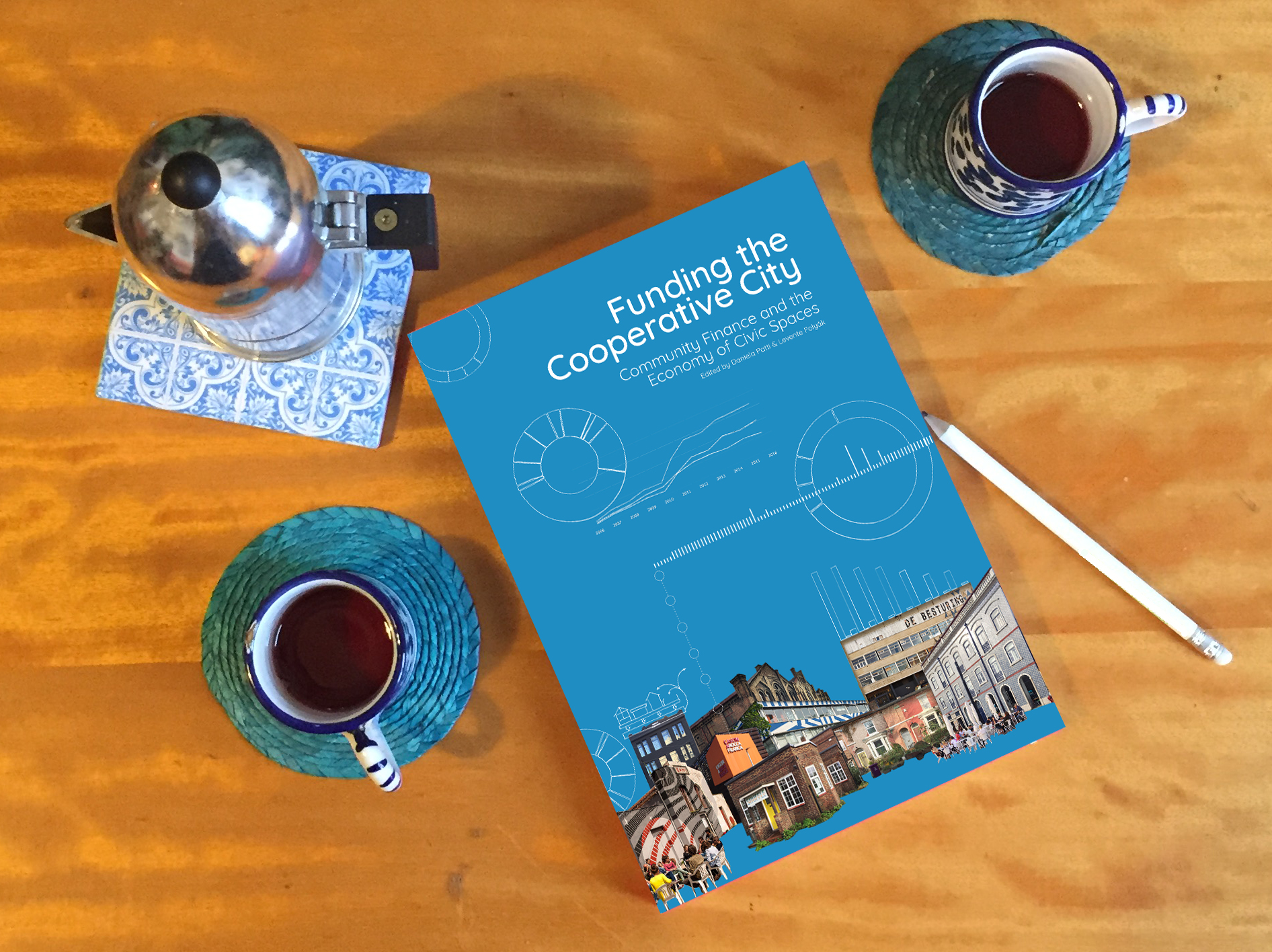
- Funding the Cooperative City: Community Finance and the Economy of Civic Spaces — Knowledge
- Social Economy in Europe: Contributing to Competitiveness and Prosperity, Local Economic and Employment Development (LEED) — Knowledge
- Transdisciplinarity for Affordable and Sustainable Housing — Knowledge
- Cooperative Conditions - A Primer on Architecture, Finance and Regulation in Zurich — Knowledge
Further sources18
- Mayor of Athens announces housing strategy — To Vima
- Athens mayor unveils housing initiatives — Greek City Times
- Kefalogianni responds to Doukas on tourism and short-term rentals — news247
- Greece tightens short-term-rental rules — Kefalogianni — Travel Market Report
- Athens extends ban on new short-term rentals through 2026 — Greek City Times
- New Social Housing law passed in parliament — Q&A — Athens Times
- Greece unveils 25,000-home social-housing programme — Greek City Times
- Spiti Mou 2 and Anakenizo — subsidies and access — Greek City Times
- Five new measures in the Mitsotakis housing package — Proto Thema
- Greece's housing squeeze and rent-burden statistics — Cosmos Philly
- Greek rents soar 10.1% — Athens Times
- Why Greece's housing supply collapsed — Greek Reporter
- Prosfygika of Alexandras Avenue — overview — Wikipedia
- Athens historic Prosfygika reborn as social housing — Greek Reporter
- Prosfygika's resistance against eviction — Bianet
- Kypseli Municipal Market — Impact Hub Athens — Impact Hub Athens
- CoHab Athens — about — CoHab Athens
- Housing financialisation in Athens and Barcelona (Golden Visa) — European Urban and Regional Studies