Introduction to Zurich’s Cooperative Housing
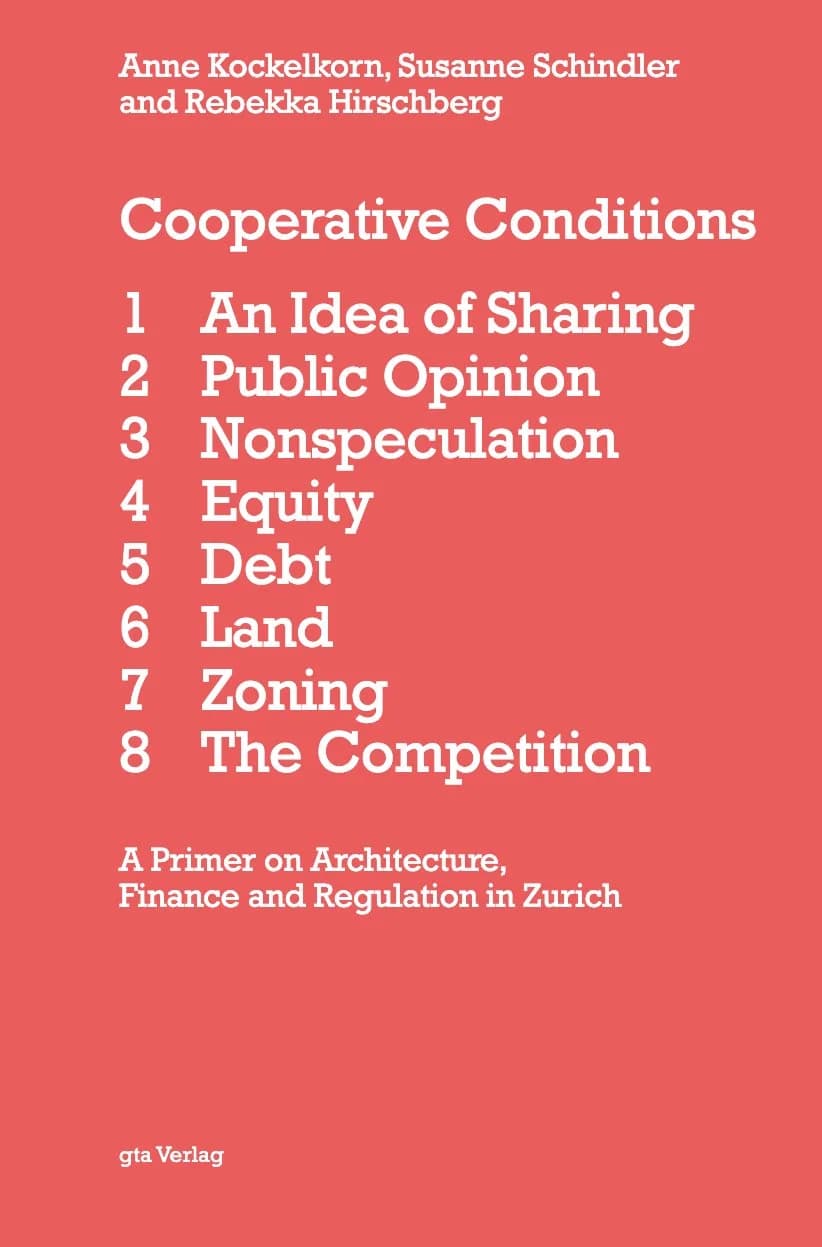
Zurich’s cooperative housing sector, examined in Cooperative Conditions – A Primer on Architecture, Finance and Regulation in Zurich, offers a comprehensive look at more than twenty historic and contemporary projects. The book is authored by Anne Kockelkorn, Susanne Schindler and Rebekka Hirschberg, scholars affiliated with gta Verlag, a Swiss academic publisher linked to the ETH Zürich Graduate School of Architecture, which focuses on research‑driven publications in architecture and urban studies. The authors bring together expertise in architectural history, urban policy and cooperative economics to illustrate how Zurich’s housing cooperatives have combined design innovation with public‑value financing since the early 20th century.
Historical Roots and Legal Framework
Cooperatives in Zurich trace their legal basis to the Swiss Code of Obligations (1881) and to a tradition of direct democracy that enables referendums, popular initiatives and mandatory votes on housing policy. The city’s 1907 charter revision and the 1919 founding of the national federation of nonprofit housing cooperatives (Wohnbaugenossenschaften Schweiz) established a regulatory environment that supports “Gemeinnützigkeit” – a principle of nonprofit public benefit. This legal status allows cooperatives to receive municipal land, credit guarantees and low‑interest loans without being classified as subsidised, fostering long‑term affordability.
Key Projects and Architectural Diversity
The primer documents projects ranging from the 1928‑32 Neubühl rowhouses (designed by Max Ernst Haefeli and others) to contemporary developments such as Kalkbreite (2008‑14) and the Hunziker Areal (2007‑15). Neubühl introduced solar orientation and flat roofs, while Kalkbreite achieved a carbon‑footprint of 32.6 m² per resident through shared amenities. The Hunziker Areal, designed by Duplex Architekten, showcases “cluster apartments” – flexible typologies that were later incorporated into the federal Wohnungs‑Bewertungs‑System (WBS) design standards. These projects illustrate a consistent emphasis on high‑quality architecture, generous shared spaces and adaptable dwelling sizes, often reducing private floor area to as little as 35 m² per person.
Financial Instruments and Public Value
Cooperatives operate on a cost‑rent model that covers capital and operational expenses without generating profit. Financing is secured through municipal land grants, equity contributions (typically 6 % of project cost), and loans from institutions such as Zürcher Kantonalbank, with the city often providing credit guarantees. The “Fonds de Roulement” revolving loan fund, established in 2003, offers zero‑interest loans up to CHF 60 000 per dwelling for projects meeting advanced sustainability certifications (e.g., Minergie, LEA). A 2001 study by Wüest Partner and econcept quantified the public‑value savings of these policies at CHF 22 million per year for the canton.
Social Impact and Demographics
Swiss housing statistics show that 58 % of dwellings are rented, with cooperative units accounting for roughly 5 % of the national stock but a higher share in Zurich (approximately 18 % of the city’s 232 000 dwellings). Residents typically occupy 35 m² per person, seven m² less than private‑sector occupants, reflecting efficient use of space. Cooperative households exhibit a broad income distribution; about half earn below the national median of CHF 58 000, while only a small fraction exceed CHF 150 000, underscoring the sector’s role in inclusive housing.
Public Opinion and Direct Democracy
Referendums and popular initiatives have repeatedly shaped cooperative policy. In 2011, a city‑wide initiative secured a commitment that one‑third of all new dwellings be “Gemeinnützig” by 2050. Subsequent surveys reveal strong public support for cooperative models, with voters recognising their contribution to social cohesion, reduced vacancy rates and lower carbon emissions. However, recent initiatives aiming for broader affordability, such as the 2020 “More Affordable Homes” vote, encountered regional resistance, highlighting divergent attitudes between urban and rural cantons.
Sustainability and Future Directions
The primer stresses that Zurich’s cooperatives serve as a model for sustainable urban housing across Europe. By integrating shared amenities, flexible floor plans and energy‑efficient construction, they achieve lower per‑capita resource consumption while delivering high architectural quality. The inclusion of innovative typologies—cluster apartments, hall dwellings and “unfinished living” concepts—into national design standards demonstrates the sector’s influence on broader policy. Ongoing challenges include balancing the need for low‑income units with the cost‑rent model and navigating evolving public expectations regarding price‑level versus public‑benefit housing.
Conclusion for a Pan‑European Audience
Zurich’s cooperative housing system offers a replicable framework that aligns democratic governance, nonprofit financing and sustainable design. Its documented successes in reducing carbon footprints, preserving affordability and fostering community participation provide valuable lessons for European cities seeking resilient, inclusive housing solutions. The detailed case studies, financial data and regulatory analysis presented in the book furnish policymakers, architects and urban planners with concrete evidence of how cooperative models can contribute to the continent’s broader sustainability goals.