The city the associations built
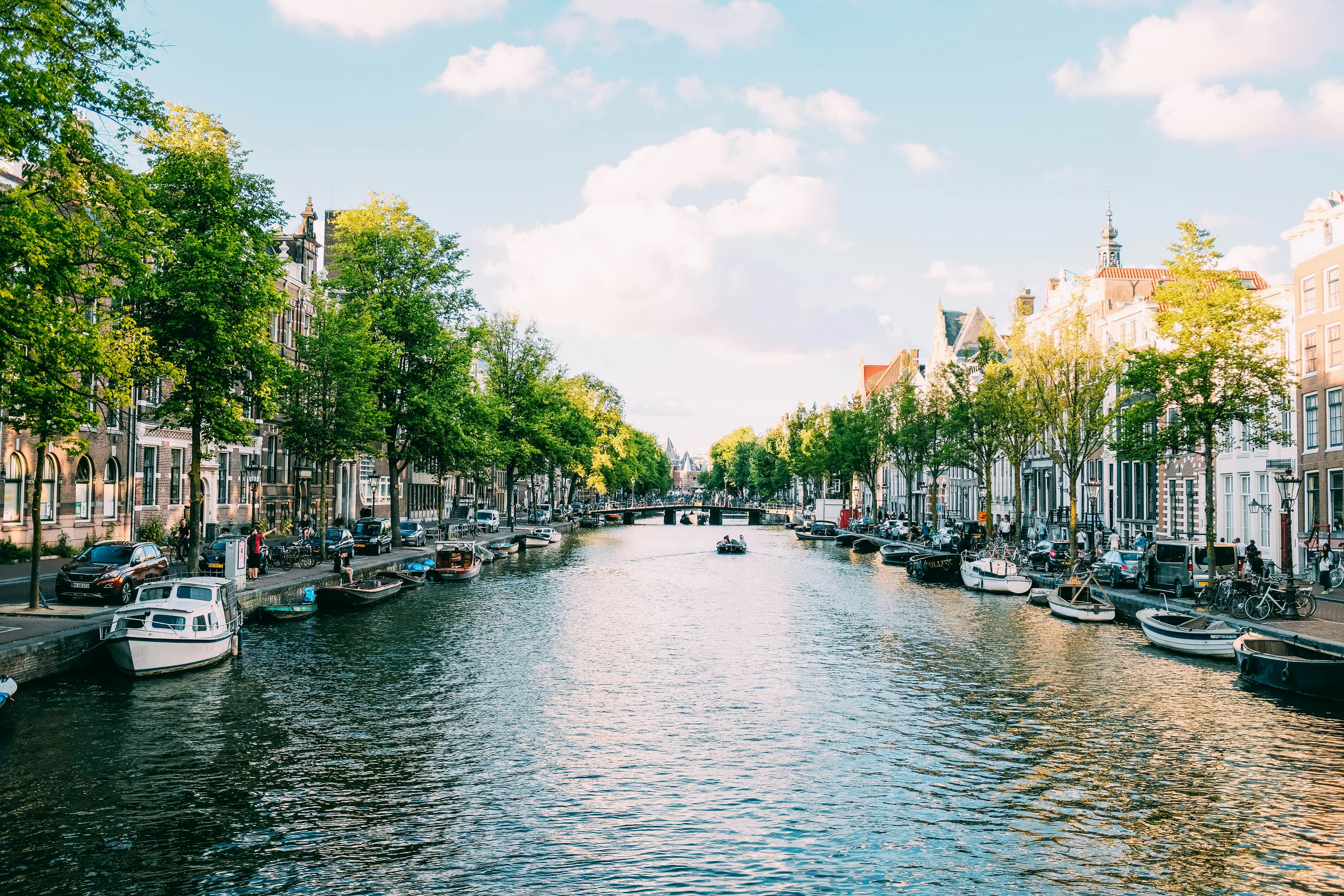
Amsterdam is a city of water, brick and dense low blocks, a metropolis of about 921,468 people built on canals and timber piles. For more than a century it has also been a city of non-profit landlords. The Housing Act of 1901 let the state fund housing associations, and they went on to build and own most of the city’s homes. That history still shapes the market: a deep regulated sector, a thin owner class, and an open market so expensive it now sits out of reach for the middle.
The tenure mix is unusual for a major capital. Renting, not owning, is the norm: 70% rent and only about 30% of households own their home. Within that rental majority the woningcorporaties (the non-profit housing associations) hold the largest share: roughly 37% of all dwellings, around 173,600 homes, of which 173,600 are social-rented. Private landlords let the rest, close to 31% of the stock. Cooperatives are still tiny as a legal tenure, about 0.1% of dwellings, some 400 homes across a dozen wooncoöperaties (resident-run housing cooperatives), though the city wants that to grow. Together the associations and cooperatives make Amsterdam roughly 37% non-market by tenure.
- Owners
- Owner-occupier30.0%
- Renters
- Public & non-profit rental37.0%
- Cooperative0.10%
- Private rental32.9%
Social housing here is a regulatory layer, not a tenure of its own. Around 46% of Amsterdam’s dwellings carry a social-housing rule that caps rent and ties lets to income, distributed across the tenure slices rather than forming one. It is wider than the association share because the associations also let regulated middenhuur (mid-rent) homes, and some private and cooperative new-build is bound by the same covenants. About 45% of residents qualify for a regulated home on income, which is why the waiting lists are long even with so much non-market stock.
Put the rents side by side and the regulated bargain is stark. Tenants in association homes pay around €8.10 per square metre, and cooperative members about €10.50, while the typical home across the whole stock costs near €11.80. Step into the open market, though, and a newly-let private contract asks a median €25.30, with furnished, serviced lets reaching €31.50 per square metre gross. The jump from the regulated floor to a fresh market contract is more than threefold. That single spread is the whole insider-outsider problem: secure if you are already in, brutal if you are not.
- Public housing (associations)
- Cooperative
- All-stock median
- New contracts
- Furnished / serviced (gross)
Net-cold monthly rent per square metre by tier (furnished is gross, all-in). The regulated association and cooperative floor sits far below the open market; a newly-let private contract runs more than three times the association rate.
Unlike many shrinking-city profiles, Amsterdam’s problem is scarcity, not abandonment. Homes rarely sit idle: residential vacancy runs at only about 2.6%, some 3,500 long-empty buildings in a tight market. Office floor is the exception, with around 990,000 square metres standing vacant, roughly 5% of the office stock, a conversion frontier the city is starting to use. Holiday letting tells the same concentrated story. An estimated 1,485 dwellings serve as full-time entire-home holiday rentals, and they bunch into the canal-belt centre, thinning the long-term supply in exactly the streets most visitors see.
What keeps the screw turning is arithmetic: people arrive far faster than homes do. Net inbound migration adds roughly 47,700 moves a year, drawn by jobs, universities and the wider Randstad economy, against only about 4,500 housing permits a year. So the pinch is no longer confined to the poorest. A 2025 market index found that buying a Amsterdam home now takes more than 15 years of an average salary, among the steepest of any European city. A widely-shared video essay, “Amsterdam Is Becoming a Dystopia”, traces how the city’s famously deep public-housing share now sits beside a near-impossible private market and a stretched municipal land fund. Housing tops the list of voter concerns, and a generation now fears it cannot afford to stay.

Social housing tenants are now paying to solve the housing crisis. As a result, rents are rising too fast. At the same time, the promised new construction figures are often not achieved.The wooncoöperatie, reinvented
The Dutch cooperative form is the wooncoöperatie, a resident-run housing cooperative that owns its building collectively and lets flats to its members at cost. It is a rental cooperative, not an ownership one: members hold no tradable equity share and cannot sell their flat for a capital gain. That asset-lock is the point. It keeps the homes out of the market for good, closer to the Zurich or Berlin model than to the share-based cooperatives of central Europe.
The tradition is recent, and it grew out of a gap. For most of the twentieth century the woningcorporaties were the non-market sector, and the cooperative idea had little room. A 2015 change to the Housing Act first gave the wooncoöperatie a legal definition, and the form has been built in earnest only since. So Amsterdam’s cooperatives are mostly new buildings by young households, not century-old societies managing inherited estates. The demand is far larger than the supply: a national study of cooperative-housing appetite estimates that more than a million Dutch households would take a cooperative home if one existed.
Today the young sector clusters into three kinds. The first is the new-build resident cooperative on municipal land — de Nieuwe Meent, De Warren, De Torteltuin — organised by future residents and financed by a jigsaw of bank loans, city loans and member deposits. The second is the federation-and-support layer: VrijCoop, which holds buildings permanently out of the market on a shared-equity model, and cooplink, the national network that helps new groups form. The third is the adaptive-reuse collective that turns a vacant site into shared housing, like Bajesdorp. Their problems differ. The new-build groups struggle most with land and finance; the reuse collectives struggle with permits and tenure security; all of them struggle to scale past the pilot.
Where the city slots the cooperative in its plans is also where this story turns political. Amsterdam now treats the wooncoöperatie as a deliberate affordable channel, not a curiosity. It leases plots on erfpacht (a long municipal ground lease that keeps the land in public hands), runs a zelfbouw (self-build) route for collective groups, and offers loans and guarantees to close the financing gap. Other European cities are pulling the same levers, and the comparison sharpens the question: can the resident cooperative move from pilot to a real share of supply?

Regulating the middle, building the rest
Amsterdam’s housing politics is a fight over the middle of the market. Zita Pels of GroenLinks holds the public-housing brief in the city college, and the headline tool is the 40-40-20 rule. Every large new scheme must be 40% social, 40% regulated mid-rent and 20% free-sector. Since July 2025 a city permit also reserves the new mid-rent homes for middle-income households, so the regulated band reaches the people it is meant for rather than the highest bidder.
Control over housing here is split between city hall and The Hague, and the two are pulling against each other. The city owns the land through erfpacht, sets the 40-40-20 split, and runs the cooperative programme. The national government sets the rent law and the building targets. Its Affordable Rent Act, the Wet betaalbare huur in force since July 2024, extended rent control into a new mid-rent band, capping many private rents on the points system. Housing Minister Mona Keijzer of the BBB now wants to soften it, to stop private landlords selling up, while still chasing the national goal of about 100,000 new homes a year — a target the ministry expects to reach only from 2027.
The cooperative sits deliberately inside this programme. The city leases plots to cooperatives on erfpacht rather than selling them, runs the zelfbouw self-build route, and offers loans and guarantees to fill the financing gap. Its Action Plan Housing Cooperatives aims for around 7,000 cooperative homes by 2030 and roughly 40,000 by 2040, about a tenth of all housing. The instruments matter more than the slogans: a guarantee that covers a construction cost overrun is often the piece that lets a small cooperative break ground at all.
The empty space from earlier has a policy answer, if a partial one. Amsterdam steers new homes onto brownfields and former harbour land rather than the green edge, and the city’s office slack offers a conversion frontier, though most offices are hard to turn into decent homes. The municipal land-and-leasehold model lets the city capture value and steer use, the long Dutch tradition of public land banking. There is no acute vacancy problem to tax here; the binding constraints are land, finance and slow permitting, not empty homes.
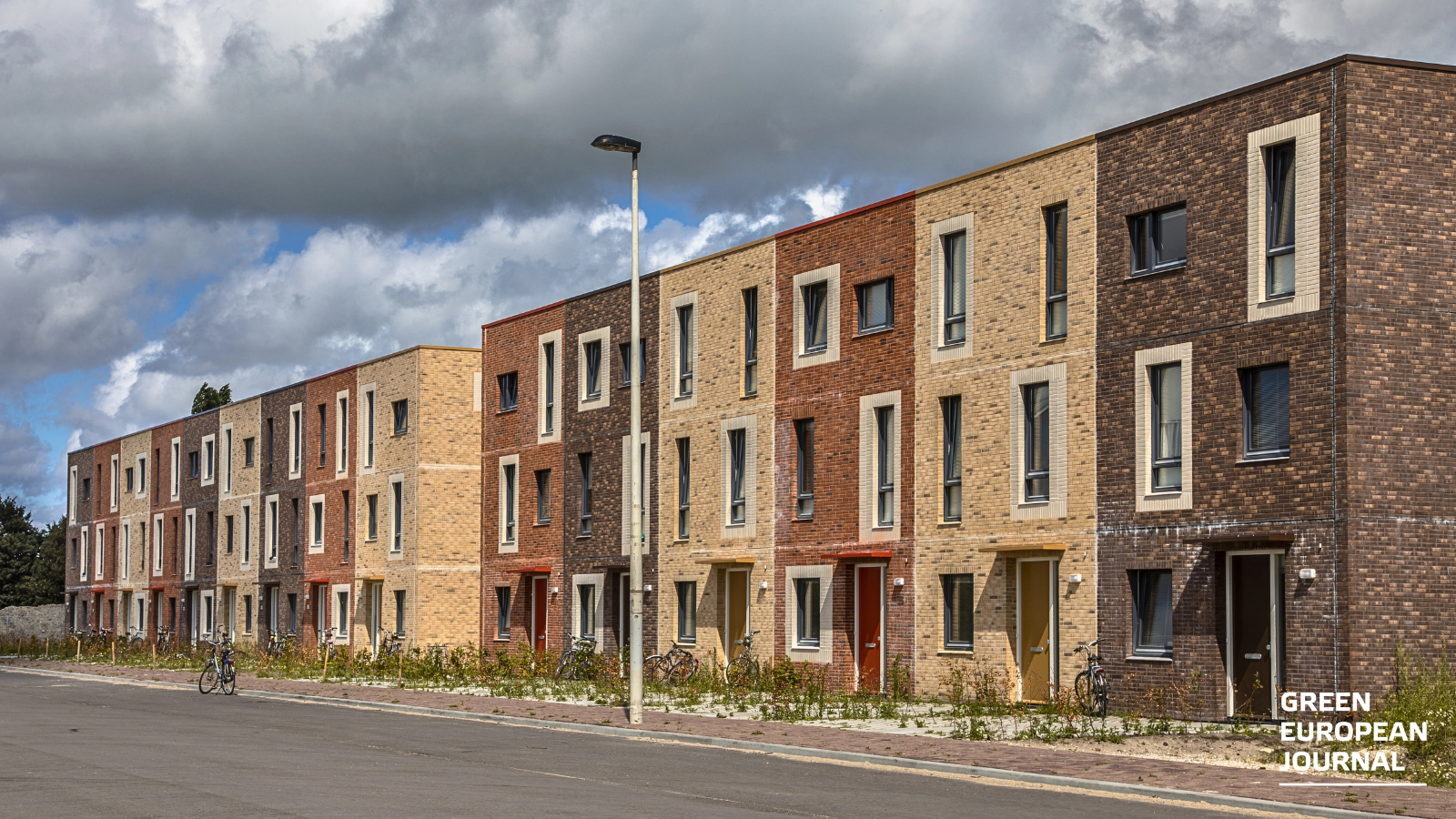
Climate and affordability turn out to be one problem in Amsterdam, not two. The stock averages around 60 years old, only about 30% of dwellings are energy-efficient, and the renovation rate crawls at roughly 1.6% a year, short of the deep-retrofit pace the EU wants. The city pushes circular construction and timber, and the cooperative and association new-build is where those standards land first. That ties the climate goal to the non-market tier the city is trying to grow, much as Vienna ties its retrofit drive to its social stock.
- 1901[source]
The Woningwet (Housing Act)
The national Housing Act lets the state fund and regulate non-profit housing associations, founding the corporatie sector that still owns most of Amsterdam’s rental homes.
- 1990s[source]
Bruteringsoperatie
The associations are financially cut loose from the state and turned into self-funding social landlords, the model that built today’s deep but increasingly stretched non-market sector.
- 2016[source]
New Housing Act curbs the associations
A reformed Housing Act narrows what associations may build to core social housing, slowing the regulated mid-rent supply the city most needs.
- 2020[source]
Action Plan Housing Cooperatives
Amsterdam launches its cooperative programme, leasing municipal land on erfpacht and aiming for cooperatives to make up about 10% of new construction.
- 2022[source]
The 40-40-20 rule
The city coalition commits to a 40% social, 40% mid-segment and 20% free-sector split for new housing, anchoring affordability in the building programme.
- Jul 2024[source]
Affordable Rent Act takes effect
The national Wet betaalbare huur extends rent regulation into a new mid-rent band of up to about 186 points on the points system, capping many private rents.
- Jul 2025[source]
Mid-rent permit in Amsterdam
Amsterdam adds a permit so regulated mid-rent homes go to middle-income households, the alderman’s tool to keep the new band on target.
- 2030[source]
National 100,000-a-year target
The Netherlands aims for around 100,000 new homes a year toward roughly 900,000 by 2030, a target the ministry now expects to reach only from 2027.
- 2040[source]
City cooperative target
Amsterdam aims for cooperatives to reach about 40,000 homes, roughly a tenth of all housing, the longest-horizon commitment in its plan.
From the Housing Act that built the association sector to the cooperative action plan, the national Affordable Rent Act, and the city’s 2040 cooperative target.
Few in Amsterdam dispute that rents need restraining; the quarrel is over what that restraint costs. Zeno Winkels, who directs the Woonbond tenants’ union, argues that social tenants are now bearing the cost of the crisis through fast-rising rents while promised new homes go unbuilt. Niek Verra, who chairs the private-landlords’ association Vastgoed Belang, calls the new rent law fundamentally wrong and warns that landlords are selling up rather than letting at capped rents. Their shared diagnosis is a starved supply; where they part is whether tighter rules feed it or starve it further. The national reporting has tracked the sell-off through 2025 and 2026.
The current law is fundamentally wrong. Landlords especially need the confidence that there will be substantial repairs to the law.On the new islands: timber, floating grids and the cooperative pilot
Amsterdam’s working examples cluster on its newest ground — the reclaimed islands of IJburg and the old harbour and prison sites the city is recycling into homes. The thread that connects them is a young cooperative movement learning to build at scale, and a circular-construction sector learning to build it cleanly. The projects below come first, then the funders and toolmakers trying to turn each one-off into something repeatable.
De Nieuwe Meent is the clearest test of whether the resident cooperative can pencil. The seven-storey timber building on municipal land in Watergraafsmeer holds dozens of affordable homes, designed and run by its members. Its real lesson is in the money. An €8 million budget was stitched together from a Rabobank mortgage, city loans, member deposits and €450,000 of crowdfunding. A guarantee against cost overruns was, in the cooperative’s own words, the final piece of the puzzle. The model works — but only just, and only with a backstop most groups cannot assemble alone.

De Warren took the same idea onto Centrumeiland, one of IJburg’s artificial islands. It is Amsterdam’s first self-build housing cooperative, an energy-positive timber block of 36 homes, split between social and mid-rent lets, designed by Roel van der Zeeuw Architects with a large share of its floor space shared. As the mortgage is paid down the rents are meant to fall, below the social and regulated averages. The catch is time and risk. Years of resident labour and financing uncertainty stand between an idea and a finished block, and not every group survives the wait.
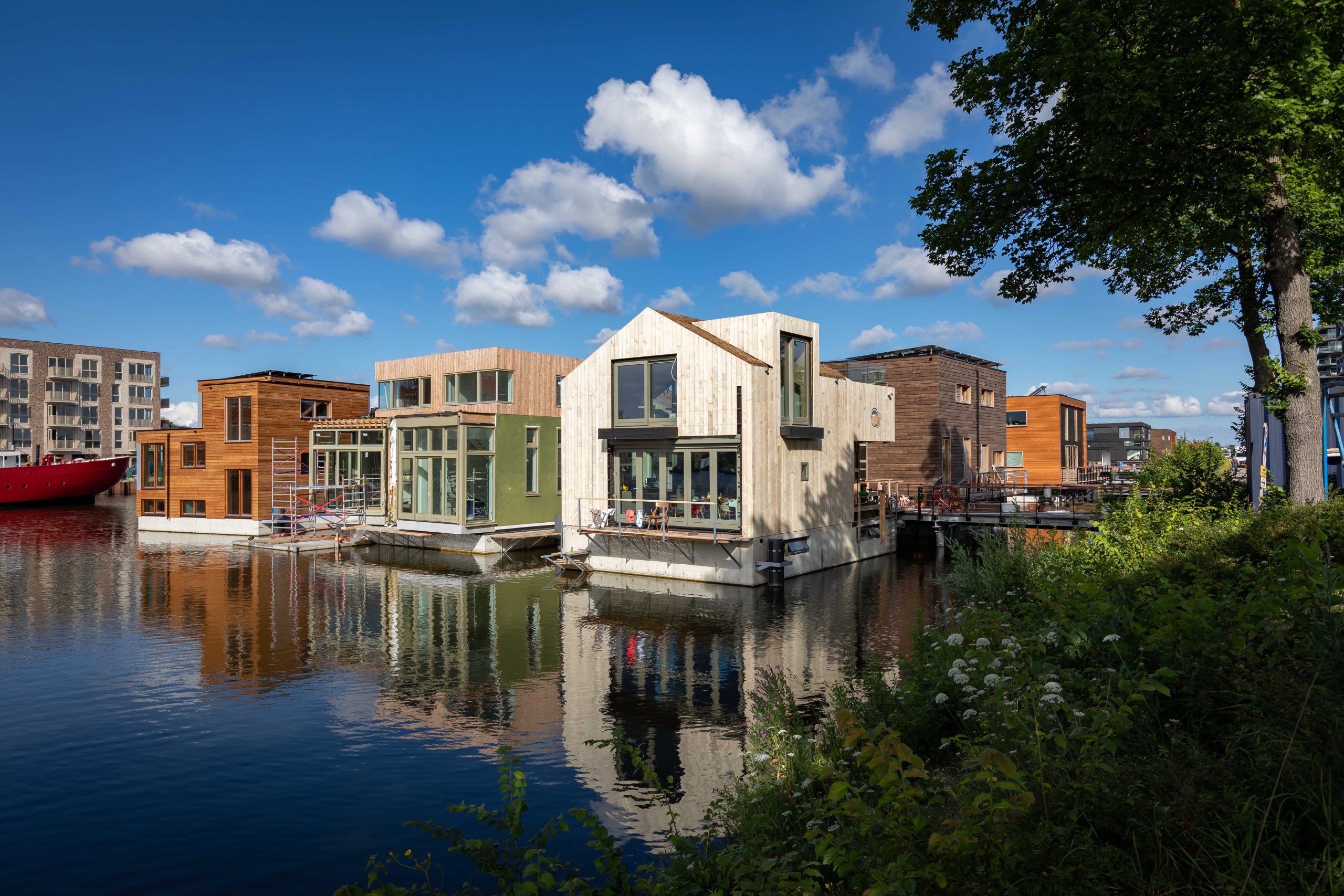
Schoonschip floats. The 46-household community on the Johan van Hasseltkanaal is one of Europe’s most sustainable floating neighbourhoods, with its own smart grid, hundreds of solar panels and dozens of heat pumps. It shows how Amsterdam can build on water where it has run out of land, and how a resident collective can run its own energy system. The friction is regulatory and financial: floating homes sit awkwardly in mortgage and planning rules written for dry land, which kept the project years in the making.
Older and cheaper experiments still teach the city. GWL Terrein, the car-free quarter built on a former waterworks in the 1990s, proved that dense, green, low-car neighbourhoods could be popular rather than fringe. DeFlat Kleiburg rescued a vast, half-derelict Bijlmer slab by selling bare apartments cheaply for residents to finish themselves, a do-it-yourself rescue that won the EU Mies Award in 2017. Bajesdorp turned a former prison site into cooperative housing, studios and a community garden — a hard-won reuse that survived years of demolition threat before it was secured. Vrijburcht, an early co-living complex on Steigereiland, added a theatre and a marina to the mix.
What lets these buildings happen is an unusually deep bench of circular-construction firms and patient lenders. Metabolic and Madaster built the material-passport and reuse tooling that lets a timber block be designed for disassembly; RAU pioneered the circular-architecture thinking behind it; Built by Nature funds the shift to biobased materials. On the money side, Triodos Bank and a cluster of social financers lend to cooperatives that mainstream banks find too small, and Commons Network and CrowdBuilding help residents organise the demand. It is a thinner federation layer than Vienna’s or Zurich’s, and almost all of it is recent. But the pieces exist, and a city that built its housing through associations once already knows how to build a sector from scratch.
References
Statistics18Click on any number to see the source
Housing market
Tenure & affordability
Cooperative, social & public
Adaptive reuse & vacancy
Population & migration
From our library26
- Property Index - Overview of European Residential Markets — Knowledge
- Amsterdam Is Becoming a Dystopia — Knowledge
- The demand for housing cooperatives in the Netherlands — Knowledge
- de Nieuwe Meent — Project
- De Warren — Project
- De Torteltuin — Project
- VrijCoop — Organisation
- cooplink — Organisation
- Bajesdorp — Project
- Why and how cities can promote affordable and sustainable Collaborative Housing — Knowledge
- Adaptive Reuse for Housing — Knowledge
- Rethinking European Offices 2030 - Risks and Opportunities from Obsolesence — Knowledge
- Land Policy in Practice: A Tale of Two Dutch Cities — Knowledge
- Green Social Housing - Lessons from Vienna — Knowledge
- Roel van der Zeeuw Architects — Organisation
- Schoonschip — Project
- GWL Terrein — Project
- DeFlat Kleiburg — Project
- Vrijburcht — Project
- Metabolic — Organisation
- Madaster — Organisation
- RAU — Organisation
- Built by Nature — Organisation
- Triodos Bank — Organisation
- Commons Network — Organisation
- CrowdBuilding — Organisation
Further sources12
- Zita Pels (GroenLinks), alderman for Public Housing — Gemeente Amsterdam
- Amsterdam introduces permit system for mid-range rental housing — IamExpat
- Building Tomorrow’s Amsterdam: cooperative housing — Europe of Cities
- Entry into force of the Affordable Rent Act — Houthoff
- New housing construction again fails to reach the 100,000 target — DutchNews
- Private sector shrinking as landlords sell off rentals — NL Times
- Tenants footing the bill for social rentals — Woonbond — NL Times
- Dutch landlords intend to keep selling rental homes — NL Times
- de Nieuwe Meent — financing — de Nieuwe Meent
- Housing Coöperation De Warren / Natrufied Architecture — ArchDaily
- Schoonschip Amsterdam — floating neighbourhood — Schoonschip
- Netherlands needs 1.2 million homes by 2040 — NL Times