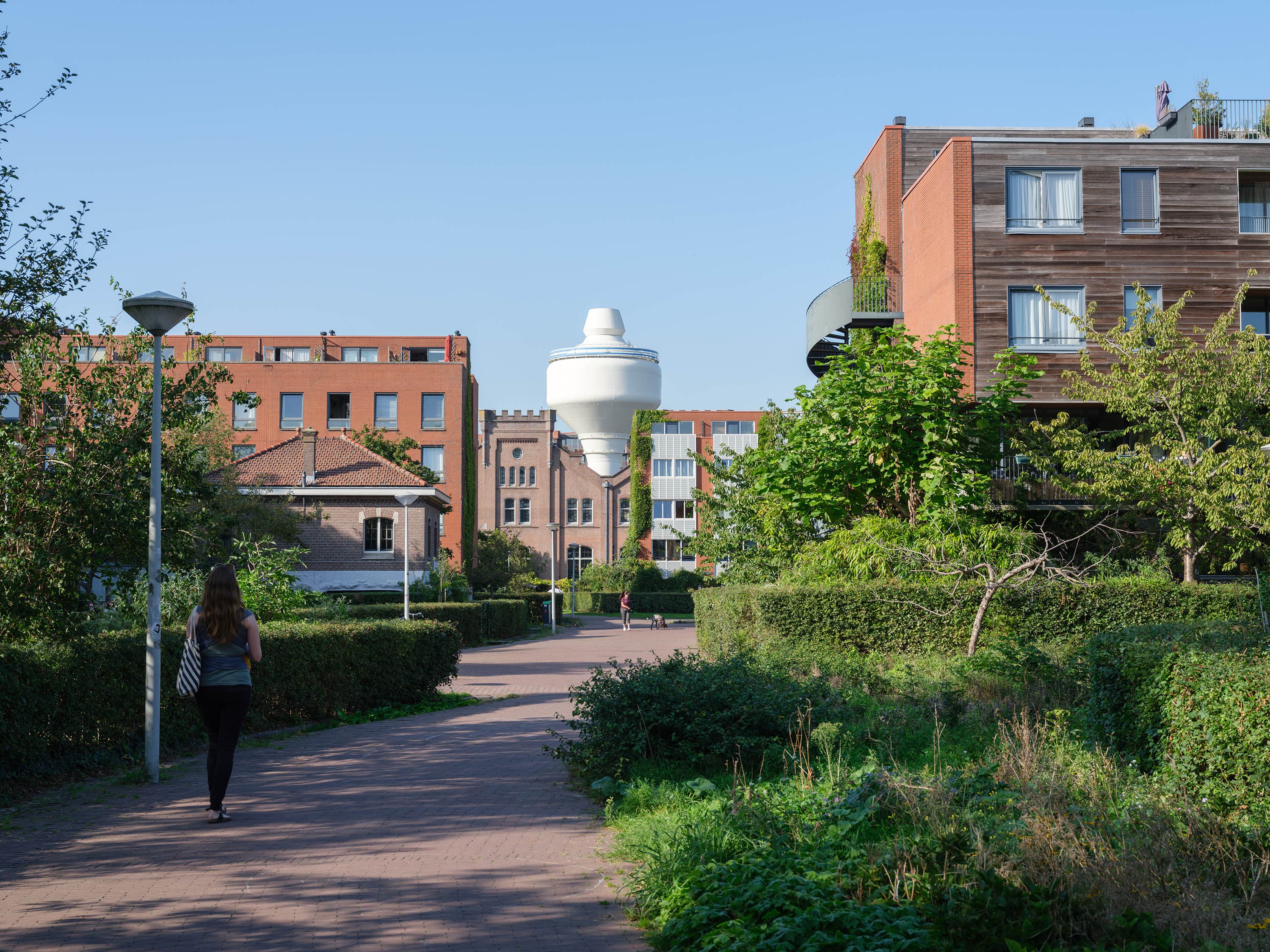
GWL-Terrein is a car-free residential neighbourhood in Amsterdam developed on the former municipal waterworks site. The project was initiated by the Westerpark municipal district council in 1989 and was delivered in phases between 1997 and 1998; the site covers about six hectares and was planned according to environmentally friendly, high-density urban design principles.27
The neighbourhood was built on the former terrain of the Gemeente Waterleidingen, and its design emphasized low car use, limited parking, and a strong public-green structure. According to project descriptions, the area includes housing for both renting and buying, communal spaces, and retained historic elements such as older buildings and a water tower that now serve as landmarks within the neighbourhood.46
The developer is identified in external project documentation as the Ecoplan Foundation, while the architectural design is associated with KCAP.46 The current site organisation is maintained by Koepelvereniging GWL-terrein, which also provides resident services, guided tours, and community coordination from Waterkersweg 316 in Amsterdam.135
The project is notable for its continued resident involvement. The website highlights volunteer-led neighbourhood maintenance and community activity, suggesting that GWL-Terrein functions not only as a housing area but also as an organised cooperative-style urban community with ongoing local governance and shared services.3