Resource context and source
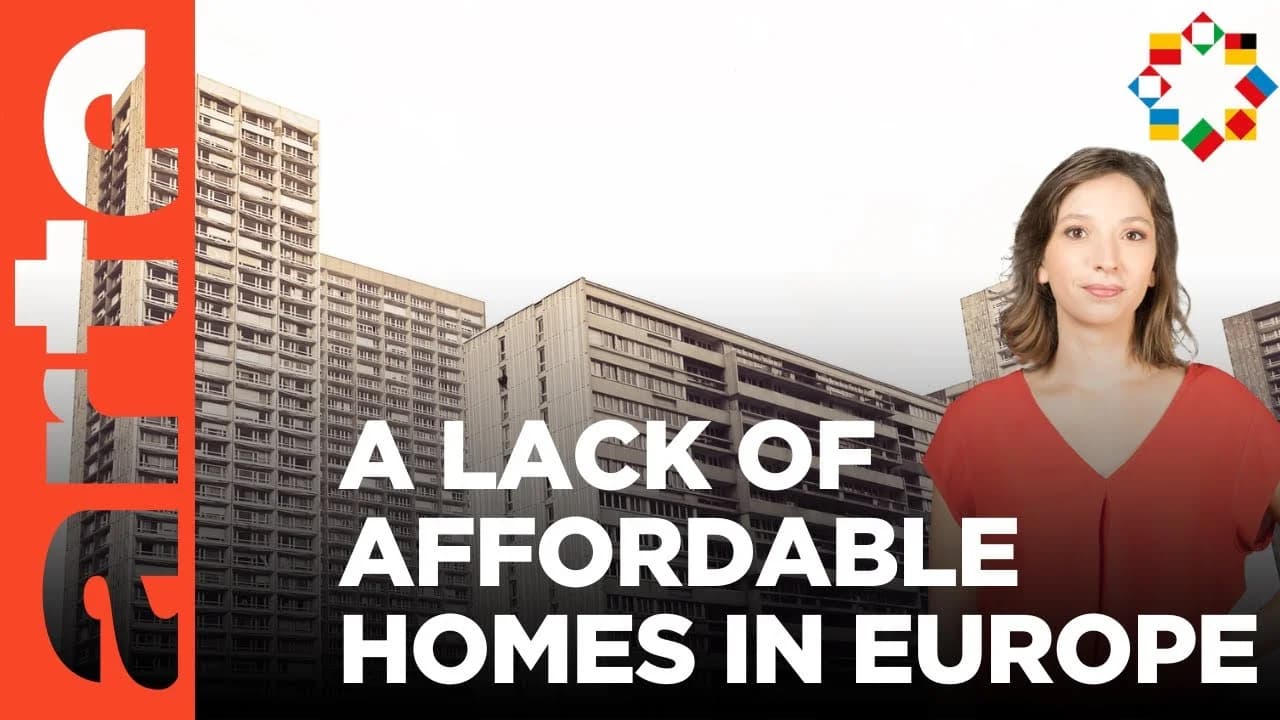
This resource is a video report titled “Why is Europe’s housing crisis hitting young people the hardest?” from ARTE Europe Weekly on the ARTE.tv/YouTube channel. It draws on reporting in Madrid and Munich and includes commentary from housing researchers and sector representatives, including Amber Howard (University of Bristol, UK) and Sorcha Edwards (Housing Europe, a network for public, cooperative and social housing across Europe).
What the report says is happening to young people
The video describes a Europe-wide affordability squeeze in which home prices and rents have risen rapidly while wages have not kept pace. It argues that people aged 15–29 are more likely to spend a higher share of income on housing and to live in overcrowded homes. The situation is presented as no longer limited to high-cost capitals such as Paris or Dublin, with prices also rising in smaller cities and rural areas.
Madrid as an example of acute pressure
In Spain, the report states that the average rent for a room in a shared flat is €550 per month—more than 70% of an average student budget. It notes that the closer accommodation is to the city centre, the more expensive it becomes, pushing students towards suburbs and longer commutes. The video also says housing costs can influence education choices, including students giving up preferred courses or universities because they cannot afford to live nearby.
Delayed independence and cross-country differences
The report links high rents to later household formation and prolonged stays in the parental home. It states that in Spain people leave the family home at around 30 years old on average, and contrasts this with other EU countries: Croatia is cited at 31.3 years and Finland at 21.4 years. The video frames these differences primarily as an affordability issue rather than personal preference, describing a widening gap between what young adults can do compared with what previous generations could at the same age.
Rent growth and “unaffordable” thresholds across Europe
Using EU-level figures, the video states that average rents increased by nearly 30% between 2010 and the second quarter of 2025. It highlights especially large increases in some countries, citing Estonia at +218%, Lithuania at +192%, and Hungary at +125%, while noting Greece as an exception with rents slightly down (−9%) despite already high prices. The report also references a European Parliament benchmark that housing becomes “unaffordable” when it exceeds 40% of disposable income; it says that in 2024 nearly 10% of households in EU cities crossed this threshold (and 6.3% in rural areas), with Greek cities cited as particularly severe (29%).
Drivers the report emphasises (supply, inflation, finance, short-term lets)
The video attributes the crisis to multiple interacting factors: insufficient housing supply (with fewer homes built due to higher material and labour costs), inflation feeding through to rents, and rising demand for rental apartments as higher interest rates and tougher lending conditions make ownership harder. It also points to short-term rental platforms such as Airbnb as contributing to displacement from city centres, while arguing that a broader “governance vacuum” and reduced public intervention in housing markets have allowed pressures to accumulate.
Social inequality, wellbeing, and proposed policy directions
The report argues that parental wealth has become a key “lifeline” for escaping insecure renting, reinforcing inequality for those without family support. It also says housing insecurity affects wellbeing and mental health, with young people internalising feelings of failure despite structural causes. Solutions mentioned include rent caps, expanding social housing (including conversion of existing stock), and longer tenancy contracts. The video also features alternative models such as cooperative and multigenerational living, and highlights home-swapping initiatives in Germany (including a Munich platform) as one mechanism to better match household needs to available homes.
EU-level response referenced in the video
The report notes that the EU appointed its first housing commissioner and is developing an “affordable housing plan” in consultation, aimed at limiting speculation and supporting public investment to increase housing supply. Youth access to housing is described as a stated priority, alongside concerns that public finance should not fuel further speculation and could instead support community-led, social, public, and cooperative housing, including establishing funds where such providers are not yet in place.