Resource context
Orange Liste is a Germany-focused online resource (OrangeListe.com) published by DenkMalNachhaltig GmbH and authored by civil engineer Julia Stein and manager Matthias Binninger. It presents a citizen-oriented approach to protecting “preservable” existing buildings that are vacant, deteriorating, or at risk of demolition, and it positions building reuse as part of a broader construction-culture transition.
What the platform is
OrangeListe.com is described as an online platform that makes endangered buildings visible and invites the public to submit cases. Submissions can include buildings threatened by vacancy, decay, or imminent demolition, as well as buildings already saved or currently being revitalised. The initiative’s core goal is to prevent valuable existing structures from being overlooked by documenting them and drawing attention to them.
Civic participation and awareness
A central mechanism is activating citizens to contribute local knowledge by submitting buildings and sharing information. The platform frames public engagement as a way to increase the chance of rescue by making a building visible and accessible to a broader network. It also highlights “hope” through examples of successful preservation, aiming to demonstrate that interventions in the existing stock are feasible.
Linking reuse to the “construction transition”
Orange Liste explicitly connects preservation and reuse (“building in the existing stock”) with the need for a shift in how societies treat existing buildings. By increasing visibility of threatened structures, the initiative argues that the urgency of changing construction practices becomes clearer and that heritage, ecological value, and resource preservation can be advanced through reuse rather than replacement.
Networking and support model
The platform’s role is presented as a connector: it aims to bring “the right places together with the right people” by linking owners with experts to initiate revitalisation measures. Knowledge transfer and exchange are highlighted as important tools for tackling complex challenges around existing buildings. Proposed “rescue measures” range from sharing relevant information and brokering partnerships to bringing in specialised expertise, and can include interim uses, renovation, or comprehensive revitalisation.
What Orange Liste does not do
OrangeListe.com states that it is not a real-estate brokerage, developer, planning office, engineering firm, or construction company. It does not itself plan or build; instead, it provides a platform for those who want to act and for collaboration to emerge around threatened buildings.
Submission process and publication rhythm
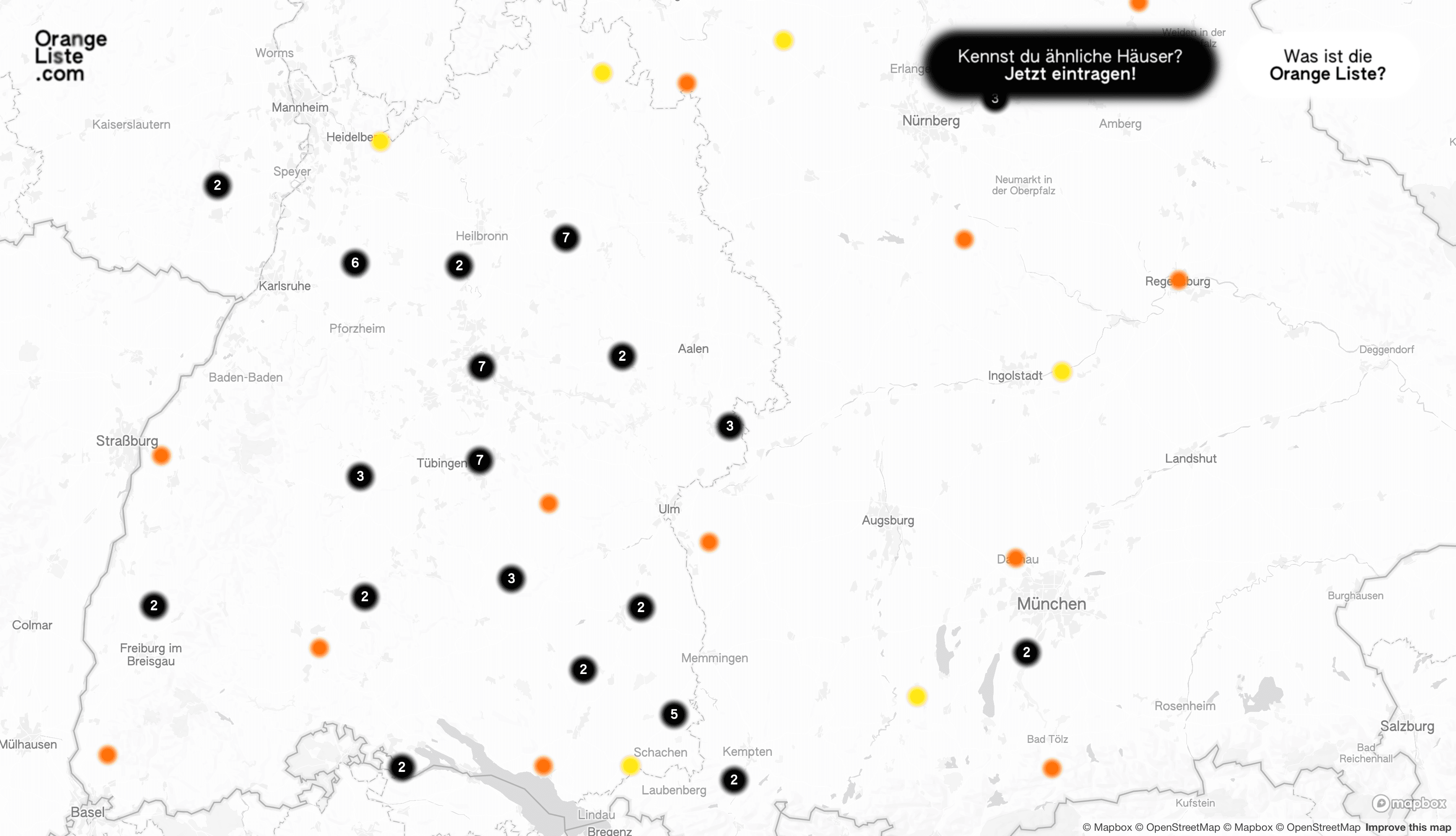
Buildings are submitted via an online form. The Orange Liste team reviews the information and images, may add background research, and then categorises entries using a four-colour system (described as an evolving evaluation framework). After successful checks, buildings are published in batches approximately every 4–8 weeks and appear on the platform’s map.
Funding and organisational setup
The initiative does not pay for preservation measures. Instead, it positions itself as a mediator that helps identify financing options tailored to each project; an overview of funding opportunities by German federal state is described as being in development. Orange Liste is presented as a non-profit campaign that currently generates no revenues and charges no fees or commissions; costs are currently sponsored by DenkMalNachhaltig GmbH, with plans considered to establish an independent non-profit structure.
Scope and audience
Submissions are open to everyone (individuals, initiatives, companies, associations, and politicians). The current geographic scope covers all German states, with an intended expansion to the wider DACH region. The platform’s approach is framed for a broad public audience rather than only specialised architectural circles, relying on local networks and knowledge to support building rescue efforts.