Overview of the Study
The research paper “Housing crisis in European cities: exploring the potential of social and collaborative housing for supporting newcomers” investigates how collective housing models can address the acute housing shortage faced by refugees and migrants in Europe. Authored by Caroline Birkner and Elia Apostolopoulou, both scholars with expertise in urban studies and migration, the article was published by Taylor & Francis Online in June 2025. It draws on case studies from Vienna, Austria and Barcelona, Spain, examining solidarity apartments, cooperative housing, and social housing projects that aim to foster multicultural urban spaces and bridge social capital for newcomers.
Context and Publication Details
The paper appears in a peer‑reviewed research journal, with a DOI 10.1080/17535069.2025.2518081. It was received on 26 Mar 2024, accepted on 5 Jun 2025, and made publicly available online on 23 Jun 2025. The authors are affiliated with academic institutions that focus on migration, housing policy, and urban design, and the work was supported by the Stiftung der Deutschen Wirtschaft and the EU Horizon research programme (grant 101132777).
European Housing Crisis Data
Europe’s housing crisis is highlighted by several key statistics: by 2024, 19 % of disposable income is spent on housing across the EU, rising to 38 % for vulnerable households. In Spain, the foreign‑born population grew from 1 % in 1990 to 12.2 % in 2010, intensifying demand for affordable homes. The paper notes that housing affordability is undermined by privatization, financialization, and reduced social‑housing subsidies, leading to long waiting lists and heightened risk of substandard living conditions for refugees.
Social and Collaborative Housing Models
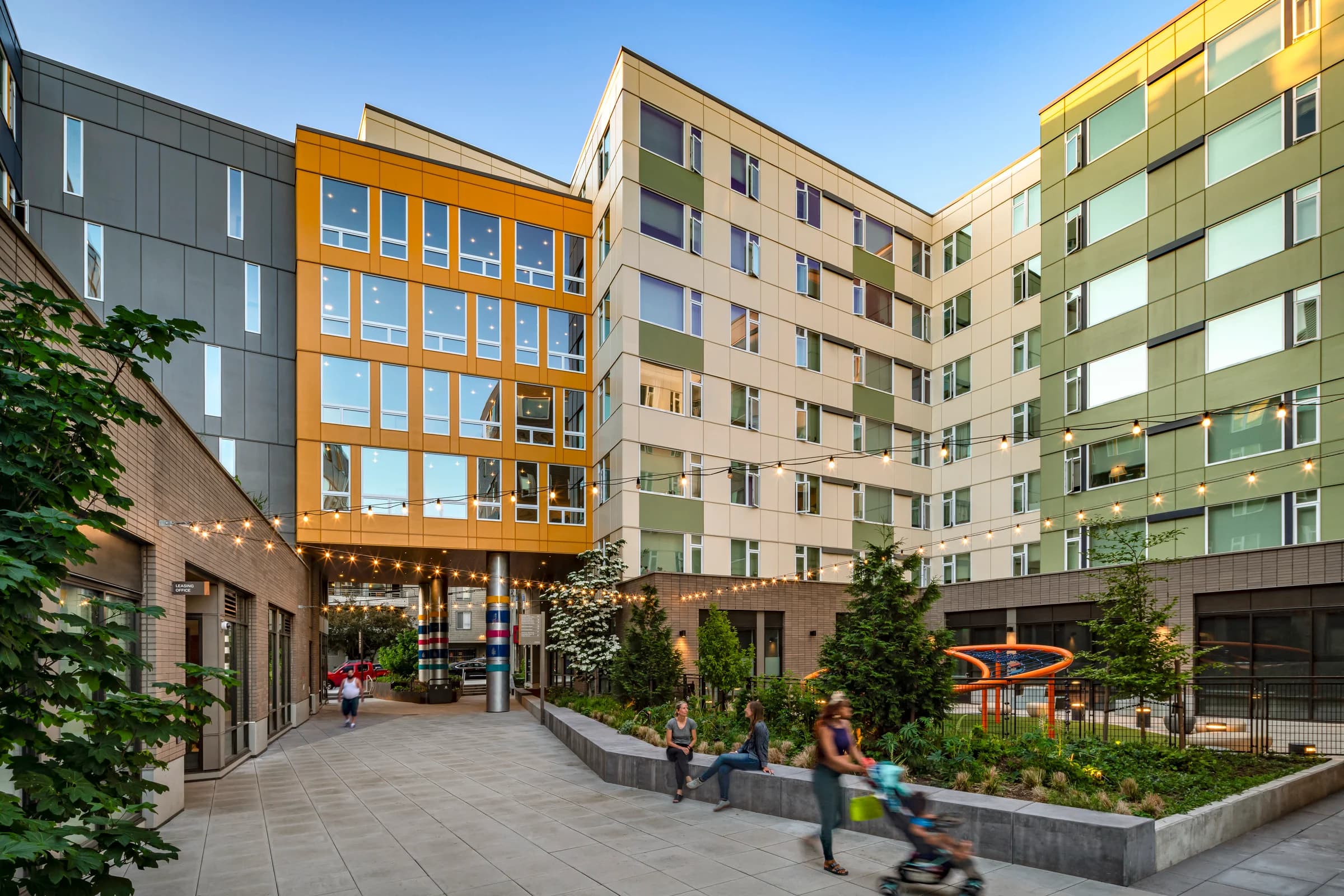
Three Vienna projects—Sargfabrik, OASE.inklusiv, and Gleis 21—illustrate how solidarity apartments (“Flexwohnungen” and “Soliwohnungen”) provide subsidized rents through cross‑financing, allowing NGOs to allocate units to newcomers. These projects incorporate communal amenities such as roof terraces, swimming pools, libraries, and shared kitchens, fostering daily interaction and social bridging. In Barcelona, the Casa Bloc and Bellvitge complexes represent social‑housing typologies; Casa Bloc hosts refugee families in one block, while Bellvitge’s activist legacy supports a more welcoming stance toward newcomers.
Integration Mechanisms and Outcomes
The study identifies three forms of social capital: bonding (within homogeneous groups), bridging (across diverse groups), and linking (connections with institutions). Vienna’s collaborative housing emphasizes bridging through buddy‑programmes, mentorship, and flexible lease arrangements, enabling refugees to transition from temporary to longer‑term housing. Barcelona’s Bellvitge demonstrates linking capital via NGOs and resident‑led commoning, whereas Casa Bloc shows limited bridging due to resident resistance. Empirical observations reveal that shared spaces—courtyards, gardens, and community rooms—are pivotal for spontaneous encounters and a sense of belonging.
Key Findings and Recommendations
- Collaborative housing can reduce rent burden by cross‑subsidizing higher‑paying tenants.
- Participatory design ensures that communal areas meet the needs of both newcomers and existing residents.
- Buddy‑programmes and NGOs are essential for facilitating social bridging and integration.
- Policy suggestions include extending housing‑first approaches, increasing rent subsidies for refugees, and incentivizing social‑sustainability criteria in new building competitions.
- Scaling successful models requires coordination among municipalities, NGOs, and housing providers, as demonstrated by Vienna’s multi‑sector collaborations.
Implications for Sustainable Housing
The paper links housing sustainability to social inclusion, arguing that collective ownership, energy‑efficient retrofits, and shared resources lower environmental footprints while promoting community resilience. By integrating newcomers into eco‑friendly, socially cohesive neighborhoods, European cities can address both the housing crisis and broader sustainability goals. The authors call for further research on the long‑term environmental performance of collaborative housing and its role in urban climate mitigation strategies.