Overview of the Report
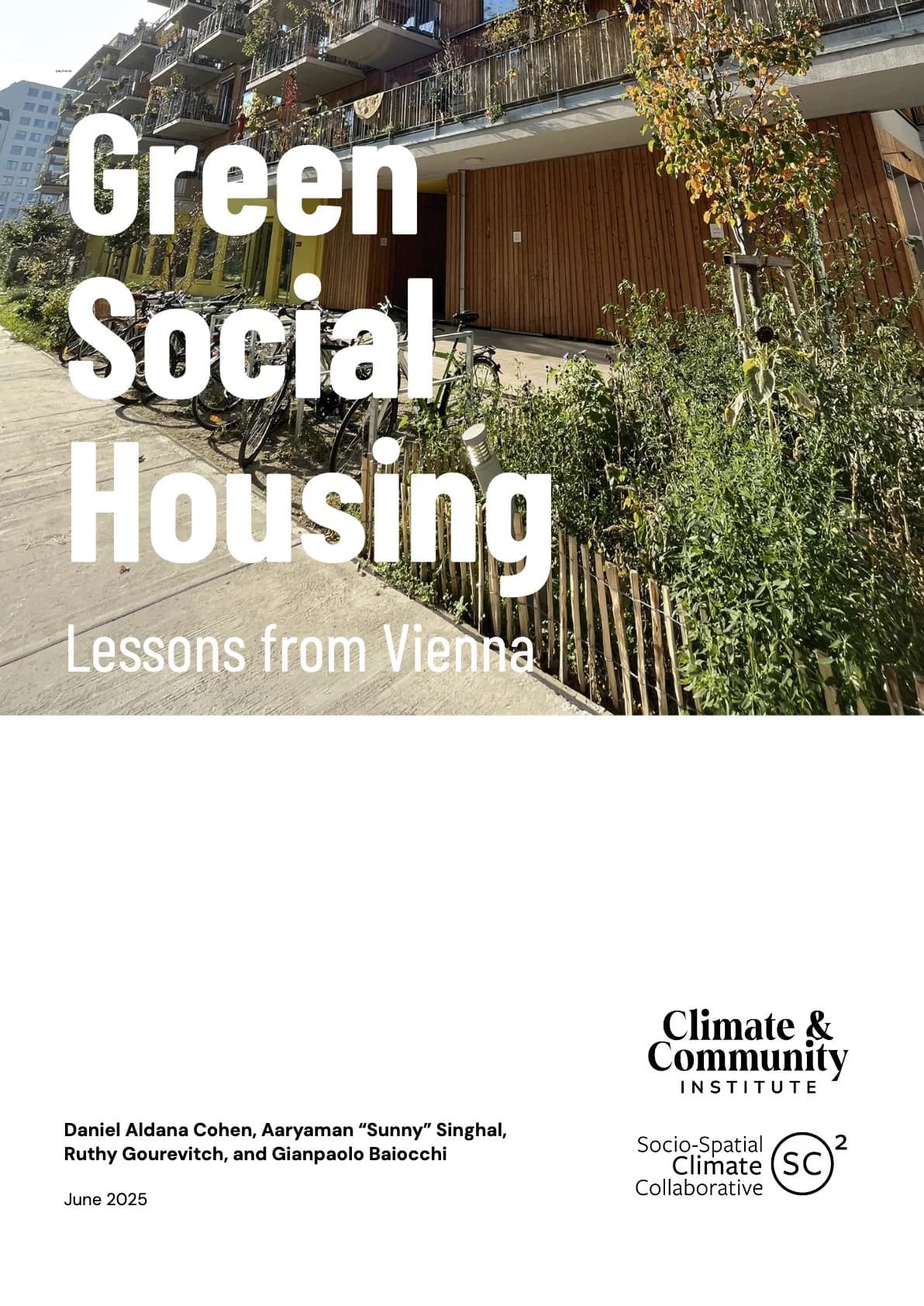
The Climate and Community Institute (CCI) released a comprehensive study titled “Green Social Housing – Lessons from Vienna.” Authored by Daniel Aldana Cohen, Aaryaman “Sunny” Singhal, Ruthy Gourevitch, and Gianpaolo Baiocchi, the report analyses Vienna’s social‑housing system and extracts actionable insights for Europe‑wide sustainable housing policies.
Scale of Vienna’s Social Housing
Vienna provides housing for over 40 % of its residents, amounting to roughly 400 000 social‑housing units. Municipal housing accounts for 21 % of all units, while limited‑profit housing makes up another 21 %. New construction adds about 5 000 units annually, representing one‑third of the city’s total housing output.
Affordability and Rent Impact
Average rent in Vienna (2023) is €10.5 / m², the lowest among major Western European cities. Compared with private market rents, social housing saves households about $800 per month (≈ €750). A 10 % increase in limited‑profit housing share correlates with a 5 % reduction in private‑market rents.
Climate Goals and Decarbonisation
Vienna aims for climate neutrality by 2040. Since 1990 the city has cut building‑sector CO₂ emissions by 37 %, with a 20 % drop in the last five years. Solar capacity grew from 50 MW to 250 MW, serving 72 000 residents; the target is 530 000 residents by 2030. Over 90 % of building‑sector emissions stem from gas heating, prompting a city‑wide phase‑out plan that replaces gas with district heating, heat pumps, and geothermal systems.
Funding and Financing Model
Public loans (≈ 30 % of project cost) are offered at 1 % interest over 40 years, sourced from a 1 % housing tax and loan repayments. Private banks provide the remaining financing at higher rates. Tenants contribute 5‑7 % of upfront costs, which are fully refundable, decreasing by 1 % per year of residence.
Design Innovation through Competitions
Vienna runs developer competitions that require proposals to meet ecological, economic, and social criteria. Successful projects integrate green roofs, cross‑laminated timber, modular construction, and renewable energy systems, creating replicable prototypes for the private sector.
Social Equity and Inclusion
Social housing is allocated via a points system that prioritises the most vulnerable (homeless, disabled, low‑income). Municipal housing guarantees tenure even if a household’s income rises above eligibility limits. However, barriers remain for migrants: a two‑year residency requirement and upfront down‑payments for limited‑profit units limit access for recent arrivals.
Integrated Urban Planning
Housing sites are embedded in “15‑minute neighbourhoods” with schools, health services, and public transit within walking distance. Public transport usage in Vienna is high (≈ 90 % of residents hold annual transit passes), contributing to low transport‑related emissions (3 % of city emissions versus 78 % from cars).
Political Foundations
The Social Democratic Party (SPÖ) has historically championed social housing, maintaining strong alliances with trade unions, the Chamber of Labor, and tenant organisations. This political cohesion has sustained investment in affordable and green housing across changing national governments.
Key Takeaways for Europe
- High‑volume, publicly owned housing can keep rents affordable and stabilize markets.
- Linking housing development to climate criteria accelerates decarbonisation while generating innovation.
- Long‑term, low‑interest public financing reduces the cost burden on tenants and developers.
- Integrated planning that co‑locates services and transit enhances livability and reduces car dependence. The report concludes that adopting Vienna’s balanced mix of municipal and limited‑profit housing, its financing mechanisms, and its climate‑oriented planning can guide pan‑European efforts toward sustainable, equitable urban housing.