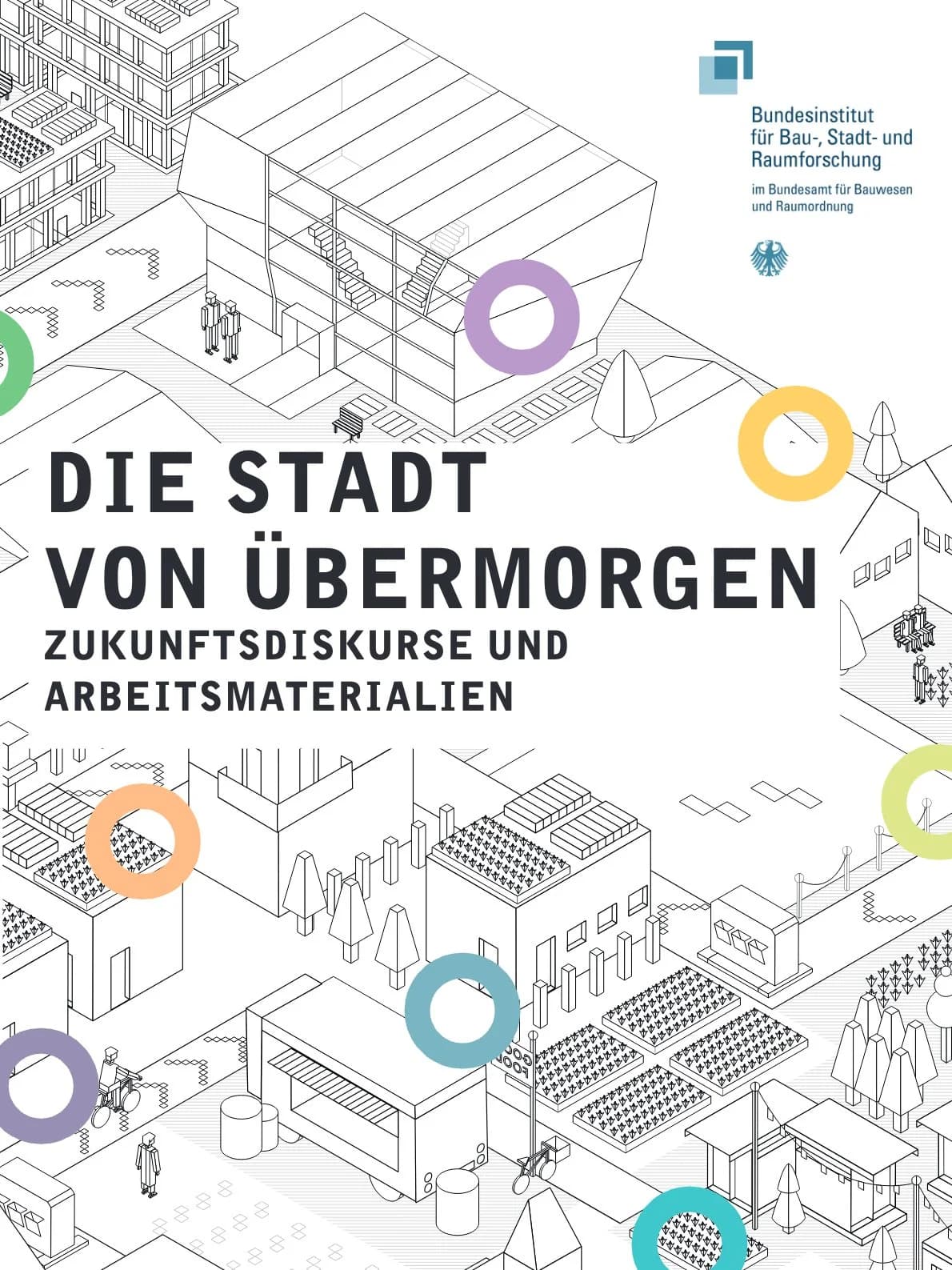
Overview of the Publication and Its Origin
The document “Die Stadt von Übermorgen” is a comprehensive report produced by the Federal Institute for Research on Building, Urban Affairs and Spatial Development (BBSR), a research arm of the German Federal Ministry for Housing, Urban Development and Construction (BMWSB). Authored by a team of urban researchers, including Dr. Marion Klemme, Dr. Katharina Hackenberg, and contributors from urbanista and Futur A, the work reflects the findings of the ExWoSt research programme. It was publicly released in 2022 and is available through the BBSR website.
Scope and Objectives of the Research
The report investigates future trends affecting German cities and presents a “method kit” for conducting forward‑looking urban discourse. Its primary aim is to equip city planners, municipal officials, NGOs, and citizens with tools to identify robust trends, assess uncertainties, and develop strategic responses for sustainable urban development up to 2050.
Key Trend Molecules and Their Implications
The authors synthesized over 150 individual trends into 15 “trend molecules,” each summarising a coherent set of developments. Notable clusters include:
- Human‑Machine Integration – growing use of robotics, AI, and cyber‑physical enhancements.
- Longevity and Health – rising life expectancy, increased focus on preventive health and active ageing.
- Resource Scarcity – tightening supplies of minerals, energy, and arable land, prompting circular economy measures.
- Climate Change and Resilience – intensifying weather extremes, necessitating flood protection, heat‑shielded spaces, and green infrastructure.
- Digitalisation of Urban Systems – smart grids, Internet of Things, and algorithmic city management shaping mobility, energy, and public services.
The Method Kit for Future Discourse
The publication offers a structured toolkit comprising:
- Trend Cards – concise visual summaries of each trend molecule.
- Persona Method – fictional future residents to stimulate inclusive discussion.
- Module‑Based Workshops – step‑by‑step guides for facilitators to run scenario‑building sessions.
- Digital Resources – online videos, downloadable worksheets, and an interactive website (www.stadtvonübermorgen.de) for ongoing engagement.
Findings from Conducted Workshops
Across seven model municipalities, workshops revealed common priorities:
- Strengthening social cohesion and education as foundations for resilient communities.
- Prioritising green and mixed‑use neighbourhoods to reduce car dependence.
- Emphasising flexible, multi‑functional public spaces that can adapt to shifting demographics and climate pressures.
- Highlighting the need for transparent data governance to balance innovation with privacy.
Practical Recommendations for Sustainable Housing
The report outlines specific actions for housing policy:
- Compact, Energy‑Efficient Buildings – promote retrofitting with insulation, solar façades, and smart energy management.
- Modular and Adaptive Design – enable interior reconfiguration to accommodate changing household sizes and ages.
- Circular Material Use – encourage recycled construction materials and design for disassembly.
- Integration of Green Spaces – incorporate balconies, rooftop gardens, and communal green areas to improve micro‑climates and biodiversity.
- Affordability Through Cooperative Models – support co‑ownership and community land trusts to mitigate market‑driven price spikes.
Relevance for a Pan‑European Audience
While rooted in German research, the trends and tools are transferable across Europe. Many challenges—aging populations, climate‑induced hazards, and material scarcity—are shared across EU cities. The methodological approach aligns with EU initiatives such as the European Green Deal and the Horizon Europe programme, offering a replicable framework for cross‑border collaboration on sustainable urban futures.
Access to Further Information
All data, trend visualisations, and workshop guides are freely accessible via the BBSR publication portal. Contact details for the authors and the institute are provided, enabling interested stakeholders to request supplementary material or arrange expert consultations.